The Baker's Guide to Tangzhong: Mastering the Water-Roux Technique for Ultra-Soft, Pillowy Bread and Buns
There is a specific kind of magic that occurs in a kitchen when the scent of yeast meets the warmth of a proofing oven, but for many home bakers, that magic often stops short of the bakery-quality results they crave. You have likely experienced the frustration of spending hours kneading, proofing, and baking, only to pull a loaf from the oven that feels dry, dense, or stales within twenty-four hours. This is the common struggle of the home artisan, battling against the limitations of standard lean doughs that lack the structural integrity to hold onto moisture. We often blame the yeast, the flour, or even the humidity in the room, but the truth is usually found in the molecular interaction between starch and water. It is time to stop blaming the variables beyond your control and start mastering the science of the Tangzhong method, a transformative technique that changes everything you thought you knew about crumb structure.
The Tangzhong method, an East Asian technique that has taken the global baking community by storm, is essentially a pre-gelatinized flour paste that acts as a structural stabilizer. By cooking a portion of your recipe's flour and liquid until it reaches a thick, pudding-like consistency, you are pre-hydrating the starches and forcing them to hold onto water throughout the baking and cooling process. This is not just a shortcut or a kitchen hack; it is a fundamental shift in how your dough behaves on a microscopic level. Once you incorporate this roux into your primary dough, you will notice an immediate difference in the elasticity of the gluten network and the unprecedented softness of the finished product. This guide is designed to move you beyond basic troubleshooting and into the realm of professional-grade bread making.
Stepping into the world of Tangzhong requires a commitment to precision and a willingness to understand the "why" behind the "how." Throughout this guide, we will break down the chemistry, the step-by-step preparation, and the specific adjustments needed to ensure every bun, roll, and loaf you produce is worthy of a high-end patisserie. We will look at temperature control, hydration ratios, and the secrets to achieving that elusive, cloud-like pull-apart texture that keeps people coming back for seconds. Put away the store-bought preservative-laden loaves and prepare to embrace the softest, longest-lasting bread of your life. It is time to elevate your home kitchen to a professional standard, one roux-based dough at a time.
The Science of the Tangzhong: Why It Works
At its core, the Tangzhong method is a masterclass in starch gelatinization. When you mix flour and water at room temperature, the starch granules remain relatively dormant; however, when you apply heat—typically to about 149°F to 150°F (65°C)—the granules swell, absorb the liquid, and burst, creating a thick paste. This gelatinous mixture is capable of holding significantly more water than standard dough because the water is "trapped" within the molecular structure of the starch. When you add this paste to your final dough mix, the Tangzhong effectively acts as a moisture reservoir.
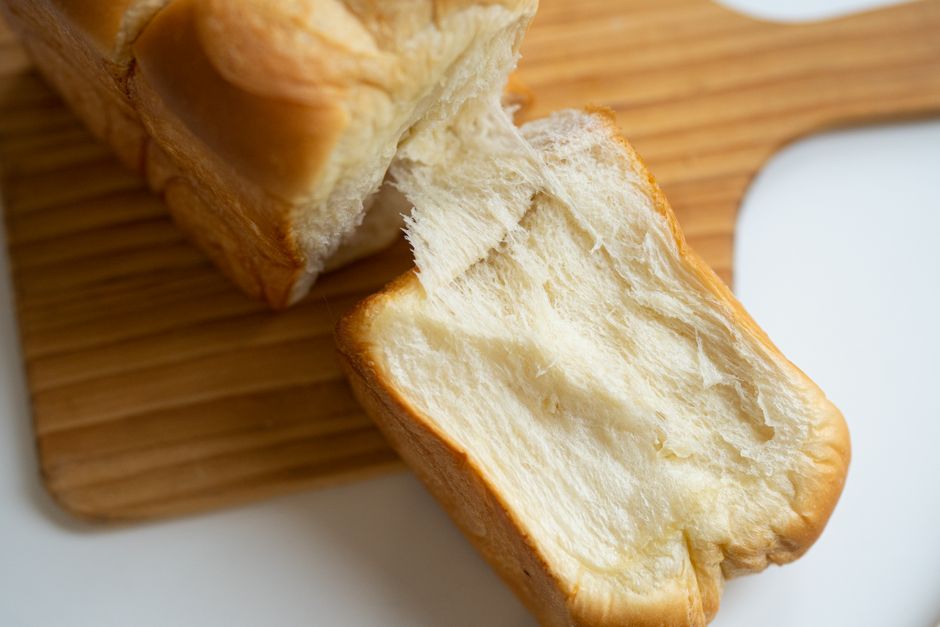
This structural shift has a profound effect on the finished loaf. Because the water is trapped, it cannot evaporate as easily during the baking process, resulting in a bread that remains soft and supple for days rather than hours. Furthermore, the gelatinization process slightly denatures the proteins in the flour, which softens the overall gluten network. This creates a bread that is incredibly extensible and prone to that desired "shred-ability," where the crumb peels away in long, delicate ribbons rather than crumbling under pressure.
Understanding Starch Gelatinization
Starch consists of two types of molecules: amylose and amylopectin. When you cook your flour-and-water mixture for the Tangzhong, you are essentially breaking down the crystalline structure of these starches. As they absorb the hot liquid, they expand and form a gel. This gel provides a scaffold for the bread, supporting the bubbles of carbon dioxide produced by your yeast. Without this scaffold, these bubbles might collapse or merge into large, uneven pockets; with the roux, your crumb becomes uniform, tight, and exceptionally soft.
The Impact on Shelf Life
One of the most persistent problems in home baking is the "staling" process, which is caused by the recrystallization of amylopectin, also known as retrogradation. By pre-gelatinizing the starches, the Tangzhong method slows down this process significantly. The moisture held within the roux prevents the starch molecules from binding back together into a rigid, crystalline state. This is precisely why milk bread and other Tangzhong-based recipes retain a fresh-baked quality much longer than traditional sourdough or crusty rustic breads.
The secret to the most pillowy, cloud-like bread isn't found in a specialized ingredient or an expensive mixer; it is found in the simple, ancient science of gelatinizing starch to lock in moisture that would otherwise vanish in the oven.
Calculating Your Ratios for Perfect Tangzhong
A common mistake made by novices is trying to substitute a Tangzhong into a recipe without adjusting the overall hydration. If you simply add a roux to a standard loaf recipe, you will end up with a sticky, unmanageable mess that refuses to hold its shape. To master the technique, you must understand the ratio of the roux to the flour in the main dough. The most common starting point for bakers is to use approximately 5% to 10% of the total flour weight in the recipe for the Tangzhong.
When creating your roux, the liquid-to-flour ratio should generally be 5:1 by weight. For example, if you are using 50 grams of flour for your Tangzhong, you will need 250 grams of liquid—usually a combination of milk and water, or just water. Cooking this mixture to the correct temperature is vital. If you do not heat it enough, the starches will not gelatinize; if you overheat it, the mixture will become too thick and scorched. Using a digital thermometer is the most professional way to ensure you hit that 149°F (65°C) mark consistently.
The Golden Ratio
While variations exist, most professional bakers swear by a total Tangzhong weight that comprises about 20% to 25% of the total dough's hydration. When you are writing your own recipes or adapting existing ones, treat the Tangzhong as a component of your total hydration. If your recipe calls for 500g of flour and 300g of liquid, take 40g of that flour and 200g of that liquid to create your roux. The remaining 460g of flour and 100g of liquid will then be combined with your roux to form the main dough.
Adjusting for Different Flours
It is important to note that different types of flour—all-purpose, bread flour, or even whole wheat—have varying protein and starch content, which affects how much liquid they can absorb. If you are using a high-protein bread flour, your Tangzhong will be slightly more structured and elastic. If you are using a lower-protein pastry or cake flour, the resulting roux may be more fluid. Always adjust your final liquid addition by feel; the dough should be tacky but not glued to your hands.
Step-by-Step Execution: Preparing the Roux
Consistency is the hallmark of a great baker. Preparing the Tangzhong should be the very first step of your baking day, as it needs to cool to room temperature before it is added to your yeast-based ingredients. If the roux is too hot when you add your yeast, you risk killing the microorganisms, which will leave you with a flat, lifeless dough. Conversely, adding it while it is fridge-cold can retard the proofing process too much. Room temperature is the sweet spot.
Follow this workflow for the perfect roux:
Mastering the Whisking Technique
Do not underestimate the power of a proper whisk. Use a wire balloon whisk to ensure that the flour is fully incorporated into the liquid before the heat causes the starch to set. If you develop lumps during the cooking process, it is almost impossible to remove them later, and these lumps will end up as hard, unpleasant spots in your soft, pillowy bread. If you do see small lumps, immediately strain the roux through a fine-mesh sieve while it is still hot.
Managing Temperature
If you do not have a thermometer, look for the "ribbon stage." As you stir, the roux should leave distinct trails behind the whisk that remain visible for a few seconds before disappearing. This indicates that the viscosity is correct. If the roux looks like a thick, rubbery clump, you have likely overheated it or used too little liquid. While a slightly thicker roux is better than a watery one, aim for the consistency of a thick, smooth pudding.
The beauty of the Tangzhong method lies in its simplicity; it is a humble porridge of flour and water that serves as the bridge between a good loaf of bread and a masterpiece of culinary engineering.
Integrating the Tangzhong into the Dough
Once your Tangzhong has cooled, it is time to incorporate it into your main dough. Whether you are using a stand mixer or kneading by hand, the addition of the roux changes the physical characteristics of the dough. You will find that even with a high-hydration recipe, the dough feels more manageable and less "sticky" in the traditional sense, though it may be quite tacky. The gelatinized starches provide a smooth, velvety texture that is a pleasure to work with.
When using a stand mixer, add the Tangzhong during the initial mixing stage, along with your liquid ingredients and yeast. If you are adding fats like unsalted butter, hold them back until the dough has formed a cohesive ball. This allows the gluten to develop its initial structure before the fat coats the proteins and inhibits the development. This "delayed fat" technique is particularly effective when working with enriched doughs like brioche or milk bread.
Hand-Kneading with Tangzhong
If you are kneading by hand, the Tangzhong-enriched dough may initially feel like a messy, uncooperative puddle. Do not be tempted to add more flour. Instead, use a dough scraper to move the dough against the counter in a rhythmic motion. After about eight to ten minutes of consistent effort, the dough will undergo a transition; the stickiness will begin to dissipate as the gluten strands align and the moisture is fully absorbed. This is the moment when you know you have succeeded.
Achieving Windowpane Test
The ultimate sign of a properly kneaded Tangzhong dough is the windowpane test. Take a small piece of dough and gently stretch it between your fingers. A well-developed dough should stretch into a thin, translucent membrane without tearing. Because of the Tangzhong, this membrane will be surprisingly durable and flexible. If the dough tears immediately, it needs more development; keep kneading until you can achieve that delicate, light-transmitting surface.
Troubleshooting Common Tangzhong Issues
Even experienced bakers run into hurdles. One of the most frequent complaints is a dough that remains "too wet" despite following the recipe exactly. This is often due to the specific protein content of the flour being used. If you find your dough is impossible to handle, you have two options: increase the mixing time to build more strength, or adjust your recipe for the next bake by reducing the water by 5-10 grams. Never resort to adding massive amounts of flour, as this will result in a dense, bread-like texture rather than the light, airy crumb you desire.
Another issue is a bread that browns too quickly in the oven. Because the Tangzhong increases the availability of simple sugars through the breakdown of starches, the Maillard reaction—the process that turns crusts brown—happens much faster. If your buns are getting too dark before they are fully cooked through, tent them with a piece of aluminum foil halfway through the baking time. This allows the interior to finish baking without the crust becoming burnt or bitter.
Dealing with Yeast Activity
Sometimes, bakers report that their Tangzhong bread doesn't rise as well as expected. This is almost always related to temperature. Ensure that your Tangzhong is not warmer than room temperature when it hits the yeast, and ensure that your milk or water is around 95°F to 105°F (35°C to 40°C). If the dough is too cold, the yeast will struggle to activate, leading to a long, sluggish proof. If the dough is too hot, you risk killing the yeast entirely.
Preventing a "Gummy" Crumb
If your loaf comes out feeling slightly gummy or wet in the center, it is likely an issue with the bake time, not the Tangzhong itself. Tangzhong bread retains so much moisture that it requires a slightly longer bake time than a lean dough. Do not rely solely on the appearance of the crust. Use a digital probe thermometer to check the internal temperature of the center of the loaf. You are looking for a temperature between 190°F and 200°F (88°C to 93°C).
Elevating Your Results: Professional Tips and Tricks
Now that you have the basic technique down, it is time to experiment with the variables to truly elevate your baking. One of the best ways to enhance the flavor of your Tangzhong bread is to replace the water in the roux with milk or even heavy cream. This adds a richness that complements the soft texture of the loaf. Additionally, you can add small amounts of flavorings directly into the Tangzhong as it cooks, such as a pinch of vanilla bean paste for sweet buns or a touch of toasted sesame oil for savory rolls.
Another professional tip is to use the cold-fermentation method in conjunction with the Tangzhong. After your initial knead, place your dough in the refrigerator overnight. This slow, cold fermentation allows for the development of complex, enzymatic flavors that cannot be achieved in a quick two-hour proof. When you combine this with the moisture-locking power of the Tangzhong, the result is a flavor and texture profile that rivals the best bakeries in the world.
Experimenting with Liquid Ratios
While the 5:1 ratio is standard, you can play with the viscosity of your roux to change the final crumb. A slightly thinner roux will result in a more open, airy structure, which is perfect for sandwich loaves. A thicker roux will yield a tighter, more uniform crumb, which is ideal for rolls or filled buns that need to maintain their shape without collapsing under the weight of fillings like red bean paste, cream cheese, or savory meats.
Scoring and Finishing
Because Tangzhong dough is so soft and extensible, scoring it before it enters the oven can be tricky. Use a very sharp, thin blade or a professional lame. Do not press down into the dough; instead, use a light, fluid motion to create shallow cuts. If you are baking a milk bread loaf, brushing the top with an egg wash (one egg whisked with a tablespoon of milk) just before baking will give it a high-gloss, bakery-quality finish that is truly professional.
Baking is an act of patience, and the Tangzhong method is the ultimate expression of that patience; you are choosing to invest an extra ten minutes in the roux to guarantee that every subsequent bite is an experience of pure, pillowy perfection.
Conclusion
The journey to becoming an expert baker is paved with small, iterative improvements, and mastering the Tangzhong technique is arguably the most significant upgrade you can make to your toolkit. By understanding the science of starch gelatinization, you are moving away from trial and error and toward a predictable, high-quality result every time you heat up your oven. You have learned that this humble paste is not just an additive but a foundation, providing the moisture and structural integrity that allows for that signature pillowy texture we all associate with elite-level bread.
As you continue to use this method, you will find that it becomes second nature. You will start to see the potential for the Tangzhong in almost every enriched dough recipe you encounter, from Japanese milk bread and brioche to dinner rolls and cinnamon buns. Do not be afraid to experiment with the ratios and the base liquids; the beauty of baking is that even when a recipe is "perfect," there is always room for a baker’s personal touch. Keep a notebook of your experiments—noting temperatures, bake times, and results—and watch as your confidence grows along with your loaves.
You have the knowledge, the technique, and the science to back up your craft. Stop blaming the chef, the equipment, or the weather; you now possess the key to achieving the softest, most resilient bread possible. The next time you find yourself kneading a ball of dough, remember the chemistry at work beneath your palms. You are not just making food; you are creating an experience of comfort, one perfectly hydrated, cloud-like slice at a time. Go forth, preheat those ovens, and let the magic of the Tangzhong transform your kitchen into the neighborhood’s best bakery. Your most pillowy bread is waiting to be baked.
Get the Next Recipe
Weekly recipes, techniques, and gear picks — straight to your inbox.
