
The Chemistry of Egg Coagulation: Why Temperature Control Makes or Breaks Custards
There is a moment in the life of every aspiring home cook when they move beyond the simple mechanics of following a recipe and begin to wonder why, exactly, things happen the way they do in the kitchen. For many, this revelation occurs during the pursuit of the perfect custard—that silky, velvet-smooth bridge between liquid cream and solid dessert. We have all stood over a simmering stovetop, whisking nervously, wondering if we are seconds away from a masterpiece or a scrambled mess. The truth is that baking, and specifically the art of egg-based emulsification, is not a matter of luck or divine intervention. It is pure, repeatable science, governed by the elegant dance of protein denaturation and the precise laws of thermodynamics.
When we talk about custard, we are essentially talking about the deliberate organization of proteins. Eggs are composed of water and complex proteins that, in their raw state, are folded up like tiny, coiled springs. As we apply heat, we provide the energy necessary for these proteins to unfold—a process known as denaturation—and subsequently link up with one another to form a three-dimensional matrix. This matrix acts as a net, trapping the liquid molecules and turning a thin, pourable cream into a delicate, thickened solid. Mastering this transition is the quintessential rite of passage for any chef, as it requires a balance of intuition and technical rigor that distinguishes the amateur from the professional.
The beauty of understanding the chemistry of egg coagulation lies in the liberation it provides from the anxiety of the recipe card. Once you comprehend why a custard curdles—the result of over-tightening the protein network until it squeezes out its trapped moisture—you stop fearing the heat and start respecting it. In the following sections, we will strip away the mystery surrounding these delicate preparations, focusing on the temperatures, ratios, and cooling techniques that define the professional standard. By the time we are finished, you will not just be making better desserts; you will be practicing a form of culinary alchemy that relies on facts rather than guesswork.
The Molecular Architecture of the Egg
At the heart of every custard is the egg, a marvel of biological engineering that serves as both the emulsifier and the thickener of the culinary world. Eggs are largely composed of water, but they hold a rich array of proteins, primarily ovalbumin, ovotransferrin, and livetins. These proteins are tightly curled and suspended in an aqueous environment. When they are at room temperature, they are stable, but they are held in a state of suspended potential. The moment you introduce heat, you are essentially initiating a chemical reaction that forces these molecules to open up and shake hands with their neighbors.
Understanding Denaturation and Coagulation
When protein molecules denature, they lose their native folded shape. Once they have unfurled, they begin to interact with other nearby proteins, creating a network that traps the liquid phase of your mixture. If you heat the eggs too quickly or beyond the critical threshold, this network becomes too dense. The proteins bind too tightly together, pushing out the liquid—a process called syneresis—which is why your custard looks like it has curdled into tiny, grainy bits of scrambled egg. Preventing this is entirely dependent on temperature control.
The Role of Sugar as a Buffer
One of the most important secrets in a pastry chef’s arsenal is the inclusion of sugar. Sugar is not just a sweetener; it is a hydrophilic compound that competes with the proteins for water molecules. By adding sugar to your eggs before heating, you effectively raise the temperature at which the proteins begin to coagulate. This provides you with a larger "window of safety" during the cooking process. Without sugar, eggs would thicken much faster and at a lower temperature, leaving you with almost zero room for error.
"The difference between a velvety crème anglaise and a broken, grainy mess is often just a matter of two degrees of temperature and a steady, patient hand."
Defining the Critical Temperature Zones
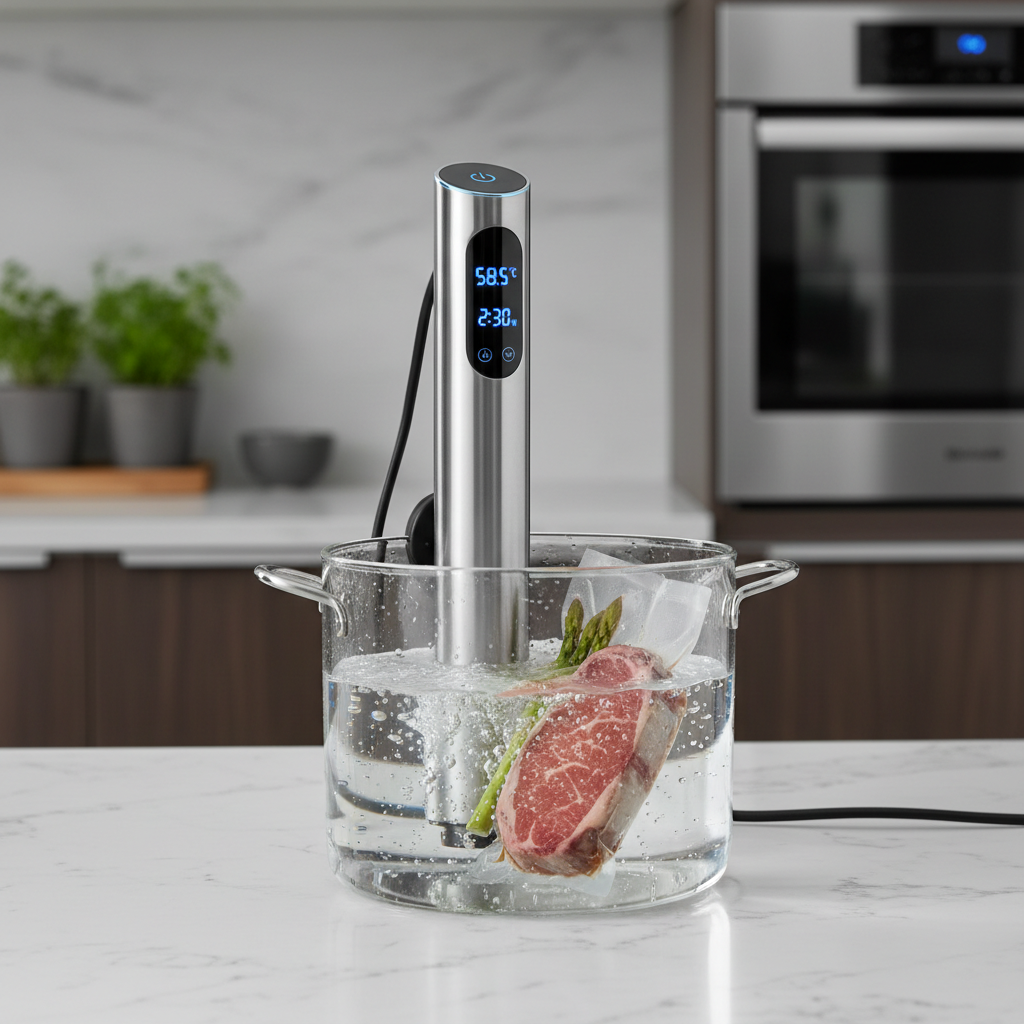
To master the custard, you must stop looking at the clock and start looking at the thermometer. While recipes often say "cook until it coats the back of a spoon," this is a subjective measurement that varies depending on your spoon's material and your visual perception. Professional kitchens rely on specific thermal benchmarks that ensure the proteins have coagulated enough to set, but not enough to toughen or break. The range for a successful custard typically falls between 160°F and 180°F (71°C and 82°C).
The 160°F Threshold
At approximately 160°F (71°C), the proteins in the egg white begin to set, while the yolk proteins require a slightly higher temperature to reach their full potential. This is the stage where the mixture begins to thicken into a sauce. If you stop at this point, you have a light, pourable crème anglaise. It is delicate, requires constant attention, and must be pulled from the heat the moment it reaches this stage to ensure it doesn’t overcook from residual heat.
The 175°F to 180°F Range
When you are making a set custard, such as a flan, a pot de crème, or a baked cheesecake, you are looking for a higher temperature. In these applications, the custard is usually cooked in a water bath—a bain-marie—which moderates the heat and ensures that the outside of the custard doesn't set before the inside. At this temperature, the proteins form a much more robust matrix, allowing the dessert to hold its shape when unmolded. If you exceed 185°F (85°C), the proteins will inevitably bond too tightly, resulting in the dreaded "weeping" of your custard.
The Technique of Tempering
If you have ever dumped hot cream into raw eggs, you have likely experienced the disappointment of sudden, accidental scrambled eggs. This is caused by a massive, localized increase in temperature that forces the eggs to coagulate instantly before they can be distributed into the mixture. To avoid this, we use a process called tempering. This is the art of slowly introducing heat to the eggs, raising their temperature gradually until they are ready to be fully incorporated into the hot liquid base.
Step-by-Step Tempering
By tempering, you are essentially normalizing the temperature of the two phases before they merge. This ensures that the proteins unfold slowly and evenly, creating a consistent texture throughout the entire batch. Never skip this step; it is the most reliable insurance policy against a curdled custard.
"Temperature is the language of the kitchen; if you do not learn to speak it with your thermometer, you are essentially cooking in the dark."
The Impact of Fat and Liquid Ratios
The composition of your custard base fundamentally alters the way the proteins coagulate. The ratio of egg yolks to whole eggs, and the ratio of dairy fat to water content, determines the final mouthfeel and structural integrity of the dessert. Egg yolks contain high levels of fat and lecithin, a natural emulsifier that creates a creamy, dense texture, while egg whites contain higher protein concentrations that lead to a firmer, more gelatinous set.
Balancing Richness and Structure
For a traditional French custard, you might use a higher proportion of egg yolks, which results in a rich, decadent mouthfeel. Because yolks have a lower water content, they require less cooking time to reach the coagulation point. Conversely, if you are making a lighter custard, you may include more whole eggs. The added water content in the whites helps to dilute the protein network, resulting in a cleaner flavor and a lighter, more refreshing final product.
The Influence of Dairy
Using whole milk will result in a custard that is structurally sound but less luxurious. Using heavy cream increases the fat content, which interferes with the protein network slightly, leading to a softer, more delicate set. Many professional pastry chefs use a blend—often a 1:1 ratio of milk to heavy cream—to achieve the perfect balance of structural stability and silky, melt-in-the-mouth texture. This ratio provides enough milk solids for the proteins to cling to, while the fat from the cream coats the palate.
Whole Milk:* Adds structure, firmer set.
Heavy Cream:* Adds richness, softer, silkier mouthfeel.
Egg Yolks:* Provides emulsification, color, and depth of flavor.
Sugar:* Inhibits curdling, provides texture, and creates a glossy sheen.
Achieving Perfection Through Heat Management
Once you have mastered the ingredients and the tempering process, the final challenge is managing the heat source itself. A heavy-bottomed saucepan is non-negotiable. Thin-bottomed pans create "hot spots" where the temperature exceeds the coagulation point before the rest of the mixture is ready, leading to scorched or grainy custard. Using a heavy-bottomed copper or stainless steel pan ensures that the heat is distributed evenly across the entire base of the mixture.
The Bain-Marie Principle
When baking custards in the oven, the water bath is your best friend. By placing your ramekins inside a larger pan filled with hot water, you are ensuring that the temperature of the custard never exceeds the boiling point of water—212°F (100°C)—which is the perfect environment for slow, gentle protein coagulation. The water acts as an insulator, protecting the custard from the intense dry heat of the oven walls and preventing the outer edges from setting too fast.
The Importance of Residual Heat
Perhaps the most overlooked factor in custard making is carry-over cooking. Even after you remove your pan from the heat, the mixture remains at a high temperature. If you leave the custard in the hot pan, it will continue to coagulate, potentially curdling while it sits on the counter. Always transfer your finished custard to a cool bowl immediately. If you are making a stirred custard, chill it by placing the bowl over an ice bath. This "shocks" the proteins into their final, silky state and halts the cooking process instantly.
The Role of Emulsifiers and Additives
Sometimes, even with the most precise temperature control, we look for an extra layer of security. This is where secondary ingredients come into play. While a pure custard relies solely on the egg proteins, many modern recipes incorporate minor amounts of cornstarch or arrowroot powder. These starches function as a secondary thickening agent, providing a safety net for the egg proteins. When heated, starch molecules swell and absorb water, creating a stable, translucent gel that holds up even if the eggs are slightly overcooked.
Using Starch as an Insurance Policy
Adding a small amount of starch—perhaps a tablespoon per quart of base—changes the definition of your custard. It is no longer a "pure" custard, but rather a pastry cream (crème pâtissière). The advantage of this technique is that you can actually bring the mixture to a boil without the risk of it breaking. The starch provides the structural integrity, while the eggs provide the richness. This is the preferred method for filling tarts, éclairs, and cream puffs, where structural stability is just as important as taste.
Incorporating Flavorings Correctly
The timing of your flavorings is also a matter of chemistry. If you are infusing your milk with vanilla beans, citrus zest, or herbs, do so during the initial heating phase. This allows the volatile oils and aromatics to extract into the fat of the milk, creating a deeper, more rounded flavor profile. Avoid adding acidic ingredients—like lemon juice or fruit purees—until the end of the cooking process, as acidity can lower the coagulation temperature of the eggs and cause them to set prematurely.
Troubleshooting Common Custard Failures
Even the most seasoned pastry chefs occasionally encounter a "broken" custard. Understanding why a failure occurred is the first step toward preventing it the next time. If your custard is grainy, it is almost certainly a result of overheating. If it is too thin, you likely didn't reach the required temperature threshold. If it has a "rubbery" texture, you likely used too many whole eggs or cooked it too quickly at an extremely high heat.
Fixing a Broken Custard
If you find that your crème anglaise has small, grainy bits of egg, do not discard it. You can often save it by pouring the mixture into a high-speed blender and processing it on high for 30 seconds. The mechanical shearing force can often break down the coagulated bits and re-emulsify the mixture, smoothing out the texture. While it may not be as perfect as a batch that was cooked correctly, it is usually good enough for home use.
The "Sieve" Secret
No matter how careful you are, always, always pass your finished custard through a fine-mesh sieve. This is the hallmark of professional technique. Even if your custard looks smooth to the naked eye, a sieve will catch the tiny chalazae strands of the egg or any minuscule protein bits that might have formed. This one step transforms a homemade custard into a restaurant-quality product, providing that characteristic "silk" that separates a truly great dessert from an average one.
"True culinary confidence is not found in the absence of mistakes, but in the knowledge of how to correct them when they inevitably occur."
Elevating Your Skills: Moving Beyond the Basics
Once you have mastered the fundamental chemistry of the egg-based custard, you have unlocked an entire category of desserts. From here, you can branch out into crème brûlée, where the sugar-crusted top adds a textural contrast to the silky base, or pot de crème, which relies on a slower bake for an impossibly dense, rich profile. The variable you change is not the fundamental chemistry, but the ratio of dairy to egg and the method of heat application.
The Art of the Crème Brûlée
For a classic crème brûlée, we focus on a high ratio of egg yolks to heavy cream. This produces a custard that is exceptionally rich. Because you are only looking for a soft set, you can remove these from the oven when the center still has a slight jiggle. As they chill in the refrigerator, the proteins continue to stabilize, creating that perfect, spoonable consistency that gives way under the crack of a caramelized sugar crust.
Experimenting with Savory Custards
Do not limit your knowledge to the dessert menu. The science of egg coagulation applies perfectly to savory applications like quiche, savory flans, and chawanmushi. By substituting milk for stock or vegetable purees, you can create elegant, protein-rich appetizers. The same rules regarding temperature control apply: keep the heat low and slow, and you will achieve a texture that is light, airy, and sophisticated.
Conclusion
The pursuit of the perfect custard is, at its core, a lesson in patience and observation. By shifting your focus from the instructions on a card to the underlying chemical reactions occurring in your saucepan, you empower yourself to be a better, more thoughtful cook. You now understand that denaturation is the mechanism of thickening, that tempering is the bridge to stability, and that residual heat is the silent enemy of the delicate texture we all crave.
When you next stand at your stove, watch the steam rise and feel the heat radiating from the pan with a new appreciation for the precision required to manipulate the egg. Remember that you are in control of the variables. Use your thermometer as your primary tool, trust in the process of tempering, and never underestimate the transformative power of a fine-mesh sieve. Culinary excellence is rarely about the complexity of the recipe; it is about the mastery of the basic elements.
The next time you prepare a custard, take a moment to observe the transformation. Watch the liquid thicken, listen for the change in the consistency as the whisk passes through the base, and witness the way the proteins unite to form something far greater than the sum of their parts. By embracing the science, you aren't just following a recipe; you are engaging in a timeless dialogue with the ingredients. May your custards be smooth, your tempering be flawless, and your desserts always be a testament to the beautiful, predictable, and delicious chemistry of the kitchen. Stay curious, keep measuring, and continue to blame the chef—because the chef now knows exactly what went into the pot.
Get the Next Recipe
Weekly recipes, techniques, and gear picks — straight to your inbox.
