
The Complete Guide to Spices: Building Flavor from the Ground Up
The kitchen is a laboratory of infinite possibility, yet for many home cooks, the leap from "following a recipe" to "intuitive cooking" remains shrouded in mystery. Most people view spices as mere accessories—a sprinkle of this or a dash of that added at the very end of the process to provide a superficial boost to a dish. In reality, spices are the structural foundation of global cuisine, capable of transforming mundane ingredients into masterpieces of depth, complexity, and soul. To truly master the culinary arts, one must stop looking at a spice rack as a collection of jars and start viewing it as a palette of chemical compounds waiting to be unlocked. Understanding the character of each spice—its origin, its volatility, and its affinity for fat—is the first step toward reclaiming your agency as a chef.
When we discuss building flavor from the ground up, we are talking about the Maillard reaction, the interaction of essential oils, and the delicate balance of bitter, sweet, pungent, and earthy notes. Professional chefs rarely treat spices as an afterthought; they view them as ingredients that require careful manipulation, heat application, and timing to express their full potential. Whether you are tempering mustard seeds in hot oil, dry-toasting coriander to amplify its citrusy aromatics, or slow-blooming a spice blend in a mirepoix, your goal is to extract maximum flavor. This guide is designed to dismantle the intimidation factor of spices and provide you with the technical framework required to command your pantry like a seasoned professional.
Developing a sophisticated palate for spice requires patience and a commitment to experimentation that goes beyond standard recipe instructions. I have spent decades in professional kitchens, watching talented line cooks struggle to get the "zing" right or complaining that a curry lacks the depth of the ones they ate in Southeast Asia. The secret, almost universally, lies in how the spices were treated during the initial stages of cooking. We will explore the chemistry of heat, the importance of purchasing high-quality whole seeds, and the specific ratios required to ensure your dishes possess the elusive "wow" factor. Prepare to shift your culinary perspective, sharpen your knife skills, and embark on a journey of aromatic discovery that will fundamentally change how you approach every single meal you prepare.
The Chemistry of Flavor: Why Whole Spices Matter
The difference between pre-ground spices from a supermarket shelf and high-quality, whole spices is the difference between a canned soundtrack and a live orchestral performance. When spices are ground, their volatile oils—the compounds responsible for their flavor and aroma—begin to dissipate almost immediately upon contact with oxygen. By the time that jar of ground cumin reaches your pantry, it has likely lost sixty to seventy percent of its potency and complexity. To cook with authority, you must embrace the habit of purchasing whole seeds, barks, and berries and grinding them fresh as the recipe demands.
The Power of Oxidation and Volatility
Every spice contains a unique profile of chemical compounds that react differently to light, heat, and time. For instance, the cinnamaldehyde in cinnamon or the piperine in black peppercorns acts as a volatile agent that dictates the spice's shelf life. Once ground, the surface area of the spice increases exponentially, which accelerates the oxidation process. This is why ground spices often taste "dusty" or "flat" after a few months. When you grind your own, you are releasing a burst of fresh flavor that was previously locked inside the cellular structure of the seed, providing a vibrancy that pre-ground alternatives simply cannot replicate.
Professional Equipment for the Home Cook
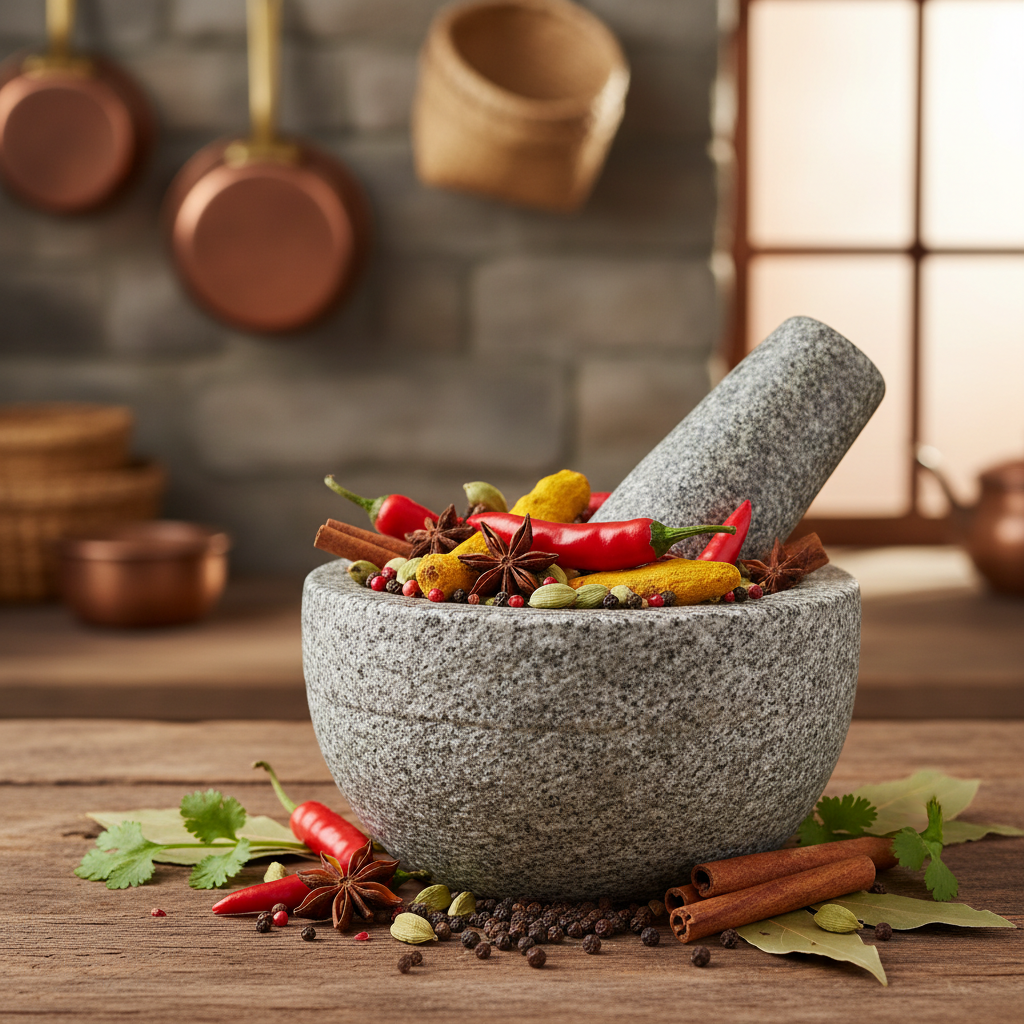
You do not need a commercial spice mill to achieve professional results, but you do need the right tools to maintain consistency. Invest in a dedicated electric coffee grinder that is used solely for spices—never mix your coffee beans and your cumin seeds. Alternatively, a high-quality mortar and pestle made of granite or heavy stone is an essential piece of equipment for those who prefer the tactile control of crushing spices by hand. The act of grinding with a pestle creates friction and heat, which releases oils more effectively than a high-speed metal blade might.
"A kitchen without a mortar and pestle is like a carpenter without a hammer. You are not just crushing seeds; you are physically breaking down the flavor barriers of the ingredient to invite them into your cooking."
Mastering the Technique: Blooming and Toasting
The most common mistake home cooks make is adding spices to a dish at the wrong time. If you dump a tablespoon of chili powder into a liquid-heavy soup or a cold sauce, the flavor remains raw, metallic, and disconnected from the other components. Spices are generally hydrophobic, meaning their flavor compounds are fat-soluble. To extract the full spectrum of their character, they must be "bloomed" in a fat medium—such as ghee, olive oil, or butter—before any water-based ingredients are introduced.
The Art of Dry Toasting
Dry toasting is the process of heating whole spices in a dry skillet over medium-low heat until they become fragrant. This technique is crucial for spices like cumin, coriander, and fennel seeds. As the spices heat up, the cellular walls soften, and the essential oils move to the surface. You will know they are ready when you can smell them clearly and the seeds appear slightly darker. Watch carefully, however; once you smell the aroma, you have about thirty seconds before they burn and become bitter. Keep the pan moving constantly to ensure even heat distribution and prevent localized charring.
Blooming in Fat (Tempering)
Once your spices are toasted, they should ideally be bloomed in fat. In Indian cooking, this technique is known as tadka or tempering. When you drop your spices into hot oil, the fat acts as a carrier, pulling the flavor compounds out of the spice and distributing them throughout the oil, which then coats every other ingredient in your pan. This creates a flavor profile that is rounded, deep, and fully integrated. Use this technique at the beginning of your cooking process—after your aromatics like onions or garlic have sweated but before you add your bulk ingredients like meats or vegetables.
Understanding the Flavor Profile: Sweet, Earthy, and Pungent
Categorizing spices based on their primary flavor profiles allows you to build recipes from scratch without relying solely on cookbooks. We can divide most culinary spices into three main categories: earthy, sweet, and pungent. An earthy spice, like cumin or turmeric, provides a grounded, savory base that anchors the dish. Sweet spices, such as cinnamon, cloves, nutmeg, and cardamom, provide an aromatic lift that makes the dish feel sophisticated and complex. Finally, pungent spices, like black pepper, chili, and mustard, provide the "heat" or physical sensation that stimulates the palate and cleanses the tongue.
The Architecture of a Blend
When you are building a spice blend, aim for a ratio that incorporates all three categories. A classic garam masala or curry powder works because it balances the earthiness of coriander with the sweetness of cinnamon and the pungency of black pepper. If your dish feels heavy or one-dimensional, it is often lacking a "sweet" note to brighten the finish. Conversely, if your dish feels thin or lacks "meatiness," you likely need more earthy elements to provide a structural foundation.
Respecting the Heat
Not all heat is created equal. The heat from black pepper is felt in the back of the throat and has a sharp, woody note, while the heat from chili peppers (measured in Scoville units) is felt on the tongue and lips. Mustard seeds provide a sinus-clearing, volatile heat that is aggressive but fleeting. Understanding how these different types of "heat" interact with your ingredients will allow you to fine-tune your recipes. For example, if you are making a rich, creamy curry, you want a pungent heat like cayenne to cut through the fat, rather than the woody heat of black pepper, which might get lost in the cream.
Storage and Longevity: Keeping Your Pantry Alive
You can buy the most expensive, freshly harvested spices in the world, but they will be useless within a month if they are stored incorrectly. Spices are vulnerable to four primary enemies: heat, light, moisture, and air. If you store your spice rack above the stove—where heat and steam from cooking are constantly rising—you are essentially killing your spices every time you boil a pot of pasta.
The Ideal Storage Environment
The perfect environment for spices is a dark, cool, dry cupboard away from the stove and away from direct sunlight. While many home cooks love the aesthetic of clear glass jars on a magnetic strip or open shelves, the reality is that exposure to light degrades the quality of the volatile oils rapidly. If you insist on having your spices visible, ensure the jars are made of amber or opaque glass and that they are kept in a pantry that does not receive direct sun.
Managing Inventory
Use a permanent marker to write the purchase date on the bottom of every jar. Most whole spices will retain their optimal flavor for 6 to 12 months, while ground spices lose their magic after about 3 to 6 months. If a spice has lost its color or, more importantly, its scent, it is time to discard it. Do not be afraid to prune your pantry; a spice that has gone stale will actively subtract flavor from your dish rather than adding it.
"Your spice rack is not a museum. It should be a living, breathing collection that is constantly refreshed. If you haven't opened a jar in a year, you aren't saving it for a special occasion—you are storing dust."
The "Global Palette" Approach: Developing Your Own Rubs and Blends
Rather than buying pre-mixed seasonings that often contain fillers like cornstarch or excess salt, I encourage every home cook to develop their own signature rubs. A basic rub usually follows a simple ratio: 4 parts earthy/base, 2 parts sweet/aromatic, and 1 part pungent. For a standard barbecue rub, this might look like 4 tablespoons of paprika, 2 tablespoons of brown sugar, and 1 tablespoon of ground black pepper or mustard powder.
Customizing to Your Ingredients
When working with delicate proteins like white fish or scallops, you want to avoid overpowering the natural sweetness of the meat. In these cases, focus on subtle, floral spices like fennel pollen, coriander, or green cardamom. For heavy, fatty meats like pork shoulder or brisket, reach for high-impact, earthy spices that can stand up to long, slow cooking times, such as smoked paprika, chipotle powder, and cloves.
The Rule of Three
If you are nervous about building your own blends, start with the Rule of Three. Pick one earthy spice, one sweet spice, and one pungent spice. For example: cumin, cinnamon, and cayenne. Toast them, grind them, and bloom them in oil. This combination is essentially the backbone of a Moroccan ras el hanout or a Middle Eastern baharat. Once you master this core trio, you can begin adding complexity by introducing secondary notes like coriander (citrus), cardamom (floral), or star anise (anise/liquorice).
Advanced Techniques: Infusion and Smoking
Beyond dry toasting and blooming, there are advanced techniques that can push your cooking into the realm of the professional. Infusion is a brilliant way to add spice flavor without adding the physical grit of the spice itself. For example, if you want the flavor of whole cloves or cinnamon in a delicate pan sauce, you can infuse the spices into your stock or butter, then strain them out before serving. This gives you the clean, refined look of a restaurant dish while maintaining the deep aromatic profile of a complex spice blend.
Smoking Spices at Home
You do not need a commercial smoker to impart smoky notes into your food. You can use smoked salt or smoked paprika to add that depth, but for an even more authentic approach, try toasting your spices in a pan with a small amount of wood chip dust or by using a smoking gun. Another technique is to use charred spices. For certain Mexican salsas, the secret is to char the spices (like dried ancho chiles) in a cast-iron skillet until they are almost black, then rehydrate them. The resulting flavor is incredibly complex, with a bitter, charred edge that highlights the fruitiness of the chile.
The Temperature Factor
Always keep in mind the relationship between temperature and spice intensity. Many spices are heat-sensitive and will turn bitter if they reach too high a temperature. For instance, turmeric should never be charred; it loses its earthy brightness and becomes soapy. Cinnamon, on the other hand, requires a bit of heat to reveal its warming properties. Always add delicate spices like ground cardamom or nutmeg at the very end of the cooking process to preserve their volatile, floral aromatics.
Common Pitfalls and How to Fix Them
Even experienced cooks run into trouble with spices. The most common error is over-seasoning. If you have added too much spice and the dish is overwhelming, the best way to correct it is to dilute the base. If it is a soup or sauce, add more of the liquid component (stock, cream, or coconut milk). If the issue is bitterness caused by burnt spices, a small amount of acid (like a squeeze of lemon juice or a dash of vinegar) or a hint of sweetness (honey or maple syrup) can often balance the profile.
The "Spoon Test"
Never season a dish directly over the pot. Always use a spoon to taste a small amount, then add your spices in small increments. Spices are like salt; you can always add more, but you cannot take them out. Keep a notebook in your kitchen where you record your ratios. If a specific blend of cumin, coriander, and turmeric works perfectly for a lentil stew, write it down! You will find that you develop "house blends" that eventually become the signature of your home cooking.
The Role of Salt
It is impossible to talk about spices without mentioning salt. Salt is not a spice, but it is the primary flavor amplifier. When you add spices to a dish, you are adding flavor molecules, but those molecules are often inhibited by a lack of salt. A well-seasoned dish with mediocre spices will almost always taste better than a poorly seasoned dish with expensive spices. Always season your fat with salt before you add your spices. This allows the salt to penetrate the oil and act as a conductor for the spice flavor when it hits your tongue.
"Salt is the spotlight; spices are the actors. Without the spotlight, the actors are just standing in the dark. Your job as a chef is to ensure the light is focused properly so that every performance can be seen and appreciated."
Building Flavor: The Lifecycle of a Dish
To understand the full lifecycle of a dish, you must learn to "layer" your spices. Start with a "base layer"—hard spices like cumin, mustard seeds, or cinnamon sticks—added during the blooming phase. These create the depth of the dish. Next, add your "middle layer"—powders and herbs like coriander, turmeric, or dried oregano—once you have added your aromatics and liquids. Finally, add your "top layer"—delicate, aromatic spices or fresh herbs—right before serving. This could be a dash of fresh-ground nutmeg on a cream-based soup or a sprinkle of toasted, crushed fennel seeds on a finished pasta dish.
Patience is an Ingredient
The final lesson in building flavor is recognizing that some spices require time to mature. A stew made with a whole cinnamon stick and several cloves will taste completely different after one hour of simmering compared to three hours. The longer the stew sits, the more the spices mellow and integrate into the fats and proteins of the dish. This is why many dishes, especially curries, stews, and braises, taste better the next day. The process of maceration and long-term flavor absorption creates a cohesive dish where no single spice stands out, but rather they work in harmony to create a symphony of taste.
Embracing the Craft
Ultimately, the goal of this guide is not to provide you with a rigid set of rules, but to give you the confidence to explore your pantry. The culinary world is vast, and the ways in which spices can be used are limited only by your imagination. Whether you are using a technique that is centuries old or experimenting with a modern fusion concept, the principles remain the same: high-quality ingredients, careful temperature control, fat-based extraction, and a balanced approach to the flavor spectrum. Take the time to smell, taste, and experiment.
Conclusion
Building flavor from the ground up is a process that rewards curiosity and technical discipline. By transitioning from pre-ground convenience to the thoughtful application of whole, toasted, and bloomed spices, you are effectively upgrading your kitchen's potential. Remember that the spice rack is not a static collection; it is a living library of cultural history, chemical interaction, and sensory experience. Every time you grind a seed, bloom a spice in hot fat, or balance a flavor profile with a touch of sweetness or acid, you are performing a culinary act that has been perfected by chefs across the globe for millennia.
As you move forward, challenge yourself to deviate from the recipes you know by heart. Swap the cumin for caraway in your next cabbage dish, or incorporate toasted mustard seeds into your next potato salad. Pay attention to how the heat, the fat, and the time you spend on the stovetop affect the final result. Keep your spices fresh, your techniques consistent, and your palate open. The journey to becoming a chef—a person who commands flavor rather than simply following instructions—begins with the next jar you open and the next seed you crush.
Never be afraid to blame the chef—but ensure that, in your case, that chef is someone who understands the fundamental power of the spice rack. The mastery of flavor is a lifelong pursuit, and the humble spice is the most accessible tool you have to achieve it. Keep cooking, keep tasting, and keep pushing the boundaries of what your palate can experience. The "Blame The Chef" philosophy is built on the belief that anyone can reach professional levels of cooking if they are willing to sweat the details. Go forth, experiment, and let your spice rack tell the story of your culinary evolution, one delicious meal at a time. Your kitchen is your sanctuary, and with these techniques, it is also the most sophisticated laboratory you will ever own. Happy cooking!

Get the Next Recipe
Weekly recipes, techniques, and gear picks — straight to your inbox.
