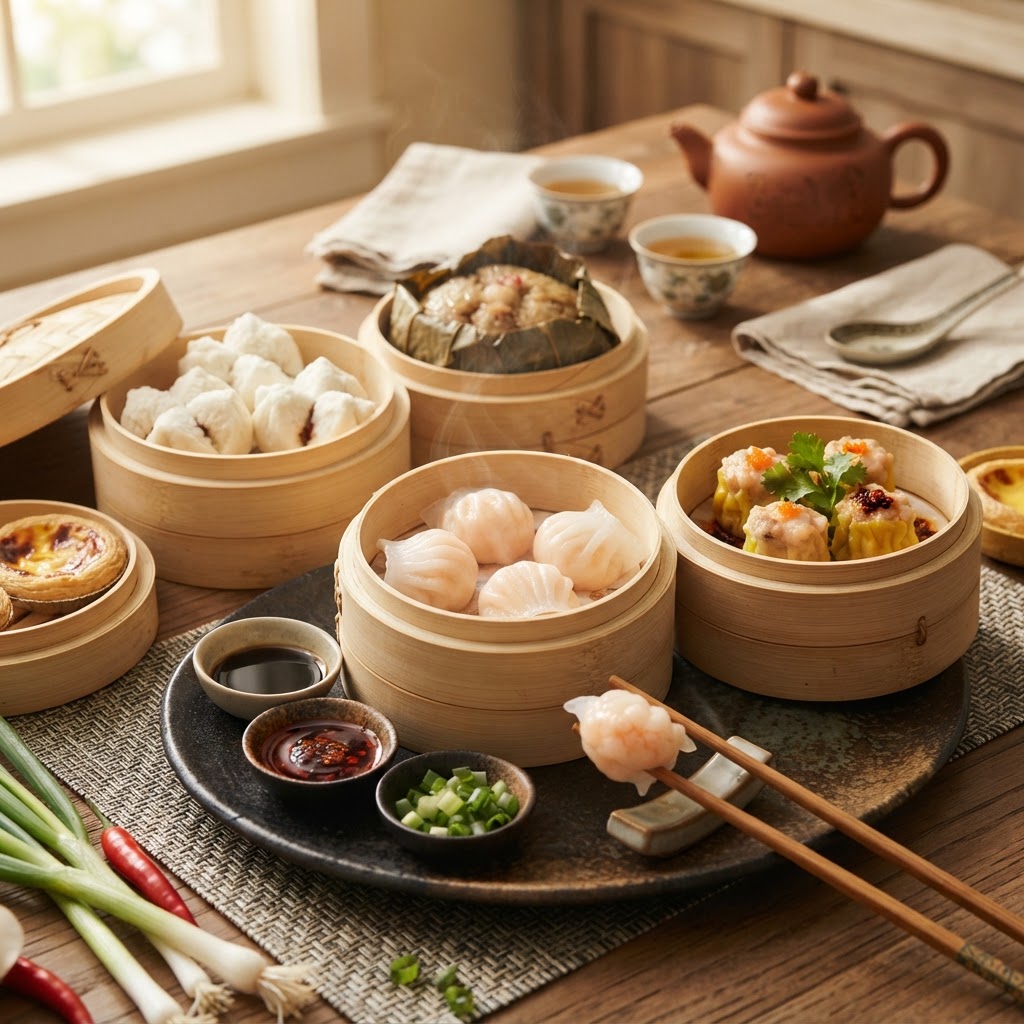
The Foundations of Cantonese Dim Sum: Mastering Delicate Wrappers and Savory Fillings at Home
There is a specific, hushed magic to the Sunday morning ritual of a Cantonese teahouse. The air is thick with the scent of jasmine tea, the rhythmic clatter of bamboo steamer baskets against metal carts, and the low, melodic hum of conversation. For those of us who grew up with these flavors, dim sum isn’t just a meal; it is a sensory language of affection, precision, and history. Bringing this tradition into your home kitchen can feel daunting, but it is ultimately an exercise in patience and an appreciation for the structural integrity of dough and the seasoning of protein.
When we talk about the foundations of dim sum, we are talking about a delicate balance between the translucent, ethereal nature of wrappers and the robust, bouncy, savory punch of the fillings. This isn't high-speed cooking. It is a slow, methodical process that rewards those who pay attention to the hydration of their flour and the aeration of their ground meat. Whether you are folding a pleat on a har gow or rolling out a supple siu mai wrapper, you are participating in a culinary lineage that demands respect for the ingredient's structural limits.
In this guide, we are going to strip away the intimidation factor and break down the chemistry of dim sum. We will explore the vital role of starch ratios, the importance of "bouncing" your meat mixtures to achieve that quintessential restaurant-grade texture, and the art of folding. By the end of this journey, your kitchen will smell exactly like the neighborhood institutions you’ve frequented for years. Let’s pull up a chair, brew a pot of hot tea, and begin the transformation of simple flour and water into something truly celebratory.
The Chemistry of the Wrapper: Wheat Starch and Tapioca
The pursuit of the perfect, crystal-clear wrapper—specifically for the iconic har gow—is the ultimate test for any dim sum cook. Unlike western doughs that rely on gluten development for elasticity, Cantonese dumpling skins often rely on the precise blend of wheat starch and tapioca starch. Wheat starch provides the delicate, snow-white aesthetic, while the tapioca starch introduces the necessary chew and transparency once steamed.
The Ratios of Success
When working with these starches, precision is not a suggestion; it is a mandate. A common mistake is using standard all-purpose flour, which will result in a gummy, opaque skin. You must source high-quality wheat starch, which is refined and gluten-free. For a standard batch, aim for a ratio of 2 parts wheat starch to 1 part tapioca starch. This combination allows the dough to hold its shape under the intense heat of the steamer while remaining thin enough to reveal the pink hues of the shrimp inside.
The Scalding Technique
The secret to working with these starches lies in the scalding technique. You must use boiling, near-scalding water to hydrate the starches. Do not use room temperature water, as it will fail to gelatinize the starches, resulting in a brittle, crumbling mess. Pour the boiling water into your flour mixture while stirring vigorously with a wooden spoon or chopsticks. Once incorporated, cover the bowl and let the dough "rest" or "steam" under its own heat for about five minutes. This step is non-negotiable for achieving that supple, elastic texture that doesn't crack when you pleat it.
"The true test of a dim sum wrapper is not just in how it looks, but in how it resists the pull of the chopsticks without surrendering its hold on the savory treasure within."
The Science of the Filling: Achieving the Bounce
The texture of a restaurant-quality dim sum filling is distinctly "bouncy"—a quality the Cantonese call soeng. This isn't just about mixing ingredients; it is about physical manipulation. When you process shrimp or pork for a dumpling, you are aiming to break down the proteins to create a tight, uniform paste that holds moisture during the high-heat steaming process. If you simply chop your ingredients and mix them, the resulting filling will be crumbly and dry.
The Importance of the Emulsion
To achieve the "bouncy" effect, your protein (whether shrimp or pork) must be chilled, and your mixing bowl should ideally be placed over ice. You are looking to create a protein emulsion. Using a stand mixer with a paddle attachment on low speed, or even using your hand to beat the mixture against the side of a bowl in a singular, circular motion, helps develop the necessary stickiness. Adding a small amount of liquid, such as chicken stock or ginger-infused water, during the mixing phase allows the protein to absorb the moisture, ensuring that when it hits the heat, the interior remains succulent.
Essential Seasoning Components
The seasoning profile of dim sum is famously understated yet deep. Do not over-complicate your filings. The core flavor profile should rely on:
Master Class: Pleating and Shaping Techniques
Shaping is where the aesthetics meet functionality. A well-shaped dumpling isn't just pretty; it has a uniform thickness that ensures it cooks evenly. If one side of your wrapper is significantly thicker than the other, you will end up with a dumpling that is raw on one side and overcooked on the other. Use a flat-bottomed heavy glass or a small rolling pin to roll your dough into thin circles, keeping the edges slightly thinner than the center to accommodate the gathering of the pleats.
The Har Gow Pleat
For the har gow, aim for at least 7 to 9 pleats. Hold the wrapper in your non-dominant hand and use your thumb and index finger of your dominant hand to pinch and fold the edge. It is helpful to start from the center and move outward. Don't be discouraged if your first dozen look like wrinkled handkerchiefs. The muscle memory takes time to develop. The goal is to enclose the shrimp so that the seam is airtight, preventing the flavorful juices from leaking out during the steaming process.
The Siu Mai Cylinder
The siu mai (pork and shrimp open-faced dumpling) is much more forgiving. You place a tablespoon of filling in the center of a square wrapper and, instead of sealing it, you gather the sides upward, leaving the top open. Use a butter knife to gently press the sides against the filling to create a clean, vertical cylinder shape. Garnish the top with a bit of bright orange carrot or a single roe, which adds both color and a subtle textural contrast.
"Dim sum is the art of constraint. You are wrapping a world of flavor in a translucent veil, and the beauty lies in how little you need to say to say everything perfectly."
Equipment Essentials: Steamers and Heat Management
You do not need a commercial kitchen to excel at dim sum, but you do need the right equipment. The traditional bamboo steamer is not just for show; it is a superior tool for the job. Bamboo has a natural ability to absorb excess moisture, preventing condensation from dripping back onto your delicate dumplings. If you use a metal steamer, the trapped steam will turn your wrappers soggy and prone to tearing.
Managing the Steam
When setting up your steamer, always bring your water to a rolling boil before placing the baskets on top. The high, constant heat is essential for the structure of the wrappers. If the heat is too low, the dough will dissolve into a mushy state before the proteins have a chance to set.
Time Management*: Most dumplings require 8 to 12 minutes of active steaming.
Space*: Do not overcrowd the baskets. Leave at least an inch between each dumpling to allow for proper air circulation.
Lining*: Use parchment paper with holes punched in it or fresh cabbage leaves to prevent sticking without compromising the steamer’s airflow.
Beyond the Basics: Fermented Aromatics and Dips
A dim sum meal is rarely eaten plain. It is elevated by the accouterments that accompany it. The "Holy Trinity" of dim sum dipping sauces usually includes Chili Oil (Lao Gan Ma style), a black vinegar dip, and occasionally a sweet soy glaze. The acidity of the black vinegar, specifically Chinkiang vinegar, is critical. It cuts through the rich, fatty nature of pork-based fillings and refreshes the palate, making you ready for the next bite.
Crafting the Perfect Dip
To make a restaurant-grade dipping sauce, combine 2 tablespoons of Chinkiang black vinegar, 1 teaspoon of light soy sauce, and a few drops of toasted sesame oil. For those who enjoy heat, whisk in a tablespoon of your favorite chili crisp. The complexity of the black vinegar—which is fermented with glutinous rice and possesses a malty, woody profile—is the secret weapon that elevates home-cooked dumplings to professional heights.
The Role of Aromatics
Don't underestimate the power of ginger. In Cantonese cuisine, ginger is often used in two ways: finely minced in the filling for internal flavor, and julienned into thin matchsticks to be served on the side. When paired with soy sauce and vinegar, the sharpness of the raw ginger provides a necessary aromatic lift that balances the savory, umami-heavy components of the dumplings.
Troubleshooting Common Dim Sum Failures
Every chef has faced the frustration of a collapsed dumpling. If your wrappers are tearing, it is likely that your dough is too dry or you aren't working fast enough. These starches cool quickly and lose their pliability. Keep your dough covered with a damp, warm towel at all times while you work. If the dough starts to feel stiff, you can knead it for a few seconds with a drop of warm water to re-activate the elasticity.
The "Leaky" Filling Issue
If your dumplings are leaking, it is a sign that the filling is too loose or your seal is weak. To fix this, ensure your vegetables (like mushrooms or bamboo shoots) are finely chopped and thoroughly squeezed dry before adding them to the protein. Excess liquid in the vegetables is the primary culprit for leaking. Furthermore, if you are working with large shrimp, try to keep them in larger chunks rather than pureeing them entirely, as the texture of the shrimp meat helps provide structural integrity to the center of the dumpling.
The Texture of the Wrapper
If your har gow is turning out opaque or chalky, revisit your wheat starch source. Not all brands are created equal. You are looking for a product that is labeled specifically as "Wheat Starch" (often found in the baking or flour aisle of Asian supermarkets), not "Wheat Flour." There is a distinct chemical difference, and the flour will never result in that signature crystal appearance, no matter how much you steam it.
Final Thoughts
Mastering dim sum is not about achieving perfection on your first attempt. It is about the rhythm of the process—the way the dough feels under your hands, the way the aroma of ginger and sesame oil fills the kitchen, and the way you learn to respect the ingredients. It is a slow, meditative practice that connects you to a culture defined by the joy of sharing food.
Take your time with the pleating. If the first few look imperfect, do not worry; they will taste just as delicious. As you continue to practice, you will find that the movements become second nature, and the "bouncing" of the filling becomes an intuitive adjustment based on the humidity of the room or the temperature of the protein. You are not just cooking; you are curating an experience.
Remember that dim sum is, at its heart, about the company you keep. Whether you are serving these to family or enjoying a quiet moment of accomplishment, you have successfully moved from a consumer of these delights to a creator. The next time you walk into a teahouse, you will carry with you the intimate knowledge of what goes into those bamboo baskets, and that, in itself, changes the way you taste the world. Keep folding, keep steaming, and above all, keep experimenting with the flavors that define your own kitchen.
***
As you venture further into the craft, consider adding your own flair to the classic fillings. While the traditional recipes provide the foundation, the Cantonese culinary philosophy is remarkably adaptable. You might incorporate water chestnuts for a satisfying crunch, or perhaps experiment with adding cilantro or scallions for a fresh, herbaceous finish. Some home chefs even incorporate diced wood-ear mushrooms to add a subtle, earthy depth that stands up well against the brightness of shrimp or the savoriness of pork.
When you are ready to expand your repertoire beyond the basics, look into the world of steamed buns or bao. These require a different set of skills involving yeast-leavened dough, which offers a soft, pillowy contrast to the crystal-clear wrappers we have discussed today. The principles remain the same: patience, high-quality ingredients, and a rigorous attention to the steaming process. Each new item you add to your dim sum spread builds upon the last, creating a diverse and impressive table that reflects the time and care you have invested.
Finally, do not be afraid to host a dim sum party. The process is labor-intensive, but it is an incredible communal activity. Set up a station where friends can help with the folding. The conversation that flows while pleating dumplings is often just as nourishing as the meal itself. It turns a solitary culinary project into a shared memory, which is exactly the spirit that Cantonese dim sum was meant to embody. By demystifying the wrappers and the fillings, you have opened the door to a lifetime of delicious, homemade Sunday mornings. Enjoy every bite, and remember: in the world of dim sum, you are the master of your own steamer. Happy cooking, and may your pleats always hold strong.
***
In the final analysis, the pursuit of the perfect dim sum is never truly finished. It is a lifelong exploration of texture, aroma, and technique. Each time you step into the kitchen to prepare these dishes, you are engaging in a dialogue with a rich tradition. The har gow, the siu mai, and the various other treasures are merely the vocabulary of this language. As you become more fluent, you will find yourself improvising, adjusting seasoning ratios to suit your personal palate, and perhaps even creating your own signature dipping sauces.
The most important takeaway from this guide is to embrace the "faults." The slightly uneven pleat, the dash of extra ginger, the improvisation of a side dish—these are the things that make your cooking unique. Do not let the pursuit of "authentic" perfection stifle your creativity. True authenticity in the home kitchen is found in the joy of the cook. When you serve food that has been crafted with intention and care, it resonates with those who eat it in a way that restaurant-bought food simply cannot.
Continue to source your ingredients from local markets when possible, look for the highest quality starches and freshest proteins, and never underestimate the value of a well-rested dough. You now have the fundamental tools and the technical knowledge required to navigate the complexities of Cantonese dumpling making. The rest is entirely up to your imagination and your hands. Go forth, keep the steam rising, and enjoy the profound satisfaction that comes with serving a homemade feast. You’ve earned it.
***
To round out your culinary journey, keep a small notebook in your kitchen. Record the hydration levels you used for your dough, note the temperature of your steamer, and write down the specific proportions of your favorite filling mixtures. Dim sum is a craft of small adjustments, and having a record of your previous successes and trials will allow you to fine-tune your technique with each passing weekend. You will find that after a few months, your "average" dumpling far exceeds what you once thought was the peak of quality.
Think of your steamer as a small, contained ecosystem. Everything inside is being transformed by the alchemy of heat and moisture. It is an efficient, clean, and healthy way to cook that honors the ingredient's natural flavor rather than masking it under heavy sauces or deep-frying. By mastering the delicate wrapper and the savory, bouncy filling, you have unlocked a style of cooking that is as elegant as it is delicious.
There is a profound sense of peace that comes from the repetitive motion of folding. Use it as a form of mindfulness. In our high-speed world, the act of making dim sum forces you to slow down, be present, and focus on the tactile reality of the moment. It is a rare gift to have a hobby that provides both a delicious reward and a mental respite. Lean into that. When you are standing over the steamer, watching the white plumes of vapor rise, take a deep breath, appreciate the jasmine scent, and recognize the skill you have built. You are the architect of your own culinary experience.
***
Lastly, remember that the "Blame The Chef" philosophy is built on the idea that cooking should be an adventure, not a chore. If a batch doesn't turn out quite right, blame the chef, laugh about it, and make another batch. The only way to truly fail is to stop trying. With these foundations firmly set, you have the confidence to tackle any recipe that comes your way. Whether you are hosting a large brunch or simply treating yourself to a quiet lunch, your new skills will serve you well for years to come.
As you progress, try to pair your homemade dim sum with a selection of high-quality loose-leaf teas. The tannins in a good Tieguanyin or Pu-erh tea are the perfect counterpart to the richness of pork-based fillings, and the floral notes of a delicate Oolong will highlight the subtle sweetness of fresh shrimp. You are not just making food; you are curating an entire dining atmosphere.
Thank you for joining me in this deep dive into the foundations of Cantonese dim sum. It has been a pleasure to share these techniques and tips with you. Now, clear off your counter, dust it with a little wheat starch, and get to work. The bamboo steamer awaits, and there is a world of flavor to be created. Happy cooking, and remember: everything tastes better when you know exactly how it was made, from the first mix of the starch to the final, perfect, steaming bite. You are well on your way to becoming a dim sum master in your own right. Keep practicing, stay curious, and always keep the heat on high.


Get the Next Recipe
Weekly recipes, techniques, and gear picks — straight to your inbox.
