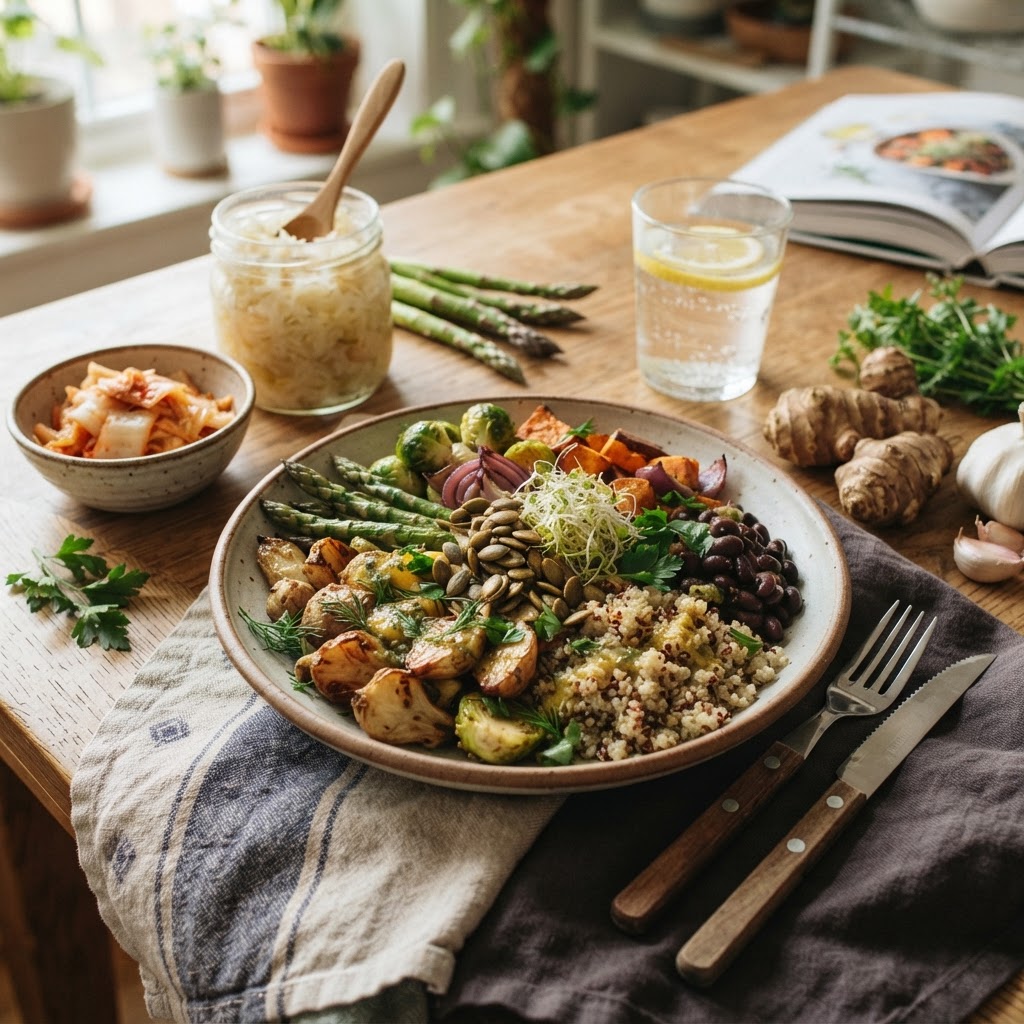
The Gut-Health Toolkit: How to Incorporate Prebiotic-Rich Vegetables Into Your Daily Meals
Modern culinary culture has spent decades obsessing over flavor, texture, and aesthetic presentation, often at the expense of our internal biological ecosystem. We curate our pantry shelves with artisanal vinegars and rare spices, yet we frequently overlook the most fundamental element of our physical well-being: the microbiome. Your gut is not just a digestive organ; it is a complex, sentient-like landscape that dictates your immunity, your mood, and your energy levels. As home cooks, we have the unique power to act as the primary architects of this environment, using our kitchens as laboratories for health rather than just places of consumption. By shifting our focus toward prebiotic-rich vegetables, we move from mere food preparation to purposeful nutrition that nourishes the trillions of microorganisms living within us.
The secret to a flourishing gut is the inclusion of prebiotic fibers, which are non-digestible carbohydrates that serve as the fuel for beneficial gut bacteria. While probiotics—found in fermented foods like kimchi or kefir—are the "seeds" of health, prebiotics are the "fertilizer" that allows those seeds to thrive and colonize. Without an adequate supply of these fibers, even the most expensive probiotic supplement will likely pass through your system without making a meaningful impact. Integrating these foods into your daily meals does not require a radical diet overhaul or the sacrifice of culinary pleasure. Instead, it invites a deeper exploration of vegetable-forward cooking, where the natural sugars and earthy flavors of plants like garlic, onions, and asparagus are highlighted rather than hidden.
In this guide, we will dismantle the mystery surrounding gut health and translate scientific necessity into actionable, delicious culinary techniques. We are going to look beyond the surface of raw salad greens to understand how roasting, fermenting, and layering flavors can optimize the bioavailability of these essential fibers. As you work through these recipes and tips, remember that the goal is consistency rather than perfection; the gut thrives on variety and steady supply. By the time you reach the end of this toolkit, you will view your vegetable drawer as a medicine cabinet, equipped with the knowledge to create meals that heal from the inside out. Let us prepare to transform your kitchen into a foundation for long-term health.
The Science of Fiber: Understanding Prebiotics vs. Probiotics
It is a common point of confusion for many home cooks: what exactly is the difference between these two nutritional powerhouses? Think of your digestive tract as an elaborate garden. Probiotics are the live bacteria cultures you introduce to improve the health of that garden, while prebiotics are the specialized plant fibers that act as food for these bacteria. When you consume foods rich in inulin, pectin, or fructooligosaccharides (FOS), you are essentially providing the sustenance required for your "good" bacteria to produce short-chain fatty acids. These fatty acids are critical for maintaining the integrity of your gut lining, which in turn reduces systemic inflammation.
Why Prebiotics Matter for the Home Chef
When you prioritize these fibers, you are playing the long game. A healthy gut lining acts as a fortress against toxins and pathogens that might otherwise enter your bloodstream. From a culinary perspective, this is a fantastic excuse to double down on the aromatics. Garlic, leeks, and onions are the trinity of the kitchen for a reason, but they are also the most accessible prebiotic-rich foods on the planet. When we sauté these items, we aren't just building a flavor base for a stew or a pasta sauce; we are actively fueling the internal machinery of our guests and our families.
The Synergy of Food Preparation
Many home cooks mistakenly believe that cooking destroys the nutritional value of vegetables, but in the case of certain prebiotics, heat can actually make fibers more accessible. While raw vegetables have their place, roasting or lightly blanching certain roots and alliums can break down complex cell walls, making it easier for your body to extract the goodness hidden within. It is about striking a balance. By understanding how to manipulate these vegetables through temperature and timing, you can maximize both the flavor development and the nutritional density of your meals.
"A kitchen is not merely a place of consumption, but the site of a profound biological exchange. Every vegetable you prep is a message to your gut microbiome; make sure that message is one of growth and vitality."
The Allium Family: More Than Just a Flavor Base
The allium family—garlic, onions, leeks, shallots, and chives—is the backbone of global cuisine for a reason. Their sharp, pungent profiles provide the foundation for almost every savory dish, but their true power lies in their high concentration of inulin, a soluble fiber that passes undigested to the lower gut where it is fermented by your microbiome. For the home chef, this is the easiest "health hack" to implement. Every time you start a meal with a sauté, you are already halfway to a gut-healthy dinner.
Mastering the Sauté for Digestive Health
The key to maintaining the integrity of these prebiotics while coaxing out their flavor is to avoid burning them. When garlic or onions turn bitter or brown, they lose much of their delicate sweetness and some of their structural benefit. Aim for a translucent, softened texture by cooking over medium-low heat with a high-quality fat like olive oil or ghee. A professional chef trick is to add a tablespoon of water or broth to the pan if the onions seem to be browning too quickly; this "sweating" process releases the aromatics without causing charring, keeping the prebiotic fibers intact.
Creative Ways to Integrate Alliums
Don’t just stick to the basic white onion. Explore the range of flavors provided by shallots, which offer a milder, sweeter profile, or leeks, which have a dense, satisfying crunch when sautéed properly. Try a leek and goat cheese tart, or incorporate raw, finely minced chives into a yogurt-based dipping sauce. Remember that raw alliums have a more concentrated prebiotic load, so finishing a dish with a handful of freshly sliced spring onions is both a culinary garnish and a nutritional boost.
Roots and Tubers: The Hidden Powerhouses
Often overlooked, root vegetables like Jerusalem artichokes (sunchokes), chicory root, and dandelion greens are the gold standard for prebiotic fiber. Jerusalem artichokes, in particular, have a nutty, sweet flavor that sits somewhere between a potato and a water chestnut, and they are remarkably rich in inulin. However, for many home cooks, these ingredients can be intimidating to work with due to their rough exterior or distinct bitterness.
Handling Sunchokes and Chicory
When working with sunchokes, you do not need to peel them—simply scrub them thoroughly under cold water with a stiff brush to remove any dirt from the knots. To roast them perfectly, slice them into uniform, quarter-inch rounds, toss with extra virgin olive oil, sea salt, and fresh thyme, and roast at 400°F (200°C) for 25 to 30 minutes. The edges will caramelize, highlighting the natural sugars, while the center remains tender. For chicory or dandelion greens, which possess a sharp bitterness, pair them with a balanced dressing containing honey or balsamic vinegar to soften the impact on the palate.
The Ratio Rule for Digestion
If you are new to high-fiber vegetables, do not introduce them all at once. Your microbiome needs time to adjust to a higher intake of prebiotic fibers. Start by incorporating one serving of these vegetables into your lunch or dinner every other day, and observe how your digestion responds. A good ratio to aim for is 2:1, where you have two parts of cooked, easier-to-digest vegetables (like carrots or sweet potatoes) for every one part of a dense, high-prebiotic vegetable like sunchokes or garlic.
"The difference between a bland dish and a life-changing meal often comes down to the courage to embrace ingredients that challenge the palate. Bitter greens and pungent alliums are the keys to a vibrant, functioning gut."
Asparagus and Under-Appreciated Greens
Asparagus is a nutritional heavyweight, especially when it comes to gut health. It contains high levels of prebiotic fiber and acts as a natural diuretic. When selecting asparagus, look for firm stalks with tight tips. If the stalks are limp, the moisture—and some of the vital nutrients—have already begun to escape. The secret to keeping asparagus vibrant and nutritious is to avoid overcooking it; mushy, grey asparagus is a tragedy both for the palate and the fiber content.
Blanching and Flash-Roasting Techniques
The most effective way to prep asparagus is to blanch it briefly. Bring a pot of salted water to a rolling boil and drop the trimmed stalks in for exactly 90 seconds. Immediately transfer them to an ice bath to stop the cooking process. This preserves the bright green color and keeps the fiber structured. If you prefer roasting, toss the asparagus in a light coating of avocado oil and roast at 425°F (220°C) for just 8-10 minutes. The high heat creates a slight char on the tips while keeping the stalks crisp.
Maximizing Fiber with Greens
Beyond asparagus, don't forget the power of dark leafy greens. While spinach and kale are popular, try incorporating dandelion greens or escarole into your meals. These possess natural bitterness that signals your digestive system to start producing enzymes, which helps in the absorption of nutrients. Incorporating these into a sauté with a bit of garlic and lemon zest creates a side dish that is both complex and incredibly functional for your microbiome.
The Art of Fermentation: A Bridge Between Worlds
While we are focusing on vegetables, we cannot discuss gut health without mentioning the bridge between prebiotics and probiotics. Fermentation is the ultimate culinary technique for enhancing the bioavailability of vegetables. When you ferment a cabbage into sauerkraut or carrots into spicy pickles, you are essentially pre-digesting the vegetable. The bacteria break down the cellular structures, making the fibers easier for your gut to utilize and adding a shelf-stable, probiotic boost to your pantry.
Fermentation for Beginners: The Quick Pickle
If you are intimidated by complex lacto-fermentation, start with a "quick-pickle" brine. A ratio of 1 part apple cider vinegar, 1 part water, a pinch of sea salt, and a dash of maple syrup works wonders for almost any vegetable. While these aren't "live" in the same way that traditional salt-brined ferments are, they are incredibly gentle on the digestive system and make high-fiber vegetables much easier to tolerate.
The Professional Chef’s Pantry
A professional kitchen is never without a jar of fermented items. It is the secret to adding "acid" to a dish without relying solely on citrus. When you finish a heavy, meat-forward dish with a side of house-made fermented vegetables, you are providing your gut with the perfect counterbalance of fiber and acidity. Keep a jar of pickled onions or fermented carrots in your fridge at all times, and you will find yourself adding them to salads, tacos, and grain bowls throughout the week.
Integrating Prebiotics into Everyday Meals: A Practical Guide
Now that we understand the science and the techniques, how do we bring this into the daily flow of cooking? The answer lies in layering. You don't need a specific "prebiotic diet"; you just need to add a few tablespoons of the right ingredients to the meals you already love. For example, if you are making a standard bolognese sauce, don't stop at onions. Add finely diced leeks and a handful of minced garlic towards the end of the cooking process to preserve their integrity.
Strategic Meal Planning
Try to incorporate one "prebiotic star" into every meal of the day. For breakfast, stir a tablespoon of ground flaxseed or a small amount of chicory root powder into your morning oats or yogurt. For lunch, add sliced raw leeks or shaved fennel to your salad. For dinner, make your primary side dish a roasted vegetable medley that features sunchokes or asparagus. This steady drip of prebiotic fuel ensures that your gut bacteria are never hungry, which helps stabilize your energy levels throughout the day.
The Importance of Variety
Your gut microbiome is similar to a rainforest; it thrives on diversity. If you only eat onions and garlic for your prebiotics, you are only supporting a narrow subset of your bacterial population. Rotate your vegetables seasonally. In the spring, lean into asparagus and leeks; in the fall, focus on garlic, chicory, and root vegetables. By keeping your culinary repertoire diverse, you ensure that your internal ecosystem remains resilient and adaptable to whatever stress life throws your way.
Troubleshooting Digestive Sensitivity
If you find that you experience bloating or discomfort when you start adding these vegetables to your diet, do not despair. This is common and usually indicates that your microbiome is undergoing a rapid, yet necessary, change. The most common culprit for discomfort is the sudden introduction of high-fiber foods to a system that isn't accustomed to them. The fermentation process within your gut is increasing, and your system simply needs time to catch up.
Chef Tips for Gentler Digestion
Hydration is key:* High-fiber foods pull water into the digestive tract. Increase your daily water intake to ensure those fibers move through your system smoothly.
Chew thoroughly:* Digestion begins in the mouth. Breaking down food mechanically is the first step toward reducing gut stress.
Keep a food journal:* Keep track of which vegetables cause sensitivity. You might find that you tolerate cooked onions better than raw, or that sunchokes are best consumed in small quantities.
Slow and steady:* Reduce the portion size of the prebiotic-rich vegetable and slowly increase it over 2-3 weeks.
"The goal of healthy cooking is not to limit your options, but to expand them. When you feed your gut properly, you find that the food you once thought was 'difficult' becomes a source of profound comfort and sustained energy."
Final Thoughts
The path to a healthier gut is paved with ingredients we already know and love, waiting to be rediscovered through the lens of functionality. By viewing garlic, onions, asparagus, and root vegetables as essential tools for your microbiome, you transform the act of cooking into a daily ritual of care. You don't need to be a nutritionist or a scientist to see the benefits of this approach; you just need to be a conscious home cook. Start small, stay consistent, and pay attention to how your body responds. The beauty of this journey is that the benefits are cumulative, meaning that every meal you prepare with care today serves as an investment in the health of your future self.
As you move forward, keep experimenting with these techniques. Roast your sunchokes until they achieve that perfect nuttiness, practice the art of the gentle sauté with your alliums, and never shy away from the slight bitterness of nutrient-dense greens. Your gut is a resilient, responsive organ that is constantly looking for balance. When you feed it the right fuel, it will reward you with improved energy, sharper focus, and a general sense of physical harmony. Keep your kitchen stocked with these vibrant, fiber-forward staples, and you will find that "healthy" doesn't just mean "good for you"—it means delicious, satisfying, and deeply soul-nourishing.
Finally, remember that the "Blame The Chef" philosophy is built on the belief that the cook is the most important advocate for the health of their household. You have the skills to curate the experience of those around you, and by prioritizing gut health, you are providing the most foundational gift possible: the vitality to enjoy life to the fullest. Whether you are prepping a simple weeknight stir-fry or a complex roasted feast, let the prebiotic-rich vegetable be the hero of your plate. Your gut will thank you, and your taste buds will certainly never complain. Keep cooking, keep experimenting, and trust the process of nourishing yourself from the inside out. There is no better project for a home chef than the cultivation of one’s own well-being, one vegetable at a time. The pantry is ready, the oven is preheated, and the path to a flourishing gut is waiting for you to take the next step. Keep your knives sharp, your ingredients fresh, and your focus on the incredible, unseen garden that lives within. You have all the tools you need to build a better future, starting with your very next meal. Happy cooking, and here is to the vibrant, healthy life that starts in your kitchen.

Get the Next Recipe
Weekly recipes, techniques, and gear picks — straight to your inbox.
