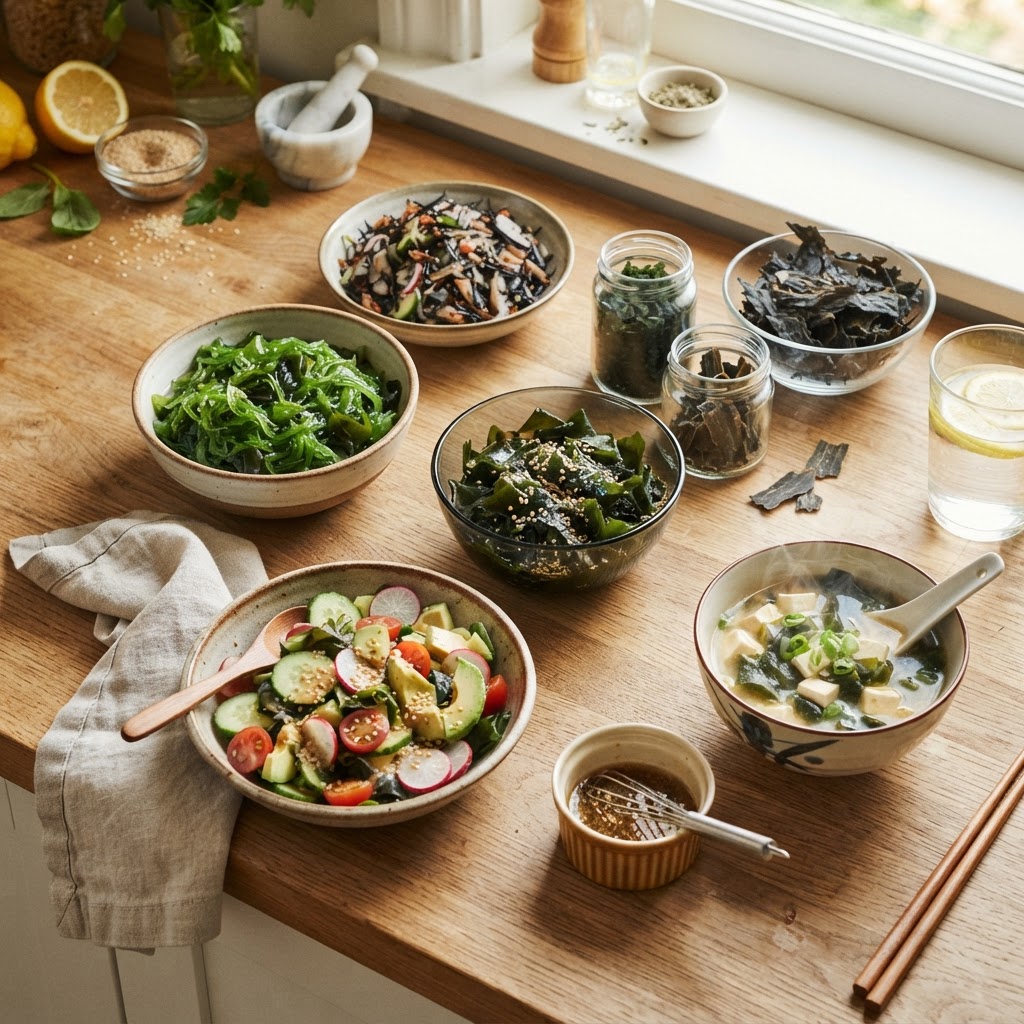
The Healthy Home Cook’s Guide to "Aquatic Greens": Mastering Seaweed Selection and Rehydration Techniques for Mineral-Rich Salads and Soups
The modern home kitchen is often a landscape of familiar terrestrial staples, yet there exists an entire ocean of untapped nutritional potential just waiting to be harvested. For years, I have urged my readers to look beyond the produce aisle and into the briny depths of the pantry to discover the world of "aquatic greens." Seaweed is not merely an afterthought in a bowl of miso soup; it is a dense, mineral-rich powerhouse that can elevate the texture, salinity, and nutritional complexity of any dish. When we speak of oceanic flora, we are discussing ingredients that have been harvested for centuries, prized by coastal cultures for their ability to provide essential iodine, magnesium, and calcium in a concentrated, bioavailable form. Learning to integrate these ingredients is the mark of a truly sophisticated home cook who understands that the secret to a vibrant diet often hides in the most unlikely of places.
As you begin your journey into the world of edible seaweeds, it is important to dispel the lingering myth that these greens are difficult to manage or overly aggressive in flavor. While it is true that certain varieties possess a potent "umami" profile that can dominate a delicate dish if handled incorrectly, the vast majority of culinary seaweeds are incredibly versatile. The key lies in understanding the difference between the varieties—such as the tender, silky nature of Wakame versus the robust, leathery structure of Kombu—and mastering the specific rehydration techniques required to prepare them. Once you understand the physiological behavior of these plants, you will find that your salads, stocks, and sautéed sides gain a newfound depth that is simply impossible to replicate with land-based greens. We are going to strip away the mystery and provide you with a culinary roadmap for bringing the ocean to your dinner table with absolute confidence.
Ultimately, "Blame The Chef" is about empowering you to take risks in the kitchen, and there is no better arena for experimentation than the vast, saline world of seaweed. You will find that these ingredients act as a natural flavor enhancer, often reducing the need for excess salt while simultaneously boosting the satiety factor of your meals. This guide is designed to be your primary reference for selection, preparation, and integration, helping you navigate the aisles of specialty markets and the intricacies of your own stovetop. By the end of this deep dive, you will have the skills necessary to treat seaweed with the same reverence you reserve for prime proteins and fresh herbs. Let us dive into the cooling, mineral-dense waters of aquatic gastronomy and transform the way you think about healthy home cooking.
Understanding the Taxonomy of Aquatic Greens
Navigating the seaweed aisle can be intimidating, as the sheer variety of colors, shapes, and dried textures is enough to leave even an experienced cook scratching their head. To master the craft, you must first distinguish between the three primary categories: Red, Brown, and Green algae. Each classification brings a unique set of culinary properties to the table, and understanding their biological composition is the first step toward achieving the perfect bite. Brown seaweeds, which include giants like Kombu and Wakame, are typically the most prized for their ability to provide the "dashi" base, that essential foundational stock that creates a savory depth in soups.
Red seaweeds, such as Nori and Dulse, are generally more delicate and often possess a slightly sweeter, more complex flavor profile. Green seaweeds, like Sea Lettuce, are closer in profile to terrestrial greens, often providing a bright, clean, and slightly acidic brightness that is perfect for finishing salads or garnishing dishes. When selecting your seaweed, look for brands that focus on sustainable wild-harvesting or certified organic cultivation, as these plants are essentially sponges for their environment and you want to ensure your source is free from heavy metals and contaminants.
Identifying Quality Markers
Color Uniformity:* Avoid seaweed that looks bleached or patchy, as this indicates poor storage or aging.
Aroma:* High-quality dried seaweed should smell like the ocean—fresh, clean, and saline—rather than overly fishy or stagnant.
Texture:* Dried varieties should feel crisp and snap easily. If the seaweed is pliable, it may have been exposed to humidity, which can degrade its nutritional content.
"Seaweed is the unsung hero of the pantry, a mineral-dense treasure that bridges the gap between raw natural nutrition and high-impact, professional-grade umami flavor."
The Art of Rehydration: Temperature and Timing
The most common mistake home cooks make when working with seaweed is an "all-or-nothing" approach to rehydration. Many believe that soaking seaweed in boiling water is the fastest way to get it ready, but this is a critical error that leads to a mushy, unappealing texture. Instead, cold-water hydration is almost always the preferred technique for maintaining the integrity of the plant’s cellular structure. By using cool, filtered water, you allow the seaweed to gradually absorb moisture, returning to a state that closely mimics its fresh-harvested appearance.
For most varieties, a simple soak in a bowl of room-temperature water for 10 to 15 minutes is sufficient. During this time, you will observe the seaweed expanding significantly—sometimes up to five or six times its dry volume—so ensure you use a bowl large enough to accommodate this expansion. If you are preparing a large batch for a salad, be sure to gently massage the leaves under running water after the soak to remove any residual grit or salt crystals that may have been present during the drying process.
The Rehydration Cheat Sheet
Building the Ultimate Mineral-Rich Salad
Once you have mastered the rehydration process, your salad game will change forever. Seaweed-based salads are not just about tossing leaves into a bowl; they are about balancing textures and ensuring that the dressing complements the natural salinity of the greens. I recommend pairing rehydrated Wakame with thinly sliced cucumbers, toasted sesame seeds, and a bright vinaigrette made from rice vinegar, ginger, and a touch of toasted sesame oil. The key here is the texture contrast—the snap of the cucumber against the buttery, succulent nature of the seaweed is nothing short of transcendent.
It is also important to consider the "drainage" factor. Seaweed, even after being dried, retains a significant amount of water internally. After your soak, take the time to gently squeeze the seaweed between your hands to remove excess moisture before adding your dressing. If you leave too much water in the leaves, your vinaigrette will become diluted, leading to a bland, watery experience. Always dress your salad immediately before serving to prevent the leaves from becoming soggy or losing their vibrant hue.
Chef’s Tips for Salad Success
The Squeeze:* Using a clean kitchen towel to pat dry your seaweed after the soak is a pro tip that ensures the dressing clings to the leaves rather than sliding off.
Acid Balance:* Seaweed thrives when paired with acid. A splash of citrus juice (like lime or yuzu) can brighten the earthiness of the greens significantly.
The Crunch Factor:* Always add a toasted nut or seed element—peanuts, sesame seeds, or macadamia nuts—to provide a necessary contrast to the soft seaweed.
Mastering the Dashi Base for Soups
If the salad is the playful side of seaweed, the soup is its serious, meditative cousin. At the heart of most Japanese-inspired broths is Kombu, a thick, leathery brown kelp that acts as a flavor foundation. You do not rehydrate Kombu in the same way you do salad greens; instead, you perform a slow extraction. Place a sheet of Kombu in a pot of cold water and slowly bring it to the brink of a simmer—never a rolling boil. Removing the Kombu right before the water begins to bubble is crucial, as boiling the seaweed can release tannins that turn your broth bitter and cloudy.
This process, often called making "Kombu Dashi," is the cleanest way to infuse your soups with natural, plant-based umami. The resulting liquid will be pale, light, and incredibly aromatic. From this base, you can build infinite variations. Add miso paste at the very end to create a classic miso soup, or toss in some dried shiitake mushrooms for an even deeper, more complex flavor profile. Remember, the Kombu you used for the base can actually be saved, sliced into thin strips, and sautéed with soy sauce and mirin for a delicious side dish known as "Kombu Tsukudani"—nothing goes to waste in a professional kitchen.
"A well-made dashi is the backbone of Asian cuisine, proving that you don't need meat or animal fats to achieve a rich, satisfying depth of flavor."
Incorporating Seaweed into Your Daily Routine
Beyond salads and soups, seaweed should be treated as a nutritional supplement that you happen to eat. Because seaweed is so dense in minerals—specifically iodine, which is essential for thyroid health—it is a fantastic addition to your daily intake. You don't need to eat a bucket of it to reap the benefits; a simple tablespoon of finely shredded Nori or Dulse sprinkled over your morning eggs or stirred into a bowl of quinoa can provide a significant nutritional boost. I often keep a jar of "seaweed sprinkles"—a blend of toasted dulse, sesame seeds, and sea salt—near my stove to season dishes right before they head to the table.
This habit of "stealth health" is one of the easiest ways to improve your long-term wellness. By replacing conventional salt with a blend that includes seaweed, you are lowering your sodium intake while simultaneously increasing your trace mineral consumption. It is a simple swap, yet it has profound implications for your overall culinary health. The goal is to make these ingredients a part of your standard flavor palette, rather than treating them as exotic items you only pull out for special occasions.
Daily Integration Ideas
Culinary Safety and Sourcing Standards
As with any ingredient pulled from the natural world, sourcing matters. Seaweed is an accumulator, meaning it effectively pulls minerals and compounds from the water it inhabits. Because our oceans are subject to varying degrees of pollution, it is vital that you buy from reputable companies that provide testing certificates for their products. Look for seaweed harvested from cleaner, colder waters, such as the North Atlantic or the pristine coasts of Hokkaido, Japan. You want to avoid products harvested near industrial zones or shipping lanes where runoff can compromise the safety of the greens.
Furthermore, always check the packaging for labels such as "Wild Harvested" versus "Cultivated." While wild-harvested seaweed can be higher in certain trace minerals due to the varied ocean environment, cultivated seaweed—often grown on ropes in controlled environments—can be more consistent in flavor and quality. There is no right or wrong choice, but there is a choice in safety. Educate yourself on the brands you buy, and don't be afraid to reach out to the manufacturer if you have questions about where or how their products were harvested. Your health is the priority, and the best home cook is an informed consumer.
Experimentation and The Future of Your Kitchen
The journey with aquatic greens does not end with a single salad or a well-executed dashi. The more you work with these ingredients, the more you will realize that their potential is limited only by your own creativity. Why not try blending powdered seaweed into a compound butter to melt over a grilled steak? Or perhaps create a seaweed-infused oil to drizzle over roasted root vegetables? The combination of the deep, oceanic brine and the caramelized sugars of roasted vegetables is a sophisticated pairing that will surprise even your most cynical dinner guests.
As you become more comfortable, you might consider experimenting with different varieties you find at local farmers' markets or ethnic grocers. The wide world of seaweed offers everything from the crunch of Ogo to the intense, salty punch of Sea Grapes. Embrace the process of discovery. Cooking is an evolutionary skill, and by incorporating these mineral-rich aquatic greens into your repertoire, you are not just making healthier meals; you are diversifying your palate and connecting with one of the oldest and most sustainable food sources on the planet. Keep your jars of dried seaweed stocked, keep your soak times precise, and always remember to blame the chef when the flavors are so good they can’t believe it’s healthy.
Final Thoughts
We have traveled a long way from the terrestrial norms of the standard kitchen, diving into the saline-rich world of aquatic greens. Mastering seaweed is about more than just adding a new ingredient to your rotation; it is about respecting the balance of the ocean and understanding how to extract its most potent nutrients. From the careful, cold-water rehydration of delicate Wakame to the slow, precise extraction of a Kombu-based dashi, you now possess the technical foundation to treat seaweed with the respect it deserves. Whether you are aiming to bolster your daily mineral intake, searching for that elusive "fifth taste" of umami, or simply looking to expand your culinary horizons, these greens are your most valuable allies.
The home kitchen should be a laboratory of health and flavor, and there is no better way to signal your commitment to both than by embracing the sea. Start small, perhaps with a simple seaweed salad or a dash of Nori in your morning scramble, and allow your palate to adjust to the intensity and depth these greens provide. As you grow more confident, do not hesitate to experiment with different varieties and preparation methods. Share these meals with your family and friends, and explain the history and the science behind your choices. You are not just cooking; you are participating in a culinary tradition that spans continents and centuries.
Finally, remember that the most important ingredient in any dish—be it from the land or the sea—is your own curiosity. If a dish doesn't come out perfectly the first time, don't be discouraged. The beauty of cooking lies in the iteration, the small adjustments to soak times, the balance of acid, and the personal touch you add to every plate. By taking the time to learn these techniques, you have set yourself on a path of long-term wellness and culinary excellence. Keep your pans clean, your pantry stocked with the bounty of the ocean, and never stop pushing the boundaries of what you thought was possible in your home kitchen. You are a chef in the making, and the ocean is your pantry. Go forth and cook with confidence, knowing that your meals are not just delicious, but deeply rooted in the minerals and life-force of the sea. There is so much more to explore, so keep your curiosity sharp and your kitchen well-stocked. You’ve got this, and when the flavors are this bold and this nourishing, you’ll never want to go back to the way you cooked before. Happy cooking, and remember: if the meal is unforgettable, you can always blame the chef for making it look too easy.




Get the Next Recipe
Weekly recipes, techniques, and gear picks — straight to your inbox.
