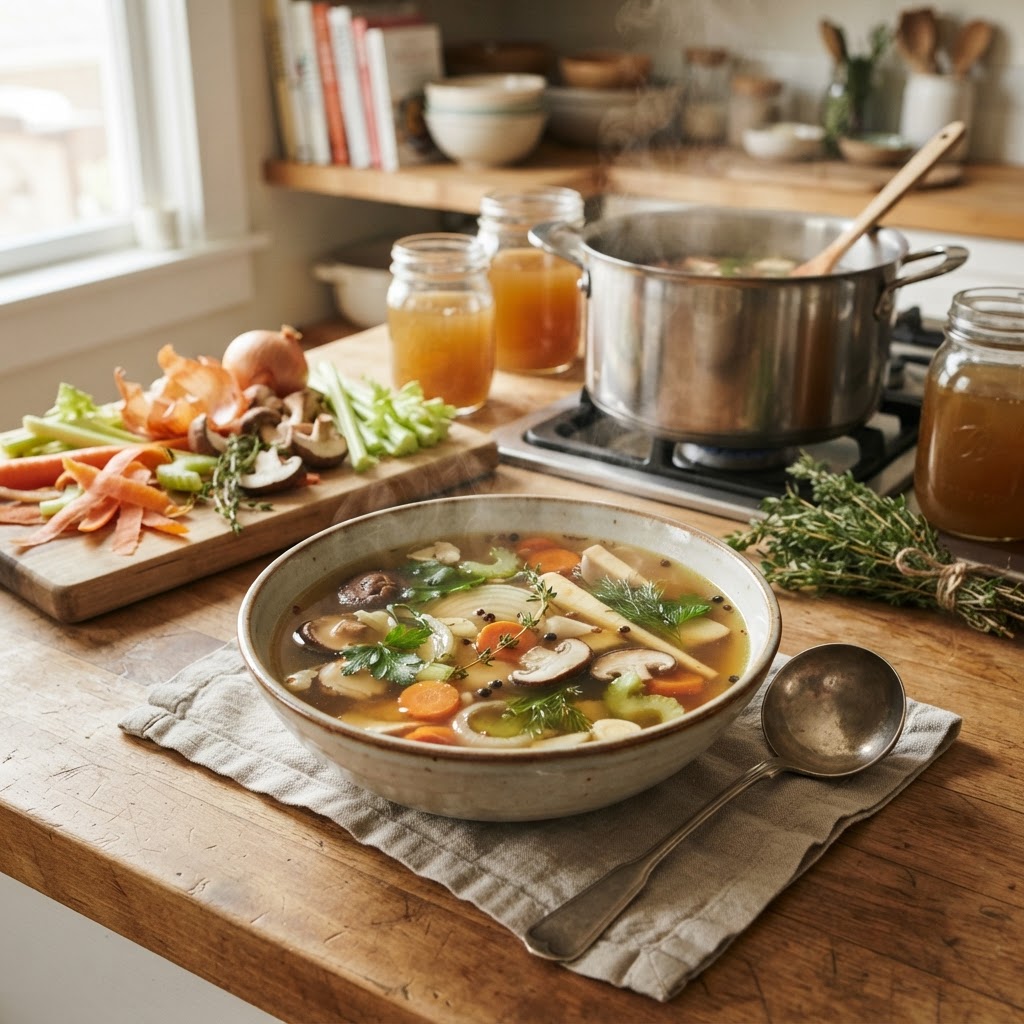
The Healthy Home Cook’s Guide to "Flavor-Infused Broths": Mastering Zero-Waste Vegetable Scrap Stocks for Nutrient-Dense Bases
There is a quiet, simmering magic that happens in the heart of a home kitchen when you learn to stop viewing your vegetable trimmings as trash. For too long, the culinary world has conditioned us to peel, chop, and discard the "unwanted" ends of our produce, sending perfectly viable nutrients and concentrated flavor profiles straight into the bin. By shifting your mindset to embrace Zero-Waste Cooking, you aren't just saving money on your grocery bill; you are actively participating in a sustainable culinary cycle that rewards patience and intention. This guide is designed to transform those overlooked onion skins, carrot tops, and celery hearts into the liquid gold that serves as the backbone of every great meal you will ever cook.
Developing a signature broth is perhaps the most important skill a home chef can cultivate, acting as a secret weapon that elevates simple soups, risottos, and grains from mundane to masterful. When you master the art of the Flavor-Infused Broth, you take total control over the sodium content, the ingredient quality, and the overall complexity of your dish. Commercial store-bought stocks are often laden with preservatives, high levels of sodium, and subtle metallic aftertastes that mask the vibrant essence of fresh vegetables. By taking matters into your own hands, you unlock a depth of flavor that is unattainable in a cardboard carton, turning your stovetop into a laboratory of aromatic intensity.
In this comprehensive journey, we will walk through the science of extraction, the strategy of ingredient collection, and the precise techniques required to build a broth that is as nutrient-dense as it is delicious. You will learn which scraps deserve a place in your freezer bag and which ones should be avoided at all costs to prevent your broth from becoming bitter or murky. We will explore the nuances of temperature control, the benefits of long-simmer extraction versus quick-infusion methods, and the proper storage protocols to ensure your kitchen remains a functional, zero-waste powerhouse. Grab your favorite stockpot, clear some space in your freezer, and prepare to redefine what it means to cook with purpose.
The Strategy of the Scrap Collection
Building a great broth begins long before you turn on the stove; it starts with the disciplined collection of high-quality scraps. The key to a Nutrient-Dense Base is maintaining a consistent supply of clean, usable trimmings that have been harvested from organic produce whenever possible. Think of your freezer as a living pantry, where every onion end and fennel frond is a potential deposit into a future flavor bank. The golden rule here is to ensure that your scraps are free of mold, dirt, or signs of decay, as even a small amount of spoiled produce can compromise the flavor of a gallon of liquid.
Creating Your Freezer Repository
To effectively manage your scraps, I recommend using a high-quality, reusable silicone freezer bag or a dedicated airtight container. Label the bag clearly and keep it in an easily accessible area of your freezer so that as you chop your daily dinner, you can toss in the trimmings immediately. It is essential to wash your vegetables thoroughly before peeling them so that you don't introduce unwanted grit into your stock pot later. By treating your scraps with the same respect as your primary ingredients, you ensure that your eventual broth remains clean, bright, and vibrant in color.
The Essential Scrap Hierarchy
Not all scraps are created equal, and understanding the hierarchy of aromatics is crucial for balancing your broth. The "Holy Trinity" of vegetable stock is onion, carrot, and celery, but expanding beyond these staples is where the real culinary creativity begins. Mushrooms, for example, provide an intense Umami boost that can mimic the depth usually reserved for meat-based stocks. Leek greens, tomato ends, and herb stems—like parsley and cilantro—are absolute powerhouses that add layers of complexity and brightness. Always store these in separate portions if you want to customize your broth profiles later, or mix them all for a versatile "all-purpose" liquid.
"A kitchen that treats scraps as treasure is a kitchen that will never lack for depth, soul, or culinary complexity."
The Science of Flavor Extraction
The process of making broth is essentially a lesson in thermodynamics and chemistry, specifically regarding the extraction of Water-Soluble Nutrients and volatile aromatic compounds. When you simmer vegetables, you are breaking down cellular structures, allowing flavors and vitamins to leach into the water. If the temperature is too high, you risk boiling the vegetables to the point of disintegration, which can result in a cloudy, muddy-tasting stock. The secret is to maintain a gentle "Gentle Simmer," which is typically between 185°F and 195°F. At this temperature, the water remains active enough to extract flavor but calm enough to prevent the emulsion of starches that cause cloudiness.
Balancing Temperature and Time
Time is your greatest ally when building a stock, but there is a point of diminishing returns. Generally, 45 to 60 minutes is sufficient for a vegetable broth to extract maximum flavor without turning the ingredients into a bitter mush. If you simmer for too long—particularly if you include bitter greens or excessive brassica stalks like broccoli or cauliflower—the sulfurous compounds will become overly dominant. Aim for that one-hour sweet spot to achieve a clean, savory, and golden-hued liquid that serves as a perfect canvas for your culinary creations.
The Impact of Mineral Content
Another technical aspect often overlooked is the quality of your water. Since broth is primarily water, the mineral content—specifically the hardness—can affect how spices and vegetables bloom. If you live in an area with hard water, consider using filtered water to ensure your broth has a neutral, clean profile. You will notice that by removing the chemical interference of chlorine and heavy minerals, the natural sweetness of carrots and the earthiness of mushrooms shine through with much greater clarity.
Ingredients to Include and Avoid
While the zero-waste philosophy encourages using everything, some items are strictly "do not include" if you want a palatable result. For instance, while onions are excellent, the dry, papery outer skin of an onion can add a nice golden color, but it can also be difficult to strain later. Conversely, avoid adding any parts of potatoes or other starchy vegetables, as the excess starch will make your stock thick, gummy, and opaque. Avoiding these pitfalls is what separates a professional, clean stock from a thick vegetable soup that has been strained.
The "No-Go" List
To keep your stock bright and usable for everything from light pasta sauces to delicate consommés, please avoid adding:
The "Flavor All-Stars"
To ensure your broth has a high Nutrient Density, always prioritize the following whenever you have them available:
Mushroom Stems: Specifically shiitake or cremini for that deep, woody Umami* flavor.
Herb Stems:* Parsley, cilantro, dill, and woody thyme sprigs add incredible aromatic depth.
Tomato Ends:* The seeds and gel contain glutamic acid, which is the primary source of natural savory flavor.
Leek Greens:* Unlike the white part, the dark green tops are extremely fibrous but are flavor-packed and perfect for long-simmer infusions.
"True culinary mastery lies in the ability to balance the intense aromatics of the garden with the subtle sweetness of the earth."
Step-by-Step Execution: The Master Broth Method
Once your freezer bag is full, it is time to turn those scraps into liquid. This process should be treated as a meditative practice, not a chore. Start by taking your frozen scraps and placing them directly into a large, heavy-bottomed stockpot. There is no need to thaw them beforehand; the temperature drop will be negligible, and the transition from ice to simmer will help break down the cell walls of the vegetables. Adding a touch of healthy fat—such as a tablespoon of olive oil or butter—at the beginning helps to draw out the fat-soluble vitamins and aromatic compounds.
The Ratios and Liquid Volume
A good rule of thumb is to use enough water to just cover the vegetables by about an inch. If you use too much water, you will end up with a diluted, watery broth that lacks body. If you use too little, you won't have enough liquid to submerge the scraps for proper extraction. Think of it as a 2:1 ratio by volume—two parts vegetable scraps to one part water. This provides a concentrated base that you can always dilute later if you find the flavor too intense, but it is much harder to "concentrate" a stock once it has been watered down.
The Simmering Protocol
Enhancing Your Base: Culinary Add-ins
If you want to take your stock to the next level of culinary sophistication, consider adding "boosters" during the last 15 minutes of simmering. While the basic veggie stock is wonderful, adding a small amount of toasted spices or fresh aromatics can change the entire personality of the broth. For a broth intended for Asian-inspired soups, add a thumb of ginger, a stalk of lemongrass, or a star anise pod. For a Mediterranean-style base, focus on adding extra garlic cloves or a rind of Parmesan cheese—though keep in mind that the latter adds significant salt and depth.
The Role of Acid and Salt
Never fully salt your broth while it is cooking. Because the liquid reduces over time, you risk ending up with a salty, unpalatable base if you season it too early. Instead, finish your broth with a tiny splash of Apple Cider Vinegar or fresh lemon juice right after straining. The acid acts as a "flavor brightener," pulling all the various notes of the vegetables into harmony and cutting through any potential flatness. Think of it as a chef's final adjustment before a dish leaves the kitchen.
Storage and Preservation
Proper storage is the final hurdle in the zero-waste process. If you aren't using your broth immediately, allow it to cool quickly by placing your container in an ice bath. Once chilled, you can store the broth in the refrigerator for up to 5 days. For long-term preservation, portion the broth into silicone muffin trays, freeze them, and then store the "broth pucks" in a freezer bag. This allows you to grab exactly how much liquid you need for a specific recipe, whether it is for deglazing a pan or adding liquid to a small portion of grains.
Why Quality Home Broth Matters
The commercial broth industry is built on convenience, but it often sacrifices the very things that make cooking an act of nourishment. When you make your own broth, you are not only controlling the quality of ingredients, but you are also engaging in a practice that reinforces your connection to the food you consume. A homemade stock made from fresh, vibrant scraps has a complexity that is palpable. It is the difference between a symphony and a single note. By choosing to master this process, you are opting for health, sustainability, and a standard of quality that few store-bought products can replicate.
Nutrient Density and Wellness
Beyond flavor, there is the undeniable benefit of Nutrient Density. Many of the vitamins found in vegetables—particularly the fat-soluble vitamins A, D, E, and K—are better absorbed when they are extracted into a liquid medium and paired with a small amount of healthy fat. This makes your vegetable stock an incredibly restorative elixir, especially when you are feeling run down. It is a simple, effective way to boost your daily nutrient intake without needing expensive supplements or complicated dietary plans.
The Sustainable Kitchen
Finally, consider the environmental footprint of your kitchen. By utilizing scraps, you are diverting hundreds of pounds of organic waste from landfills each year. In a world where food waste is a massive contributor to greenhouse gas emissions, this small habit of the home cook is a powerful act of resistance and care. It turns your kitchen into a closed-loop system, reminding you that nothing is truly "waste" if you have the knowledge and the technique to transform it into something beautiful.
Final Thoughts
Mastering the art of the flavor-infused vegetable broth is a journey of refinement, patience, and appreciation for the ingredients we often overlook. Throughout this guide, we have explored the technical requirements—the precise temperatures, the strategic collection, and the balancing of aromatics—that allow a home cook to produce a stock that rivaled those found in professional kitchens. By incorporating these practices into your weekly routine, you are doing more than just cooking; you are cultivating a skill set that will serve you, your family, and the environment for years to come.
Remember that there is no single "perfect" recipe for vegetable stock. The beauty of this process lies in its variability. Some weeks, your broth will be earthy and mushroom-forward; other weeks, it will be bright, herbal, and light. Embrace these fluctuations as a reflection of your kitchen's seasonal rhythm. Always taste as you go, trust your intuition, and don't be afraid to experiment with new flavor profiles as your confidence grows. Your kitchen is your sanctuary, and your broth is the heart of every meal that emerges from it.
As you move forward, keep a journal of your favorite combinations. Note which scraps created the most satisfying colors and which herbs provided the most intoxicating aromas. Treat your freezer bag with the care of a professional pantry, and never underestimate the transformative power of a simmering pot of liquid gold. Thank you for choosing to prioritize quality and sustainability in your home cooking journey. The path to a better meal starts with a single scrap, a little heat, and a lot of heart. Go forth and create something nourishing.
***
In the pursuit of perfecting your kitchen craft, it is essential to remember that even the simplest ingredients possess untapped potential. The Zero-Waste Vegetable Scrap Stock is not merely a cooking hack; it is a fundamental pillar of culinary intelligence. When we choose to extract flavor from what is traditionally discarded, we are essentially reclaiming our kitchen's productivity. Every carrot peel, every celery base, and every herb stem that makes its way into your stockpot is a testament to your commitment to excellence and efficiency. As you continue to refine your technique, you will notice that your palate becomes more attuned to the subtle differences in flavor. You will begin to taste the difference between a stock made with intention and a stock made by rote. This is the mark of a true home chef.
The technical nuances of temperature control are perhaps the most vital lessons for any aspiring cook. Remember that the goal is not to force the flavor out, but to coax it. A Gentle Simmer preserves the structural integrity of the compounds, ensuring that your broth remains light, aromatic, and free from the bitter, swampy notes that occur during rapid boiling. It is a practice of patience. In a world that demands instant results, spending an hour or two slowly building a foundation of flavor is a radical act of culinary wellness. It allows you to slow down, engage your senses, and truly appreciate the ingredients that nourish your body.
Furthermore, the nutritional profile of a well-crafted vegetable stock is often underestimated. By simmering a diverse array of scraps, you are creating a complex, mineral-rich liquid that serves as a base for everything from morning grain bowls to evening stews. This is where the Nutrient-Dense Base comes into its own. The extraction of minerals like magnesium, potassium, and calcium into a warm, hydrating broth provides a comforting, bioavailable source of nutrition. When you serve your family a meal built upon this foundation, you are serving them more than just food; you are serving them vitality.
As you integrate these practices, consider the impact on your community and the planet. Every container of stock you make is one less plastic bottle or metal can entering the waste stream. By choosing to process your own food, you are opting for transparency and sustainability. You are taking responsibility for your consumption and turning your home kitchen into a hub of innovation. This is the essence of "Blame The Chef"—a philosophy that celebrates the power of the cook to shape their world, one delicious, nutrient-packed dish at a time. May your kitchen always be filled with the rich, savory scent of a masterpiece in the making.
Finally, do not get bogged down by the "perfection trap." If your stock is a little darker than expected, or if you accidentally included a bit too much of a certain vegetable, view it as a learning opportunity. Culinary intuition is built through trial and error, not through the rigid following of recipes. The best cooks are those who understand the principles well enough to play with them. If you find your broth lacking, adjust with a little salt, a dash of acid, or a pinch of herbs. Keep your freezer stocked, keep your pots clean, and always, always keep simmering. The journey to the perfect broth is ongoing, and it is a journey well worth taking for the joy it brings to your table.
To recap the most critical elements of your zero-waste success:
By sticking to these guidelines, you will ensure that your home kitchen remains a productive, flavorful, and sustainable space. There is nothing quite as satisfying as opening your freezer to find a stash of golden-hued, nutrient-dense broth ready to be turned into a masterpiece. Whether you are crafting a simple vegetable soup, a complex risotto, or a light poaching liquid for fish, your homemade base will always be the defining factor. It is the signature of your personal culinary style, a testament to your hard work, and the ultimate reward for the zero-waste cook. Keep cooking, keep experimenting, and keep sharing your love for food with those around you.
As we conclude this guide, I encourage you to look at your kitchen trimmings with new eyes. That onion root end? It’s flavor. Those mushroom stems? They’re umami. That cilantro bunch you forgot to use? It’s brightness. When you align your kitchen practices with the natural flow of ingredients, you transform the mundane act of cooking into a source of pride and deep satisfaction. You have the tools, the techniques, and the strategy to excel. Now, it is up to you to put them into practice and continue raising the bar in your home kitchen. Happy simmering, and may every batch you make be better than the last. You are well on your way to becoming a master of the broth, and your culinary journey is just getting started. The world of flavor is waiting for you, one scrap at a time. Embrace it.

Get the Next Recipe
Weekly recipes, techniques, and gear picks — straight to your inbox.
