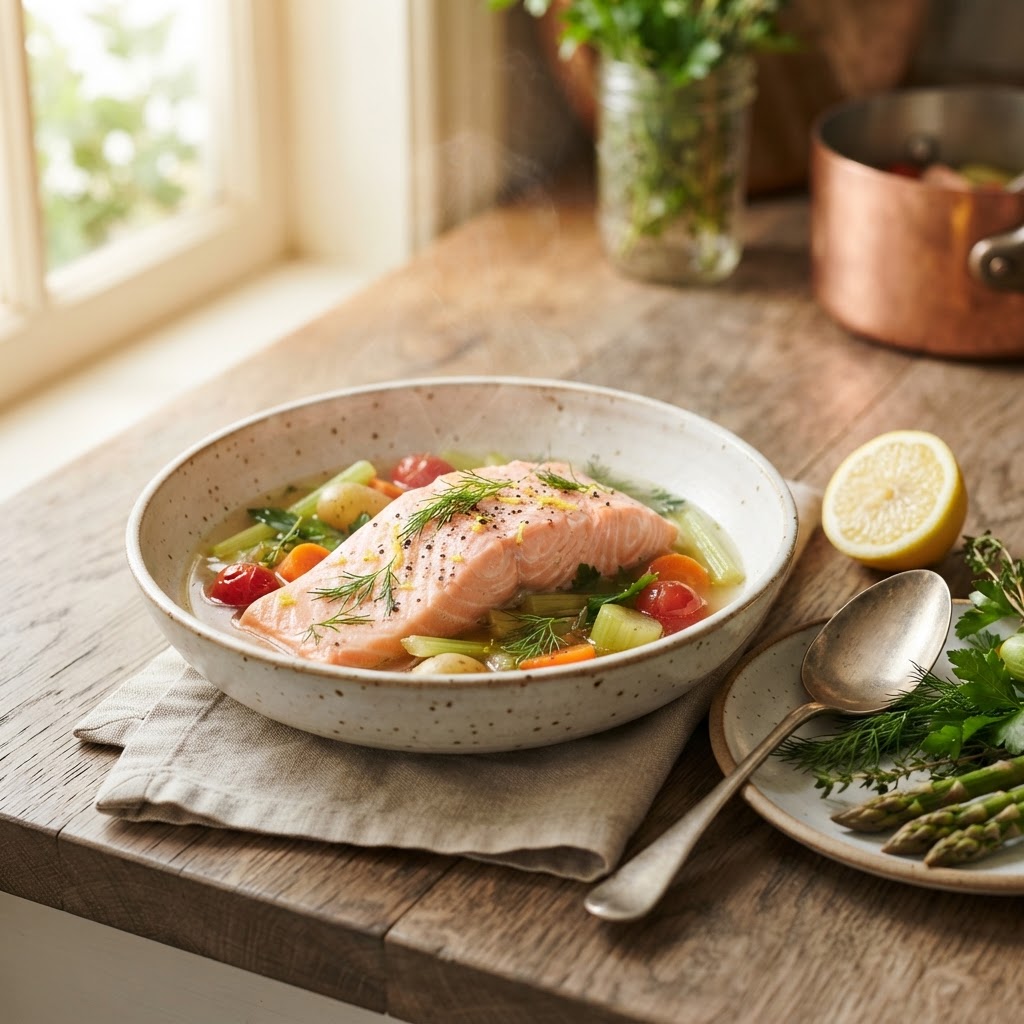
The Healthy Home Cook’s Guide to Gentle Poaching: How to Retain Maximum Nutrients and Moisture in Lean Proteins
In the bustling, high-heat world of professional kitchens, we are often taught that searing, roasting, and frying are the primary tools of the trade. We chase the Maillard reaction—that beautiful browning of proteins—as if it were the ultimate culinary destination. However, when we transition from the pass of a restaurant to the calm of our own home kitchens, the priorities often shift toward wellness, longevity, and ease. There is a quiet, unassuming technique that remains the gold standard for those who prioritize health and texture above all else: gentle poaching. It is not a flashy method, but it is one that demands respect, patience, and a nuanced understanding of how heat affects the delicate structure of lean muscle fibers.
When we talk about poaching, we are essentially talking about the art of cooking food in liquid at a temperature just below the point of a simmer. Unlike boiling, which is aggressive and can cause proteins to tighten and expel their internal juices, poaching allows for a gradual transformation. By keeping our cooking medium—usually a flavorful court-bouillon or an aromatic-infused broth—within a strict temperature range, we ensure that the proteins remain tender, moist, and nutritionally dense. For the health-conscious home cook, this is transformative, as it eliminates the need for excessive fats like butter or oil that are typically required for high-heat cooking. You are effectively letting the water, wine, or broth do the heavy lifting while preserving the integrity of the vitamins and minerals that would otherwise be lost to oxidation or extreme evaporation.
Adopting the poaching method requires a mental shift, moving away from the "hot and fast" mentality that dominates modern recipe writing. It asks you to slow down, pay attention to the subtle bubbles rising to the surface, and trust in the gentle power of convection. As you begin to integrate this into your weekly routine, you will find that it not only yields superior results for chicken breasts, white fish, and lean pork, but it also cleans up your kitchen footprint. There are no grease splatters to scrub, no smoke alarms to silence, and the resulting poaching liquid often doubles as a base for a nutrient-rich soup or a quick pan sauce. This is the ultimate tool for the modern home cook who wants to achieve restaurant-quality texture without compromising on their health goals or their sanity.
Understanding the Physics of Gentle Poaching
At its core, poaching is an exercise in temperature control. While many home cooks mistake a light simmer for poaching, true poaching happens in the "sub-simmer" zone, typically between 160°F and 180°F. When the water is above this threshold, the bubbles become more vigorous, causing the agitation that tears at the structure of the meat. When we maintain that sweet spot, the collagen in lean proteins softens gradually into gelatin, and the muscle fibers relax rather than contracting into a dry, chewy mass. This preservation of texture is the hallmark of the technique, and once you master the visual cues, you will rarely reach for a thermometer.
The Importance of the Liquid Medium
Your poaching liquid—often referred to in professional culinary circles as a court-bouillon—is the silent partner in your success. Whether you are using a simple vegetable stock, a mixture of white wine and water, or a specialized infusion of citrus and ginger, the goal is to create a flavor profile that permeates the protein without overpowering it. Always remember to season your poaching liquid as you would a soup. Because the protein will be sitting in this liquid for a significant amount of time, the salt and aromatics will act as a gentle brine, locking in moisture and ensuring the meat is seasoned from the inside out.
Recognizing the "Poach"
If you do not want to rely solely on an instant-read thermometer, look at the surface of your pan. You are looking for what chefs call "shimmering" or "tiny beads." If you see large bubbles breaking the surface, your liquid is too hot. If you see absolutely nothing, your liquid might be too cold. Ideally, you want to see a very faint movement in the liquid, almost as if it is breathing. Keeping this visual baseline consistent is the secret to producing a perfect poached chicken breast every single time, one that slices like butter and tastes like a meal from a fine-dining establishment.
"The difference between a dry, stringy piece of chicken and one that melts in your mouth is often just a matter of ten degrees in the poaching liquid. Mastery of the simmer is the mark of a true home chef."
Essential Gear for the Conscious Cook
You do not need a professional kitchen setup to succeed with poaching, but having the right tools makes the process significantly easier. A heavy-bottomed, enamel-coated dutch oven is ideal because it retains heat steadily, preventing the temperature spikes that occur in thinner, cheaper cookware. You want a pot that is large enough to submerge your protein completely, but narrow enough that you don't need a gallon of liquid to cover it. If you are poaching a single fish fillet, a deep sauté pan is often more appropriate than a tall stockpot, as it requires less liquid and keeps the ingredient from falling apart under the weight of excessive broth.
Investing in Precision
For those who are serious about nutritional retention, an instant-read digital thermometer is non-negotiable. While sight and sound are helpful, temperature is the only way to guarantee that your proteins are cooked to the safety mark without overshooting. Lean proteins like chicken should be pulled from the liquid at roughly 160°F; the residual heat will carry it to the USDA-recommended 165°F during the resting period. Using a thermometer eliminates the guesswork and the anxiety that often prevents people from trying more technical methods.
Strainers and Skimmers
A fine-mesh skimmer or a spider is essential for removing scum or impurities that rise to the surface as the protein cooks. While poaching is clean, any impurities that do surface should be removed immediately to keep your broth clear and flavorful. If you are poaching delicate items like white fish or shrimp, a slotted spoon or a small spider will prevent the proteins from breaking as you transfer them from the liquid to your serving vessel. Precision, in this case, is as much about the tools you use as it is about the technique.
Building the Perfect Court-Bouillon
The aromatics you add to your liquid are what define the final dish. Because poaching is such a mild, gentle process, the ingredients you infuse into the water will be magnified. Start with a foundation of mirepoix—onion, carrot, and celery—but don't be afraid to branch out. For chicken, fresh thyme, peppercorns, a bay leaf, and a smashed clove of garlic are the classic holy trinity of flavors. For fish, consider lemon zest, dill stalks, and a splash of dry white wine to cut through the richness of the protein.
The Ratio of Aromatics
When building your flavor base, you want to ensure the aromatics are fresh and potent. Do not use dried herbs if you can avoid it, as they tend to become muddy in a long, low-temperature soak. Instead, tie a bouquet garni of fresh herbs together so that you can easily remove it before serving. A general rule of thumb is to simmer your aromatics for at least 15 to 20 minutes before adding the protein. This creates a "base stock" that is fully flavored, ensuring that the poaching process is an infusion rather than just a hot-water bath.
Salt and Acid
Never skimp on the salt in your poaching liquid. Because you are not searing the exterior, the seasoning must come entirely from the liquid. Your water should taste as salty as a well-seasoned soup before you add the protein. Similarly, a splash of acid, such as lemon juice or white wine vinegar, can help brighten the flavor profile and keep the proteins firm. This is especially important when poaching fish, as the acid helps to keep the delicate flakes intact, preventing the fish from "mushing" during the cooking process.
"A well-crafted court-bouillon is the soul of poaching. It is the secret ingredient that turns a mundane, lean protein into an elegant, restaurant-quality masterpiece."
Techniques for Lean Proteins
Lean proteins are the most difficult to cook because they lack the intramuscular fat that acts as a buffer against high heat. When you sear a lean pork chop or a chicken breast, you are fighting a losing battle against dehydration. Poaching changes the physics of the situation entirely. By surrounding the protein with a liquid that is thermally conductive, you provide moisture from the outside in, even as the internal temperature rises. This results in a product that remains succulent throughout, regardless of how lean the cut may be.
Poaching Chicken Breast
To poach a chicken breast, start by trimming away any visible fat or gristle. Bring your seasoned broth to a low simmer—roughly 175°F—and gently slide the chicken in. Ensure that the chicken is completely covered. Turn the heat to its absolute lowest setting, cover the pot tightly, and let it poach for 12 to 15 minutes. The goal is to reach an internal temperature of 160°F. Once it reaches this point, remove the chicken immediately and let it rest on a cutting board for five minutes. This rest period is essential, as it allows the juices to redistribute throughout the muscle fibers, resulting in a perfectly moist finish.
Handling Delicate Fish
Fish requires an even gentler touch than poultry. For a white fish like halibut or cod, you want the water temperature to be closer to 150°F. At this lower temperature, the delicate proteins in the fish will coagulate slowly, creating a buttery texture that is impossible to achieve with pan-searing. Simply place the fish in the liquid, cover, and monitor the process. It will be ready as soon as the flesh turns opaque and flakes easily with a fork, usually in about 6 to 8 minutes depending on the thickness of the fillet.
The "Carry-Over" Rule
Always account for carry-over cooking. Because the protein is sitting in hot liquid, it will continue to cook for a short period after you remove it from the pot. If you wait for the meat to reach 165°F while it is still in the liquid, it will likely be at 170°F or higher by the time you sit down to eat, which will cause it to dry out. Always pull your protein at least 5 degrees below the target temperature. This simple adjustment is the hallmark of a professional chef and will dramatically improve the texture of your home-cooked meals.
The Nutritional Benefits of Low-Heat Cooking
One of the most compelling reasons to adopt poaching is the preservation of nutrients. High-heat methods like frying or deep-roasting can cause the degradation of heat-sensitive vitamins, particularly B-vitamins and Vitamin C. While no cooking method is completely neutral, poaching is arguably the best at retaining the nutritional value of lean meats. Because the protein is cooked in a liquid that is then utilized or discarded, you are minimizing the amount of oxidative damage that occurs when protein is exposed to the harsh, dry air of an oven or the direct, scorching heat of a skillet.
Minimal Oil Usage
By poaching, you remove the necessity of added fats. In a typical sauté, you might use two tablespoons of butter or oil, which equates to roughly 200–250 calories. Over the course of a week, this adds up significantly. Poaching allows you to flavor your food with herbs, citrus, and spices, which carry negligible calories but immense flavor. This makes it an ideal technique for those who are managing their weight, monitoring cholesterol levels, or simply trying to incorporate more whole-food, minimally processed meals into their diet.
Digestion and Hydration
There is also a strong argument to be made for the digestibility of poached foods. Because the proteins are kept moist and the collagen is broken down into a soft, gelatinous state, poached proteins are often easier for the body to process. This makes them a staple in the diets of athletes recovering from workouts or anyone looking to reduce digestive inflammation. Furthermore, because the protein retains its internal moisture, you are essentially hydrating your body as you consume your meal, which is a subtle but beneficial byproduct of this cooking method.
Creative Flavor Infusions
Once you have mastered the basic technique, the world of poaching opens up to an infinite array of flavor profiles. You are not limited to the standard French mirepoix. Consider looking toward global influences to spice up your poaching liquids. For a Southeast Asian-inspired meal, add star anise, cinnamon sticks, ginger slices, and lemongrass to your water. This creates an incredibly aromatic poaching liquid that will infuse the protein with deep, complex notes that feel much more elaborate than they actually are.
Infusing with Tea
Another professional trick is using tea as a poaching medium. Jasmine or green tea can be used to poach white fish, providing a subtle, floral note that pairs beautifully with the delicate sweetness of the seafood. Simply brew a strong pot of tea and use it as part of your poaching liquid base. The tannins in the tea can also help to tighten the exterior of the fish slightly, which provides a lovely contrast to the meltingly tender interior.
Fruit and Citrus Elements
Don't be afraid to experiment with citrus. Meyer lemons, limes, or even orange peels can add a bright, acidic note to the poaching liquid that cuts through the richness of heavier fish like salmon. Some chefs even poach in a combination of vegetable stock and apple cider for a savory-sweet profile that works exceptionally well with pork. The liquid can then be reduced down to a concentrated glaze, ensuring that not a single drop of flavor is wasted.
"Cooking is not just about following a recipe; it is about understanding the medium. When you poach, the liquid becomes an extension of the protein itself, a vessel for flavor that marries form and function."
Troubleshooting Common Poaching Pitfalls
Even for experienced cooks, poaching can present challenges. Perhaps the most common issue is the protein falling apart. This usually happens when the liquid is boiling too vigorously or when the protein is handled too roughly with tongs. Always use a flat, wide spatula to move delicate fish or chicken. If your chicken breast is coming out stringy, it is almost certainly because the poaching temperature was too high. Remember, the bubbles are the enemy. If you see them, turn your heat down or move the pot off the burner for a few minutes.
What if the Flavor is Too Subtle?
If you feel your poached protein lacks depth, the issue usually lies in the salt content of your poaching liquid. Many home cooks are afraid to salt their water generously, but remember that the liquid is not an ingredient you are consuming in its entirety—it is an immersion medium. It needs to be bold enough to drive flavor into the muscle fibers of the meat. If you are nervous, taste the poaching liquid before you add the protein. If it tastes like plain water, your chicken will taste like plain water. Adjust until the broth is seasoned to your liking.
Achieving the Perfect "Pull"
If you are planning to shred your poached chicken for salads or tacos, you can actually poach it slightly longer than you would for a whole breast. An extra two or three minutes at a very low simmer will make the protein fibers yield more easily to a fork. Once the chicken is cooked, pull it out, let it sit for five minutes, and then use two forks to pull the meat apart while it is still slightly warm. This is the fastest way to get tender, juicy, perfectly seasoned shredded chicken for meal prep throughout the week.
Final Thoughts
The art of poaching is a testament to the idea that the best cooking is often the quietest. By stripping away the need for high-heat drama and focusing on the gentle, steady application of heat, you open yourself up to a world of culinary precision that honors the ingredient above all else. This guide has taken you through the basics—from the physics of the sub-simmer to the creative potential of global aromatic infusions—but the true journey begins in your own kitchen. When you embrace the slow, rhythmic process of poaching, you are not just making dinner; you are participating in a culinary tradition that prioritizes health, texture, and the honest flavor of the food on your plate.
As you continue to practice these techniques, you will find that your palate becomes more attuned to the nuances of protein. You will stop needing the heavy crust of a sear or the excessive fat of a butter-baste to find your meal satisfying. Instead, you will find satisfaction in the clean, vibrant, and perfectly cooked textures that only poaching can provide. Take these lessons, invest in a reliable thermometer, and remember that the secret to great food is often simply knowing when to lower the flame and let the liquid do the work. Happy poaching, and may your proteins always be moist, tender, and perfectly seasoned.
Get the Next Recipe
Weekly recipes, techniques, and gear picks — straight to your inbox.
