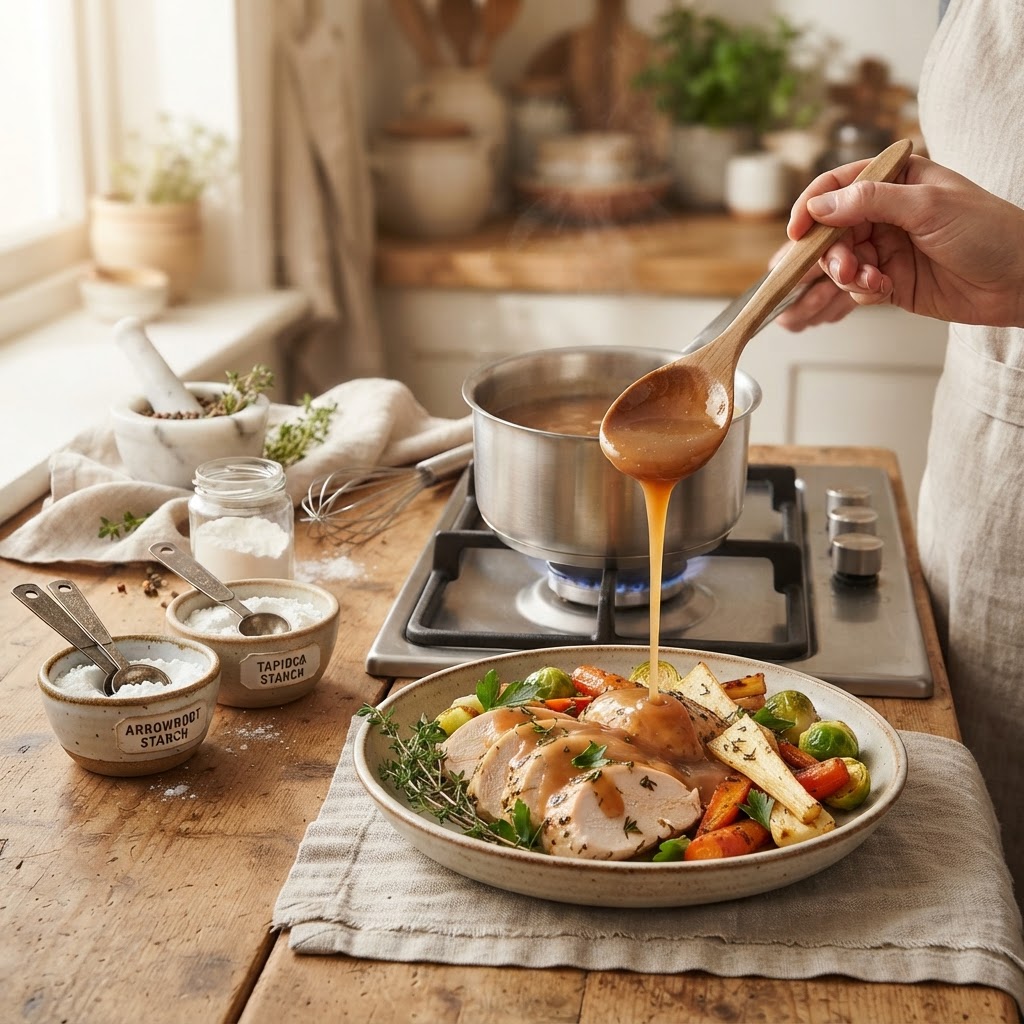
The Healthy Home Cook’s Guide to "Grain-Free Thickening": Mastering Arrowroot and Tapioca Starch Ratios for Light, Gluten-Free Sauces and Gravies
The journey toward a healthier kitchen often begins with a simple, yet daunting realization: the reliance on wheat flour as a universal crutch for texture. For years, professional kitchens and home cooks alike have treated all-purpose flour as the holy grail for thickening pan sauces, gravies, and velvety soups. However, as more individuals prioritize gut health, inflammation reduction, and gluten-free lifestyles, we find ourselves at a culinary crossroads. Transitioning away from grain-based thickeners doesn't mean sacrificing the luscious, coat-the-back-of-a-spoon consistency we crave; it simply requires a shift in scientific understanding and a bit of patience. Learning to swap traditional flour for starches like arrowroot powder and tapioca starch is a fundamental skill that elevates your home cooking from "functional" to "restaurant-quality" without the digestive weight of gluten.
Mastering these alternative starches requires us to abandon the "roux" mentality that dominates classical French culinary training. When you use flour, you are building a structure based on wheat proteins and starches that require long cooking times to remove the raw, pasty taste. In contrast, arrowroot and tapioca are pure, flavor-neutral powders that react to heat and liquid almost instantaneously. This means your cooking speed must change, and your approach to finishing a dish must become more precise. We aren't just thickening; we are engineering a specific mouthfeel that remains stable, glossy, and digestible, even when the heat is turned off.
In this guide, we will peel back the curtain on the science of starch gelatinization, explore the specific ratios that prevent the dreaded "gluey" texture, and help you determine when to choose one starch over the other. Whether you are whipping up a Thanksgiving gravy that needs to pass the scrutiny of traditionalists or a light summer vegetable velouté, these techniques will become your best tools. It is time to stop blaming the ingredients and start mastering the chemistry of the pan. Let’s dive into the art of grain-free thickening and reclaim the texture of our home-cooked meals, one sauce at a time.
The Chemistry of Starch: Why Grain-Free Matters
To truly master the art of thickening without grains, you must first understand what happens at a molecular level when a starch hits hot liquid. When you introduce a starch granule into a warm liquid, it begins to absorb water and swell, a process known as gelatinization. In wheat flour, this process is hindered by protein chains, which is why you have to cook out the floury taste for several minutes. Arrowroot and tapioca, however, are essentially pure carbohydrates. They are highly efficient, meaning a little goes a very long way, and because they lack the proteins found in wheat, they do not require the same aggressive "cooking out" period.
The challenge that most home cooks face when switching to grain-free starches is the tendency for these substances to become overly viscous or stringy if not managed properly. Tapioca starch, which is derived from the cassava root, is famous for its incredible elasticity. If you add too much, your gravy might resemble a mozzarella cheese pull rather than a smooth, silky sauce. On the other hand, arrowroot powder provides a more neutral, translucent finish, often prized for its ability to withstand acidic ingredients like lemon juice or tomato bases without breaking down.
"The difference between a amateurish glob of starch and a professional-grade sauce lies entirely in the temperature control and the method of incorporation. Do not rush the slurry."
Understanding this distinction allows you to pick your weapon of choice based on the intended outcome. Are you making a sturdy beef gravy, or are you trying to thicken a delicate fruit reduction or a coconut-based curry? By knowing the gelatinization temperature—which for these starches usually sits between 150°F and 165°F—you can prevent the premature clumping that often ruins a dish before it even reaches the table.
The Role of the Slurry
The most professional technique you can adopt is the use of a slurry. Never, under any circumstances, sprinkle dry starch directly into a bubbling pan. This is the primary reason for "clumpy sauce syndrome." A slurry is simply the starch mixed with an equal part of cold liquid—water, broth, or wine—before it enters the hot environment. This ensures that the starch granules are fully hydrated and separated before they begin to swell, resulting in a smooth, glass-like sheen.
Arrowroot: The Culinary Gold Standard
If there is one pantry staple that should replace cornstarch or flour for the average home cook, it is undoubtedly arrowroot powder. Derived from the rhizomes of the Maranta arundinacea plant, it is widely considered the superior choice for gravies, glazes, and soups. Its biggest advantage is its translucency. While flour leaves a sauce opaque and matte, arrowroot leaves it looking glossy and high-end. This is particularly important when you are serving a dish where the color of the ingredients should be allowed to shine, such as a mushroom cream sauce or a herb-infused reduction.
Another critical benefit of arrowroot is its ability to handle acidic environments. Many cooks have experienced the frustration of a sauce that loses its thickness after a splash of balsamic vinegar or lemon juice is added. Flour-based sauces can break or thin out when introduced to heavy acid, but arrowroot is much more stable in a wider range of pH levels. This makes it the ideal candidate for pan sauces that involve deglazing with white wine or citrus-based reductions.
Ratios for Success
The golden rule for arrowroot is a 1:1 ratio with cold liquid for the slurry, then adding this mixture to the pan. However, when it comes to the final sauce, the general rule of thumb is:
Start small. It is always easier to add more slurry than to try to thin out a sauce that has become a thick jelly. Remember, the sauce will continue to thicken slightly as it cools on the plate, so aim for a consistency that is slightly thinner than you actually want.
"True mastery in the kitchen is not about following a recipe blindly, but understanding how the ingredient interacts with the physics of heat. Arrowroot is an forgiving ingredient, provided you respect its strength."
Tapioca Starch: The Secret for Elasticity
Tapioca starch, also known as tapioca flour, is a powerhouse of thickening, but it is one that must be handled with care. Because it is so potent, it can easily turn a delicate dish into something overly chewy or gummy. This is why tapioca is often best utilized in recipes that already have a bit of body or fat, such as coconut milk curries, gluten-free baking, or fruit-based pie fillings. It provides a unique "mouthfeel" that can be very comforting, but it lacks the neutral, invisible finish of arrowroot.
One professional tip for working with tapioca is to avoid over-boiling. While arrowroot can handle a gentle simmer, tapioca starch is most effective when brought to a boil and then immediately removed from the heat. If you continue to boil a sauce thickened with tapioca for several minutes, the structure of the starch can begin to break down, potentially leading to a "stringy" texture. Keep an eye on your pan, and as soon as the sauce coats your spoon, it is ready.
When to Use Tapioca vs. Arrowroot
Use Arrowroot for:* Pan sauces, gravies, delicate soups, and whenever you need a clear, professional shine.
Use Tapioca for:* Fruit pie fillings, heartier curries, stir-fry sauces where a bit of "cling" is desired, and gluten-free baking projects where a binder is needed.
The Blend:* In many professional kitchens, a 50/50 blend of both starches is used to achieve the gloss of arrowroot and the stability of tapioca.
The Professional Technique: The Art of the Pan Sauce
When you are working on a classic pan sauce—perhaps after searing a piece of steak or roasting a chicken—you have a foundation of fond (those delicious browned bits stuck to the bottom of the pan). A grain-free approach to finishing this sauce is actually faster than the traditional method. Once you have deglazed your pan with wine or stock, you have a beautiful, flavorful base. Now, you need to add body without diluting that flavor with excessive amounts of flour.
Step-by-Step Gravy Execution
Navigating Common Pitfalls
Even the most experienced home cook can run into trouble when experimenting with new starches. One of the most common issues is clumping, which occurs when the starch hits a liquid that is either too hot or not properly whisked. If you accidentally add your slurry and see little white dots forming, don't panic. You can often rescue the sauce by quickly whisking it with a wire mesh strainer, or if the lumps are significant, passing the entire sauce through a fine-mesh sieve.
Another issue is the "reheating trap." Many grain-free thickeners, particularly tapioca, can lose their structural integrity when reheated multiple times. If you are making a large batch of gravy for a holiday, consider making the base in advance and adding the starch slurry only during the final reheating process before serving. This ensures that your gravy maintains that beautiful, velvety texture rather than becoming thin or separated.
Troubleshooting Guide
Sauce is too thin: Add a tiny bit more slurry, but increase the amount of liquid* in your slurry mix to ensure it incorporates easily.
Sauce is gummy:* You’ve used too much starch. The best fix is to whisk in more liquid (broth or stock) to dilute the concentration of starch.
Sauce is cloudy:* You may have used too much tapioca or failed to whisk the arrowroot thoroughly. Ensure your liquid is clear before adding the slurry.
Elevating Your Culinary Repertoire
Once you feel comfortable with the basics, it is time to expand your horizons into more complex applications. Have you ever tried thickening a fruit coulis with arrowroot? It creates a beautiful, jewel-toned sauce that is perfect for desserts or even as a glaze for savory pork dishes. Or perhaps consider using these starches to create a "velouté" for a vegetable soup. By thickening the base with arrowroot instead of a flour-based roux, you allow the true essence of the vegetables—the earthiness of the carrots, the sweetness of the parsnips—to take center stage without being masked by the taste of toasted wheat.
Remember that temperature is everything. Because these starches are so reactive, they are highly sensitive to the cooling process. If you are preparing a dish that will be served cold, such as a chilled gazpacho or a savory jelly, keep in mind that arrowroot sets quite firmly. You will need to use less starch than you would for a hot soup. Always perform a "spoon test" by dipping a metal spoon into your pot and letting it cool for a moment to see how the sauce sets at room temperature.
Expert Tips for Consistent Results
Final Thoughts
Transitioning to a grain-free kitchen is as much about philosophy as it is about chemistry. It is about choosing ingredients that honor the integrity of your food rather than relying on heavy fillers. By mastering arrowroot and tapioca, you are not just removing gluten; you are refining your palate and learning to appreciate the subtle textures that make a meal truly memorable. It takes a little practice to move away from the flour-heavy habits we were taught, but the reward—a lighter, more digestible, and undeniably beautiful meal—is well worth the effort.
Keep this guide on hand, don't be afraid to experiment with your ratios, and most importantly, taste your sauce as you go. You are the architect of your own kitchen, and with these tools in your belt, you can confidently "blame the chef" only when things go right. Mastering these techniques will eventually become second nature, allowing you to reach for the arrowroot just as naturally as you once reached for the flour. Happy cooking, and may your gravies always be perfectly silky and your sauces eternally glossy.
As you continue to explore, try incorporating these starches into your everyday stir-fries, slow-cooker stews, and even your gluten-free baking. The versatility of these ingredients is immense, and they are capable of doing far more than just thickening gravy. You might find that once you stop using wheat as a thickener, you start noticing the true flavors of your ingredients more than ever before. Welcome to a more refined, professional, and health-conscious way of cooking.
Remember, cooking is a lifelong process of learning and refinement. If your first attempt at a sauce is slightly too thick or too thin, it is not a failure—it is a lesson in the specific behavior of the ingredients in your kitchen's environment. Take note, adjust your ratios next time, and keep moving forward. You have the knowledge now to control the texture of your culinary creations with precision and grace. Whether you are cooking for a family weeknight or hosting a dinner party, these skills will ensure that your dishes are consistently exceptional.
Stay curious, keep your whisk ready, and keep pushing the boundaries of what your grain-free kitchen can achieve. You are now equipped to navigate the world of alternative starches with the confidence of a seasoned professional. The kitchen is yours to master, and the possibilities for light, elegant, and gut-friendly cooking are endless. Go forth and create something beautiful.
Get the Next Recipe
Weekly recipes, techniques, and gear picks — straight to your inbox.
