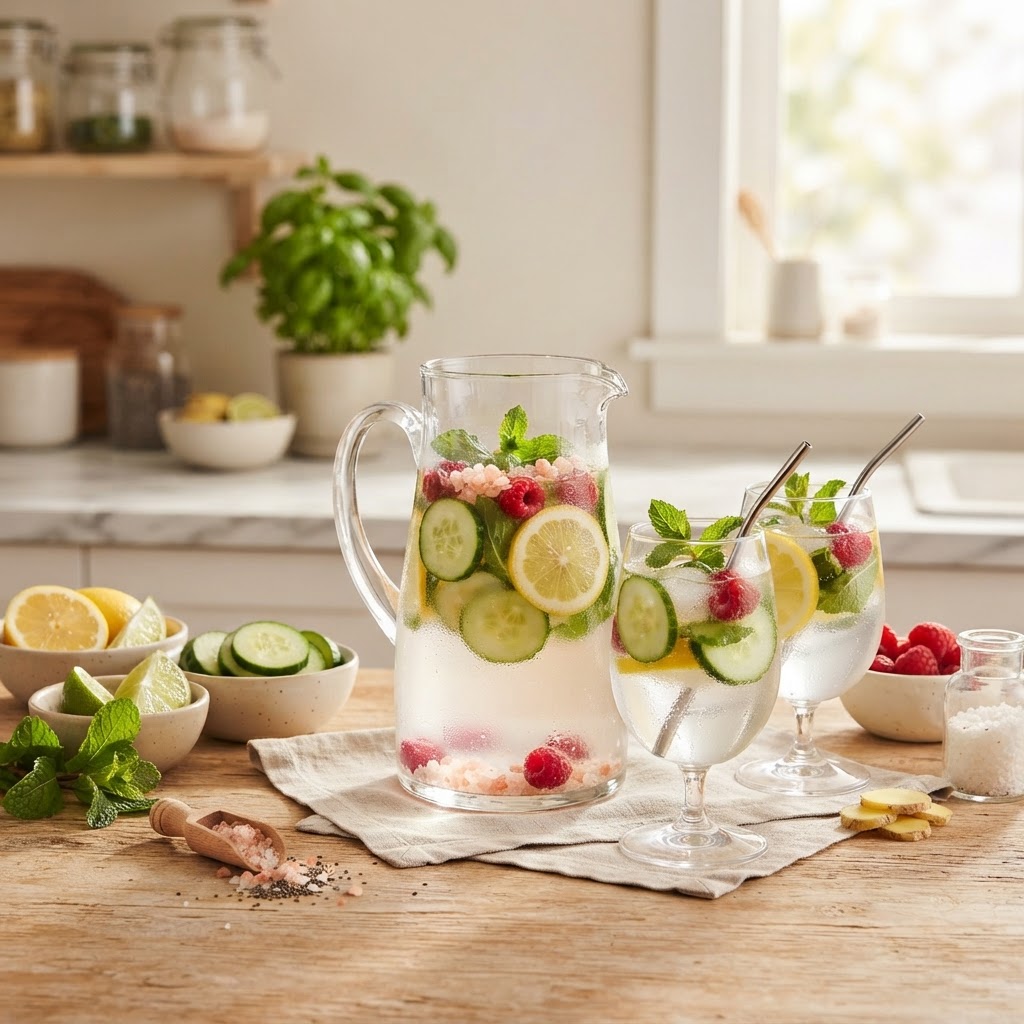
The Healthy Home Cook’s Guide to "Nutrient-Dense Hydration": Mastering Electrolyte-Balanced Infusions for Sustained Energy and Recovery
In the modern culinary landscape, we often obsess over the macronutrients on our plates—the proteins, fats, and complex carbohydrates that fuel our daily endeavors. Yet, there is a fundamental pillar of wellness that frequently goes overlooked in the home kitchen: the intricate science of nutrient-dense hydration. It is not enough to simply drink water throughout the day; true cellular efficiency requires a delicate balance of electrolytes, minerals, and trace elements that allow our bodies to absorb and utilize that moisture effectively. When you neglect this balance, you may find yourself suffering from mid-afternoon lethargy, persistent headaches, or a sluggish recovery after exercise, all of which are often mistakenly attributed to poor diet or lack of sleep. By treating hydration as a deliberate, crafted culinary pursuit, we can transform a mundane necessity into a potent tool for sustained energy and systemic vitality.
As home cooks, we have the unique advantage of sourcing high-quality ingredients, bypassing the artificial dyes, synthetic sweeteners, and excessive sodium found in commercial sports drinks. A well-crafted electrolyte-balanced infusion starts with clean, filtered water, but it truly comes to life when you introduce the right mineral precursors, such as sea salt, raw honey, and fresh citrus. When you master the art of these infusions, you are essentially creating a custom, bioavailable beverage designed specifically for your body’s unique output and metabolic needs. This is not about complex laboratory chemistry; it is about intuitive flavor profiling and an understanding of how raw, organic components interact to support our physiology. It is time to reclaim the kitchen as a space for holistic nourishment, where every sip serves a deliberate purpose in your overall health strategy.
When we talk about "Blame The Chef," we aren’t just talking about the person who burned the roast; we are talking about the chef who takes responsibility for the nutritional integrity of the ingredients they select and prepare. By mastering these infusions, you are taking ownership of your physical recovery and mental clarity, elevating your hydration game far beyond the standard glass of tap water. Throughout this guide, I will walk you through the essential ratios, the most effective botanicals, and the specific temperatures required to extract the maximum benefits from your ingredients. Get ready to rethink how you drink, how you recover, and how you sustain your energy throughout your most demanding days. We are going to build a foundation of wellness that begins in your pantry and ends with a renewed sense of vigor and focus.
The Chemistry of Hydration: Beyond Simple H2O
The concept of hydration is often misunderstood as merely replacing fluid volume. In reality, your body functions on electrical signals—nerve impulses and muscle contractions—that are entirely dependent on electrolytes. These are the minerals, specifically sodium, potassium, magnesium, and calcium, that carry an electric charge when dissolved in water. Without them, your body struggles to maintain osmotic pressure, often leading to the sensation of thirst even when you have technically consumed enough liquid. When you engage in high-intensity cooking or fitness routines, you deplete these stores, and standard water will often pass through your system without properly rehydrating your intracellular spaces.
To combat this, we look toward the concept of mineral-rich infusions. By balancing the sodium-potassium pump, we ensure that the water we consume actually enters our cells rather than simply being excreted. This is why a touch of unrefined, mineral-rich salt is the most crucial ingredient in any homemade sports drink. Unlike processed, iodized table salt, high-quality sea salt or Himalayan salt provides essential trace minerals that act as co-factors for cellular hydration, ensuring that your infusion functions as a delivery system for nutrients, not just a way to flush the kidneys.
The Role of Bioavailability
The bioavailability of your hydration source is paramount to its effectiveness. Raw honey, for instance, provides a small amount of glucose and fructose, which acts as a transport vehicle for electrolytes across the intestinal wall. By combining these natural sugars with specific mineral salts, we create an isotonic solution that mirrors the body’s natural internal environment. This allows for faster gastric emptying and quicker absorption, making it an ideal post-workout or mid-afternoon recovery tool.
"True hydration is not just about the volume of water you consume, but the efficiency with which your cells can pull that moisture from your bloodstream and put it to work."
Essential Pantry Ingredients for Electrolyte Mastery
To consistently prepare high-performance hydration, your pantry needs to be stocked with specific, high-quality staples. You should be sourcing unrefined sea salt, such as Celtic or Maldon, which retains moisture and a wider array of trace minerals compared to commercial options. Additionally, seek out raw, unfiltered honey or maple syrup, as these provide the necessary carbohydrates to fuel glycogen replenishment without spiking your blood sugar in the erratic way that refined white sugars do.
The next tier of your kit involves organic acids. Freshly squeezed citrus—lemons, limes, and oranges—are not just for flavor; they provide citric acid and vitamin C, which assist in mineral absorption and support immune function. You might also consider incorporating fresh ginger or turmeric for their potent anti-inflammatory properties, as they can help reduce systemic stress and improve blood flow, which in turn aids in the efficient transport of water and electrolytes to tired tissues.
Sourcing and Storage Tips
Quality matters when it comes to the potency of your hydration infusions. Always opt for organic, pesticide-free produce, as you are consuming these ingredients in their raw state and do not want to introduce unnecessary toxins into your system. When storing your infused waters, use glass containers rather than plastic to avoid the leaching of endocrine disruptors. If you are preparing large batches, keep them chilled to below 40 degrees Fahrenheit to preserve the integrity of the vitamins and the freshness of the herbal notes.
Celtic Sea Salt:* Provides magnesium and trace minerals.
Raw Honey:* Acts as a transport mechanism for cellular uptake.
Fresh Citrus:* Boosts absorption and provides essential electrolytes.
Fresh Ginger:* Aids in digestive health and systemic inflammation.
Mastering the Ratio: The Art of the Balanced Infusion
There is a precise culinary formula to achieve the perfect electrolyte balance. As a general rule for a standard recovery drink, you want to aim for a concentration that is slightly hypotonic to slightly isotonic. This ensures that the water enters your bloodstream quickly without causing osmotic stress on your digestive system. For every 32 ounces (one quart) of filtered water, I recommend starting with 1/4 teaspoon of high-quality sea salt and one tablespoon of raw honey or maple syrup.
From this base, you can begin to add your flavor profiles. This ratio is a foundational technique that mimics the electrolyte profile found in the blood, ensuring that you are replacing what you lose through sweat and metabolic processes. If you are preparing this for a high-intensity workout, you can slightly increase the salt content, but never exceed 1/2 teaspoon per liter to avoid potential gastric distress. The key is to experiment with these ratios until you find what suits your personal metabolic pace.
The Temperature Extraction Method
While many people reach for ice-cold water, room temperature or slightly warm infusions are often easier for the body to assimilate immediately after physical activity. If you are using herbs like mint or ginger, the steeping technique is vital. Bring a small portion of your water to a simmer—approximately 180 degrees Fahrenheit—and steep your herbs for ten minutes before adding the cold water and electrolytes. This gentle extraction method releases the volatile oils and beneficial compounds without scorching the delicate aromatic profiles.
Advanced Botanical Infusions for Sustained Energy
Once you have mastered the base, you can expand your culinary horizons by incorporating adaptogenic herbs and roots. These ingredients, such as hibiscus, butterfly pea flower, or dandelion root, do more than flavor your water—they support the endocrine system and assist in metabolic recovery. Hibiscus, in particular, is highly acidic and vibrant, making it an excellent base for a pre-workout tonic that provides a sharp, refreshing edge.
Integrating these botanicals requires an understanding of infusion times. Delicate florals should only be steeped in warm water for 5 to 7 minutes to avoid bitterness, whereas hard roots like ginger or turmeric can handle a longer simmer to draw out the deep, earthy flavors. By layering these flavors, you create a complex, professional-grade beverage that feels indulgent yet remains entirely focused on nutritional efficiency.
Structuring Your Daily Hydration Ritual
It is not enough to drink these infusions only when you feel thirsty. To truly master hydration, you must treat it as a habit. Start your day with 16 ounces of a lemon-salt infusion to reset your system after the overnight fast. Mid-day, when your energy begins to wane, shift to a slightly sweeter, honey-infused herbal tea. This pulsed approach to hydration ensures that your electrolyte levels remain stable throughout the day, preventing the crashes that most people experience around 3:00 PM.
"The difference between a commercial sports drink and a home-crafted infusion is the difference between an engineered chemical solution and a biological catalyst for recovery."
Techniques for Maximizing Nutrient Extraction
Efficiency in the kitchen starts with your tools. When preparing your infusions, a fine-mesh strainer is your best friend. You want your finished drink to be clear and free of sediment, which can settle at the bottom and create a gritty, unappealing texture. If you are using fresh berries or citrus slices, be sure to muddle them gently in the bottom of your pitcher before adding the water; this ruptures the cell walls and releases the juices more effectively than simply dropping them in.
Another professional secret is the use of infusion sachets or cheesecloth. If you are using dried spices like cardamom or clove to add warmth to your hydration, placing them in a cloth sachet allows you to remove them precisely at the moment they reach the desired flavor peak. This prevents your infusion from turning overly astringent, which is a common error when one leaves spice blends to steep too long.
The Role of pH Balance
The acidity of your water plays a significant role in how your body perceives the beverage. By using lemon or lime, you are naturally lowering the pH, which can stimulate digestive enzymes and improve the overall hydration experience. If you find your infusions are too acidic, balance the profile with a small amount of botanical sweetness, such as a drop of high-quality vanilla extract or a pinch of cinnamon. These aromatics change the neurological perception of the drink, making it more pleasurable to consume consistently.
Common Mistakes and How to Avoid Them
The most common mistake in home-based electrolyte creation is over-salting. It is tempting to think that "more is better," but too much salt creates an osmotic imbalance that draws water out of your cells and into your gut, leading to bloating and discomfort. Always weigh or measure your salt precisely; a little goes a long way. If you find you are still thirsty, it is likely that your body requires more water to process the minerals, not more minerals themselves.
Another pitfall is using excessive sweeteners. The goal is to provide a small glucose spike to assist in absorption, not to create a sugary treat. If your infusion tastes like a soft drink, you have likely added too much sugar. A faint, refreshing sweetness is all you need to aid absorption and provide a clean flavor profile. Finally, never prepare your infusions using hot, boiling water if you are adding honey, as high heat can denature the enzymes and antioxidants that make raw honey so beneficial. Always wait until the infusion has cooled to below 110 degrees Fahrenheit before adding your sweetener.
Measure precisely:* Use a proper measuring set for salt and sweeteners.
Avoid high heat:* Keep temperatures under 110°F when adding enzymes.
Glass only:* Prevent chemical leaching by using borosilicate glass or stainless steel.
Consistency:* Drink at regular intervals rather than chugging in bulk.
Incorporating Hydration into Your Culinary Workflow
Hydration is not just a beverage; it is part of your meal planning. When you are cooking high-heat dishes, remember that your body is losing fluids just by being in the kitchen. Keep a pitcher of your electrolyte-balanced infusion on the counter at all times. This habit ensures that you stay hydrated while you cook, which keeps your palate sharp and your energy levels stable during the hectic process of meal preparation.
Think of your hydration strategy as part of your "mise en place." If you know you are planning a heavy workout or a long day in the garden, prepare your infusions the night before. Chilled, overnight infusions allow the flavors to marry more deeply, resulting in a cleaner, more refined taste. By treating your hydration with the same level of respect as your sauces and braises, you elevate your home cooking to a practice of total body support.
Evaluating Your Personal Needs
Every individual has different sweat rates and mineral requirements. To determine if your infusions are working for you, pay attention to your body’s signals. Are you still experiencing headaches? Do you feel lightheaded when standing up quickly? These are signs that your electrolytes are either too high or too low. Adjust your ratios by small increments—perhaps 1/8th of a teaspoon of salt at a time—until you reach that equilibrium where your energy feels constant and your hydration feels effortless.
Final Thoughts
Mastering the art of nutrient-dense hydration is a hallmark of the modern, informed home cook. When you move past the convenience of bottled drinks and take the time to balance your own infusions, you are practicing a form of culinary alchemy that directly influences your health and longevity. It is a commitment to the details—the quality of your sea salt, the temperature of your water, and the precision of your ratios—that defines the difference between simply eating and truly nourishing.
By integrating these electrolyte-balanced infusions into your daily life, you are providing your body with the biological tools it needs to thrive in an increasingly demanding world. Remember that "Blame The Chef" is about taking full responsibility for the food and drink that sustains you. The next time you walk into your kitchen, look at your water filter and your salt cellar not just as staples, but as the foundation of your energy, recovery, and overall wellness. You possess the skills to craft the perfect drink; now, go forth and hydrate with intention. Your body will thank you for the extra care, and your palate will certainly appreciate the difference that fresh, thoughtful ingredients make in your daily ritual.
Keep experimenting, keep tasting, and keep refining. Whether it is a bright, lemony infusion to start your morning or a deep, spiced tonic to close your day, remember that consistency is the ingredient that ties it all together. Stay hydrated, stay curious, and keep crafting those small but vital improvements that make your kitchen the heart of your health journey. From my kitchen to yours, here is to a more hydrated, energized, and vibrant version of yourself. Every drop counts, and with these techniques, every drop will work exactly as it should to keep you performing at your peak. Happy brewing, and may your hydration always be as perfectly balanced as your best culinary creations.
As we conclude this deep dive into the mechanics of hydration, it is important to reflect on the broader theme of our work here. Cooking is not a series of isolated tasks; it is a holistic approach to life. Hydration is simply one of the most fundamental yet neglected layers of that process. By applying the same rigor to your water as you would to a complex reduction or a delicate pastry dough, you are essentially training your mind to seek quality in all aspects of your existence. This is the "Blame The Chef" philosophy: an unwavering commitment to excellence, even when no one is watching and even when the task at hand seems as simple as filling a glass.
In the coming weeks, try to document your findings. Keep a simple log of how you feel after consuming your custom infusions compared to how you feel on days when you rely on plain water or coffee. You will likely notice a significant uptick in your baseline energy and a marked decrease in the midday fatigue that plagues so many of us. This is the power of nutrient-dense hydration in action. It is a slow, steady, and incredibly effective way to optimize your biological performance from the inside out. Let your kitchen be your laboratory, and let your results be your motivation to continue refining your craft.
Finally, remember that the most important ingredient in any recipe is the intention you bring to it. When you take those few extra minutes to measure your minerals and thoughtfully select your botanicals, you are making a conscious choice to prioritize your well-being. That choice resonates through everything you do, influencing your mood, your work, and your relationships. Hydration is a ritual of self-respect. Treat it as such, and you will find that the benefits ripple far beyond the glass. Keep pushing the boundaries of what home cooking can be, and never hesitate to blame the chef—because the chef is you, and the results are yours to claim.
Get the Next Recipe
Weekly recipes, techniques, and gear picks — straight to your inbox.
