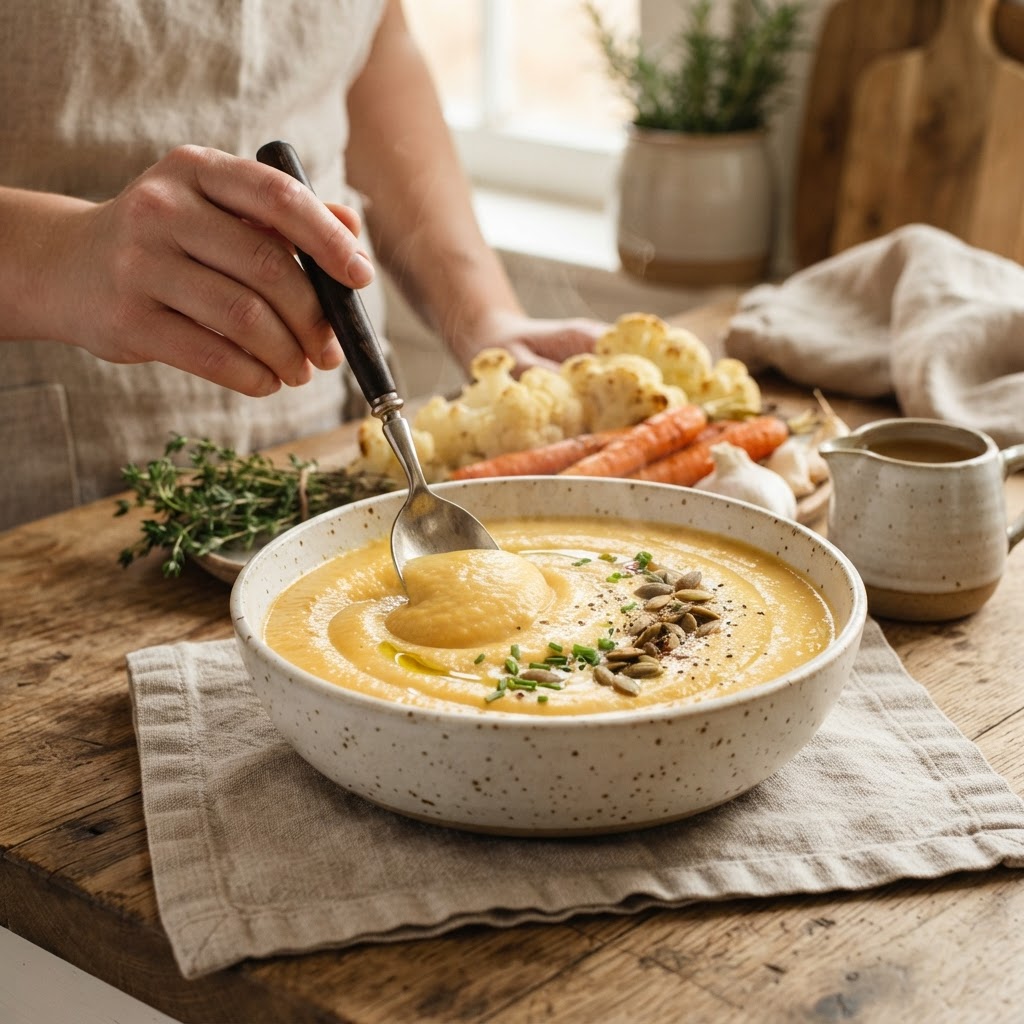
The Healthy Home Cook’s Guide to "Nutrient-Dense Purees": Mastering Vegetable-Based Thickeners for Creamy, Low-Calorie Soups and Sauces
There is a pervasive myth in the world of home cooking that achieving a luxurious, velvet-like consistency in soups and sauces requires a heavy hand with the heavy cream, butter, or refined flour-based roux. We are often taught to believe that thickness is synonymous with caloric density, leaving those of us who prioritize health in a difficult position of choosing between flavor and our fitness goals. However, the secret weapon of professional kitchens—often hidden behind the curtain of complex sauces—is the humble nutrient-dense puree. By utilizing the natural starches and fibrous structures of vegetables, you can achieve a mouthfeel that rivals the richest béchamel without adding a single gram of saturated fat.
Mastering the art of the vegetable-based thickener is not merely a shortcut; it is a fundamental shift in how you approach your culinary workflow. When you replace traditional binders with pureed cauliflower, parsnips, white beans, or roasted squash, you are essentially fortifying your meals with essential vitamins, minerals, and dietary fiber. This method transforms a simple side dish into a powerhouse of nutrition, keeping you satiated for longer while simultaneously expanding your palate. It is the bridge between the indulgent food we crave on cold nights and the wholesome meals our bodies require for sustained energy.
In this guide, we will dismantle the reliance on heavy fats and explore the science of viscosity through the lens of whole-food ingredients. You will learn how to balance the delicate sweetness of root vegetables with the savory profiles of aromatics to create emulsions that are stable, creamy, and deeply flavorful. Whether you are aiming to thicken a silky tomato bisque or add body to a vibrant green curry sauce, these techniques will empower you to "blame the chef"—that is, yourself—for a meal that tastes like an indulgence but nourishes like a salad. Let us begin the transition from heavy-handed cooking to the precision of intentional, vegetable-forward thickening.
The Science of Viscosity: Why Purees Work
To understand why vegetable purees function as superior thickeners, we must look at the structural components of the ingredients themselves. Vegetables like cauliflower, potatoes, and parsnips contain high concentrations of complex carbohydrates and starches. When these vegetables are cooked until tender and processed through a high-speed blender, their cell walls break down, releasing these starches into the cooking liquid. This creates a suspension that effectively traps water molecules, resulting in an increased viscosity that we perceive as "creaminess" on the palate.
Unlike flour-based thickeners, which can often result in a "pasty" aftertaste or turn gummy if not tempered correctly, pureed vegetables offer a clean, neutral, or complementary flavor profile. This allows the essence of your soup or sauce to shine through without being masked by the heaviness of dairy or the chalky texture of raw starches. Furthermore, the fiber content remains intact, which not only assists with digestion but also provides a more stable, long-lasting structure to your soups, ensuring they don't separate or "weep" as they cool.
The Role of Cell Walls and Starch
When you boil or steam a vegetable, the heat causes the pectin holding the cell walls together to soften. Once you apply mechanical force via a blender, you are physically shearing these cells. This is the crucial moment where the emulsification begins. The tiny vegetable particles act as physical obstacles to the flow of the liquid, creating friction that we experience as thickness.
"True culinary luxury is found in the elegance of simplicity; by harnessing the inherent structure of vegetables, we strip away the need for artificial binders and allow the natural harvest to provide the body of our dishes."
Selecting Your Thickening Agent
Not all vegetables are created equal when it comes to their thickening potential. To choose the right one, you must consider the desired end result—do you want a blank canvas, or do you want the vegetable to contribute to the flavor profile? Neutral-tasting vegetables like cauliflower and white beans are perfect for sauces where you want the primary ingredient (like tomato or basil) to remain the star. On the other hand, root vegetables like carrots and parsnips offer a subtle sweetness that pairs beautifully with earthy spices.
The Cauliflower Revolution
Cauliflower has rightfully earned its place as the king of low-calorie thickeners. When steamed or roasted, it loses its sulfurous bite and adopts a remarkably creamy, almost potato-like texture when blended. Chef’s Tip: For the smoothest result, steam your cauliflower until it is completely "fork-tender"—meaning the vegetable yields with zero resistance. If you leave even a slightly firm center, you will end up with a grainy texture that no amount of blending can fix.
White Beans (Cannellini):* These are exceptional for adding creaminess and a boost of plant-based protein. Always rinse canned beans thoroughly to remove excess sodium and starchy canning liquid.
Yukon Gold Potatoes:* Use these if you need a reliable starch boost. They have a lower water content than red potatoes, making them ideal for heavy-duty soups.
Roasted Squash:* Perfect for autumnal soups. The caramelization from roasting adds a layer of depth that boiling simply cannot replicate.
Professional Techniques for Smooth Purees
Even with the perfect vegetable, the process of turning it into a puree can go wrong if you lack the right technique. The goal is to achieve an emulsion, where the solids are perfectly suspended in the liquid. If you use a standard kitchen blender, work in batches to avoid overwhelming the blades. Overfilling a blender container leads to uneven processing, which is the primary cause of "speckled" or chunky purees.
The Importance of Heat and Liquids
When blending hot liquids, safety is the absolute priority. Never fill your blender more than halfway, as the steam expansion can blow the lid off with significant force. Always remove the center cap of the lid and cover it with a thick, folded kitchen towel to allow steam to escape while you pulse the machine. Start on the lowest speed to prevent splashing, and gradually increase to the highest setting for at least 60 seconds to ensure a velvety consistency.
Mastering Vegetable-Based "Cream" Sauces
Transitioning to vegetable-based sauces allows for a much wider range of flavor experimentation. By swapping out heavy cream for a cauliflower-cashew or white-bean-garlic blend, you can create sauces that are perfectly suited for pasta, roasted vegetables, or even as a dip. The key here is to keep the flavor profile balanced by using acids like lemon juice or apple cider vinegar to "brighten" the puree, preventing it from feeling too heavy or one-dimensional.
The Cashew-Cauliflower Base
One of the most effective techniques is the hybrid puree. By soaking raw cashews for two hours and blending them with steamed cauliflower, you achieve a creamy richness that is almost indistinguishable from heavy cream. This is perfect for a dairy-free "Alfredo" sauce. The healthy fats from the cashews provide the satiety, while the cauliflower provides the volume and fiber.
"A well-executed puree is the difference between a soup that simply sits in the bowl and a soup that coats the back of a spoon with the grace of a classic French sauce."
Seasoning: Always season the puree after* it has been blended. The process of blending can change how flavors are perceived; you will often find that the mixture needs more salt or acidity once the cells are fully broken down.
Texture adjustments:* If the sauce feels too thick, use warm vegetable stock to loosen it rather than cold water, which can drop the temperature of your dish too quickly.
Troubleshooting Common Texture Issues
Every home cook encounters the occasional "failed" puree—perhaps it is grainy, too thick, or separates upon heating. The most common culprit is under-cooking the vegetables. When the starch granules within the vegetable haven't fully gelatinized, they remain hard and separate from the liquid. Always err on the side of over-cooking when you are preparing vegetables for a puree, as they do not need to hold their shape.
Dealing with Grittiness
If you find your puree is gritty, check the fiber content of your vegetable. Fibrous vegetables like broccoli stems or celery can be difficult to blend until perfectly smooth. Chef's Tip: If you are determined to use fibrous ingredients, pass the finished puree through a fine-mesh sieve (also known as a chinois in professional kitchens). This extra step removes any residual coarse fibers and ensures a result that is truly "restaurant quality" in its smoothness.
Temperature control:* If your puree separates, it is likely due to a lack of fat or an imbalance of temperature. Re-blending while the mixture is hot usually re-incorporates the emulsion.
Starch settling:* If your soup thickens too much as it sits in the fridge, simply whisk in a splash of hot broth before reheating. Do not reheat on high heat, as this can cause the starch to clump.
Elevating Flavor with Aromatics and Acids
A vegetable-based puree can easily become bland if you don't account for flavor layering. Because you are essentially diluting the vegetable’s natural flavor with broth or water, you need to compensate with high-impact aromatics. Garlic, shallots, and ginger should be cooked until they are soft and translucent before they ever hit the blender. This ensures that their flavor is fully integrated into the base.
The Acid Balance
The most overlooked element in healthy, low-calorie cooking is acid. A heavy cream sauce has a natural richness that masks the need for acidity, but a vegetable puree can sometimes feel "flat." A squeeze of fresh lemon, a drop of sherry vinegar, or a dash of hot sauce can completely transform a soup. The acid wakes up the palate and cuts through the earthiness of the vegetables, making the flavor profile seem more complex and vibrant.
Herbal infusions:* Blend in fresh herbs like basil, parsley, or cilantro at the very last second. If you blend them too early or for too long, the heat and friction can dull their color and turn the flavor slightly bitter.
Umami boosters:* Add a tablespoon of nutritional yeast, miso paste, or tomato paste to your base before blending. These ingredients provide that "savory" depth that is often missing when you remove animal fats from a recipe.
The Future of Healthy Home Cooking
As we look forward, the shift toward nutrient-dense thickening is not just a trend—it is a sustainable way to cook that respects our health and the environment. By focusing on whole, plant-based ingredients, we reduce our food waste and improve the nutritional quality of our meals. Mastering these techniques requires nothing more than a bit of patience, a decent blender, and a willingness to step outside the bounds of traditional "heavy" cooking.
Implementing These Habits Daily
Start by dedicating one day a week to "base prep." Steam a large batch of cauliflower, roast a tray of squash, and keep a few cans of high-quality beans in your pantry. When you have these items ready to go, the hurdle of creating a healthy, creamy dinner disappears. You will soon find that you no longer rely on pre-packaged soup bases or heavy, calorie-laden store-bought sauces.
Final Thoughts
The journey toward a healthier kitchen is paved with small, actionable changes. By embracing the nutrient-dense puree as your primary thickening method, you are doing more than just cutting calories; you are embracing a style of cooking that favors the natural integrity of ingredients. You have the power to transform the kitchen into a laboratory of flavor where nutrition and indulgence meet.
Remember that "blaming the chef" is an act of taking ownership. When you create a soup that is light, satisfying, and deeply flavorful, you are not just following a recipe—you are crafting a meal that sustains your body and satisfies your senses. Do not be afraid to experiment with new vegetables, different ratios, and bold seasonings. The art of the puree is a skill that will serve you for a lifetime, providing the foundation for countless healthy, beautiful, and delicious bowls of soup. Keep your blades sharp, your vegetables fresh, and your palate curious as you continue to explore the endless possibilities of these creamy, nutrient-packed masterpieces. Happy cooking!


Get the Next Recipe
Weekly recipes, techniques, and gear picks — straight to your inbox.
