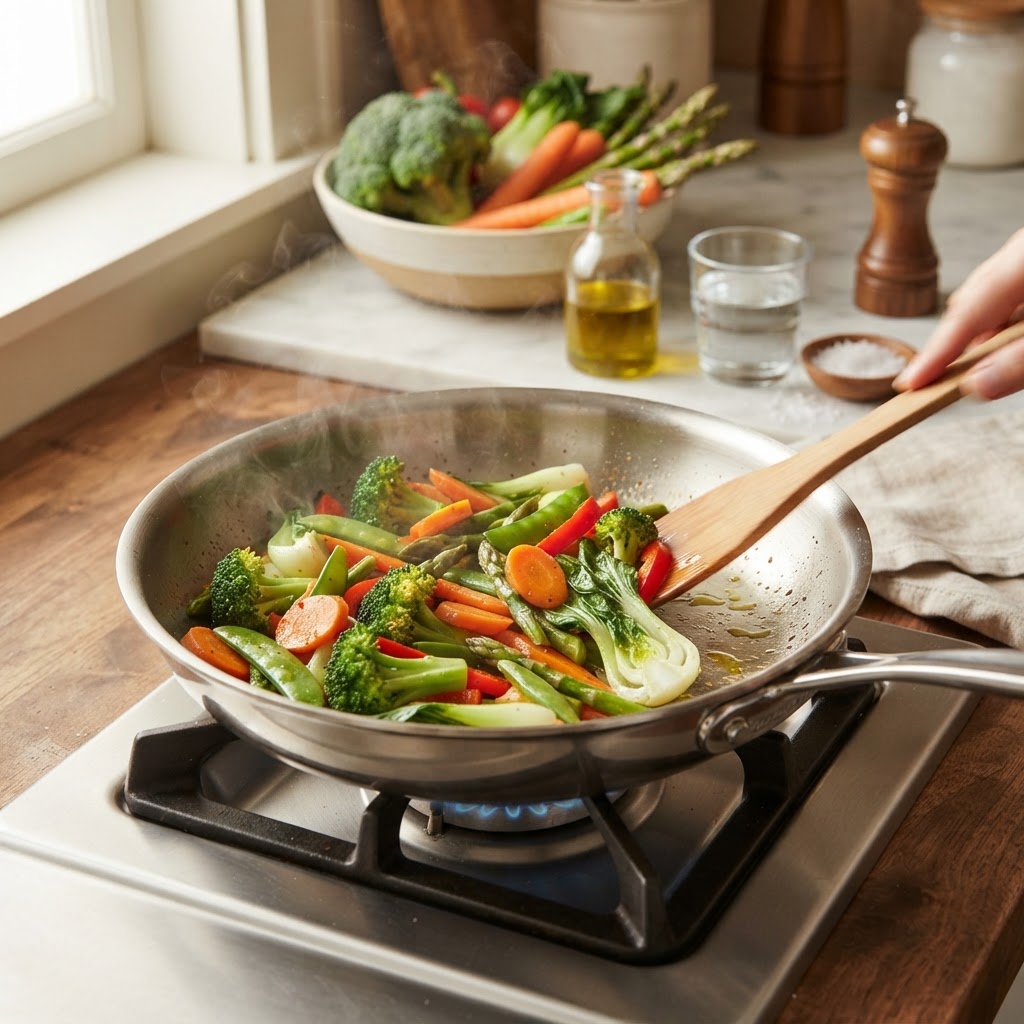
The Healthy Home Cook’s Guide to "Steam-Sautéing": Mastering Water-to-Fat Ratios for Crispy, Low-Oil Vegetables
If you have ever found yourself staring into a frying pan, desperately trying to get a perfect sear on your broccoli without drowning it in a half-cup of olive oil, you know the struggle of the modern home cook. We are constantly told that to achieve that elusive "restaurant-quality" crispness, we need to douse our produce in fat, butter, or oil until it practically glistens under the kitchen lights. Yet, for those of us trying to prioritize health without sacrificing the tactile joy of a well-cooked vegetable, this approach often feels like a compromise between flavor and fitness. We have been conditioned to believe that fat is the only bridge between raw, limp greenery and the vibrant, caramelized perfection we crave, but this is a fundamental culinary misconception that ignores the power of chemistry. By shifting our perspective on how heat, water, and fat interact within the confines of a hot pan, we can unlock a technique that creates superior texture while significantly lowering the caloric impact of our nightly meals.
The technique we are discussing today is known as steam-sautéing, a hybrid method that combines the gentle, internal cooking power of moist heat with the aggressive, browning power of dry heat. Unlike traditional sautéing, which relies entirely on fat to conduct heat from the metal surface to the food, steam-sautéing creates a concentrated environment where the vegetable is essentially poached in its own juices before being finished in a light oil coating. This process ensures that the core of the vegetable is tender and bright, while the exterior achieves a level of caramelization that usually requires a deep-fat fry. It is a masterful control of water-to-fat ratios that allows the cook to bypass the "soggy vegetable" trap entirely. Once you grasp the mechanics of how much steam is enough and when to introduce your fats, you will stop blaming the ingredients for their lackluster results and start claiming your role as the architect of your own healthy plate.
Throughout this guide, we will explore the thermodynamics of this process, identifying the exact tipping points where water evaporates and oil takes over to brown the surface. We will dismantle the myth that you need massive amounts of oil to create a Maillard reaction, showing you that with the right technique, a single tablespoon of fat can be distributed perfectly to achieve intense flavor. Whether you are a beginner looking to improve your midweek stir-fry or an experienced cook attempting to refine your healthy repertoire, this method will change the way you look at your stovetop forever. Prepare to stop relying on heavy oils and start using your pan as a precision instrument of heat and steam. By the time we are finished, you will have the confidence to tackle everything from fibrous kale and hearty carrots to delicate snap peas and asparagus with the precision of a professional chef.
The Chemistry of Steam-Sautéing
At its core, steam-sautéing is an exercise in heat transfer management. When you throw raw vegetables into a screaming hot pan with oil, the immediate result is often uneven cooking; the edges burn while the centers remain tough and undercooked. This happens because the vegetable is full of water, which acts as a heat sink that fights against the hot metal. By introducing a small amount of liquid early in the process, we use that water to "pre-cook" the internal structure of the vegetable. As the water boils off, the temperature of the vegetable rises, and the sudden shift from a moist, steam-heavy environment to a dry, lipid-heavy environment creates the perfect conditions for caramelization and browning.
Understanding the Phase Transition
The transition from steaming to sautéing is the most critical window in the process. You want to add your liquid—whether it is water, vegetable stock, or white wine—when the pan is at a medium-high temperature. You aren't boiling the vegetables; you are creating a flash-evaporation event. The steam generated inside the covered pan cooks the cellular walls of the vegetable, ensuring that they become tender, while the tight lid prevents the escape of volatile flavor compounds. Once the liquid has evaporated, the residual heat and the touch of oil remaining in the pan take over to sear the exterior.
The Role of the Maillard Reaction
The Maillard reaction—that beautiful, nutty browning we associate with great food—requires low moisture and high heat. This is why people typically drown their vegetables in oil. However, once the steaming step is complete, the vegetable is primed for this reaction. Because the interior is already soft, you don't need to leave the vegetables in the pan for as long. A quick, high-heat flash-fry is all that is required to achieve that golden-brown crust. By keeping the moisture controlled during the steaming phase, you preserve the natural sugars in the vegetables, which actually react more readily to the heat once the water is gone.
"True culinary mastery is not about the amount of fat you have in your pantry; it is about the mastery of the transition between moisture and heat. Once you control the evaporation, you control the flavor."
Equipment Essentials for the Healthy Cook
You do not need a fancy set of specialized pans to excel at steam-sautéing, but you do need equipment that manages heat retention effectively. A heavy-bottomed skillet, ideally stainless steel or well-seasoned cast iron, is the superior choice over thin aluminum pans. These materials provide the thermal mass necessary to keep the pan hot even after you add your vegetables and water. A thin pan will drop in temperature instantly when the water is added, resulting in a steamed, soggy mess rather than a perfectly crisp-tender vegetable.
The Importance of the Tight Lid
The second most important piece of gear is a properly fitting lid. If your lid is loose, you lose your steam, which means you lose the ability to cook the interior of the vegetable before the water evaporates. If you don't have a lid that fits your skillet, a flat baking sheet or even a sheet of aluminum foil crimped tightly around the edges will suffice. The goal is to create a sealed environment where the pressure can build slightly, forcing the heat into the densest parts of the produce.
Selecting Your Fat
When we talk about "healthy fats," we want to choose oils that can handle the transition to high heat without degrading. Avocado oil or refined coconut oil are excellent choices for steam-sautéing because they have high smoke points. If you prefer the flavor of olive oil, reserve it for the final 30 seconds of cooking or drizzle it over the vegetables after they have left the heat. This preserves the integrity of the oil's flavor and prevents the compounds from breaking down under excessive, prolonged heat.
Preparing Your Vegetables for Success
Vegetables have different cellular structures, which means they must be prepped in ways that facilitate the steam-sautéing method. Dense vegetables like carrots, broccoli, and cauliflower need to be cut into uniform, smaller pieces to ensure they finish cooking at the same time as the lighter vegetables. If you are mixing varieties—say, peppers and green beans—you must cut the slower-cooking items smaller than the faster-cooking items. This is a foundational chef's technique known as mis en place, where your preparation dictates your cooking success.
Uniformity is Key
When you chop vegetables, think about the surface area. A flat cut provides more surface area for the pan, which means more opportunities for browning. For example, slicing green beans on a bias (at an angle) provides a larger surface area than cutting them straight across. Similarly, breaking broccoli into small, bite-sized florets rather than giant chunks allows the steam to penetrate the stalks, ensuring they are tender right through to the center.
The Salt Factor
One mistake many home cooks make is salting their vegetables far too early. While salting is essential for seasoning, salt draws water out of vegetables via osmosis. If you salt your vegetables before putting them in the pan, you might end up with too much liquid, which can turn your steam-sauté into a boil. Aim to salt your vegetables just as the water is evaporating, or wait until the very end. This keeps the vegetables firm and prevents them from sweating excessively in the initial stages.
"When preparing produce, remember that the knife is your first tool of heat regulation. The more uniform your cuts, the more predictable the cooking time, and the more consistent the final result on the plate."
Mastering the Ratio: Water-to-Fat
This is the "secret sauce" of the steam-sautéing method. The goal is to use just enough water to cook the vegetable through without turning it into mush, and just enough fat to provide the flavor and the sear. A good starting ratio is two tablespoons of water to one tablespoon of fat per pound of vegetables. However, this can be adjusted based on the water content of the produce itself.
The Water Ratio Adjustments
High-Water Vegetables (Zucchini, Peppers, Mushrooms):* Use very little water, perhaps only one tablespoon, as these vegetables release their own moisture quickly.
Dense/Fibrous Vegetables (Broccoli, Cauliflower, Carrots, Green Beans):* Start with two to three tablespoons of water to ensure they soften before the sear.
Leafy Greens (Kale, Chard, Spinach):* Often, no added water is necessary, as the residual water from washing the leaves is usually sufficient to generate the required steam.
The Fat Application
You want to apply your fat in two stages for the best results. Start by adding a very thin coating of oil to the pan when you add the vegetables—this acts as an emulsion base for the steam. Then, once the water has evaporated and you are ready to crisp, drizzle the remaining portion of your fat over the vegetables. This ensures the fat is fresh and flavorful on the surface rather than having been boiled off during the steam phase.
A Step-by-Step Execution Guide
To successfully execute this technique, follow these steps with intention. Do not rush the process. The transition from the "steam" phase to the "sauté" phase is where the magic happens, and it requires you to be present at the stove, listening for the change in sound.
The Procedure
Troubleshooting the Method
If your vegetables are browning before they are soft, your heat is too high, or you didn't add enough water. If your vegetables are soft but have zero color, your pan wasn't hot enough, or you failed to evaporate the moisture before serving. The "sizzle" is your indicator; when the sound of boiling water stops and the sound of searing oil takes over, you are in the "flavor zone."
Elevating the Flavor Profile
Steam-sautéing provides a blank canvas for flavor. Because the vegetables are cooked gently, they retain their natural sweetness, which makes them the perfect base for aromatics and spices. However, because you are using high heat at the end of the process, you must be careful not to burn delicate herbs or dry spices.
Integrating Aromatics
Garlic, ginger, and shallots are the holy trinity of the aromatics world. Because they burn quickly, do not add them at the beginning of the steam process. Wait until the water has evaporated and you are in the final "crisp" phase. Adding garlic in the last 45 seconds of cooking allows it to infuse the oil and the vegetables without turning bitter.
Acid and Herbs
To finish the dish, a touch of brightness is essential. A squeeze of fresh lemon juice or a dash of high-quality vinegar can cut through the richness of the oil and bring out the vibrancy of the vegetables. Add your acid after you remove the pan from the heat. Finish with fresh, soft herbs like parsley, cilantro, or basil just before serving to maintain their color and aromatic oils.
Citrus:* Lemon or lime juice adds a necessary lift to earthy vegetables like carrots.
Umami:* A splash of soy sauce or tamari during the searing phase creates a savory glaze.
Heat:* Red pepper flakes added during the crisping phase infuse the oil with a gentle warmth.
The Professional Chef’s Perspective
When you work in a high-end kitchen, you learn quickly that the "healthy" way of cooking is often just a matter of technique rather than a lack of ingredients. Professional chefs often use the steam-sauté method (or "basting," as it’s sometimes called in meat cookery) because it guarantees consistency. When you are serving hundreds of plates a night, you cannot afford to have broccoli that is simultaneously burnt and raw. The steam-sauté method is your insurance policy against inconsistency.
Why This Method Wins
It wins because it honors the ingredient. By steaming the vegetable, you are preserving the vitamins and minerals that would otherwise leach out into a boiling pot of water. By sautéing the vegetable, you are creating the chemical reaction necessary for deep, complex flavor. It is the best of both worlds, packaged into a single, efficient process. It is also remarkably fast, which is the ultimate benefit for the busy home cook who wants to get a nutritious dinner on the table in under 15 minutes.
Staying Consistent
Keep a journal if you are just starting out. Note which vegetables need more water, which ones brown the fastest, and which ones pair best with specific fats. You will find that after just a few attempts, you won't need to measure the water or set a timer. You will cook by intuition—the sight of the steam, the smell of the browning sugars, and the sound of the sizzle will guide you.
"The kitchen is a laboratory of flavors, and the pan is your vessel. Do not let the simplicity of a vegetable fool you; there is infinite complexity to be found in the perfect sear."
Final Thoughts
The journey to becoming a better home cook is paved with small, incremental changes in technique. Transitioning away from the "drown it in oil" mentality is one of the most significant steps you can take toward healthier eating, but it requires the right tools and the right mindset. By mastering steam-sautéing, you are not just making "healthy vegetables"—you are making delicious, restaurant-quality sides that happen to be good for you. You are reclaiming control over your nutrition without surrendering the textures and flavors that make food a joy to consume.
Remember that perfection is a moving target. Some nights your broccoli will be a little softer, some nights a little crisper. That is the beauty of cooking at home. It is a living, breathing process that rewards observation, practice, and the willingness to learn from your own pan. Do not blame the chef when a dish doesn't turn out quite right; instead, look at the heat, the moisture, and the time, and adjust accordingly. You have all the skills you need to be an expert in your own kitchen.
Start tonight. Grab your favorite pan, a bunch of fresh produce, and a little bit of water. Practice the phase transition, monitor the sizzle, and enjoy the result. Your body will thank you for the extra nutrients, and your palate will thank you for the depth of flavor you have finally managed to unlock. This is the new standard for the healthy home cook—crispy, vibrant, flavorful, and entirely under your control. Happy cooking!
Get the Next Recipe
Weekly recipes, techniques, and gear picks — straight to your inbox.
