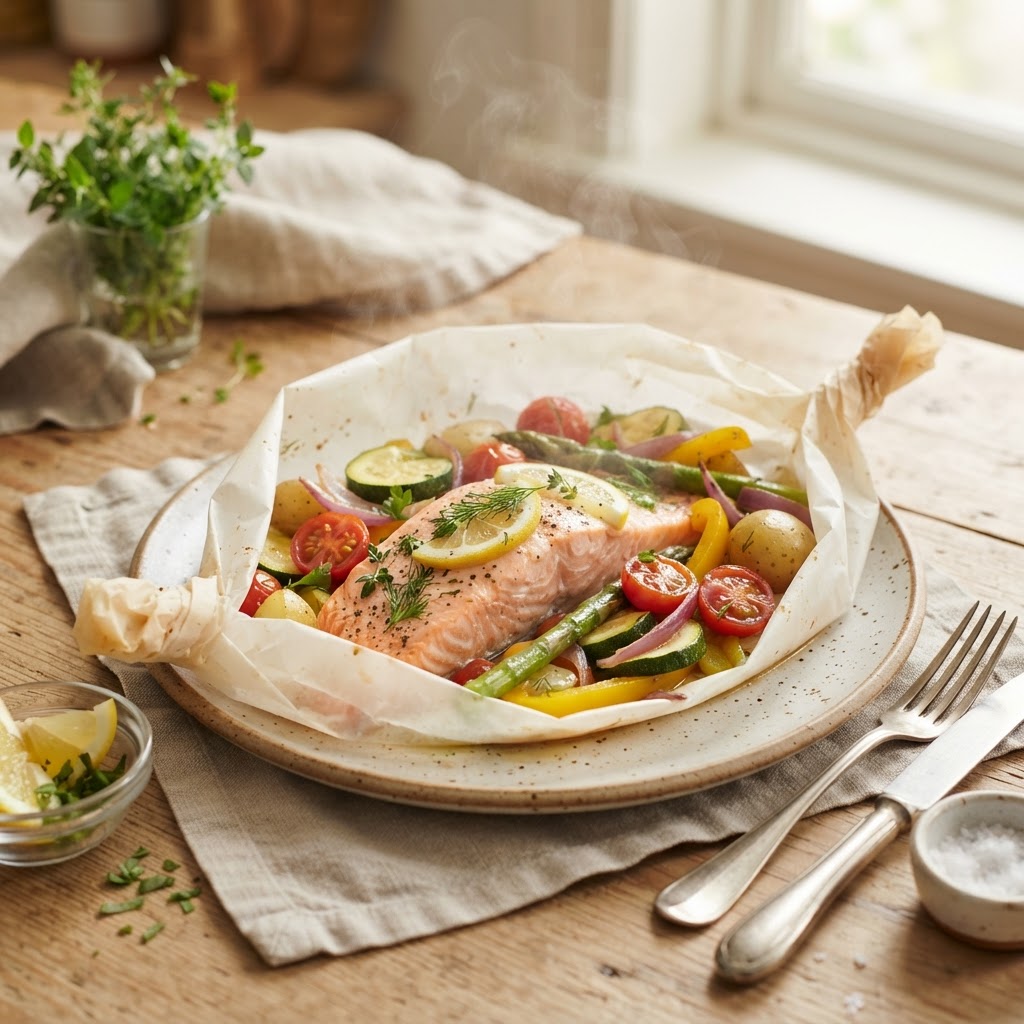
The Healthy Home Cook’s Guide to "Steaming-in-Parchment": Mastering En Papillote Techniques for Perfectly Moist, Oil-Free Protein and Vegetables
In the world of professional kitchens, there is often a misconception that high-end cooking requires buckets of butter, heavy reductions, and aggressive frying to achieve flavor. As a chef, I have spent decades in environments where the hustle and heat define the palate, yet some of my most profound culinary epiphanies occurred when I stripped away the heavy equipment and returned to the simplest of methods. En papillote, or cooking in parchment, represents the pinnacle of this philosophy, acting as a gentle incubator that coaxes the absolute best out of fresh ingredients without the need for excess fats. When you seal food within a paper parcel, you are not merely cooking; you are creating a micro-climate where steam, aromatics, and juices circulate in a perfectly controlled environment.
Mastering this technique is a rite of passage for any home cook looking to elevate their weeknight meals from functional sustenance to elegant, nutrient-dense experiences. By utilizing the natural moisture within vegetables and lean proteins, you eliminate the need for heavy oils or fats, making this an unparalleled method for health-conscious individuals. The beauty lies in the presentation—there is an undeniable theater to sliding a puffed, golden-brown parcel onto a guest's plate and watching them break the seal to release a fragrant cloud of steam. It is clean, it is sophisticated, and perhaps best of all, it results in virtually zero cleanup, as the parchment acts as both cooking vessel and serving dish.
Throughout this guide, we will explore the science of steam, the essential ingredients that create harmonious flavor profiles, and the precise techniques required to ensure your parcels are sealed tight and cooked to perfection. Whether you are preparing a delicate piece of white fish, a cluster of summer vegetables, or even a spiced chicken breast, the principles of parchment cooking remain steadfast and reliable. My goal is to demystify this classic technique so that you can approach it with the confidence of a seasoned chef. Let us embark on this journey toward healthier, more flavorful, and infinitely more manageable cooking, proving that you do not need to drown your food in butter to achieve a five-star result.
The Science of the Parchment Pocket
Cooking en papillote is essentially a masterclass in pressure cooking at atmospheric levels. When you wrap ingredients in parchment paper and fold the edges to create an airtight seal, you are capturing the steam released from the food itself. As the internal temperature rises within the parcel, the water content in your fish, chicken, or vegetables evaporates, creating a pressurized environment that cooks the food gently and evenly. Because the moisture cannot escape, the protein is effectively poached in its own juices, ensuring a texture that is remarkably moist and tender, even with lean cuts that would otherwise dry out in a standard oven.
The magic of *en papillote* lies in the synergy of the seal; when you fold the paper tightly, you are not just keeping the steam inside, but locking in the volatile aromatic compounds that would otherwise drift away into the kitchen air.
The beauty of this method is the total elimination of fat as a medium for heat transfer. In traditional cooking, we use oil or butter to prevent sticking and to conduct heat; here, the steam performs that duty entirely. This is a game-changer for those monitoring their caloric intake or heart health. Furthermore, because the environment is so mild, you preserve the delicate nutritional integrity of the ingredients, particularly vitamins and minerals that are often leached away during boiling or long-term roasting. The result is a vibrant, flavorful meal that retains its natural color and structural integrity.
Understanding the Humidity Factor
The ratio of ingredients is crucial to the success of your parcel. You want to include components that release high amounts of water, such as zucchini, sliced tomatoes, or mushrooms, to serve as the "steaming agent." If you are using drier ingredients, you may need to introduce a splash of citrus juice, dry white wine, or vegetable broth to provide the necessary moisture. The goal is to reach a balance where the parcel is plump with steam but not soggy or swimming in excess liquid. Professional chefs often view the parchment as a self-basting container; as the steam rises, it hits the top of the paper, condenses, and rains back down onto the food, basting it continuously throughout the cooking process.
Essential Tools and Materials for the Perfect Seal
You do not need a specialized kit to excel at parchment cooking, but the quality of your materials can make a significant difference in the final product. High-quality, silicone-coated parchment paper is the only medium you should use for this task. Unlike wax paper, which can melt or catch fire at higher temperatures, or aluminum foil, which can react with acidic ingredients like lemon juice or tomatoes, parchment paper is heat-resistant, non-stick, and allows the food to breathe slightly without letting the steam escape. I recommend keeping a roll of professional-grade, unbleached parchment paper in your pantry at all times.
The Art of the Fold
The "seal" is the most technical aspect of this entire culinary project. If your parcel leaks, the pressure is lost, and the food will merely bake rather than steam. To achieve the perfect fold, place your ingredients in the center of a heart-shaped or round piece of parchment. Fold one half over the other, and then start at one end, folding the edges over themselves in small, overlapping pleats. Ensure each fold overlaps the previous one by about half an inch. Continue this all the way around the edge of the parcel, ending by twisting the final tip firmly underneath the bundle. This creates a structural crimp that is strong enough to withstand the pressure of the expanding steam.
* Use a large enough sheet of paper: Always err on the side of a larger sheet to ensure you have enough room to fold the edges over securely.
* Practice your pleats: The tighter the pleat, the better the seal. Don't be afraid to take a little extra time to ensure the structural integrity of your parcel.
* Use scissors for precision: Trimming the parchment into a clean, symmetrical shape before folding makes the crimping process significantly easier and more professional in appearance.
Selecting Proteins for Success
Not all proteins are created equal when it comes to steaming. Because the cooking environment is gentle, you should avoid tough cuts of meat that require long, slow braising or high-heat searing to break down connective tissue. Instead, focus on ingredients that cook quickly. White fish such as cod, halibut, tilapia, or sea bass are absolute showstoppers in parchment. They become buttery and flaky within minutes. Scallops and shrimp are also exceptional candidates, though you must be careful not to overcook them, as they can go from tender to rubbery in a matter of seconds.
Preparing Poultry and Plant-Based Proteins
If you are working with poultry, thinly sliced chicken breast or cutlets are the way to go. Because chicken is a denser protein than fish, it is vital to pound the meat to an even thickness—no more than half an inch—to ensure it finishes cooking at the same rate as your vegetables. For those pursuing a vegetarian or vegan lifestyle, tofu, tempeh, or hearty mushrooms like king oysters work beautifully. Mushrooms, in particular, provide a wonderful umami depth when steamed, absorbing the surrounding aromatics and becoming incredibly savory.
When working with lean protein like chicken breast, think of the parchment parcel as a vehicle for infusion; the aromatics inside the bag will permeate the meat far more deeply than they would in an open-air roasting pan.
When prepping your protein, consider the "resting time." Even though the protein is steaming in the bag, it still benefits from a minute or two of resting before you open the parchment. This allows the juices to redistribute and the internal heat to stabilize. If you are serving an entire table, keep the parcels sealed until the very last second so that each guest experiences that aromatic, fragrant explosion when they cut into their own individual portion.
Harmonizing Aromatics and Vegetable Pairings
The "base" of your parcel is just as important as the protein. By layering vegetables at the bottom, you create a bed that elevates the protein and prevents it from sticking to the parchment while also providing a flavor foundation. Consider a base of julienned leeks, shaved fennel, or thinly sliced carrots. These vegetables hold their structure well under steam and provide a sweet, earthy contrast to the protein. As the steam rises, it carries the essence of these aromatics into the protein, effectively seasoning it from the bottom up.
Building Complex Profiles
Do not be afraid to experiment with your aromatics. Fresh herbs are essential—think tarragon, dill, parsley, or thyme. A slice of lemon or lime provides the necessary acidity to balance the richness of fish, while a touch of fresh ginger or garlic adds brightness to poultry or tofu. For a deeper flavor profile, incorporate a splash of wine, vermouth, or even a dash of soy sauce or miso paste into the mix. Remember, because you are trapping the moisture, a little bit of flavor goes a long way. You don't need heavy sauces here; the liquid created by the steam and the vegetables is essentially a vibrant, naturally reduced broth.
Citrus Notes:* Lemon, lime, or orange zest for a bright, floral finish.
Alliums:* Sliced shallots, garlic slivers, or spring onions for savory depth.
Herbal Infusions:* Fresh tarragon for fish, rosemary for chicken, or cilantro for shrimp.
Heat:* A few thin rings of chili or a pinch of crushed red pepper flakes to wake up the palate.
Mastering Timing and Temperatures
The golden rule of en papillote is to keep your oven temperature consistent. I generally recommend a temperature of 400°F (200°C). This temperature is hot enough to generate immediate, vigorous steam but not so hot that it threatens to scorch the parchment paper. At this temperature, a standard 6-ounce fillet of white fish combined with thin-cut vegetables will typically require between 10 to 12 minutes. If you are using chicken, you will need to push that to 15 to 18 minutes, depending on the thickness of your cutlet.
The Visual Cues of Perfection
How do you know it is done without opening the bag? Watch for the "puff." A properly sealed parcel will inflate significantly in the oven as the steam builds up. Once you see the parcel looking fully inflated and the parchment paper starting to turn a light, golden brown at the crimped edges, you are likely in the target zone. If the parcel is flat, you have a leak; don't panic, just check the internal temperature of the protein with a digital probe thermometer if you are worried, but trust your nose. You will often smell the aromatics once the protein is cooked through.
It is helpful to develop a "log" of your cooking times. Every oven behaves differently; a gas oven with a hot spot will behave differently than a convection electric oven. When starting out, do not be afraid to peek after 10 minutes. If you find the fish isn't quite opaque or the chicken feels too firm, you can always reseal the parcel—though you may need to use a clean piece of parchment—and pop it back in for two more minutes. Over time, you will develop an intuitive sense of timing that makes this one of the most reliable tools in your culinary arsenal.
Why This Method is the Ultimate "Healthy" Choice
Modern health-conscious cooking often gets stuck in a cycle of "steamed broccoli and boiled chicken," which inevitably leads to burnout and a return to less-healthy habits. En papillote breaks this cycle by providing a method that is inherently low-calorie but high-sensory. Because you are cooking in a vacuum of flavor, you don't miss the butter or oil. The natural sweetness of the vegetables is intensified by the steam, and the protein remains succulent, creating a eating experience that feels indulgent despite its clean profile. It is the perfect antidote to the "diet fatigue" that plagues many home cooks.
The Psychological Benefit of the Parcel
There is a profound psychological benefit to the en papillote presentation. When you place an individual, beautifully sealed parcel in front of a guest or family member, it signals care and intentionality. It feels like a gift. For the home cook, it is a massive weight off your shoulders regarding clean-up. When the meal is done, you simply discard the paper. There are no heavy pans to scrub, no greasy stovetops to wipe down. This efficiency encourages more frequent cooking at home, which in turn leads to better long-term nutritional choices. It is a sustainable habit-forming approach to kitchen management that benefits your health and your sanity simultaneously.
If you want to transform your kitchen into a sanctuary of health without sacrificing the joy of eating, master the parchment pocket. It is the ultimate bridge between culinary artistry and nutritional necessity.
When you start to view your food as a series of aromatic, hydrating, and nutritious combinations, the grocery store becomes a much more exciting place. Instead of looking for "lean" proteins as a chore, you begin looking for ingredients that will behave best under pressure. You start buying the freshest herbs, the crispest greens, and the most vibrant citrus because you know exactly how they will perform once the parchment is sealed. You are no longer just cooking; you are curating.
Final Thoughts
The art of en papillote is a testament to the idea that simplicity is the ultimate sophistication. By mastering the delicate balance of heat, moisture, and aromatics, you gain the ability to create meals that are light, nourishing, and deeply flavorful. This is not just a cooking technique; it is a philosophy that prioritizes the integrity of the ingredient and the health of the cook. Whether you are serving a formal dinner party or preparing a quick, nourishing meal for yourself after a long day, the parchment parcel remains a reliable, clean, and elegant solution.
As you begin your practice, remember that every chef has had their fair share of leaky parcels and overcooked fish. The beauty of this method is its forgiving nature and the speed at which you can iterate. Use the professional tips provided here—the specific oven temperatures, the importance of the crimped seal, and the careful selection of high-moisture aromatics—as your foundation. Then, take the liberty to experiment. Introduce your favorite spices, try different proteins, and play with the geometry of your vegetable cuts.
Finally, do not underestimate the sheer joy of the unveiling. The moment the steam dissipates and the aroma of your creation fills the room is a unique sensory pleasure that traditional stove-top or oven cooking rarely replicates. It is a culinary interaction that involves the diner in the final moments of the cooking process. As you continue your journey toward becoming a healthier, more confident home cook, let the parchment paper be your guide. It is an affordable, accessible, and high-reward way to elevate your culinary repertoire. Keep the parchment, keep the heat controlled, and always keep experimenting—because in the kitchen, the chef is the architect of the experience, and with this guide, you have everything you need to build something extraordinary. Happy cooking, and remember, when the flavors shine through this perfectly, you definitely do not need to blame the chef.
Get the Next Recipe
Weekly recipes, techniques, and gear picks — straight to your inbox.
