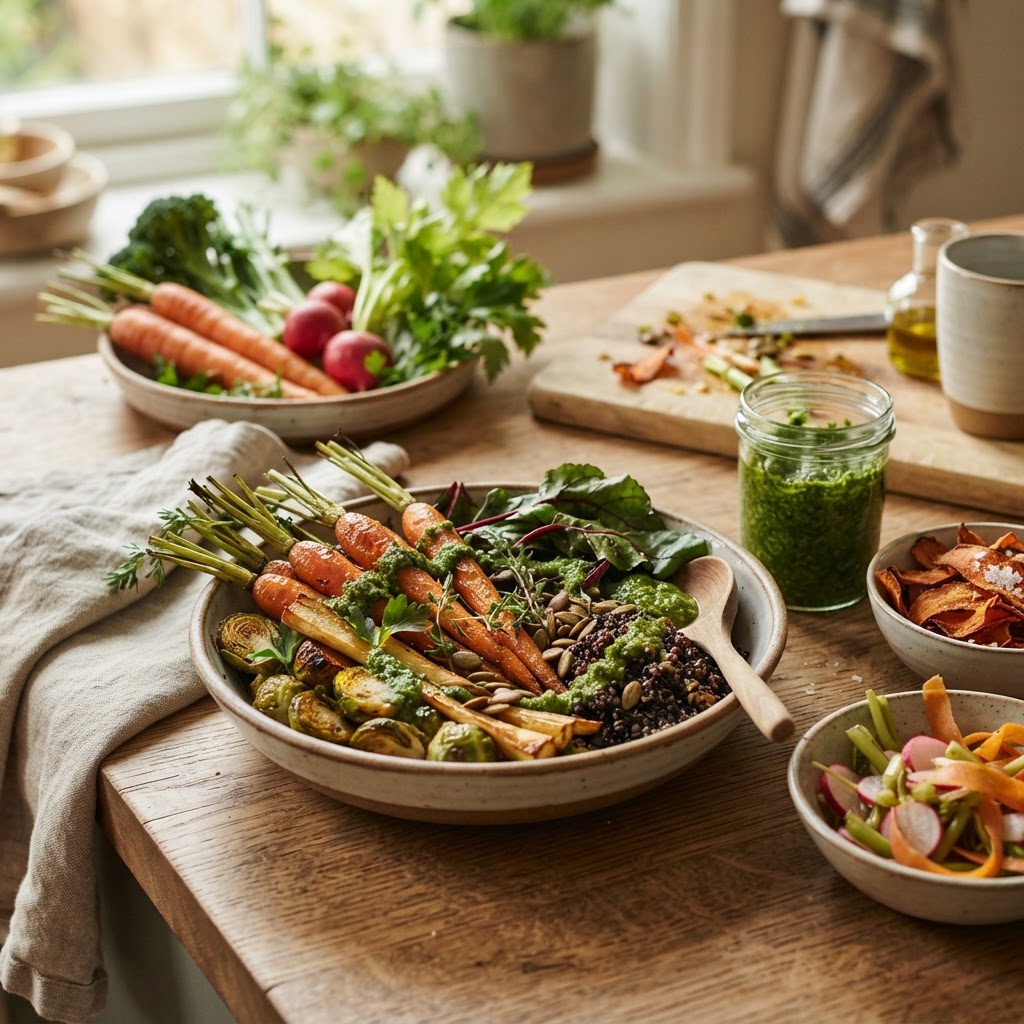
The Healthy Home Cook’s Guide to "Zero-Waste" Root-to-Stem Cooking: How to Maximize Nutrition and Minimize Kitchen Scraps
In the modern kitchen, the culinary philosophy of "root-to-stem" has shifted from a fringe environmental movement to a cornerstone of sophisticated, healthy home cooking. We often find ourselves discarding the very parts of our vegetables that hold the most concentrated phytonutrients, fiber, and intense flavor profiles. By re-evaluating what we define as "waste," we unlock a pantry’s worth of hidden ingredients that can transform a simple meal into something truly exceptional. This shift requires a change in perspective, seeing a broccoli stalk not as a woody burden, but as a tender, nutrient-dense component waiting to be shaved, pickled, or sautéed. As home cooks, our responsibility is to bridge the gap between efficiency and epicurean delight, ensuring that every harvest is honored from tip to tail.
Embracing this holistic approach is fundamentally linked to the concept of nutrient density, which is the gold standard for anyone aiming to improve their health through food. Many of the most potent antioxidants are stored in the skins, peels, and outer leaves of our produce, parts that are typically banished to the compost bin before they ever touch a cutting board. When you commit to using the whole plant, you aren't just saving money and reducing your environmental footprint; you are significantly increasing the vitamins, minerals, and bioactive compounds present in your daily intake. This guide will walk you through the professional techniques used to elevate these often-overlooked scraps into the stars of your culinary repertoire. We are stripping away the traditional culinary boundaries of what is considered "edible" and replacing them with a sustainable, flavor-forward mindset.
Getting started with root-to-stem cooking is simpler than most home cooks imagine, provided you have a few core techniques under your belt. It is about understanding texture, mastering heat, and appreciating the bitterness and earthiness that these "scraps" bring to the table. We will explore how to turn vegetable peels into crispy snacks, how to utilize brassica stems in delicate pestos, and why your herb stems deserve a permanent place in your aromatics drawer. By the time you finish this guide, you will look at your vegetable drawer with new eyes, seeing a wealth of potential where others see trash. Prepare to fundamentally change the way you cook, consume, and create in your own kitchen, one stalk and one skin at a time.
The Art of the Vegetable Stock: Liquid Gold from Scraps
The foundation of every great kitchen is a rich, flavorful stock, yet many cooks rely on store-bought bouillon or boxed liquids that are often laden with sodium and preservatives. Creating a zero-waste vegetable stock is the easiest entry point into root-to-stem cooking because it is entirely forgiving and highly rewarding. The goal here is to create a library of scraps in your freezer, a "stock bag" that acts as a repository for all the nutrient-rich ends that didn't make the final cut of your dinner preparations.
Building Your Stock Bag
To build a consistent, flavorful stock, you must be selective about what goes into your freezer bag. Focus on the aromatics: onion skins (which add a beautiful golden color), carrot ends, celery tops, parsley stems, leek dark greens, and mushroom stalks. Avoid cruciferous vegetables like broccoli, cauliflower, or Brussels sprouts, as their sulfurous compounds can turn a stock bitter when boiled for a long duration.
The Simmering Process
When you are ready to brew your liquid gold, do not rush the process. Place your frozen scraps in a heavy-bottomed stockpot and cover them with cold, filtered water. Bring the mixture to a gentle boil, then immediately drop the heat to the lowest possible simmer. Unlike meat stocks that can be boiled for hours, vegetable stocks generally peak in flavor after 45 to 60 minutes. Boiling them for too long can result in a flat, muddy taste.
"True culinary sustainability isn't just about saving the planet; it is about respecting the full spectrum of flavor hidden within the ingredients we often treat as disposable. When we stop throwing away potential, we unlock a richer, more vibrant kitchen."
Transforming Peels, Skins, and Stems into Crispy Delicacies
One of the most transformative techniques in the zero-waste kitchen is the conversion of vegetable skins—specifically those of potatoes, sweet potatoes, beets, and parsnips—into nutrient-packed crisps. Most of the fiber and concentrated mineral content in root vegetables resides just beneath the skin. By keeping the skins on, or utilizing them separately, you are making a conscious choice to boost the nutritional profile of your snacks while simultaneously cutting down on kitchen waste.
The Oven-Roasting Technique
To achieve the perfect crunch without deep-frying, temperature control is paramount. Preheat your oven to 400°F (200°C) and prepare a rimmed baking sheet with a piece of parchment paper. Toss your clean vegetable peels with a high-smoke-point oil like avocado or grapeseed oil. Season them aggressively with sea salt, smoked paprika, or dried herbs. Spread the peels out in a single layer, ensuring they are not overlapping, which prevents them from steaming instead of crisping.
Achieving Texture and Balance
The secret to superior vegetable skin chips is the Maillard reaction, which occurs when sugars and amino acids brown, creating deep, complex flavors. Bake the skins for 12 to 18 minutes, flipping them halfway through to ensure even browning. Keep a close watch in the final minutes, as the thickness of the peels can lead to burning quickly. These crisps are not just great for snacking; they add a professional-grade textural element to soups, salads, and grain bowls.
* Use a vegetable peeler to get thin, uniform ribbons for consistent cooking.
* For tougher skins like beet, consider a very light dusting of nutritional yeast for an umami-packed flavor profile.
* Store your finished crisps in an airtight container to keep them crunchy for up to three days.
Utilizing Brassica Stems: The Hidden Crunch
Broccoli and cauliflower stalks are often the most tragic victims of kitchen waste, discarded simply because they are slightly tougher than the florets. However, the stems are arguably the sweetest, most tender parts of these plants if handled with the right technique. By incorporating these stems into your cooking, you are essentially getting a "buy one, get one free" deal on your produce, adding substantial volume and fiber to your meals.
Shaving and Slicing Techniques
For the best results, you must remove the thick, fibrous outer layer of the broccoli or cauliflower stalk using a paring knife or a vegetable peeler. Once the woody exterior is removed, the interior is incredibly tender and mild. You can then slice the stalk into thin coins or use a mandoline to create delicate ribbons. These ribbons are excellent raw in a slaw or quickly sautéed with garlic and lemon zest for a bright, crunchy side dish.
Pesto from Leftover Greens
Beyond the stems, the outer leaves of cauliflower and broccoli are entirely edible and packed with vitamins. Do not discard them. Instead, blanch these greens for 30 seconds in boiling water, shock them in an ice bath, and pulse them in a food processor with garlic, pine nuts, olive oil, and parmesan. This creates a nutritionally superior pesto that mimics the flavor of basil while utilizing the most nutrient-dense leaves of the plant.
"A great chef knows that the 'scrap' is merely an ingredient that hasn't found its proper context yet. By applying heat, acid, and a bit of creativity, what we once called garbage becomes the foundation of our most inspired dishes."
Herb Stem Infusions and Aromatics
How often do we pluck the leaves off cilantro, parsley, or dill and toss the stems, believing they are flavorless? In reality, the stems contain a higher concentration of the aromatic oils that define the herb's flavor. Using herb stems as a base for your cooking fats is a pro-level technique that brings a subtle, herbaceous depth to every dish you touch.
Infused Oils and Butters
Collect your woody cilantro stems or parsley stalks and clean them thoroughly. You can mince these stems finely and sauté them as the base for stir-fries, or steep them in warm oil to create a vibrant herb-infused base. If you are making compound butter, finely chop the tender parts of the stems and fold them into softened salted butter, then roll the butter into a log and chill. This creates a perfect finish for a seared steak or a piece of white fish.
The Power of Stem Aromatics
In many Southeast Asian cuisines, cilantro stems are an essential ingredient in curry pastes. They add an earthiness that leaves alone cannot provide. Try pounding your herb stems into a paste with garlic, ginger, and chili to create a robust foundation for a Thai-style soup. By integrating these stems, you aren't just minimizing waste; you are building flavor layers that create a much more complex and professional final product.
Fermentation: The Ultimate Zero-Waste Tool
Fermentation is perhaps the most ancient and effective method for preserving the parts of plants we would otherwise throw away. The process of lacto-fermentation transforms tough stalks, peels, and stems into tangy, probiotic-rich powerhouses. Not only does this extend the shelf life of your ingredients, but it also creates a unique flavor profile that adds brightness to heavy meals.
Lacto-Fermenting Scraps
You can ferment almost any vegetable stem or peel using a simple 2% salt brine solution. For every 500 grams of vegetable material, add 10 grams of sea salt. Pack the scraps tightly into a sterilized glass jar, ensuring that the vegetables are completely submerged under the brine. You can use a weight or a clean cabbage leaf to keep the scraps below the surface.
The Timeline of Flavor
* Let your ferment sit at room temperature for 3 to 7 days, depending on your preferred level of tanginess.
* During the first few days, you may notice bubbles—this is a healthy sign of microbial activity.
* Once the desired level of acidity is reached, transfer the jar to the refrigerator. These fermented scraps are incredible chopped into salads, layered into sandwiches, or eaten as a digestive aid before a meal.
Rethinking Root-to-Stem Fruit and Vegetables
We often focus on the leaves and stalks, but the peels of citrus and the cores of certain fruits are equally valuable in a zero-waste home kitchen. Citrus zest is common, but what about the pith? Or the core of an apple? These elements can be repurposed to create syrups, infusions, and even natural cleaning agents, proving that the kitchen never has to see a bin if you are creative enough.
Citrus Pith and Peel Syrups
Instead of just zesting your lemons or oranges, use the entire peel to make a concentrated citrus syrup. Simply combine the peels with equal parts sugar and water, let the mixture simmer for 15 minutes, and then steep for an hour. This syrup is perfect for cocktails, sparkling water, or drizzling over yogurt and fruit. You can even dry the excess peels in a low-temperature oven (200°F) until brittle and pulse them into a powder to use as a citrus seasoning for baking.
Apple Cores and Water Infusions
Apple cores are packed with pectin, which is the natural setting agent for jams and jellies. If you are making a large batch of homemade jam, save your apple cores and simmer them in a small amount of water to create a pectin-rich liquid that you can add to your fruit preserves. Alternatively, steep your apple cores in a pitcher of water with a cinnamon stick for a refreshing, zero-calorie infusion that tastes like autumn in a glass.
Advanced Techniques: Dehydration and Powders
If you want to achieve professional status as a zero-waste cook, you must invest in a dehydrator or learn to use your oven’s lowest setting effectively. Creating powders from dried vegetable scraps is the pinnacle of root-to-stem cooking. These powders act as "flavor bombs" that can be hidden in everything from morning smoothies to evening gravies, adding concentrated nutrients without altering the volume of your meal.
Making Vegetable Powders
To make a nutrient-dense powder, collect ingredients like kale stems, dried herb stalks, tomato skins, or mushroom trimmings. Dehydrate these until they are completely bone-dry and snap easily when bent. Pulse them in a high-speed blender or a spice grinder until they turn into a fine dust. You can store these powders in small jars and use them to thicken soups, add umami to roasted vegetables, or boost the protein and mineral content of a homemade salad dressing.
Precision Dehydration
The key to success is low, slow heat. Set your oven to 150°F to 170°F and leave the oven door slightly ajar to allow moisture to escape. It may take several hours, but the resulting flavor intensity is unmatched. Mushroom powder, for instance, can elevate a simple beef stew into a gourmet dish with just one teaspoon, providing a deep, savory punch that would otherwise take hours to build through traditional stock-making.
"When you utilize the whole plant, you aren't just avoiding waste; you are capturing the entire history of the ingredient. The intensity of flavor found in the dehydrated skin of a tomato or the pulverized stalk of a mushroom represents the true soul of culinary craft."
The Economics and Ethics of Zero-Waste
Moving toward a root-to-stem lifestyle is not just an exercise in cooking; it is an economic strategy that significantly reduces your monthly grocery expenditure. When you stop throwing away 20% to 30% of your produce, your food budget effectively expands. This allows you to invest in higher-quality, organic, or locally sourced produce, further increasing the nutritional value of your meals.
Tracking Your Savings
Start by taking a photo of your compost bin before and after adopting these techniques. The shift will be dramatic. By repurposing vegetable ends, you are also reducing the number of shopping trips you need to make for stock, garnishes, or flavorings. This creates a more self-sufficient home kitchen that is less reliant on external supply chains and pre-packaged goods, which is a major victory for both your wallet and your carbon footprint.
Ethical Consumption
Choosing to use the entire vegetable is an act of gratitude toward the resources that went into growing that food. It takes water, energy, and soil health to produce a single carrot or a head of broccoli; by consuming the whole plant, you are honoring that labor. This mindfulness extends beyond the kitchen, fostering a deeper connection with the food on your plate and the ecosystem that provides it. It is a slow, steady revolution that begins with your knife skills and ends with a significantly reduced impact on the world around you.
Final Thoughts
The journey toward root-to-stem cooking is a marathon, not a sprint. You do not need to overhaul your entire kitchen in a single day. Start by keeping a simple stock bag in your freezer, or try roasting your potato skins instead of peeling them into the bin. As you become more comfortable with these ingredients, your confidence will grow, and your kitchen will naturally evolve into a space of extreme efficiency and heightened flavor.
Remember that the goal is progress, not perfection. There will be days when you are too tired to dehydrate tomato skins or make a pesto from cauliflower leaves, and that is perfectly fine. The beauty of this philosophy is its flexibility. It is about building habits that serve your health and your planet, one meal at a time. Every stalk, every stem, and every peel you save contributes to a larger picture of culinary stewardship.
As you continue to refine your process, share what you learn with others. Teach your family how to turn broccoli stems into a slaw, or show a friend how to make a rich, flavorful broth from the scraps they once thought were trash. By spreading this knowledge, you are contributing to a movement that prioritizes health, waste reduction, and the fundamental joy of good cooking. You have the tools, the techniques, and the knowledge—now, go into your kitchen and let your creativity flourish. The most delicious parts of your meal are waiting in the compost bin; it is time to bring them to the table and show them the respect they deserve.
Continue to challenge yourself by experimenting with new ingredients. Have you ever tried fermenting watermelon rinds? Or turning carrot tops into a vibrant chimichurri? The possibilities are endless when you stop viewing food through the narrow lens of traditional waste. Every piece of produce has a story to tell and a flavor to offer; your job is simply to provide the space for those flavors to shine. Stay curious, stay hungry, and keep cooking with intention. You are the master of your kitchen, and with these root-to-stem techniques, there is no limit to the culinary excellence you can achieve.
To further your mastery, consider documenting your own "zero-waste" recipes. Keep a small notebook of which scraps respond best to which cooking methods. You will find that certain vegetables, like beets and carrots, have very similar scrap profiles and can be interchanged in stocks and powders with ease. This builds your own internal culinary archive, allowing you to move away from recipes and toward an intuitive, skill-based way of cooking that serves you for a lifetime. Your kitchen is now a closed-loop system of flavor, and that is a truly wonderful thing.
As you grow more adept, you will find that the distinction between "ingredient" and "scrap" begins to blur entirely. When you buy a bunch of carrots, you aren't just buying the root; you are buying the entire plant, and you will find uses for all of it. This mindset shifts your entire relationship with the grocery store and the kitchen. You become a more thoughtful consumer and a more skilled cook, and ultimately, a healthier individual. The path of root-to-stem cooking is a rewarding one, and it is a privilege to walk it alongside you. Keep pushing boundaries, keep exploring, and most importantly, enjoy the incredible flavors that were hiding in plain sight all along.
The final piece of advice is to stay present in your cooking. Don't look at the peels and stems as another task; look at them as an opportunity. When you are peeling a carrot, feel the texture of the skin. When you are trimming an onion, notice the layers. This engagement with your ingredients is what elevates a home cook to a culinary artist. Use your senses, trust your palate, and never be afraid to try something new. The kitchen is your laboratory, and the bounty is limitless. From the humble onion skin to the mighty broccoli stalk, every piece of food has value. Now go forth and create something beautiful, healthy, and entirely waste-free. Your next masterpiece is already sitting in your vegetable bin.
As we conclude this guide, reflect on the impact you have already made. By choosing to incorporate these methods, you have saved resources, reduced your waste, and likely improved the nutritional quality of your meals. This is the definition of a healthy, sustainable kitchen. Whether you are a beginner or a seasoned pro, the principles of root-to-stem cooking will always have something new to offer. Let this be the start of a lifetime of culinary exploration, where every scrap is a discovery and every meal is a testament to your respect for food and the world it comes from. Thank you for joining me on this journey, and I look forward to seeing how you continue to transform your kitchen, one ingredient at a time. The future of home cooking is sustainable, and it starts right here, with you. Keep the flame of curiosity alive, keep your knives sharp, and always remember: you are the steward of your kitchen, and your potential is only limited by your imagination. Happy cooking, and may your kitchen always be a place of endless possibility and delicious, zero-waste discovery.
Final note: As you continue this practice, you will notice your waste bin getting lighter and lighter, a physical representation of your progress and your commitment to a better way of eating. It is a rewarding feeling to know that your actions are directly aligned with your values. This is the true power of the home cook. We have the ability to make choices every single day that ripple out and create real change, starting with the very next meal we put on the table. Keep going, keep learning, and keep sharing the joy of sustainable, high-nutrition, root-to-stem cooking. You are the architect of your own culinary world, and it is a beautiful thing to witness. Your journey into the heart of the zero-waste kitchen has only just begun. Stay inspired, stay committed, and remember that every small effort compounds over time, leading to a profound transformation of your health, your home, and your footprint on the world. The kitchen is a place of profound potential; make the most of it. Enjoy the bounty, enjoy the process, and most of all, enjoy the incredibly vibrant, nutrient-dense, and sustainable meals that you are now empowered to create. The world of root-to-stem cooking is wide open for you, and it is a journey that will yield delicious returns for years to come. Now, head into your kitchen with confidence, and let your creativity run wild with the knowledge that nothing goes to waste and everything can be turned into something extraordinary. Your culinary legacy is being written in your own kitchen, one dish at a time. Make it a meaningful one, and make it delicious. The path ahead is full of flavor, health, and purpose. Embrace it with open arms and a well-honed knife. The transformation is entirely in your hands, and it is a glorious thing to witness. Enjoy the results of your hard work, and may every meal be a celebration of sustainability, nutrition, and the art of the root-to-stem kitchen. You have all the tools you need to succeed, and the journey is its own reward. Keep reaching for that next level of culinary skill, and never lose your passion for creating, learning, and sharing the best food possible. This is the new standard of excellence in the home kitchen, and you are leading the way. Well done, and here is to many, many more meals that nourish both you and the planet. Remember, the best kitchen is one that respects its ingredients entirely. You are doing exactly that, and it makes all the difference in the world. Enjoy the process, and savor every bite.

Get the Next Recipe
Weekly recipes, techniques, and gear picks — straight to your inbox.
