The Home Cook’s Guide to Acid: Mastering Vinegars, Citrus, and Fermented Fruits to Balance Every Dish
If you have ever found yourself standing over a simmering pot of stew, tasting it repeatedly, and feeling a strange, nagging sense of disappointment despite following the recipe to the letter, you are not alone. It is the classic dilemma of the home cook: the seasoning seems correct, the textures are right, yet the dish feels flat, heavy, or one-dimensional. In almost every instance, the missing piece of the puzzle isn't more salt, more butter, or more exotic herbs; it is acid. Acid is the unsung hero of the culinary world, the bright spark that cuts through fat, elevates dull flavors, and provides the necessary tension to make your palate sit up and pay attention. Mastering this component is precisely what separates the "home cook" from the "home chef," transforming your repertoire from merely edible to truly memorable.
Understanding the role of acid is like learning how to use a musical instrument; once you learn the mechanics, you can play a symphony of flavors in your own kitchen. While salt amplifies the existing flavors of an ingredient, acid acts as a contrast, providing a counterbalance that cleanses the palate between bites. When you reach for a bottle of vinegar or a wedge of lemon, you are not just adding a sour taste, but rather adjusting the pH balance of the entire composition. This is why a drop of lemon juice can revive a heavy cream sauce or why a splash of sherry vinegar can make a roasted root vegetable dish pop with newfound complexity. We often fear over-acidifying a dish, but the truth is that most amateur cooks are far too timid with their use of these transformative ingredients.
In this guide, we are going to peel back the layers of the pantry to explore the vast world of acidic ingredients, from the sharp sting of distilled white vinegar to the subtle, fruity funk of aged balsamic and the bright, citrusy punch of yuzu. We will discuss how to pair specific acids with ingredients, when to add them during the cooking process to ensure they don't lose their luster, and how to harness the power of fermentation to create your own signature profiles. By the end of this journey, you will no longer look at a lackluster sauce as a failure, but rather as a blank canvas awaiting the right acidic touch. Let us begin this masterclass in flavor architecture, keeping in mind that the only rule in cooking is that the food must taste good to you.
The Chemistry of Contrast: Why Acid Matters
At the most fundamental level, culinary acid is the counterbalance to the savory, sweet, and fatty profiles that dominate our diet. When we eat something rich—like a slow-cooked brisket, a creamy carbonara, or even a simple piece of pan-seared salmon—our tongue becomes coated in fat. If that fat isn't cut by an acidic agent, the flavor becomes muted and the experience becomes cloying. Acid cleanses the taste buds, effectively resetting the palate so that every bite feels just as exciting as the first. This is why the world’s most iconic dishes, from Mexican tacos with lime to Chinese stir-fries with black vinegar, rely heavily on this interaction.
The science behind this is relatively simple yet profound: acid molecules interact with the receptors on your tongue to suppress the intensity of fat and sugar while simultaneously amplifying the aromatic compounds of herbs and spices. When you add a splash of cider vinegar to a pot of lentil soup, you are not necessarily making the soup taste like apples; you are making the earthiness of the lentils and the smokiness of the ham stand out in sharper relief. This is the balancing act that professional chefs practice every single second they are on the line. It is about harmony, not dominance.
"Acid is the light in the room. Without it, you are cooking in the dark, unable to see the true potential of your ingredients. Always season with salt to amplify, but use acid to illuminate."
To incorporate this effectively, you must learn to taste your food in three stages: the initial attack, the mid-palate, and the finish. If you find your dish is too "round"—meaning it sits heavy on the tongue and leaves a coating—you are likely missing an acidic finish. Incorporating acid at the end of the cooking process preserves the brightness, as heat can sometimes dull the volatile aromatic compounds found in delicate vinegars or fresh citrus.
Identifying Your Acid Profile
Every acid brings a different character to the dish. Some are sharp and linear, like rice vinegar or lemon juice, while others are complex and rounded, like balsamic vinegar or verjus. When deciding which one to reach for, consider the base flavor of your dish:
Mastering the Vinegar Pantry
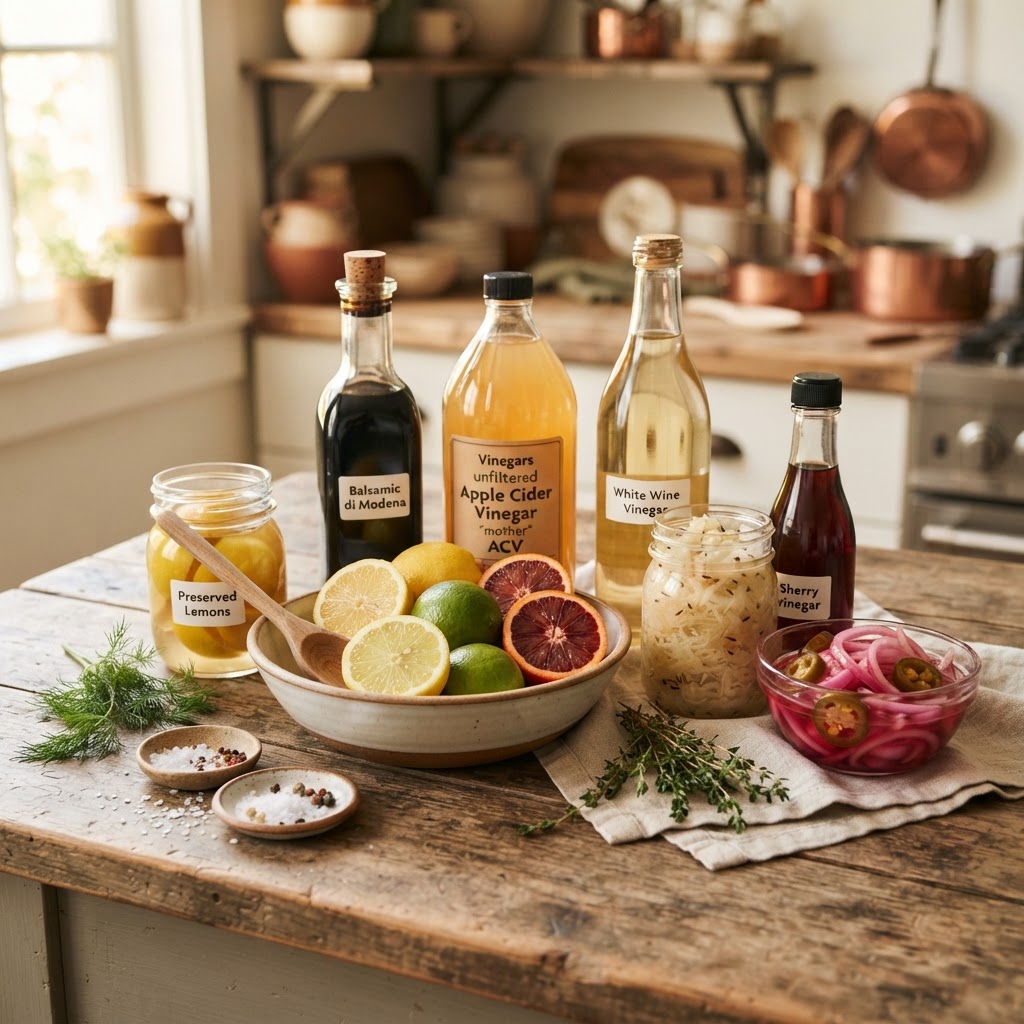
The vinegar aisle can be an intimidating landscape of glass bottles, but it is essential to keep a core rotation of high-quality vinegars. Unlike pantry staples that might last forever, a vinegar with a "mother" or a high-quality balsamic has a shelf life of flavor intensity. Distilled white vinegar is useful for cleaning and pickling where you want pure, aggressive acidity, but for cooking, you want vinegars that offer nuance.
Apple cider vinegar is perhaps the most versatile tool in a home cook’s kit. Because it is derived from fruit, it maintains a slight sweetness that pairs beautifully with pork, chicken, and fall vegetables. It is the secret weapon in many barbecue sauces because it cuts through the brown sugar and fat without being as bracing as a white spirit vinegar. When using cider vinegar, look for "raw" or "unfiltered" varieties to ensure you are getting the full depth of flavor that the fermentation process provides.
Sherry vinegar, a personal favorite of many professional chefs, is the "chef’s choice" for finishing sauces. It is made from dry sherry wine and aged in oak barrels, resulting in a nutty, complex flavor that is far more sophisticated than standard wine vinegar. A splash of sherry vinegar in a pan sauce (deglazing the pan after searing a steak) will elevate the dish to restaurant-quality status in seconds.
The Art of Deglazing
Deglazing is one of the most effective ways to introduce acid into a dish. When you sear meat, the browned bits left in the pan—the fond—are concentrated flavor gold. By adding an acidic liquid like wine, sherry, or vinegar, you release those browned bits and emulsify them into the fat, creating a sauce that is both rich and bright.
The Citrus Spectrum: Beyond Lemon
While we often conflate "acid" with "vinegar," citrus provides a completely different experience. Citrus juices contain citric acid, which is generally more aromatic and fresher than the acetic acid found in vinegar. Using the zest is just as important as using the juice, as the oils in the peel provide a depth of fragrance that the juice alone lacks.
Lemon is the gold standard for versatility, but don't ignore the nuances of other citrus fruits. Lime is sharper and more floral, making it the perfect companion for cilantro, chili, and seafood. Orange juice (especially from blood oranges or bitter oranges) provides a subtle, fruity acidity that works exceptionally well with duck or roasted root vegetables. Yuzu, a Japanese citrus, is a flavor powerhouse that tastes like a hybrid of lemon, lime, and mandarin, offering a sophisticated acidic profile for raw fish or light dressings.
"A great vinaigrette should never be one-note. By combining the sharpness of lemon juice with the depth of a mellow vinegar, you create a layer of acidity that feels both immediate and lingering."
When using citrus in cooking, keep in mind that heat destroys the volatile oils that make the fruit taste fresh. If you are making a delicate fish sauce, stir in the lemon juice only after you have removed the pan from the heat. If you are braising, feel free to add lemon halves or slices early on, as the long-simmering process will mellow the harshness and impart a sophisticated, cooked-citrus flavor that is quite distinct from raw juice.
Pro Tips for Citrus Usage
The Zest-First Rule:* Always zest before you juice. A microplane is an essential tool; ensure you only zest the colored part (the flavedo) and avoid the bitter white pith.
The Softening Trick:* To get more juice out of a stubborn lemon or lime, roll it firmly against your countertop with the palm of your hand for 10 seconds before cutting it.
Balancing Citrus:* If a dish tastes "too lemony" or sharp, you have overshot the acidity. Counterbalance it with a pinch of sugar, honey, or even a small amount of heavy cream to round out the jagged edges of the citric acid.
Fermented Fruits and Vegetables
The world of fermented acid is vast and deeply rewarding for the home cook. We are not just talking about sauerkraut and kimchi, though those are excellent examples. Any fruit or vegetable that undergoes a lactic acid fermentation process gains a complex, tangy flavor that is impossible to replicate with simple vinegar.
Lacto-fermentation is the process where vegetables are submerged in a brine, and the bacteria naturally present on the skin convert sugars into lactic acid. This result is a clean, bright, and deeply satisfying acidity. You can ferment almost anything: blueberries with salt, green strawberries, or even ramps. The resulting "fermented juice" can be used as a finishing liquid, a base for hot sauce, or a unique salad dressing component.
The beauty of fermented acidity is that it brings umami along for the ride. Unlike the sharp, piercing note of a store-bought white vinegar, fermented fruit acids have a rounded, "aged" quality that integrates seamlessly into heavy, slow-cooked dishes. If you are making a beef bourguignon or a heavy root vegetable gratin, a small spoonful of a fermented chili paste or a splash of fermented fruit brine will provide the lift you need without making the dish taste "sour."
Building Your Own Fermented Pantry
The Balance of Fats and Acids
Perhaps the most common mistake made by amateur cooks is failing to account for the fat content of the dish when choosing an acid. Fats act as a muffler for flavor; the more fat in your dish, the more aggressive your acid needs to be. A simple leaf salad with a light vinaigrette requires a delicate white wine vinegar, while a heavy lamb shank with a rich reduction sauce requires something much stronger, like a red wine vinegar or a balsamic reduction.
Consider the emulsion. When you whisk vinegar and oil, you are creating a temporary bond that suspends the acid in the fat. This is why vinaigrettes are so effective; you get the fat (which coats the mouth and carries flavor) and the acid (which cuts through that coating) in a single bite. If your salad tastes "oily," you don't need more salt; you need a few more drops of vinegar to break through that fat layer.
Emulsification techniques:
Mustard as a Binder:* A small teaspoon of Dijon mustard helps hold the acid and oil together, preventing the dressing from breaking too quickly.
The Slow Drizzle:* Always add your oil to your vinegar (or lemon juice) in a slow, steady stream while whisking constantly. This creates a stable emulsion that feels creamy on the palate rather than greasy.
Room Temp Matters:* Ingredients will emulsify much easier if they are all at room temperature, particularly if you are using fats like olive oil that might solidify slightly if cold.
Troubleshooting Your Dish
If it tastes heavy/greasy:* Increase the acidity. A squeeze of lemon or a tablespoon of vinegar can make an oily pasta sauce feel light and vibrant.
If it tastes "flat" but not necessarily heavy:* You likely need a combination of salt and acid. Try adding a pinch of salt followed by a splash of vinegar.
If it tastes too sour:* Do not panic. You don't necessarily need to add more of everything. A small pinch of sugar or a touch of fat (butter, cream, or avocado) can "muffle" the acid until it reaches the desired level of harmony.
The Fine Art of Timing
When to add your acid is just as important as what acid you choose. There are three primary windows for adding acid: at the beginning (for foundation), during the simmer (for integration), and at the finish (for impact).
Foundation: When cooking grains, legumes, or root vegetables, adding a small amount of acidic liquid to the cooking water—a squeeze of lemon or a splash of vinegar—can actually help the vegetables hold their shape. The acid firms the pectin in the vegetable cell walls, preventing your carrots or beans from turning into mush during long braises.
Integration: Adding acid during the cooking process allows the flavor to permeate the meat or vegetable. If you are making a stew, adding a splash of red wine or tomato paste (which is naturally acidic) early on allows the acid to break down connective tissues and develop a complex, deep flavor that you simply cannot get from finishing a dish with a drop of vinegar.
Finish: This is the most crucial step. Most delicate acids, including fresh citrus juices and fine vinegars, lose their "snap" if boiled for long periods. Save your final balancing for the very last minute. Before you plate your dish, taste it, add a small amount of acid, and taste it again. You will be amazed at how that final addition brightens the colors and brings the entire composition into focus.
"Cooking is the art of balancing contrasts. If your dish is a painting, salt is the canvas, heat is the brush, and acid is the final, sharp highlight that makes the entire image pop."
Understanding Acid Degradation
It is vital to recognize that acid is a volatile component. When you subject vinegar or citrus to high, sustained heat, you are effectively "cooking out" the volatile aromatics. While this is desirable for depth in a stew, it is a disaster for a dressing or a finishing sauce. Always keep a "finishing" bottle of high-quality vinegar in your pantry that you never use for cooking, only for seasoning at the table.
Final Thoughts
Mastering the use of acid is a journey, not a destination. It requires you to pay attention to your tongue, to experiment with different flavor profiles, and to trust your own judgment over the arbitrary measurements in a cookbook. Remember that the goal is not to make your food "sour," but to make it "alive." When you notice a dish feels dull or heavy, treat that not as a failure, but as an opportunity to practice your skills. Reach for your vinegar, your citrus, or your fermented pantry items, and start the process of adjustment.
By understanding the difference between the sharp bite of white vinegar, the floral notes of lime, and the deep, fermented complexity of a high-quality vinegar, you are building a toolset that will serve you for a lifetime. Start by practicing the "deglaize and finish" technique next time you sear a piece of meat. Notice how that splash of acidity transforms the pan drippings into a restaurant-grade sauce. Observe how a squeeze of fresh lemon changes the flavor of a simple bowl of roasted vegetables from "fine" to "extraordinary."
As you become more comfortable with these ingredients, don't be afraid to push the boundaries. Try pickling your own onions, experiment with adding a dash of balsamic to your strawberries, or incorporate a bit of fermented fruit juice into your next salad dressing. The kitchen should be a place of discovery, and acid is the most reliable guide you have for navigating the complexities of flavor. Keep tasting, keep adjusting, and remember that when you blame the chef for a dish that falls flat, the best response is simply to add more acid. Happy cooking, and may your palate always stay sharp.
Finally, remember that the most successful cooks are those who treat every meal as a sensory experiment. You don't need expensive equipment or rare ingredients to elevate your home cooking; you simply need an understanding of how to balance the fundamental building blocks of flavor. Acid is the most powerful tool in your arsenal, and with practice, you will find that it becomes second nature to reach for it whenever your dish needs that extra spark. Keep your pantry stocked, keep your lemons fresh, and never settle for a dish that is anything less than vibrant. The beauty of the culinary arts lies in the balance, and with this knowledge, you are ready to create plates that sing with complexity and life.


Get the Next Recipe
Weekly recipes, techniques, and gear picks — straight to your inbox.
