The Home Cook’s Guide to Alliums: Mastering Flavor Profiles and Charring Techniques for Shallots, Leeks, and Garlic
There is a singular truth that every professional cook knows in their marrow: the foundation of almost every great dish begins with the pungent, sweet, and complex aromatics of the allium family. Whether you are sweating down a mirepoix or aggressively charring a bulb of garlic, you are engaging in a culinary alchemy that transforms raw, sharp vegetation into the deep, savory bedrock of flavor. Many home cooks view these ingredients as mere supporting actors—the "pre-game" to the main course—but when treated with intentionality and technique, they can easily steal the spotlight. Understanding the nuances of shallots, leeks, and garlic is not just about following a recipe; it is about learning how to manipulate chemical reactions to build layers of seasoning that salt and pepper simply cannot replicate on their own.
When we talk about the Alliums family, we are looking at a spectrum that ranges from the delicate, onion-like whispers of the shallot to the intense, sulfur-rich punch of raw garlic. Mastering these requires you to understand how heat, fat, and time dictate their personality. If you rush a leek, you get soggy fiber; if you burn garlic, you get bitter carbon; if you ignore the shallot, you lose a subtle, refined sweetness that balances acidic or rich sauces. The goal of this guide is to move you beyond the "dice and drop" mentality, inviting you to treat these aromatics as the stars they are. By adjusting your charring techniques and understanding how to unlock natural sugars through controlled caramelization, you will find that your kitchen repertoire expands exponentially.
Welcome to the deep dive into the world of aromatics here at Blame The Chef. We aren’t interested in shortcuts; we are interested in flavor construction that feels effortless because it is rooted in solid technique. Throughout this post, we will explore the thermodynamics of heat application, the importance of fat selection in extracting volatile compounds, and the specific timing required to turn sharp aromatics into silky, savory gold. You will learn to identify the exact moment to pull a leek from the pan, how to distinguish between translucency and caramelization, and why your garlic has been turning bitter in the pan for all these years. Grab your chef’s knife, prepare your mise en place, and let’s get to work on the building blocks of professional flavor.
The Science of the Allium: Volatile Compounds and Sweetness
At the core of the allium family—which includes onions, garlic, shallots, leeks, chives, and scallions—is a complex chemistry of sulfur compounds. When you slice into these plants, you are rupturing cell walls and triggering an enzymatic reaction that produces the characteristic "bite" that makes our eyes water and our palates tingle. This pungency is not an enemy to be feared; it is the raw material that, when introduced to heat, undergoes a transformation known as the Maillard Reaction and the caramelization of natural sugars.
When you apply consistent, moderate heat, these sharp, aggressive sulfur molecules break down and mellow, eventually yielding to the sweet, nutty, and savory notes trapped within the cell structure. This is why raw garlic can be overwhelming, while confit garlic is spreadable, buttery, and remarkably sweet. The key for the home cook is to control the intensity of the heat so that the sugars develop color and depth without the bitter char of scorched proteins.
The Role of Fat as a Heat Conduit
Fat—whether it is olive oil, butter, or rendered duck fat—is the primary vessel for flavor extraction in alliums. Because many of the flavor compounds in shallots and garlic are fat-soluble, cooking them in oil allows those flavors to permeate the entire dish rather than staying trapped inside the vegetable itself. This is why we never start a sauté with a dry pan. You are essentially creating a flavorful infusion that will season everything you add to the pot thereafter.
"The difference between a mediocre home cook and a chef isn't the knife skills; it’s the patience to let the alliums do the work, turning sharp, biting chemistry into a velvety, complex background for the entire meal."
The Refined Shallot: Balancing Sweetness and Structure
Shallots occupy a unique space in the culinary hierarchy, sitting somewhere between the structural integrity of a yellow onion and the delicate, perfumed sweetness of garlic. They are the favorite of the professional kitchen for a reason: they dissolve into sauces, crisp up into beautiful garnishes, and hold their own in vinaigrettes. Unlike onions, shallots have a higher sugar content and a lower water content, which makes them prone to burning if you aren't vigilant.
When sautéing shallots, I recommend using a low-to-medium flame and a generous amount of clarified butter or a high-quality oil. Because they are smaller, their layers are tighter; this means they hold onto moisture differently. If you are aiming for a shallot confit, keep the temperature low—somewhere around 225°F to 250°F—allowing the cells to soften slowly without darkening the exterior too quickly.
Techniques for Crispy Shallots
If you have ever been to a high-end bistro and wondered how they get those golden-brown, crispy shallot bits, the secret is all in the temperature and the extraction of moisture. For the perfect crisp:
The Leek: A Study in Texture and Earthiness
Leeks are the "gentle giants" of the allium world. They lack the aggressive sulfur kick of their cousins, offering instead a mild, vegetative sweetness that provides incredible body to soups, braises, and gratins. The biggest mistake home cooks make with leeks is not cleaning them properly. Because leeks grow in the ground with leaves that overlap, they are notorious for trapping fine grit and soil deep within their stalks.
To clean them effectively, trim the root end and the dark, fibrous green tops. Slice the white and light green parts down the center lengthwise, then fan them out under cold running water, ensuring your fingers get between every layer. Once cleaned, slicing them into half-moons creates a uniform shape that cooks evenly and looks elegant in the final presentation.
Charring the Leek
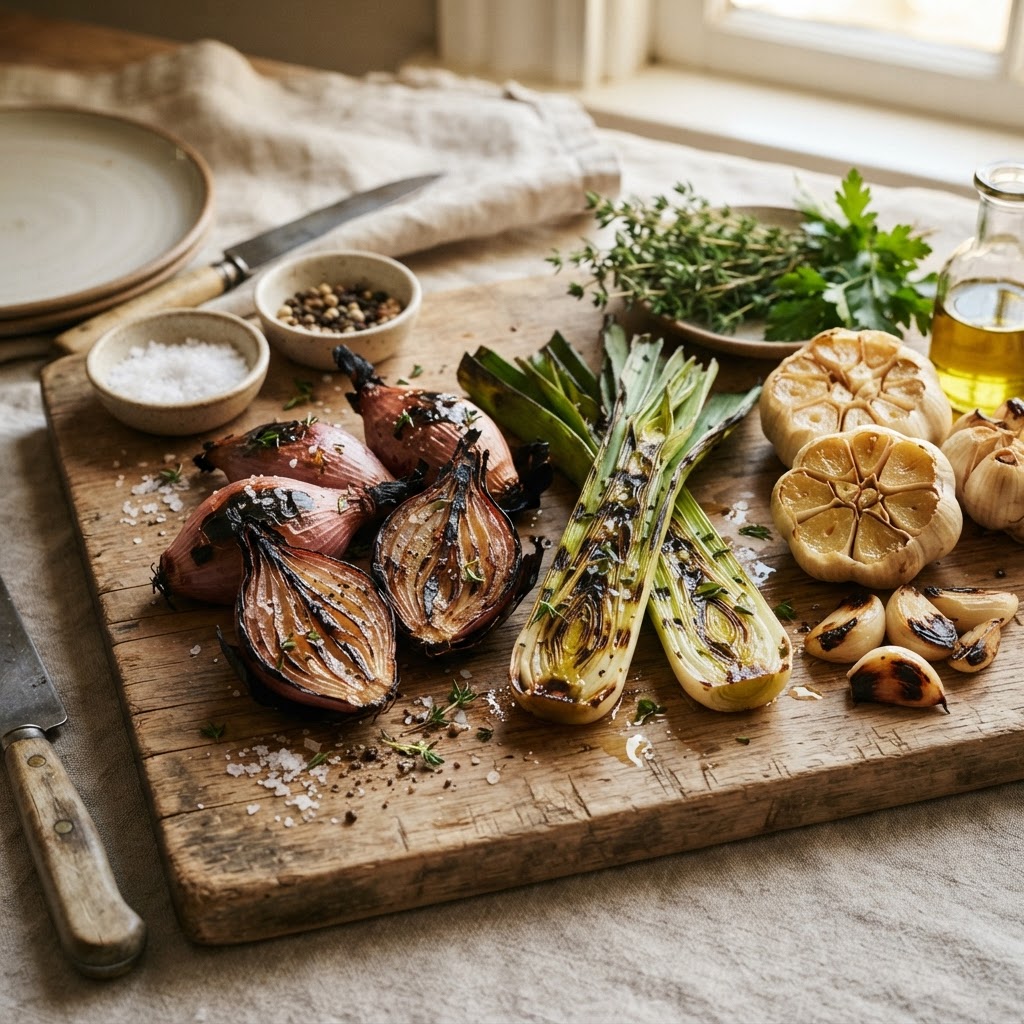
One of the most underutilized techniques for leeks is high-heat charring. By cutting the leek into thick, 2-inch chunks and searing them in a cast-iron skillet, you create a contrast between the charred, smoky exterior and the buttery, steamed interior. Aim for a hard sear on the cut sides, using a small amount of heavy cream or vegetable stock added to the pan toward the end of the cooking process to braise them into tenderness.
* Heat your pan until smoking.
* Add the leeks cut-side down.
* Do not touch them for at least 3 minutes to develop a dark char.
* Flip and add a tablespoon of butter to glaze.
"A leek is not just a vegetable; it is a canvas. When you char the outer layers to bitterness and let the inner core melt into a sweet, creamy custard, you realize that alliums are capable of mimicry—they can be the crunch, the sauce, and the vegetable all at once."
Garlic: The Art of Timing and Temperature
Garlic is the most temperamental of all alliums. Its flavor is defined by allicin, a volatile compound that only releases its full intensity when the clove is crushed or sliced. This is the first rule of garlic: if you want a subtle flavor, cook the clove whole; if you want a punchy flavor, smash it or mince it fine. But beware, as the surface area increases, so does the risk of the dreaded "acrid burn."
There is a specific window for cooking minced garlic: usually no more than 30 to 60 seconds over medium heat. If you go beyond that, the delicate sugars will turn from a nutty, savory caramel color to a dark, bitter brown. If you find your garlic browning too fast, add a splash of white wine or stock to the pan to instantly drop the temperature and halt the cooking process.
The Confit Advantage
If you want to have the ultimate "secret weapon" in your fridge, Garlic Confit is the answer. It is essentially slow-poached garlic in oil, resulting in a product that is sweet, mild, and spreadable.
* Peel 2-3 heads of garlic (don't worry about keeping them whole).
* Place them in a small saucepan and cover completely with high-quality olive oil.
* Cook on the lowest setting of your stovetop for 45-60 minutes.
* The result is a clove that can be mashed into mashed potatoes, smeared on crusty bread, or blended into a vinaigrette for an instant professional boost.
Mastering Charring Techniques Across the Board
Charring is not just about aesthetics; it is about carbonizing the surface to provide a smoky contrast to the sweet interior. This technique works exceptionally well for alliums because it adds a layer of depth that balances the natural sharpness. Whether you are using a gas stovetop flame, a grill, or a heavy cast-iron skillet, the principle remains the same: high, focused heat applied for a short duration.
When charring, do not crowd the pan. If you put too many shallots or leek segments in the pan at once, the temperature will drop, the moisture will release, and you will end up steaming your aromatics rather than searing them. Crowding leads to grey, limp vegetables. Work in batches to ensure that every surface has direct contact with the hot metal of the skillet.
Visual Cues for Success
Home cooks often rely on timers, but when working with aromatics, visual cues are far more reliable:
Shallots:* Look for the edges to turn translucent and then a deep, golden-brown. Once they start to soften, they are ready.
Leeks:* Look for a blackened edge. The green should turn a vibrant, bright emerald before beginning to darken.
Garlic:* If you are roasting a whole bulb, look for the skins to turn papery and golden. The cloves should be soft to the touch and appear slightly translucent, almost like a piece of candy.
Incorporating Alliums into Your Daily Mise en Place
To truly master the culinary arts, you must change how you view your mise en place. Do not prepare your aromatics at the last second. Take the time to slice, chop, or mince them before you even turn on the stove. This allows you to control the timing of when each ingredient hits the heat. For instance, in a classic ragu, you might start with onions and leeks, cooking them for 10 minutes, only to add the minced garlic in the final minute so it doesn't burn during the long braise.
Think about the "Layering Effect." Aromatics are not a monolithic block of flavor; they represent a progression. By adding different types of alliums at different stages of the cooking process, you can create a depth of flavor that feels sophisticated and layered. An onion added at the beginning provides the body; a shallot added halfway through provides the sweetness; and a dusting of chives or raw scallions added at the very end provides the fresh, sharp, aromatic brightness that cuts through the fat.
The Triple-Allium Strategy
Try this in your next dish:
"A dish without a proper aromatic base is like a house without a foundation. It may look impressive from the outside, but it lacks the structural integrity to hold your attention for more than a few bites."
Troubleshooting Common Allium Mistakes
We have all been there: you are cooking a delicate sauce, and suddenly the smell of burnt garlic permeates the kitchen, forcing you to start the entire process over. This is a rite of passage for every cook, but it is one that can be mitigated with better heat management. The most common mistake is failing to account for the residual heat of the pan. Even after you turn off the burner, a cast-iron skillet will continue to cook your aromatics for several minutes.
If you find that your aromatics are browning faster than your other ingredients, pull the pan off the heat entirely. Let the ambient heat do the work. Additionally, if you are working with high-heat searing, choose an oil with a high smoke point, such as avocado oil or grapeseed oil. Extra virgin olive oil has a lower smoke point and can add a bitter, scorched flavor to the aromatics if used at temperatures exceeding 375°F.
When to Discard and Start Over
There is a culinary rule that states: if the garlic has turned black, it has lost its soul. There is no salvaging a dish where the garlic has burnt, as the bitter compounds will bleed into the entire sauce, making it virtually impossible to mask. If you scorch your aromatics:
* Remove the pan from the heat.
* Do not attempt to scrape out the black bits.
* Discard the aromatics entirely.
* Wipe the pan clean with a paper towel.
* Start fresh—it is a lesson in patience, not a failure of skill.
Final Thoughts
Mastering the allium family is perhaps the most high-yield investment a home cook can make in their own skill set. We aren't asking you to learn complex French pastry techniques or hunt down elusive ingredients; we are asking you to take the humble onion, the elegant leek, and the pungent clove of garlic and treat them with the respect they deserve. By controlling the heat, understanding the chemistry of the sear, and timing your additions, you change the way your food tastes at its most fundamental level.
Remember that cooking is a conversation between you, your ingredients, and your heat source. When you sauté a leek until it is butter-soft or char a shallot until it is sweet and caramelized, you are essentially engaging in a dialogue with flavor itself. Do not be afraid to experiment with different temperatures, different fats, and different levels of char. Your kitchen is a laboratory, and your palate is the ultimate judge of whether you have achieved the perfect balance.
Take the techniques we have discussed today—the slow confit, the high-heat char, the careful layering—and apply them to your weeknight dinners. You will find that your sauces become richer, your soups become more complex, and your vegetable sides become the most anticipated part of the meal. Blaming the chef is easy when things go wrong, but when you master these building blocks, you will be the one receiving the praise. Keep cooking, keep tasting, and never underestimate the power of a perfectly prepared allium.
Get the Next Recipe
Weekly recipes, techniques, and gear picks — straight to your inbox.
