The Home Cook’s Guide to Aromatic Pastes: How to Blend Fresh Herbs, Spices, and Alliums for Instant Flavor Foundations
Every time I step into a professional kitchen, the air is thick with the scent of what we call the "soul" of the dish. It isn’t just the heat from the ovens or the sharp tang of vinegar; it is the fragrance of freshly crushed alliums, bruised herbs, and toasted spices melding together in a mortar or a high-speed blender. As home cooks, we often look for shortcuts in a jar—pre-minced garlic or dried herb blends—but I am here to tell you that the secret to restaurant-quality flavor lies in the art of the aromatic paste. Mastering these foundations changes everything about how you approach your daily cooking routine, elevating simple pantry staples into complex, layered masterpieces. By learning to blend fresh ingredients into potent flavor bombs, you save time during the week while significantly increasing the depth of your finished dishes.
The concept of an aromatic paste is ancient, spanning cultures from the Thai curry paste to the Latin American sofrito and the Indian masala base. At its core, the technique is about liberation; you are physically breaking down cell walls to release volatile oils that would otherwise remain trapped. When you chop garlic with a knife, you get aromatics; when you pound it into a paste with a pinch of salt, you create an emulsion of flavor that coats every single ingredient it touches. This is not just about convenience, but about molecular extraction, ensuring that your stews, sautés, and marinades taste cohesive rather than like a collection of disjointed ingredients. Once you begin making these pastes, you will find that your kitchen repertoire suddenly feels limitless, allowing you to build complex foundations in minutes rather than hours.
In this guide, we are going to dive deep into the mechanics of building, storing, and utilizing these flavor foundations in your home kitchen. We will explore the chemistry of the mortar and pestle versus the food processor, discuss the importance of toasting spices, and break down the ratios required to create a perfectly balanced paste every single time. It is my firm belief that every home cook deserves the tools to replicate the depth of flavor found in high-end culinary environments without the need for a brigade of sous-chefs. So, clear off your counter, sharpen your blade, and prepare to fundamentally alter the way you season your food. Let us demystify the aromatic paste, one clove, leaf, and seed at a time.
The Chemistry of Crushing: Why Texture Matters
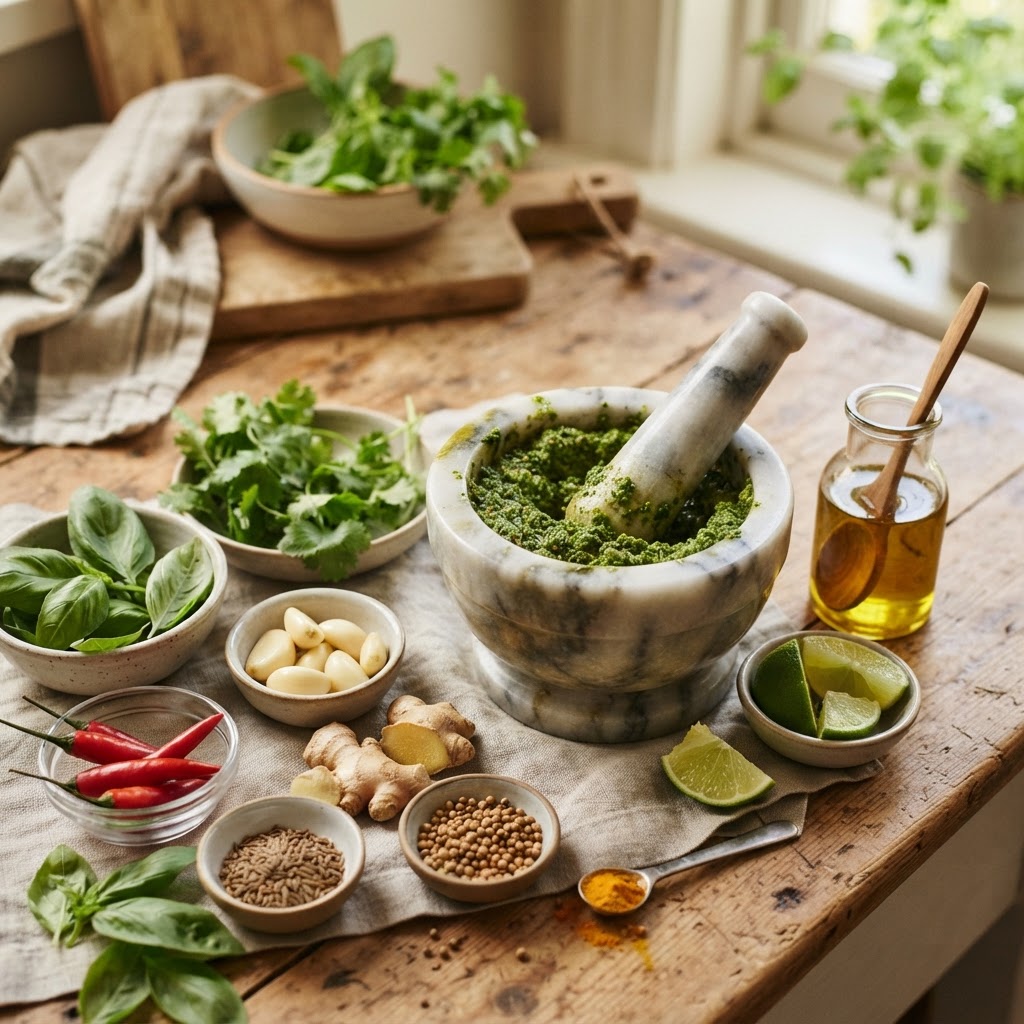
When you utilize a knife to chop your aromatics, you are cutting through fibers, but you are not releasing the full potential of the essential oils trapped within. Aromatic paste making is fundamentally a process of mechanical disruption. When you use a mortar and pestle to crush garlic, ginger, or chilies, you are applying pressure that causes the ingredients to release their juices, creating a naturally thickened sauce that clings to your proteins and vegetables. The cellular structure of ginger, for instance, is fibrous and woody; a rough chop leaves large, unpleasant chunks, but a well-ground paste integrates the heat and citrusy notes of the ginger into the very fabric of your dish.
"The true measure of a chef is not how they handle a complex sauce, but how they respect the foundational ingredients that provide the backbone of flavor to every single meal."
The choice of tool is paramount. While a modern food processor is efficient for bulk preparation, it often heats the ingredients due to high-speed blade friction, which can result in a "cooked" or dulled flavor profile before you even hit the pan. In contrast, the mortar and pestle keeps the ingredients cool, preserving the raw, vibrant, and volatile oils that give aromatics their distinct characteristics. If you are aiming for a high-intensity, punchy flavor, hand-crushing is the gold standard.
Understanding the Role of Friction and Heat
When ingredients are processed, the friction generated can degrade delicate compounds. This is why many professional kitchens insist on the "cold method." When you are working with heat-sensitive herbs like cilantro or Thai basil, you want to ensure the paste stays cool. Using a frozen or chilled bowl for your mortar and pestle can help preserve the bright green color and the punchy, grassy notes that are often lost during the standard blending process.
Essential Ratios for the Perfect Base
Consistency is the hallmark of a great cook. If you are constantly guessing your proportions, your results will be inconsistent. For a standard, all-purpose savory paste—which I use for everything from pan-seared chicken to roasted vegetables—I suggest a reliable ratio of 2 parts allium to 1 part aromatics and 1 part moisture. For example, two bulbs of garlic, one thumb-sized piece of ginger, and a tablespoon of neutral oil or water. This ratio ensures that your base is potent enough to flavor an entire dish but balanced enough that it doesn't overwhelm the palate with acidity or bitterness.
The Importance of Salt in the Blend
Salt is not just a seasoning; it is an abrasive catalyst. By adding a generous pinch of coarse sea salt or kosher salt into your mortar along with your dry ingredients, you create a grinding surface that helps break down the fibrous material much faster. Salt also draws out moisture from the ingredients, creating a natural brine that stabilizes the paste and helps it keep for a longer period. Always remember to adjust the salt content of your final dish later, accounting for the amount added during the paste-making process.
Garlic:* Should be firm and free of green sprouts.
Ginger/Turmeric:* Peel only if the skin is thick or dirty; otherwise, the skin adds fiber and flavor.
Oil:* Use a neutral oil like grapeseed or avocado to avoid interfering with the flavor profile.
Toasting Spices: Unlocking Hidden Depth
No aromatic paste is complete without the addition of toasted dry spices. Many home cooks make the mistake of adding spices directly to the pan, where they often burn or fail to fully infuse the dish. By incorporating your cumin seeds, coriander, or peppercorns directly into your paste, you ensure that the oils are evenly distributed. Toasting spices in a dry pan over medium heat for 60 to 90 seconds until they become aromatic is the most effective way to wake up those dormant essential oils.
"Toasting is the process of bringing a seed back to life. Without it, you are merely using the shell of an ingredient rather than the heart of it."
Once toasted, let the spices cool completely before grinding them with your fresh aromatics. If you add hot, toasted spices to a cool, moisture-heavy paste, you risk creating a strange textural inconsistency and potentially "cooking" your fresh herbs prematurely. A great tip is to grind your spices into a fine powder first, then add your fresh ingredients to create the wet paste, which helps create a smoother, more uniform consistency throughout.
Essential Spices to Keep on Hand
The Art of the Herb Paste: Freshness Preserved
Fresh herbs are the stars of the aromatic world, but they are notoriously fragile. When you blend herbs like parsley, cilantro, basil, or mint, they often oxidize and turn a muddy brown color within minutes. To prevent this, professional chefs utilize a technique involving a small amount of acid and oil. A tiny squeeze of lemon juice or a dash of vinegar stabilizes the chlorophyll in the herbs, keeping your paste a vibrant, vivid green for days.
Technique for Maximum Color Retention
When processing your herbs, do not blend them until they are completely liquid. You want a "chunky" consistency that maintains the integrity of the leaf. If you are using a food processor, use the pulse button rather than running the machine continuously. This keeps the blades from heating up the mixture and prevents the herbs from turning into an unappetizing sludge.
The Foundation of Asian Cuisines: Curry and Lemongrass Bases
In Southeast Asian cooking, the aromatic paste is non-negotiable. Whether it is a green, red, or yellow curry, the foundation is a heavy, fragrant blend of lemongrass, galangal, chilies, and shrimp paste. The key here is sequential grinding. Start with the hardest ingredients—the ones that take the most work—like lemongrass stalks and galangal. Once those are fine, add the chilies and alliums, and finally the softer ingredients and pastes.
The Role of Aromatics in High-Heat Cooking
When working with these potent pastes, remember that they are prone to burning if added to a pan that is too hot. Start with a cold or room-temperature pan, add your oil, and then add your paste. Gently cook it over low to medium-low heat until the raw smell of the alliums disappears and the mixture becomes fragrant and darkens slightly. This process, known as blooming the paste, is what separates a mediocre curry from one that tastes like it came from a street stall in Bangkok.
Lemongrass:* Only use the tender white and light green inner stalks.
Galangal:* Much woodier than ginger, it requires a sharp knife and extra effort to grind.
Chilies:* De-seed if you want flavor without the overwhelming heat.
Storage and Preservation: From Pantry to Freezer
Once you have invested the time to create a complex, multi-layered aromatic paste, you want to ensure it lasts. While some pastes will keep for a week in the refrigerator, most are best stored in the freezer. A fantastic trick is to use an ice cube tray to freeze your pastes in pre-portioned amounts. Simply fill the slots with your paste, cover with a thin layer of oil to prevent freezer burn, and freeze until solid.
Pro-Tip: The Oil Barrier
If you are storing your paste in a jar in the fridge, always top it off with a thin layer of oil. This seals the paste off from oxygen, significantly slowing down the oxidation process and keeping your aromatics fresher for much longer. When you are ready to cook, just scoop out the amount you need, including a bit of that flavored oil, and toss it straight into your pan.
Final Thoughts
The aromatic paste is not just a cooking technique; it is a philosophy of preparation. It is the recognition that the best meals are built from the bottom up, with layers of flavor that start long before you put your protein in the pan. By taking control of the ingredients, the ratios, and the methods by which you extract flavor, you take control of your kitchen. You move away from the passive experience of "following a recipe" and toward the active, intuitive art of cooking.
Do not be afraid to experiment. Take the techniques discussed—the mortar and pestle grinding, the spice toasting, the herb stabilization—and create your own signature blends. Maybe it is a roasted garlic and rosemary paste for your Sunday roast, or a spicy chipotle and lime paste for your tacos. Once you understand the mechanics, the combinations become endless. Remember, a dish is only as good as its foundation, and with these pastes in your repertoire, your foundation will always be rock solid.
As you begin incorporating these aromatic foundations into your weekly meals, you will notice a change in your own cooking speed and intuition. You will spend less time chopping during the dinner rush and more time focusing on the technique of the cook itself. The scent that hits your kitchen when you drop that homemade paste into a hot pan is the smell of a chef who knows exactly what they are doing. So go ahead, start building those layers. Your meals—and the people you feed—will thank you for it.
A Chef’s Commitment to Excellence
Remember that perfection in cooking is not about a single grand gesture, but the accumulation of small, intentional choices. Every time you pound a clove of garlic or toast a handful of seeds, you are casting a vote for quality. Keep your knives sharp, keep your workspace clean, and never settle for store-bought convenience when you have the power to create something superior at home. Keep blaming the chef—because the chef is you, and the results are yours to command.
As you refine your process, keep a small notebook of your favorite combinations and the ratios that worked best for your palate. A "house paste" can become a signature element of your culinary identity, something that friends and family will come to associate with your home. Perhaps you find that you prefer a more aggressive ginger note in your stir-fry, or a subtle hint of cinnamon in your tomato-based stews. These discoveries are what make cooking a lifelong journey of learning and improvement.
Finally, consider the joy of the process itself. There is a meditative quality to the repetitive motion of the mortar and pestle. It is a moment of stillness in an otherwise busy day, a chance to slow down and engage with the raw ingredients before they are transformed by heat. This intentionality translates directly onto the plate. You are not just adding ingredients; you are adding care, attention, and a deep respect for the culinary craft.
Continue to explore, continue to taste as you go, and never stop questioning how you can coax more flavor out of your ingredients. The world of aromatics is vast, and you have only just scratched the surface. Whether you are blending the bold, spicy pastes of South Asia or the bright, herbaceous blends of the Mediterranean, the principles remain the same. Respect the ingredients, understand the chemistry, and above all, enjoy the process of turning simple pantry items into culinary art.
With these foundations established, your transition from home cook to a confident kitchen artist is inevitable. Keep pushing the boundaries of your flavor profiles, experiment with new herbs and spices you haven’t tried before, and always keep your pantry stocked with the fresh ingredients that make these pastes possible. The "Blame The Chef" standard is high, but I know you are up to the task. Until next time, happy blending and even happier cooking. You are the architect of your kitchen's flavor, and every paste you create is a brick in the foundation of your future masterpieces.
The journey of the home cook is rarely linear. You will have days where the balance feels slightly off or the texture isn't quite what you imagined, and that is perfectly acceptable. Those moments are part of the learning curve, providing the context for your future successes. Embrace the imperfections, learn from them, and keep coming back to the basics. The beauty of these aromatic pastes is that they are forgiving. If a blend is too salty, add a bit more aromatics. If it's too thick, add a drop more oil. Your kitchen, your rules, your taste.
Keep your jars filled, your pestle ready, and your curiosity piqued. The transition to professional-level flavor is within your reach, and it starts with the humble act of blending fresh ingredients into a fragrant, potent foundation. I hope this guide serves as a well-worn reference in your kitchen for years to come. Now, head back to that kitchen and start blending—there is a world of flavor waiting to be unleashed, and you have the keys.
Final tip for the road: Keep a dedicated section of your freezer for these bases. Label them clearly with the date and the intended use. You will thank yourself on those busy Tuesday nights when all you need to do is snap off a portion of your homemade curry paste or herb base to turn a bowl of rice or a piece of protein into a restaurant-quality meal. Consistency, efficiency, and depth—these are the hallmarks of a truly great chef, and they are now firmly within your grasp. Keep cooking with passion, and keep that flavor foundation strong. You have mastered the base; now go master the meal.
Get the Next Recipe
Weekly recipes, techniques, and gear picks — straight to your inbox.
