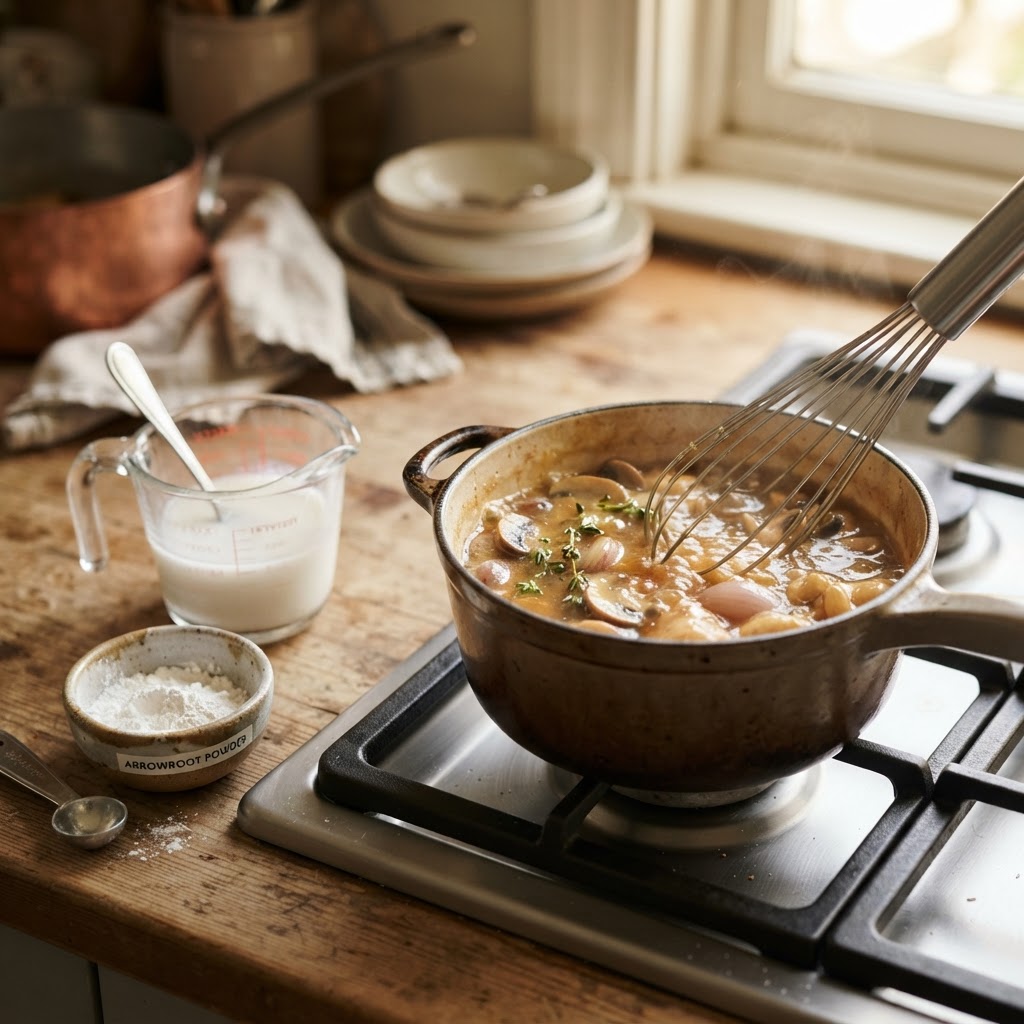
The Home Cook’s Guide to Arrowroot Powder: Mastering Slurry-to-Heat Ratios for Glossy, Freeze-Stable Sauces and Thickeners
For years, home cooks have relied on the standard flour-and-butter roux or the gritty, chalky finish of under-cooked cornstarch to manage the viscosity of their sauces. We have all been there: standing over a simmering pan, whisking frantically as lumps form, or watching a beautiful pan sauce break because the starch wasn't hydrated correctly. There is a quiet, sophisticated alternative hiding in the baking aisle, often relegated to the gluten-free shelf: arrowroot powder. Derived from the rhizomes of the Maranta arundinacea plant, this fine, neutral, and incredibly versatile starch is the secret weapon that professional chefs use to achieve that elusive, glass-like sheen on everything from delicate fruit glazes to robust pan sauces. Understanding the unique chemical properties of arrowroot—and how it behaves differently than its grain-based counterparts—will completely transform your ability to control the texture of your home-cooked meals.
The beauty of arrowroot lies in its low gelatinization temperature and its incredible clarity. Unlike cornstarch, which can turn opaque and cloudy when heated, arrowroot remains transparent, allowing the vibrant colors of your ingredients to shine through. Whether you are aiming for a silky jus that clings perfectly to a seared steak or a light, airy thickening for a lemon curd, this starch provides a superior mouthfeel that never feels gummy or pasty. Because it is a root-based starch rather than a cereal starch, it does not have the "raw flour" taste that requires extensive cooking times. This makes it an ideal candidate for last-minute adjustments, giving the home cook total command over the final consistency of a dish without the fear of compromising the flavor profile.
Mastering the use of arrowroot is as much about science as it is about intuition, and that is precisely why we are diving deep into the slurry-to-heat ratios today. Getting the texture right isn’t just about following a recipe; it is about recognizing the physical state of your liquid and knowing exactly how much starch is needed to reach the desired nappe consistency. We will explore the common pitfalls of overheating, the importance of cooling, and why arrowroot is the superior choice for dishes intended for the freezer. By the time you finish this guide, you will be able to look at a pan sauce, estimate its volume, and prepare a slurry with the confidence of a line cook who has spent thousands of hours at the stove.
Understanding the Chemistry of the Slurry
At its core, a slurry is simply a suspension of starch in a cold or room-temperature liquid. The goal is to distribute the starch particles evenly throughout the liquid before they encounter heat. If you were to dump raw arrowroot powder directly into a boiling liquid, the exterior of the starch granules would swell instantly, trapping dry, powdery starch in the center. This creates those dreaded, unsightly lumps that ruin the texture of a sauce. By pre-mixing the powder with a liquid, you create a uniform dispersion that allows the granules to swell simultaneously and evenly once they reach the target temperature, resulting in a perfectly smooth, velvet-like finish.
Why Arrowroot Outperforms Cornstarch
The primary difference between arrowroot and cornstarch lies in the structure of the starch granules and their reaction to heat. Cornstarch requires a higher temperature to gelatinize and is notoriously sensitive to over-stirring and acidic ingredients. If you whisk cornstarch-thickened sauces for too long, the starch chains can break down, causing the sauce to thin out right before you plate it. Arrowroot, however, is much more resilient. It begins to thicken at a lower temperature—around 140°F (60°C)—and maintains its structural integrity even if you continue to simmer the sauce.
The Perfect Slurry Ratio
To achieve a professional-grade consistency, the ratio of liquid to arrowroot is paramount. A standard, reliable slurry ratio is 1:1 by volume, meaning one part arrowroot powder to one part cold liquid (usually water, stock, or wine). For a light thickening—ideal for soups or thin glazes—a slightly looser mixture works well. For heartier sauces or fruit pie fillings, you may want to push that toward a 1.5:1 ratio. Remember: you can always add more slurry to a sauce, but you cannot easily remove it once the starch has set. Start conservatively and add in small increments.
"The secret to a restaurant-quality sauce isn't just the stock; it is the physical chemistry of the thickener. When you master the slurry, you move from being a follower of recipes to a manipulator of textures."
The Art of Temperature Control and Incorporation
One of the most common mistakes home cooks make is adding a slurry to a boiling liquid and expecting immediate results. While it will thicken, the temperature shock can sometimes cause the starch to swell too aggressively, leading to a texture that is less "silky" and more "gloopy." Instead, pull your sauce off the direct flame for a moment before whisking in your slurry. This allows the heat of the liquid to activate the arrowroot gradually rather than explosively. Once the slurry is fully incorporated, return the pan to a medium-low heat to bring the sauce back to a gentle simmer.
The Nappe Consistency Test
How do you know when you have added enough? The culinary standard is the nappe consistency, a French term meaning "to coat." To test this, dip the back of a metal spoon into your sauce and run your finger through the center of the liquid coating the spoon. If the sauce stays in place and creates a clean path without running back into the center, you have reached the perfect thickness. If it runs, it needs another half-teaspoon of slurry. If the path closes instantly, you have hit that perfect, shiny, professional glaze that coats the back of the spoon like velvet.
Avoiding Over-Heating and Shear
Arrowroot is surprisingly sensitive to high-intensity shear (vigorous, long-term whisking) once it has thickened. While it is more robust than cornstarch, if you continue to boil it for ten minutes, the sauce will eventually lose its viscosity. Always add your slurry at the very end of the cooking process. Think of the slurry as the "finishing touch" rather than a foundational step. By adding it during the final two to three minutes of simmering, you preserve the structural integrity of the starch chains, ensuring your sauce remains glossy and thick until the very last bite.
Troubleshooting Common Slurry Failures
Even the most experienced chefs occasionally deal with a broken sauce or a slurry that didn't behave as expected. If your sauce looks cloudy, you have likely used too much starch or the starch was not properly hydrated. If your sauce is thin and refuses to thicken, your slurry may have been too old or the sauce was not hot enough. The key to fixing any issue is to remain calm and assess the liquid's temperature before acting. You can always whisk in more slurry, but you can also dilute a sauce that has become too thick by whisking in a splash of warm stock or water.
The "Cloudy Sauce" Dilemma
If your sauce appears opaque, it is often a sign of insufficient temperature or improper starch-to-liquid mixing. Arrowroot is best suited for clear glazes and juices. If you are working with a creamy sauce, you might notice that the arrowroot doesn't offer the same "whiteness" as flour, but it will offer a far superior shine. If you accidentally make a sauce that is too thick, do not despair. Simply whisk in a small amount of warm broth—one tablespoon at a time—until you reach the desired consistency. This "thinning down" process is perfectly acceptable and practiced in commercial kitchens daily.
Working with Acids
One of the most significant advantages of using arrowroot is its compatibility with high-acid ingredients. When you are making a lemon-butter sauce or a balsamic reduction, cornstarch will often fail because the acidity breaks down the starch bonds, causing the sauce to weep or separate. Arrowroot holds up remarkably well under acidic conditions. When cooking with citrus, wine, or vinegar, arrowroot remains stable, providing a consistent, elegant texture that doesn't falter when paired with the vibrant acidity of your pan ingredients.
"The true test of a sauce is its sheen. When the light hits a well-prepared glaze, it should reflect back like a polished mirror. That is the hallmark of arrowroot; it is the starch that lets the beauty of the ingredients remain the star."
Why Arrowroot is the King of Freeze-Stable Sauces
If you are a home cook who practices meal prepping or loves to freeze batches of soups, stews, or braises, you have likely encountered the "weeping" problem. Flour-thickened sauces often separate during the freezing and thawing cycle, leaving you with a watery, grainy mess that looks unappetizing. Starch granules from wheat and corn tend to "retrograde" when frozen—the starch chains reform, pushing the water out of the mixture. This is why a frozen gravy often looks like curdled milk when it melts.
The Resilience of Root Starches
Arrowroot powder is a root starch, and its molecular structure is significantly different from cereal starches. It is remarkably resistant to the retrogradation process. When you freeze a sauce thickened with arrowroot, the starch granules remain suspended in the liquid matrix even after a complete freeze-thaw cycle. When you reheat your meal, the sauce returns to its original, glossy, thick consistency, often indistinguishable from the day it was prepared. This makes arrowroot the absolute best choice for stews intended for the freezer, such as a hearty beef bourguignon or a savory chicken velouté.
Tips for Freezing
When preparing a dish for the freezer, aim for a slightly thinner consistency than you would for immediate consumption. Freezing can cause a slight dehydration of the sauce, so you want to leave a small margin for that transition. Additionally, always allow your food to cool completely to room temperature before portioning it into freezer-safe containers. Press a layer of plastic wrap directly onto the surface of the sauce to prevent ice crystals from forming, which can introduce excess moisture and dilute your perfectly calculated slurry-to-heat ratio.
Mastering the Ratio: A Quick-Reference Guide
To help you internalize these ratios, it is helpful to visualize the total volume of your sauce. If you are working with a standard saucepan containing approximately 2 cups of liquid, you will typically need about 1 tablespoon of arrowroot powder mixed with 1 tablespoon of cold water. This provides a medium-bodied sauce that is perfect for finishing. If you are dealing with a larger batch, say 4 cups, adjust your ratio accordingly—2 tablespoons of arrowroot to 2 tablespoons of water. Consistency in your measuring tools is just as important as the ratio itself.
The Importance of Liquid Selection
What you choose for your slurry matters. While water is perfectly fine, using a portion of the cooking liquid (if it is cold) adds depth. For example, if you are making a red wine reduction, whisking the arrowroot with a tablespoon of cold red wine will ensure you aren't diluting the color or flavor of your sauce. For a cream-based soup, a splash of cold cream or milk in the slurry can add a touch of richness. Never, ever use hot liquid to make your slurry; the heat will cause the starch to form a thick, gelatinous lump before it even enters your pan.
The Step-by-Step Incorporation
Professional Chef Tips for Elegant Presentation
Presentation is the final step in the culinary process, and the shine you achieve with arrowroot is a professional indicator of quality. One trick chefs use is to finish a sauce with a "knob" of cold butter (known as monter au beurre) after the arrowroot has done its work. The arrowroot provides the structural body and the sheen, while the butter provides the mouthfeel and a luxurious depth of flavor. By combining the two, you create a sauce that is both visually stunning and incredibly decadent.
Achieving the "Mirror Glaze"
If you are working with fruit sauces or dessert glazes, arrowroot is your best friend. Because it is neutral and clear, it allows the vibrant color of berries or stone fruits to remain brilliant. Avoid the common mistake of over-sweetening these sauces, as sugar can also affect the gelatinization of starch. If you are adding fruit to your sauce, incorporate the fruit, reduce it slightly, and then add your slurry. The starch will bind the juices released by the fruit, resulting in a beautiful, syrupy consistency that looks as good as it tastes.
The Final "Sweep"
When plating, use a wide spoon to ladle the sauce directly onto the protein or around the edges of the plate, depending on your desired look. If you have mastered the nappe consistency, the sauce should hold its own on the plate without spreading into a thin, watery pool. This is what separates a dish that "looks like a meal" from one that "looks like a restaurant entree." It is the culmination of managing your starches, controlling your heat, and taking the time to ensure the emulsion is stable and the texture is perfect.
"A sauce is the soul of the plate. It ties the components together, bridging the gap between the textures of the meat, vegetables, and starch. Respect the sauce, and the dish will thank you."
Final Thoughts
Mastering arrowroot powder is a journey of refinement. It is about moving away from the heavy-handed, flour-heavy techniques of the past and embracing a more precise, elegant approach to thickening. By understanding the science of the slurry-to-heat ratio, respecting the delicate nature of root starches, and utilizing the stability that arrowroot offers for freezing, you are elevating your home kitchen to a level of professional competence. You now have the knowledge to handle acidity, to manage temperatures, and to create those beautiful, glassy sauces that serve as the hallmark of a skilled cook.
Do not be discouraged if your first attempt at a perfect glaze isn't exactly what you pictured. Cooking is a practice, and the more you work with arrowroot, the more you will develop an intuitive sense for the ratios. You will begin to look at a pan of simmering stock and just know how much starch it requires. You will start to recognize the exact moment a sauce hits the nappe stage without needing to grab a spoon every time. That intuition is the goal. Keep practicing, keep experimenting with your flavor profiles, and most importantly, keep enjoying the process of creating something beautiful and delicious.
The next time you find yourself standing over the stove, tasked with turning a thin pan sauce into something memorable, remember this guide. Start with a cold slurry, add it slowly, monitor your heat, and watch for that beautiful, shimmering clarity. Whether you are serving a simple weeknight chicken dish or an elaborate Sunday roast, the addition of a properly prepared arrowroot slurry is the difference between a good meal and a great one. You are the architect of your kitchen, and now, you have the tools to build textures that are as refined as your tastes. Happy cooking!
***
As we wrap up our deep dive, remember that versatility is the hallmark of a great pantry staple. If you find yourself in a pinch, arrowroot is a fantastic thickener for gravies, fruit fillings, soups, and even delicate puddings. Its neutral flavor profile means it won't interfere with your carefully crafted seasonings, whether you're working with savory herbs like rosemary and thyme or sweet spices like cinnamon and vanilla. The key, as we've repeated, is the slurry. Never skip the step of mixing your starch with cold liquid, as this is the single most important factor in preventing the lumps that plague amateur cooks.
Think of your starch as a seasoning in its own right—it is a seasoning of texture. Just as you balance your salt, fat, and acid to create harmony in a dish, you must balance your thickening agents to create harmony in the mouthfeel. A sauce that is too thin feels watery and incomplete; a sauce that is too thick feels pasty and heavy. Arrowroot gives you the latitude to find that perfect middle ground, that ideal viscosity that leaves the palate satisfied but not weighed down. It is the hallmark of a thoughtful, intentional chef.
Finally, always remember to store your arrowroot in an airtight container in a cool, dry place. Like any starch, it can absorb moisture from the air, which might affect its performance over time. While it is shelf-stable, keeping it in a sealed jar or bag will ensure it stays fine and powdery for your next cooking session. We hope this guide serves as a staple reference for your culinary library. Mastery of the basic techniques—like the slurry-to-heat ratio—is what allows for the creative freedom to explore more complex recipes with confidence. Get into the kitchen, grab your whisk, and start perfecting that sauce. You have the tools, the technique, and now, the expertise to make every meal a success.
Beyond the technical aspects, consider the broader impact of your cooking. When you invest the time to learn the nuance of an ingredient like arrowroot, you are honoring the food you prepare. You are showing respect for your ingredients and for the people who will be sitting at your table. A glossy, well-structured sauce reflects the care you put into the entire cooking process. It turns a simple dinner into an experience. Whether you are cooking for a crowd or preparing a quiet meal for one, the attention to detail you bring to the stove is what makes the difference. Enjoy the journey, embrace the learning process, and don't be afraid to blame the chef—or in this case, take full credit for the delicious results.
In our next segment, we will delve into the world of emulsified fats and how they interact with starches to create even more complex mouthfeels. But for now, focus on the slurry. Master the 1:1 ratio. Learn the feel of the spoon. Observe the way the light catches the sauce as it hits the plate. These are the small, quiet victories of the home chef. They are the moments where art meets science in the most satisfying way possible. May your sauces always be smooth, your glazes always be shiny, and your table always be full of joy. You have mastered the basics of arrowroot, and that is a significant step forward in your culinary evolution. Keep the heat steady, keep the whisk moving, and above all, keep cooking. There is always something new to discover, something to refine, and something delicious waiting to be made in your own home kitchen.
To reiterate for the sake of consistency, always prioritize your temperature management above all else. If you are adding your slurry to a pan that is too hot, you risk clumps. If you are adding it to a pan that is too cold, you risk a raw, starchy taste that won't resolve. The "sweet spot" is a gentle simmer, just below a rolling boil. This is where the arrowroot granules hydrate most effectively, resulting in that beautiful, clear finish we discussed earlier. Once you find this temperature, lock it in your memory. It will be the most valuable tool in your arsenal. The journey from a basic home cook to a master of texture is shorter than you think, provided you pay attention to the fundamental rules of chemistry in the kitchen.
We look forward to hearing about your successes with these techniques. Feel free to reach out with your questions, your triumphs, and even your culinary "oops" moments—we learn just as much from the mistakes as we do from the wins. Keep experimenting, keep tasting, and remember that every meal is an opportunity to practice these skills. The world of starches is vast, but with arrowroot as your starting point, you are well on your way to becoming a true master of your own kitchen. Thank you for reading, and we will see you at the next culinary challenge. Until then, happy thickening and happy cooking!

Get the Next Recipe
Weekly recipes, techniques, and gear picks — straight to your inbox.
