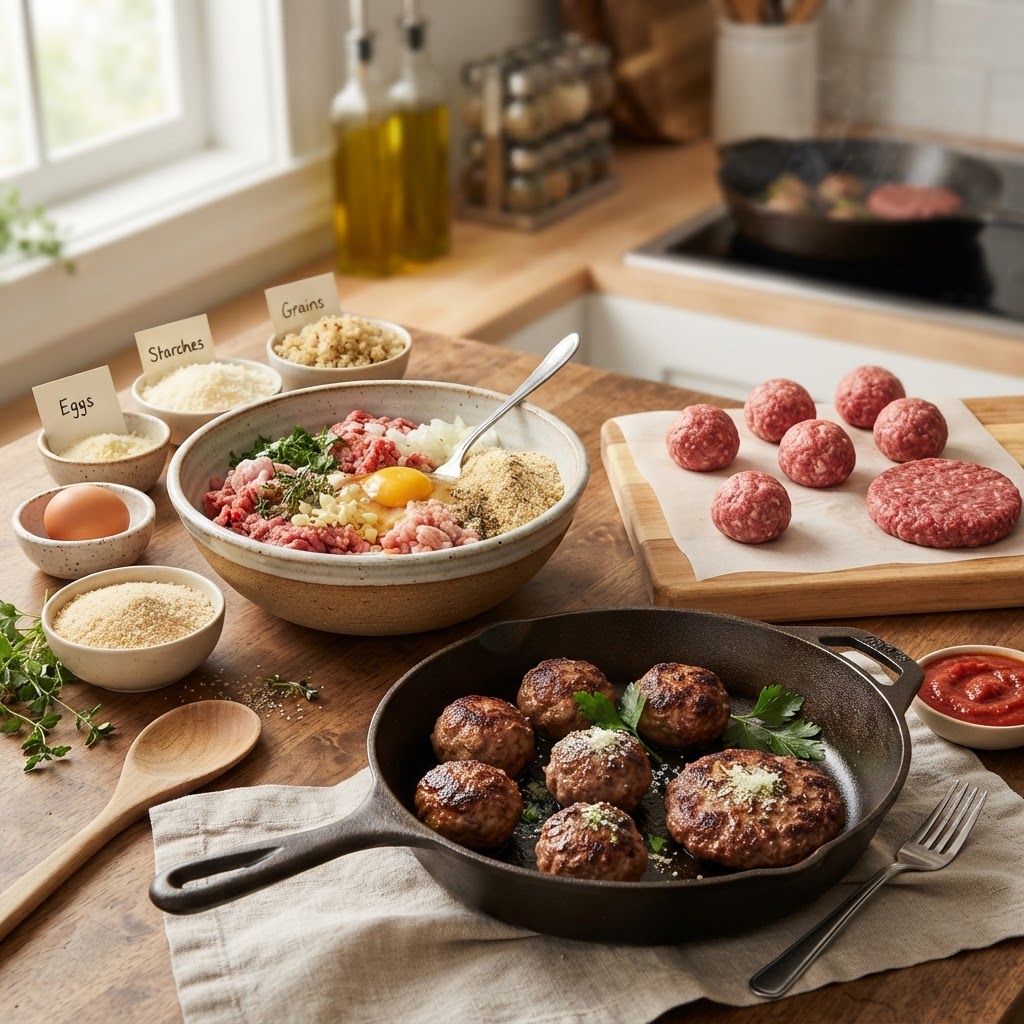
The Home Cook’s Guide to Binding Agents: How to Use Eggs, Starches, and Proteins to Perfect Your Meatballs, Burgers, and Patties
Have you ever spent an entire afternoon meticulously prepping the perfect blend of ground meats, hand-chopping fresh herbs, and grating artisanal cheeses, only to watch your masterpiece crumble into a sad, unidentifiable heap the moment it hits the searing pan? We have all been there, standing over a stovetop with a heavy heart and a spatula, wondering where exactly we went wrong. The truth is that the difference between a professional-grade patty that holds its integrity and a dry, crumbly mess often comes down to the science of binding. Understanding how to bridge the gap between lean protein and flavorful fat is the hallmark of a seasoned home cook, and it is a skill that elevates your kitchen game from amateur to inspired.
The secret to a perfect structural foundation lies in the invisible architecture of your mixture. When we talk about binding, we aren't just talking about keeping things together; we are talking about creating a cohesive texture that retains moisture, enhances the mouthfeel, and ensures that every bite is as structurally sound as it is delicious. Whether you are crafting a delicate salmon cake, a robust beef burger, or a classic Italian meatball, the ingredients you choose to act as your "glue" determine how that finished product behaves under the stress of heat. Once you master these principles, you will stop blaming your pan or your spatula and start commanding your ingredients with the precision of a head chef.
In this guide, we are going to peel back the curtain on the culinary mechanics that keep your food intact. We will explore the nuanced world of proteins, the versatility of starches, and the essential roles that temperature and hydration play in the binding process. By the end of this deep dive, you will have a comprehensive toolkit of techniques to ensure that every burger you sear and every meatball you simmer arrives on the plate in exactly the shape you intended. Let’s dive into the chemistry of the kitchen and transform the way you approach your favorite ground-meat recipes.
The Foundation of Protein Extraction
At the molecular level, meat is a collection of muscle fibers held together by connective tissue. To achieve a perfect bind, you must first encourage these proteins to bond with one another. This is a process known as protein extraction, and it is the most critical step in building a firm texture without relying solely on fillers. When you work ground meat with a little bit of salt and some mechanical agitation, you are effectively "activating" the myosin, a protein that acts as a natural glue when heated.
"The magic of the meatball isn't in the breadcrumbs, but in the myosin. If you work your mixture until it becomes tacky, you are creating a protein web that will hold everything together, even without an egg."
Why Temperature Matters
The temperature of your meat is non-negotiable. If you try to mix ground beef or pork while the fat is warm, the fat will begin to smear and coat the muscle fibers, effectively preventing them from bonding properly. Always keep your meat, your bowl, and even your hands cold. If you feel the mixture warming up as you stir, stick it back in the refrigerator for twenty minutes before you start forming your patties. This prevents the "mealiness" that ruins the mouthfeel of a burger and ensures that the structural bond remains tight.
The Role of Salt
Salt is more than a seasoning; it is an active participant in structural integrity. By drawing moisture out of the muscle fibers, salt allows the proteins to dissolve slightly and create a sticky, paste-like consistency. For the best results, incorporate your salt into your meat mixture at least 30 minutes before you plan to form your patties. This "pre-salting" allows for deeper penetration and a superior bind, turning a loose collection of meat into a cohesive, springy dough that holds its shape even under the intense heat of a cast-iron skillet.
Eggs: The Traditional Binder
The egg is the undisputed champion of the home cook’s kitchen, and for good reason. As a binder, eggs serve two primary purposes: they provide moisture and, as they coagulate during the cooking process, they form a solid network that traps the meat’s juices. However, it is entirely possible to have too much of a good thing. Using an excessive number of eggs will result in a rubbery, spongy texture that masks the natural flavor of the protein.
The Ratio Rule
For a standard meatball mix, a safe starting point is one large egg per pound of meat. If you are adding a high volume of dry fillers like breadcrumbs or oats, you may need to increase this slightly, but always aim for the minimum amount necessary to hold the mixture together. If the mixture feels wet or "sloshy" before it hits the pan, you have likely overdone it. The goal is a mixture that is moist enough to be supple, but dry enough to be shaped by hand without leaving a residue on your palms.
Whisking for Success
Never crack an egg directly into the meat mixture without whisking it first. By breaking down the egg white and yolk into a uniform liquid, you ensure that the binder is distributed evenly throughout the meat rather than clumping in one spot. This emulsification helps the egg penetrate the breadcrumbs or starches you are using, creating a consistent texture throughout every single meatball. This small step—whisking your eggs—is a classic professional technique that prevents those unpleasant "cooked egg white" pockets that can occasionally appear in a subpar meatball.
The Science of Starches and Breadcrumbs
When you need to extend your meat—whether to make it go further for a large dinner party or to create a lighter, more tender texture—starches are your best friends. Whether you prefer fresh breadcrumbs, Panko, or even cooked rice, these fillers perform a vital function by absorbing the rendered fat and juices that would otherwise leak out of your patty. By locking those fats inside the structure, you ensure a juicy, flavorful bite every single time.
Choosing Your Binder
Panko Breadcrumbs:* These are excellent for light, airy structures like chicken meatballs or salmon cakes because their larger surface area traps more moisture without packing tightly.
Fresh Breadcrumbs (Panade): Soaking fresh white bread in milk or stock creates a panade*, which is the gold standard for high-end meatballs. The milk adds moisture, while the bread creates a soft, cushiony texture that holds up to long braises.
Cooked Starches:* Rice or mashed potatoes can be used as binders for patties, particularly in global cuisines. These ingredients are starch-heavy and gelate when heated, providing a stable backbone for delicate proteins.
The Importance of the Panade
If you have never made a panade, you are missing out on the secret of restaurant-quality meatballs. Take a few slices of high-quality white bread, remove the crusts, and soak them in about a quarter-cup of milk. Mash it into a thick paste and fold it into your ground meat. This mixture acts as a sponge, holding onto moisture and fat during the cooking process. Because the bread is already hydrated, it won’t soak up the precious juices from your meat, keeping the protein itself succulent and tender rather than dry and tough.
Advanced Techniques: Chilling and Resting
One of the most overlooked steps in the entire culinary process is the "rest" period. After you have combined your meat, salt, binders, and aromatics, the mixture needs time to settle. Just as you rest a steak after cooking, you must rest your raw mixture before shaping it. This allows the starches to fully hydrate and the proteins to stabilize. If you have the time, let your mixture sit in the refrigerator for at least two hours—or even overnight.
"The refrigerator is your secret weapon. A cold mixture is firm, easy to handle, and less likely to fall apart when it encounters the intense, direct heat of your pan."
Chilling for Shape Retention
If you are forming burgers, keep your patties in the fridge until the very second you are ready to cook them. If the fat has begun to soften, the burger will lose its shape the moment the heat hits the bottom of the patty. By keeping the patties chilled, you give the exterior a chance to form a delicious, golden-brown crust (the Maillard reaction) before the center has a chance to heat up and lose its integrity.
The Resting Period Post-Cooking
Never slice into a meatball or a burger the second it leaves the heat. When you apply heat, the juices inside the meat are forced toward the center. If you cut it immediately, those juices will run out onto your plate, leaving the meat dry and lackluster. By resting your patties for 5 to 10 minutes, you allow the moisture to redistribute evenly throughout the meat. This is the difference between a dry, crumbly burger and a succulent, juicy experience that defines great cooking.
Addressing the Protein-to-Binder Balance
Finding the balance between your primary protein and your binder is an art form. If you are working with very lean protein, such as turkey or ground chicken, you will naturally need a stronger binding agent because these meats lack the natural fat that helps things stick together. Conversely, if you are working with a fatty blend of ground chuck, you can rely more on the protein’s natural stickiness and use less filler.
Adjusting for Lean Meats
When working with lean meats like poultry, consider adding a fat source back into the mixture, such as finely minced bacon or even a touch of olive oil. These fats help lubricate the protein strands, making the mixture more pliable and easier to bind. Without that added fat, lean poultry meatballs can become dense and tough. Remember: fat is flavor, and in the case of meatballs, fat is also a structure-builder.
The "Squeeze Test"
How do you know if your mix is ready? Use the squeeze test. Take a small amount of the mixture and form it into a ball in the palm of your hand. If it holds its shape with only light pressure, you are in the clear. If it crumbles, you need more binder or more mechanical mixing (to activate the proteins). If it feels like sticky mud or leaves a thick residue on your hand, you have added too much egg or liquid and may need to add a bit more breadcrumb or dry starch to balance it out.
Troubleshooting Common Failures
Even the most experienced chefs occasionally encounter a batch that doesn't behave. Perhaps the mixture was too warm, or perhaps the ratio of breadcrumbs was slightly off. The most common cause of failure is overworking the mixture. While you do need to mix it enough to activate the myosin, if you mix it for too long, you will break down the meat texture so much that it becomes a paste rather than a burger. Aim for the "sweet spot" where the mixture just starts to look uniform and tacky.
When to Pivot
If you are in the middle of shaping your meatballs and realize the mixture is simply not holding together, don't panic. Simply add a tablespoon of breadcrumbs at a time. The breadcrumbs will absorb the excess moisture and provide the structural skeleton needed to hold the meat together. If you find your patties are sticking to the grill or the pan, ensure your cooking surface is properly preheated and oiled. A cold pan is the enemy of a perfect sear, and a sticky surface is the enemy of a perfect patty.
The Problem of Ingredient Size
The size of your inclusions also matters. If you are adding finely diced onions, peppers, or herbs, make sure they are very fine. Large chunks of vegetables act as "structural disruptions"—they create gaps in the meat, which are natural breaking points. If you have a large chunk of onion in the middle of a burger, the meat will likely crack right at that point. Aim for a fine mince on all your aromatics to ensure a uniform texture that holds together beautifully.
The Professional Kitchen Mindset
Ultimately, the goal of understanding binding agents is to give you the confidence to improvise. Once you understand the roles of the egg (moisture and cohesion), the starch (fat-absorption and structural bulk), and the protein (natural stickiness), you can stop following recipes blindly and start creating your own. A meatball isn't just a recipe; it is a chemistry project that ends with a delicious dinner.
When you bring a tray of perfectly uniform, beautifully seared meatballs to the table, you aren't just showing off your culinary skills—you are demonstrating an understanding of how ingredients work together. You are the architect of your own meal. Whether you are cooking for a family weeknight or a high-stakes dinner party, the foundation you build within that bowl is what ensures your success. Stop worrying about the pan, stop worrying about the spatula, and start focusing on the chemistry of the mix.
Final Thoughts
Mastering the art of binding is a journey, not a destination. It requires patience, a bit of trial and error, and an appreciation for the subtle shifts in texture that occur when you tweak your ratios. Start by practicing with a basic beef meatball, pay close attention to how the cold temperature affects the texture, and don’t be afraid to experiment with different types of starches. You will quickly find that the "perfect" bind is entirely dependent on your own preferences and the specific ingredients you have on hand.
As you continue to refine your technique, remember the importance of temperature control and the power of a well-made panade. These are the tools that separate the home cook from the chef. The next time you find yourself at the grocery store staring down a package of ground beef, don't just think about what spices you’ll add. Think about the structure. Think about the bind. Think about how that mixture will behave once it meets the heat. When you start thinking like a chef, the results will speak for themselves.
Don't be discouraged by a few broken patties along the way. Every kitchen failure is simply a lesson in molecular dynamics. Keep your meat cold, keep your binders balanced, and keep your hands light. You now have the knowledge to construct the perfect burger, the ultimate meatball, and the most reliable patty you have ever made. Happy cooking, and remember: when it comes to the integrity of your meal, you are the one in control, not the pan. Go forth and create something sturdy, succulent, and absolutely delicious.
By internalizing these steps, you are moving beyond simple food preparation and into the realm of culinary craftsmanship. The home cook’s kitchen is a laboratory of flavors and textures, and the bind is the glue that holds it all together. Keep this guide handy, keep your knives sharp, and most importantly, keep cooking with confidence. Your perfect meal is only a few adjustments away. Every great chef started exactly where you are today—looking for the secrets to the perfect structure—and now, those secrets are yours to keep. Enjoy the process of refining your craft, and may your patties never crumble again.

Get the Next Recipe
Weekly recipes, techniques, and gear picks — straight to your inbox.
