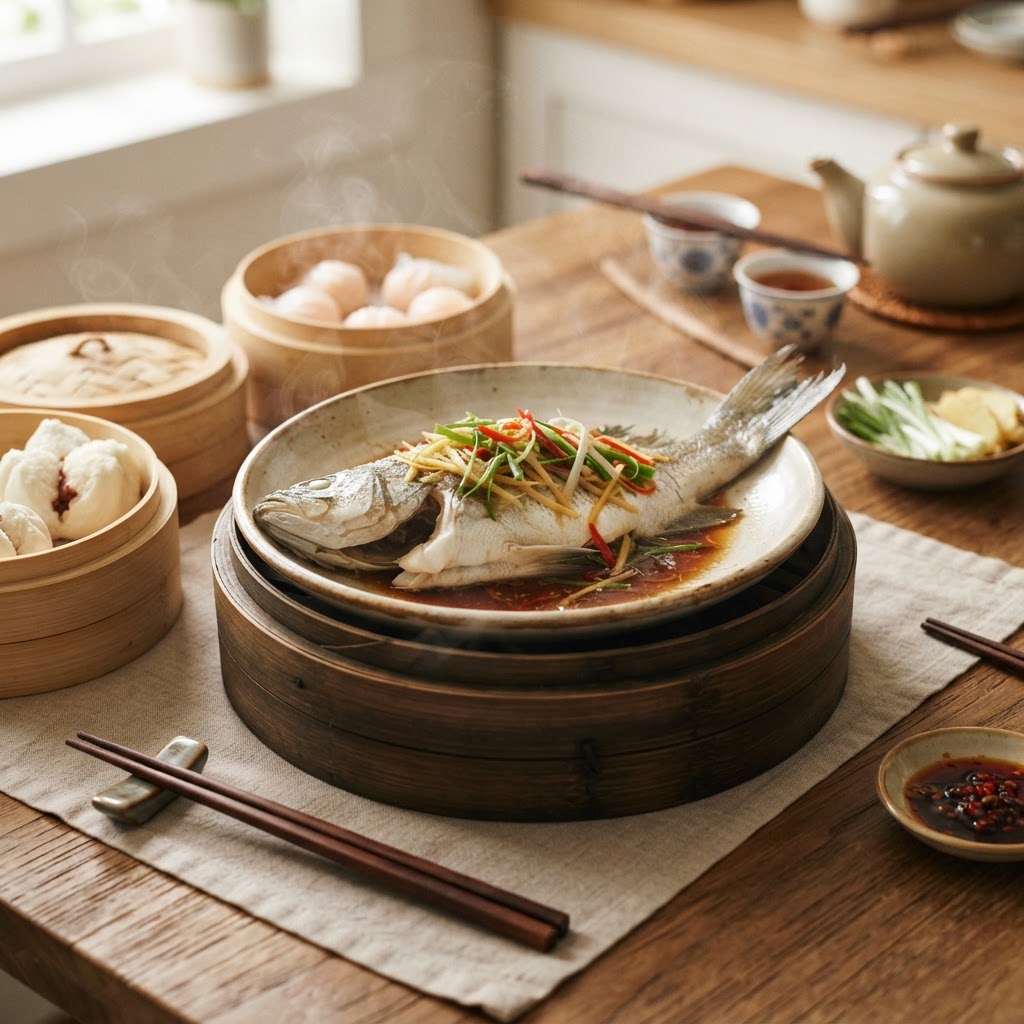
The Home Cook’s Guide to Cantonese Steaming: Mastering Aromatics and Heat Control for Perfectly Tender Fish and Dim Sum
There is a profound, quiet elegance in the art of Cantonese steaming that often eludes the home cook, obscured by the perceived complexity of professional kitchen equipment. At its core, this technique is not merely about cooking food; it is a philosophy of preserving the integrity of the ingredient, allowing the natural sweetness of a fresh catch or the delicate texture of a shrimp dumpling to take center stage. When you strip away the heavy sauces and the aggressive searing associated with other culinary traditions, you are left with the essence of the produce itself, amplified by the gentle, penetrating kiss of circulating steam. It is a humble method, yet one that demands a level of precision that separates the mediocre from the truly transformative.
To master the steamer is to understand the language of heat control and aromatic layering, two pillars that form the foundation of Cantonese cuisine. Many beginners approach steaming with a sense of trepidation, fearing either the rubbery disaster of overcooked protein or the lackluster result of an under-seasoned dish that tastes purely of water. However, once you grasp the mechanics of high-intensity steam and the strategic timing of ginger, scallion, and soy, the process becomes intuitive and deeply rewarding. This is a rhythmic style of cooking, one that encourages you to slow down, prep your ingredients with obsessive care, and watch the clock with the vigilance of a seasoned sous-chef.
In this guide, we will peel back the layers of Cantonese steaming, moving beyond the restaurant table and into your own kitchen with accessible, professional techniques. We will explore the science of steam, the essential aromatics that act as the flavor profile’s backbone, and the rigorous discipline of heat management required to achieve that elusive, silk-like texture. Whether you are aiming to recreate the perfect steamed sea bass with sizzling oil or attempting to fold your first batch of crystal shrimp dumplings, the principles remain the same. By the end of this journey, you will find that the steamer is not just an appliance for the health-conscious, but an indispensable tool for achieving the highest expression of flavor in your culinary repertoire.
The Science and Equipment of Steam
Steaming is essentially an exercise in thermal conductivity and moisture management. Unlike boiling, where the ingredient is submerged in liquid and potentially stripped of its flavor, steaming relies on the latent heat of water vapor to cook food evenly and gently. When steam hits the surface of the food, it undergoes a phase change back into liquid water, releasing a vast amount of energy that cooks the food thoroughly without the harsh, dehydrating effects of dry heat. This is why steamed fish remains succulent and dumplings maintain their structural integrity without splitting or becoming waterlogged.
For the home cook, the equipment choice is surprisingly flexible. While a traditional bamboo steamer offers the aesthetic and functional benefit of absorbing excess moisture—preventing condensation from dripping back onto your food—a stainless steel steamer insert or even a simple metal rack placed inside a wok will suffice. The key is ensuring that there is enough space around the food to allow for the uniform circulation of heat. If your steamer is overcrowded, you create "cold zones" that lead to uneven cooking, which is the primary culprit behind failed dim sum and tough fish fillets.
Managing the Steaming Environment
To truly elevate your game, you must view your steamer as a closed system where environment dictates the outcome. The water level is perhaps the most overlooked factor; you want a robust, rolling boil before you ever introduce the ingredient, but you must ensure that the water level is low enough that it doesn't touch the rack or the bottom of your dish. If the boiling water splashes onto your fish, you are effectively poaching it, which alters the texture entirely. Additionally, always preheat your steamer to a high temperature to ensure that the initial burst of heat sets the surface of the food, locking in the natural juices.
"The true secret to Cantonese steaming lies not in the complexity of the sauce, but in the absolute control over the intensity of the steam itself. Treat the steamer as a precision instrument, not a place to dump ingredients."
The Essential Aromatics: Building the Flavor Foundation
In Cantonese cooking, aromatics are not meant to overpower; they are meant to act as a flavor bridge between the primary ingredient and the seasoning. Ginger and scallion are the undisputed pillars of this genre. When sliced into thin, needle-like matchsticks—known as julienne—and placed atop a fillet of fish, they serve a functional purpose beyond taste: they facilitate the release of flavor while the fish is cooking and provide a sensory contrast to the tender, flaky meat. The ginger cuts through the richness of the fish, while the scallions provide a herbaceous, slightly sweet lift.
Beyond these staples, the strategic use of high-quality light soy sauce, Shaoxing rice wine, and white pepper is vital. Shaoxing wine is non-negotiable; its deep, malty complexity is essential for neutralizing any "fishiness" in the protein. It acts as an olfactory eraser, stripping away unpleasant aromas and replacing them with a savory depth. When preparing your aromatics, consistency is key. If your ginger slices are uneven, some will be raw and pungent while others might burn; practice your knife skills to ensure that every piece of aromatic hits the heat simultaneously.
The Art of the Sizzle
One of the most iconic techniques in Cantonese fish preparation is the sizzling oil finish. Once the fish has been steamed to perfection and removed from the steamer, you garnish it with fresh aromatics and then pour a small amount of smoking-hot neutral oil over the top. This technique accomplishes three things: it briefly cooks the raw garnishes to mellow their sharpness, it releases a secondary wave of fragrance that hits the diner immediately, and it creates a beautiful sheen on the surface of the fish. This final step is the bridge between a home-cooked meal and a restaurant-quality experience.
Mastering the Steamed Fish: Precision and Patience
The goal of steaming a whole fish—usually a rockfish, sea bass, or snapper—is to achieve a state where the meat is translucent and flaky, peeling away from the bone with the slightest resistance. To achieve this, freshness is the only variable you cannot negotiate. A fish that has spent too much time on ice will lose its structural integrity, turning mushy the moment the steam hits it. When selecting your fish, look for clear, bright eyes and firm, elastic flesh that bounces back when pressed.
Preparation begins with scaling and gutting, but the internal cleaning is where most home cooks fail. You must scrub away the dark, clotted bloodline along the spine, as this is where the majority of the bitter, metallic flavor resides. Pat the fish completely dry before seasoning it with a light rub of salt and a splash of Shaoxing wine. Placing the fish on a bed of ginger slices and scallion stalks serves as a riser, allowing steam to circulate beneath the fish, ensuring even cooking on both the top and the bottom simultaneously.
Timing and Temperature Control
For a standard one-pound fish, the rule of thumb is roughly 8 to 10 minutes of active steaming time. However, this is heavily dependent on the depth of the fish and the intensity of your heat source. Always use a timer. The moment the timer goes off, probe the thickest part of the fish with a cake tester or a thin metal skewer. If it slides through like butter, you have reached the summit. If you feel resistance or see opaque, un-flaky flesh, add 60 seconds. Remember, the fish will continue to carry over-cook for a minute or two after it leaves the steamer, so err on the side of caution.
"A perfectly steamed fish is a testament to the chef's respect for the ingredient. It should feel like a whisper of the ocean, delicate and refined, rather than a heavy, cooked-through slab."
The Architecture of Dim Sum: Crystal Dumplings and Beyond
Dim sum requires a completely different mindset. Here, the focus shifts from the freshness of a single protein to the precision of texture and temperature. The "Crystal" wrapper, usually made from a blend of wheat starch and tapioca starch, is notoriously unforgiving. If the water used to hydrate the starch is not boiling hot, the dough will not gelatinize, resulting in a tough, gummy casing. If the water is too cool, the dough will be brittle and prone to tearing. You are essentially cooking a paste, which requires both agility and speed.
Filling composition is equally critical. For Har Gow (shrimp dumplings), the shrimp must be chopped, not minced, to maintain a distinct, snap-like texture. Marinating the shrimp with salt, white pepper, a pinch of sugar, and sesame oil creates a savory base that permeates the dumpling as it steams. When folding the wrappers, ensure the pleats are tightly sealed; any air pocket can cause the dumpling to explode or turn soggy. The architecture of a dim sum piece is a balance of aesthetics and structural engineering, ensuring that the filling remains juicy while the wrapper remains translucent and chewy.
Professional Tips for Dim Sum Success
Hydration:* Always keep your starch-based doughs covered with a damp cloth while working, as they dehydrate almost instantly in room-temperature air.
The Steaming Surface:* Use parchment paper liners or greased cabbage leaves to prevent sticking. Metal racks without protection are a death sentence for delicate dumpling wrappers.
Uniformity:* Every dumpling on your tray must be the same size. Variations in size lead to variations in cook time, meaning you’ll end up with some overcooked and some undercooked pieces in the same batch.
High Steam:* Dim sum relies on high-heat, rapid steaming. Never peek into the steamer, as every second the lid is lifted, you lose critical thermal energy that keeps your wrappers perfectly set.
Troubleshooting the Common Steaming Disasters
Even the most dedicated home chefs encounter issues when transitioning to professional steaming techniques. The most common complaint is a "soggy" result. This is almost always caused by condensation. When steam hits the cold lid of a pot, it reverts to water and drips back onto the food. To combat this, drape a kitchen towel over the steamer before placing the lid on; the towel will act as a sponge, absorbing the water droplets before they can compromise your dish.
Another frequent failure is the "rubbery" texture. This is a direct consequence of overcooking. Because steaming is such an efficient heat transfer method, the window between perfect and ruined is very small. If you are steaming a variety of items—some delicate vegetables, some dense meat buns—do not attempt to steam them all at once. Organize your workflow so that items with similar cooking times are grouped together. If you find your proteins are consistently tough, invest in an instant-read thermometer. Precision is your best friend when intuition hasn't yet been earned.
The Role of Seasoning in Steaming
Seasoning in Cantonese steaming is often done post-steam. Because the steam cycle is quite gentle, dry spices often fail to penetrate the center of a dense protein. Instead, rely on a finishing sauce. A simple blend of high-quality soy sauce, a touch of rock sugar, and a few drops of sesame oil, warmed slightly and poured over the dish right before serving, provides the necessary salt and complexity that steaming alone cannot generate. This "saucing" phase is where you adjust the flavor profile to your personal preference, adding brightness with a splash of vinegar or heat with a chili crisp infusion.
The Cultural Philosophy of Cantonese Steaming
To embrace Cantonese steaming is to embrace a culture of mindful consumption. This is not a style of cooking that relies on heavy fats, dairy, or elaborate reductions to create "umami." Instead, it celebrates the subtle, often neglected nuances of high-quality proteins and seasonal produce. In Cantonese kitchens, the "steamer" is the heartbeat of the house; it is the station where the most care is taken, as it represents the most direct link between the farmer's market and the diner’s palate.
When you practice these techniques, try to think about the journey of the ingredient. You are not "transforming" the food so much as you are "revealing" it. When you steam a piece of bok choy, you are aiming to retain that bright, verdant green and that crisp-tender snap. When you steam a fillet of sea bass, you are aiming to showcase the buttery sweetness of the fish. This requires a shift in the home cook's mindset: moving away from the urge to "add more" and moving toward the discipline of "taking away" until only the essential remains.
"The beauty of a Cantonese steamed dish is its honesty. You cannot hide behind heavy cream or excessive salt. If the ingredient is fresh and the technique is precise, the dish will be nothing short of magnificent."
Final Thoughts
The path to mastering Cantonese steaming is one of incremental gains. You will not produce a perfect Har Gow on your first attempt, and you may occasionally misjudge the timing on a fillet of fish. That is the nature of the craft. Each time you step into the kitchen, focus on one variable: the heat intensity, the quality of your aromatics, or the precision of your timing. Over time, these individual elements will coalesce into a seamless, intuitive rhythm that allows you to produce restaurant-quality dishes with relative ease.
Remember that the goal is not perfection, but rather the pursuit of a cleaner, more vibrant style of cooking. Cantonese steaming provides a sanctuary from the heavy, oil-laden meals that often dominate our daily lives. It offers a way to sit down at the table and enjoy a meal that makes you feel energized rather than depleted. As you continue to experiment with different proteins, vegetables, and aromatic combinations, keep these core principles at the front of your mind: constant, rolling steam; precise timing; and the strategic use of aromatics to frame the final product.
Finally, do not be afraid to invite people to your table to share in these experiments. Cantonese cooking is, by its very nature, communal. The act of placing a steaming, fragrant plate of fish in the center of the table and watching it be enjoyed is one of the greatest pleasures of the culinary arts. Take your time, trust your tools, and most importantly, blame the chef if things go wrong—but celebrate yourself when everything goes exactly right. Happy steaming, and may your kitchen always be filled with the intoxicating aroma of fresh ginger and soy.
Get the Next Recipe
Weekly recipes, techniques, and gear picks — straight to your inbox.
