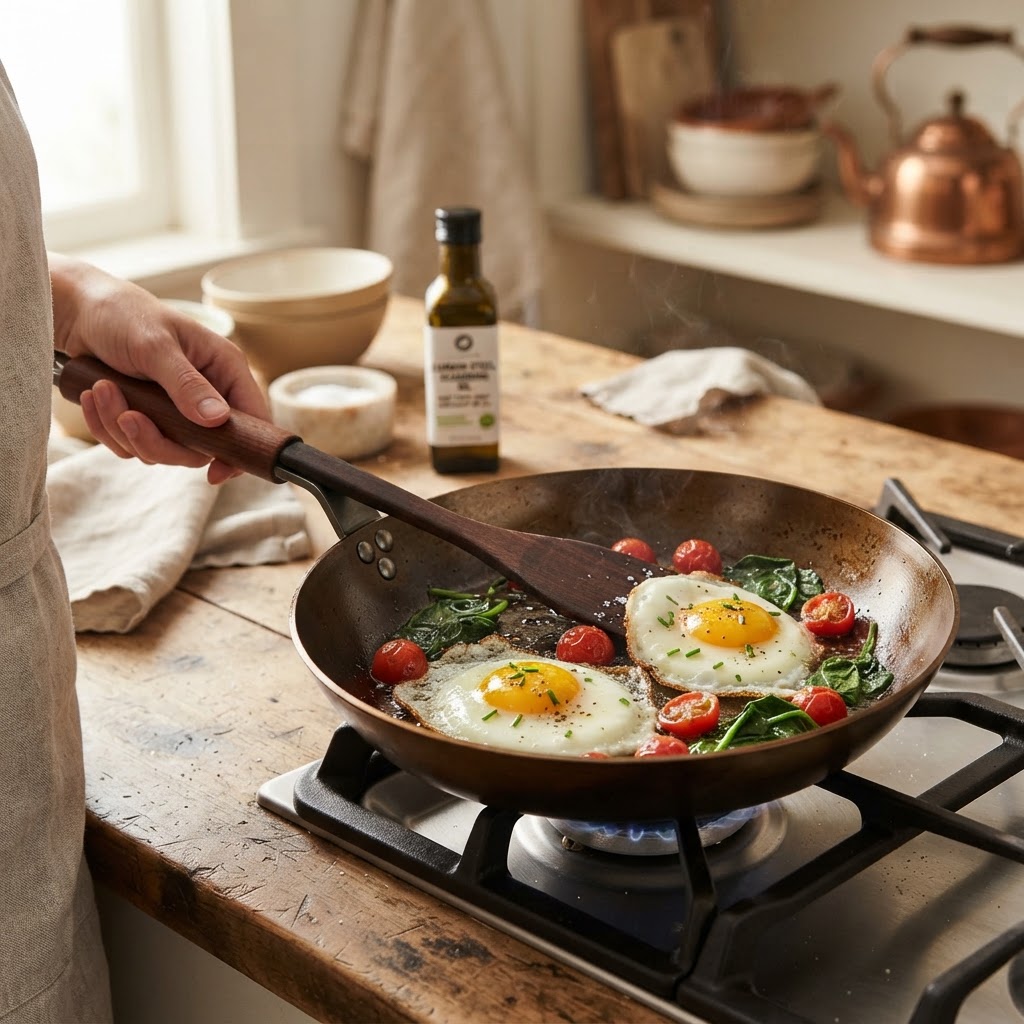
The Home Cook’s Guide to Carbon Steel Maintenance: Mastering Seasoning, Cleaning, and Restoration for a Lifetime of Non-Stick Performance
There is a specific, tactile magic that occurs when you transition from the world of non-stick, chemical-coated pans to the raw, rugged utility of carbon steel. For many home cooks, the initial purchase of a carbon steel skillet is an act of aspiration, a promise to oneself that they are finally ready to graduate to "pro-level" gear. Yet, the first time that pristine silver surface turns blotchy, brown, or—heaven forbid—begins to rust, panic often sets in. You might find yourself staring at a sticky mess, wondering if you have somehow ruined a professional tool that was supposed to last a lifetime. Rest assured, the learning curve is steep, but the reward is a surface that performs better than any synthetic coating ever could.
At Blame The Chef, we believe that your cookware should be an extension of your own hand, evolving alongside your culinary journey. Unlike stainless steel, which is rigid and indifferent to your treatment, or cast iron, which is heavy and brittle, carbon steel occupies a beautiful middle ground. It is lightweight enough for sautéing, durable enough for the oven, and capable of developing a non-stick patina that makes morning eggs a frictionless joy. Understanding how to maintain this metal is not merely about chores; it is about developing a relationship with your kitchen, learning to read the surface of your pan like a map of your past meals.
The following guide is designed to strip away the mystery surrounding this material. We will cover the granular details of seasoning, the scientific necessity of proper cleaning, and the restorative processes that can bring even the most neglected pan back from the brink. You are not just learning how to wash a dish; you are learning how to build and maintain a layer of polymerized oil that protects your metal and elevates your cooking. Let’s stop being intimidated by our equipment and start mastering the art of the carbon steel lifecycle, ensuring your skillet remains the workhorse of your kitchen for decades to come.
The Chemistry of the Seasoning Process
Understanding Polymerization
At its core, seasoning is not just about oiling a pan; it is a chemical transformation known as polymerization. When you heat a thin layer of oil past its smoke point, the triglycerides in the oil break down and reorganize into a hard, plastic-like substance that bonds to the microscopic pores of the carbon steel. This is the foundation of your non-stick surface. If you use too much oil, you create a tacky, gummy layer that will eventually flake off. If you use too little, the metal remains vulnerable to oxidation and sticking.
Achieving the perfect bond requires patience and precision. You are looking for a light, golden-brown finish that builds up in micro-thin layers. Professional chefs often compare this to painting; it is much better to apply ten thin coats than one thick, heavy layer. By heating the pan to a specific temperature—usually between 450°F and 500°F (230°C–260°C)—you ensure the oil molecules are vibrating with enough energy to cross-link effectively. This creates a surface that is not only slick but also resistant to the acidic ingredients that might otherwise strip your seasoning away.
Selecting the Right Oil
Not all fats are created equal when it comes to building your base layer. You want an oil with a high smoke point and a high degree of polyunsaturated fats, which are more reactive and prone to polymerization. Grapeseed oil, refined coconut oil, and sunflower oil are top-tier candidates for this task. Avoid extra virgin olive oil or butter for the initial seasoning process, as their low smoke points will lead to uneven burning rather than a consistent, hard polymer finish.
"A well-seasoned carbon steel pan is not a static object; it is a living, breathing work of art that improves with every sear, every stir-fry, and every drop of fat it encounters."
When applying the oil, treat it like you are trying to wipe the pan completely clean. Apply a few drops to a paper towel, coat the entire surface—including the sides and the exterior bottom—and then use a fresh, dry paper towel to wipe as much of that oil off as possible. You want a sheen that is barely visible to the naked eye. If you can see droplets of oil, you have used too much. This "wipe-on, wipe-off" method is the single most important secret to achieving a smooth, professional-grade finish.
The Ritual of Initial Seasoning
The Stovetop Method vs. The Oven Method
For most home cooks, the oven seasoning method is the most reliable way to ensure even heat distribution. Preheat your oven to 450°F. Place your carbon steel pan upside down on the middle rack, with a sheet of foil or a baking tray underneath to catch any potential drips. Let it bake for one hour, then turn off the oven and allow the pan to cool completely inside. The slow cooling process helps the seasoning stabilize against the steel, preventing it from cracking or peeling under thermal shock.
The stovetop seasoning method is faster and ideal for touch-ups or for those who don’t want to heat up their kitchen. Place the pan over medium-high heat until it begins to smoke slightly. Using a pair of tongs and a tightly folded paper towel, distribute a very light film of oil across the surface. As the oil smokes, move the pan around so the heat touches every inch. You will notice the metal shifting colors—from raw silver to bronze, then to a deep, dark brown. Keep the pan in motion to avoid localized hot spots that might cause the seasoning to become brittle.
Building Initial Layers
Do not expect a factory-new pan to be non-stick out of the box. You should aim for at least three to five cycles of seasoning before attempting to cook something delicate like scrambled eggs or fish. During these first few sessions, stick to high-fat, high-heat cooking methods. Searing a steak, frying bacon, or roasting vegetables in a generous amount of oil helps "feed" the seasoning. Every time you cook, you are adding a microscopic layer of fat to that initial base, slowly improving the pan’s performance.
Cleaning and Daily Maintenance
To Soap or Not to Soap?
There is an enduring myth that you should never use soap on carbon steel. Let’s dispel that right now: modern dish soap is perfectly fine. The chemical structure of soap is designed to break down grease, and while it will certainly clean the surface, it will not remove a properly polymerized layer of seasoning. The real danger to your pan isn't the soap—it’s moisture. If you leave your pan soaking in the sink, you are inviting rust, which is the mortal enemy of carbon steel.
The best way to clean your pan is immediately after cooking, while it is still warm. Use a nylon brush or a chainmail scrubber to remove any stuck-on bits. If you have stubborn remnants, add a cup of water to the pan and bring it to a simmer on the stove for a minute or two. This will loosen anything that hasn't bonded to the metal. Once the food is dislodged, pour the water out, scrub lightly with a drop of mild soap, rinse, and immediately place the pan back on the burner to dry completely.
The Importance of Immediate Drying
After rinsing your pan, never walk away and let it air-dry. The dampness will begin to oxidize the surface almost instantly. Place the pan back on the burner on low heat for two to three minutes. Once the moisture has completely evaporated, wipe the inside with a tiny bit of oil again. This "maintenance coat" acts as a barrier against the humidity in your kitchen, ensuring that your pan is ready for the next time you need it. Think of this as a daily skin-care routine for your cookware; it takes ten seconds but saves you an hour of restoration work later.
"If your pan feels sticky to the touch after cleaning, you haven't ruined it—you’ve simply been too generous with your oil. A quick scrub with a coarse paste of salt and oil will reset the surface in seconds."
Handling Common Issues and Obstacles
Dealing with Rust
If you see orange or reddish-brown spots on your pan, do not despair. Rust is a surface-level annoyance and does not indicate a structural flaw. To remove it, you need to be somewhat aggressive. Use a piece of fine-grit steel wool or a dedicated stainless steel scrubbing pad to scour the rusted area until the bare, silver metal is visible again. Wash the pan thoroughly, dry it over high heat, and re-season that spot immediately using the stovetop method. You are basically performing a minor surgery on your pan, and it will be back to normal within minutes.
Removing Carbon Buildup
Over time, you might notice thick, black patches that feel rough or flake off when you cook. This is not seasoning; it is carbon buildup, usually the result of cooking at high temperatures with excess oil or charred food particles that weren't fully cleaned. When the buildup becomes uneven, it can actually interfere with your non-stick performance. If this happens, it is time for a "reset." You can use a more abrasive cleaning tool or even a chemical stripping agent if the buildup is severe. Don't be afraid to take the pan down to raw metal occasionally. Carbon steel is incredibly forgiving and designed to be rebuilt time and time again.
Rust:* Use steel wool, scour, rinse, dry, and re-season.
Stickiness:* Wipe with excess oil, heat until the stickiness turns to a hard finish, or scrub with salt/oil paste.
Carbon Buildup:* Scrub with a heavy-duty scourer or perform a deep clean using high heat to burn it off.
Metallic Taste:* This happens if the seasoning is thin. Increase your frequency of oiling and cook fatty foods to build thickness.
Advanced Techniques for Optimal Performance
The Sauté Test
Once your pan has a base layer of seasoning, how do you know if it is ready for high-stakes cooking? Use the sauté test. Heat the pan until it is shimmering, add a tablespoon of high-smoke point oil, and then add your ingredients. If the food moves freely across the surface with a slight push of your spatula, your seasoning is sufficient. If the food drags or sticks, your pan is telling you that the surface is still too porous. Add another thin layer of oil and continue your session.
Professional chefs often use carbon steel specifically for the Maillard reaction. Because carbon steel conducts heat differently than stainless steel or aluminum, it provides a fierce, concentrated sear that develops a deep crust on proteins. To maximize this, always pat your meat or vegetables dry before they hit the pan. Moisture is the enemy of the sear. If you add cold, wet food to a carbon steel pan, you will drop the pan’s temperature too quickly, which causes the surface proteins to fuse with the metal, resulting in the dreaded "sticking."
Temperature Control and Pre-Heating
Carbon steel is highly conductive, but it also has a tendency to develop hot spots if you throw it on high heat instantly. Always practice gradual pre-heating. Place your pan over medium heat for several minutes before turning it up to high. This allows the metal to expand evenly. If you crank the heat on a cold pan, you risk warping the base, especially on induction or glass-top stoves. Once the pan is evenly hot, you can drop the heat down to the appropriate level for your cooking needs. This stability is the hallmark of a master home cook.
Restoration: Bringing a Pan Back to Life
The Deep Reset
Sometimes, you might inherit a pan or find one that has been left in a damp cabinet for a year. It might look black, greasy, and pitted. Do not throw it away. A carbon steel pan is a solid, indestructible piece of metal. You can restore it to a "factory reset" state by stripping it completely. You can use a mild oven cleaner (ensuring it is safe for the material) or simply apply high heat over a long period to burn off every vestige of old, gummy seasoning.
Once you have stripped the pan down to bare, clean, silver metal, you must treat it like a brand-new skillet. Start the seasoning process from scratch. It is actually a cathartic experience; you get to watch the metal transform from a dull gray to a beautiful, bronzed, and eventually black surface. You will find that the second time you build the seasoning, you are much more confident in your technique. The pan will reflect the care you’ve put back into it.
The Role of Acidic Foods
Many home cooks ask if they can cook tomato sauce or wine-based reductions in their carbon steel pans. The short answer is: try to avoid it, especially in the early stages. Acidic ingredients will slowly strip away the seasoning you have worked so hard to build. If you absolutely must use an acidic ingredient, do it only after your pan has developed a thick, dark, and extremely well-hardened patina. Even then, serve the food immediately and clean the pan thoroughly after cooking. If you leave a tomato-based dish sitting in a carbon steel pan, you will come back to a stripped, gray, and potentially metallic-tasting disaster.
"A carbon steel pan that has been used for five years looks vastly different than one that has been used for five days. The dark, mottled surface is a badge of honor, proving that you have truly mastered the tool."
Building the Lifetime Habit
Consistency is Key
The transition from viewing your pan as a piece of equipment to viewing it as a long-term partner is a shift in mindset. When you finish your meal, the cleaning process should be an automatic, meditative habit. By integrating the wipe-down, the dry-out, and the oil-reheat into your post-cooking routine, you ensure that the pan is never "neglected." Neglect is the only thing that will ruin a carbon steel pan. As long as you keep it dry and oiled, it is virtually impossible to destroy.
Think of your cooking sessions as a cycle. You season the pan, you cook with fat, you clean, you dry, and you maintain. This cycle reinforces the surface every time you step into the kitchen. Over the course of a year, you will find that your pan has developed a slick, glassy finish that rivals expensive non-stick coatings, without the worry of chemicals or the fear of scratching the surface. Unlike synthetic pans that lose their effectiveness and end up in a landfill, your carbon steel pan will actually function better ten years from now than it does today.
Encouragement for the Home Chef
If you have ever felt discouraged because your eggs stuck to the pan or your seasoning started to flake, remember that you are in good company. Every professional chef who has ever used carbon steel has had the exact same experience. The learning curve is part of the process. Do not let one sticky omelet deter you. Adjust your heat, check your oil, and keep cooking. The beauty of this material is its infinite remediability. If it isn't working, strip it back or build it up; you are always in control of the pan’s performance.
As you gain confidence, you will start to reach for your carbon steel pan for everything—searing, stir-frying, roasting, and even baking. You will notice that your food tastes better because you have better control over the heat and the development of flavor. You are no longer just following a recipe; you are engaging with the physics of the kitchen. That is the true essence of cooking at home: the ability to wield professional tools with the warmth and care that only a home cook can provide.
Final Thoughts
Mastering carbon steel is a journey of patience, chemistry, and culinary intuition. It is a commitment to moving away from the "disposable culture" of modern cookware and towards a tradition of longevity and performance. By now, you should understand that seasoning is not a one-time event, but a continuous process of polymerization. You have learned that cleaning is not about scrubbing away all evidence of use, but about protecting the metal from the elements. You have the tools to handle rust, carbon buildup, and the nuances of temperature control.
Your pan is ready to serve you for the rest of your life. It will bear the marks of every sear, the dark stains of every successful dinner, and the scratches of a thousand uses. These are not flaws; they are the character marks of a well-used tool. Treat your carbon steel with respect, maintain the ritual of the post-cook oil-wipe, and never be afraid to experiment with your techniques. You are the chef, and this pan is the instrument upon which you will compose some of your greatest culinary works.
As you continue to refine your skills, remember that Blame The Chef is always here to support your growth. Whether you are looking to master the perfect sear on a ribeye, achieve the elusive wok-hei in a stir-fry, or simply make a perfect, non-stick fried egg for breakfast, your carbon steel skillet will be the most reliable companion in your arsenal. Don't be afraid of the heat, don't fear the occasional mistake, and above all, keep cooking. The perfect patina is just one meal away.
When you invest in quality, you invest in a legacy. These pans are often passed down through generations, each owner adding their own layers of seasoning and history to the steel. Someday, perhaps your own children or friends will look at your trusty, dark, seasoned carbon steel pan and ask you how to make it perform that way. You will smile, knowing that it wasn't magic—it was just dedication, a little bit of high-smoke point oil, and the refusal to ever give up on a good piece of gear. Keep your pans hot, keep your fat thin, and keep creating.
(Author's note: As you reach the end of this guide, I invite you to take your pan into your hands. Feel the weight of it, inspect the surface, and visualize the meal you will prepare tonight. There is no better time than the present to start that next layer of seasoning. Happy cooking, and may your eggs always slide, your steaks always crust, and your kitchen always smell of home.)
To summarize the core principles for your kitchen wall:
By adhering to these simple tenets, you are elevating your home kitchen to a professional standard. You are no longer just cooking food; you are mastering the craft. We look forward to hearing about your successes and the delicious meals you will create on your perfectly seasoned surface. Blame the chef for the success of your next dinner, because with this knowledge, there is no reason for anything less than excellence. Happy seasoning, and we will see you in the kitchen for the next lesson in culinary mastery.
As you reflect on the transition to carbon steel, remember that the most important ingredient is your own willingness to learn. You are part of a community of cooks who appreciate the beauty of the process. Every time you flip a pancake or sear a piece of salmon, you are perfecting a craft that spans centuries. Your pan is not just a tool; it is a catalyst for creativity and a vessel for memories. May your kitchen always be a place of warmth, your ingredients always fresh, and your carbon steel always perfectly, wonderfully, gloriously seasoned. Continue to push your limits, explore new recipes, and above all, enjoy the process of becoming the master of your own culinary world.


Get the Next Recipe
Weekly recipes, techniques, and gear picks — straight to your inbox.
