The Home Cook's Guide to Caribbean Jerk: Mastering Pimento-Wood Smoke and Scotch Bonnet Marinades for Authentic Island Flavor
The aroma of authentic Caribbean jerk is more than just a scent; it is an atmospheric shift that signals a commitment to patience, heat, and tradition. When you stand over a drum smoker filled with pimento wood, watching the blue-gray ribbons of smoke dance around chicken thighs or pork shoulders, you are participating in a culinary ritual that dates back centuries. Many home cooks approach jerk with a sense of intimidation, fearing the intensity of the Scotch Bonnet pepper or the complexity of the spice blend. However, once you understand that jerk is a marriage of controlled smoke, aggressive seasoning, and slow-heat penetration, the process becomes less of a mystery and more of a meditative craft. This guide is designed to strip away the myths and provide you with a foolproof pathway to achieving that deep, wood-fired island flavor in your own backyard.
To master the art of jerk, one must first respect the provenance of the ingredients. True jerk is defined by the inclusion of allspice, known in the Caribbean as pimento, which serves as the backbone of every authentic marinade. While it is tempting to settle for grocery store spice mixes, nothing compares to the pungency of fresh pimento berries toasted and ground by hand just moments before use. We will explore how to balance the floral, fruity heat of the Scotch Bonnet with the earthy musk of thyme, scallions, and ginger. When these ingredients emulsify into a dark, coarse paste, they provide a protective layer for the meat, allowing it to withstand the rigors of low-and-slow cooking without drying out.
Throughout this post, we will delve into the technical side of temperature management and wood selection, which are the two most neglected aspects of Caribbean barbecue. Many enthusiasts fail because they cook too fast or use woods like mesquite or hickory that overpower the delicate aromatic profile of the marinade. We are going to focus on the essential equipment—whether you are using a professional-grade offset smoker or a modified charcoal kettle—and how to manipulate your airflow to keep the smoke thin and clean. By the time you finish reading, you will possess the confidence to transform your home kitchen into a legitimate island cookhouse, producing meat that falls off the bone, layered with that signature, blackened, spicy char.
The Chemistry of the Marinade
The foundation of any world-class jerk is the marinade. It is not merely a sauce; it is a brine, a rub, and a glaze all at once. The key to an authentic flavor profile lies in the balance between the acid, the aromatics, and the heat. When selecting your ingredients, prioritize freshness above all else. Dried herbs simply cannot capture the vibrant, verdant note of fresh thyme—an essential component that provides a necessary herbal counterpoint to the heat.
Balancing the Scotch Bonnet
The Scotch Bonnet pepper is the soul of jerk. These peppers possess a unique, fruity sweetness that distinguishes them from habaneros or other high-heat varieties. When handling them, you must be precise. For a medium-heat batch, use one pepper per pound of meat. If you are aiming for "authentic heat," you might go as high as three, but always remember to remove the seeds and white pith if you want to mitigate the sharpest, most aggressive burn. The capsaicin in these peppers reacts with the allspice to create a flavor that lingers in the back of the throat long after the initial bite.
Emulsification for Depth
A proper jerk paste should be thick and dark. If your marinade is too thin, it will run off the meat. To achieve the perfect consistency, use a high-powered blender or a food processor to break down your ingredients. Start with your liquids—soy sauce, malt vinegar, and a touch of lime juice—then pulse in the scallions, ginger, garlic, and allspice berries. The goal is a coarse, rustic texture rather than a smooth puree. The texture ensures that when the meat hits the heat, the herbs and spices adhere to the surface, forming a dark, savory crust known as the "bark."
"Jerk is not just a style of cooking; it is the ultimate expression of how landscape and history influence flavor. When you smell the pimento smoke, you are smelling the spirit of Jamaica itself."
Preparing the Meat for Maximum Absorption
Regardless of whether you are cooking chicken, pork, or even fish, the preparation of the meat is where many home cooks falter. Jerk requires time, not just in the cooking process, but in the marination phase. For optimal results, you need to penetrate the protein deep enough that the flavors aren't just sitting on the surface. We recommend a minimum of 12 hours for chicken and at least 24 hours for pork shoulder or ribs.
The Importance of Puncturing
Before applying your marinade, use a sharp fork or a meat piercer to create small incisions in the meat, particularly in the thicker areas like chicken breasts or pork butt. This technique allows the brine to permeate the muscle fibers. If you are working with a whole chicken, be sure to butterfly it (spatchcock) so that the meat lies flat. This ensures even cooking and allows the smoke to circulate around every inch of the bird.
The Science of the Rub
While the wet marinade provides the flavor, a dry rub can be applied in the final hour of marination to add texture. Combine toasted allspice, black pepper, cinnamon, and nutmeg with a small amount of dark brown sugar. The sugar will caramelize under the smoke, providing that deep mahogany color characteristic of authentic jerk. Remember, keep the salt content moderate; the soy sauce in the wet paste already provides a significant amount of sodium.
The Critical Role of Pimento Wood
If you ask a traditional Caribbean pitmaster what the most important ingredient is, they will likely point to the wood before they point to the meat. Pimento wood—the wood of the tree that produces allspice berries—is central to the flavor profile. The wood contains the same essential oils as the berries, meaning that as it burns, it releases a sweet, spicy, and deeply aromatic smoke that permeates the meat.
Sourcing and Substitutes
Finding genuine Jamaican pimento wood can be difficult, but it is not impossible. Many online specialty retailers now ship kiln-dried pimento wood sticks. If you absolutely cannot find pimento wood, avoid the temptation to use strong woods like mesquite or hickory. Instead, opt for fruit woods like apple or cherry, and add a handful of crushed allspice berries directly onto the hot coals. While not identical, this will mimic the woody, floral aroma that pimento provides.
Managing the Smoke
Your smoke should always look "thin and blue." If you see thick, white clouds of smoke, you are suffocating the fire and will end up with an acrid, bitter taste on your meat. Keep your fire hot and your airflow consistent. Use a digital thermometer to monitor the internal temperature of your pit, aiming for a consistent range between 225°F and 250°F. This low-and-slow approach allows the connective tissues to break down gradually while ensuring the pimento smoke has ample time to settle into the meat.
Mastering the Cooking Process
Once the meat is marinated and the smoker is at temperature, the actual cooking process requires discipline. Do not rush the process by opening the lid too often. Every time you open the smoker, you lose heat and, more importantly, you lose the smoke density that builds that signature flavor profile.
The "Low and Slow" Technique
For chicken, aim for an internal temperature of 165°F. For pork, you want to bring the internal temperature to roughly 195°F-200°F to ensure the collagen has fully rendered. If you are cooking on a standard grill rather than a dedicated smoker, set up a two-zone fire. Place the meat on the indirect side, add your wood chips for smoke, and keep the lid closed. Only move the meat to the direct side for the final 5 minutes if you need to firm up the skin or create a final char.
Monitoring Internal Temp
Invest in a quality leave-in digital thermometer. Relying on "time per pound" is an amateur move; internal temperature is the only true measure of doneness. When your meat is within 10 degrees of your target, start watching it closely. The residual heat will continue to cook the meat after you pull it off the fire, so pull it slightly early to ensure it doesn't dry out.
"The secret to the perfect jerk is not the amount of heat you pack into the marinade, but the amount of patience you pack into the smoker. If you rush the flame, you kill the flavor."
The Essential Jerk Marinade Recipe
To get you started, here is a foundational recipe that adheres to the classic proportions used in island kitchens. You can adjust the heat level by swapping out the number of Scotch Bonnet peppers to suit your personal tolerance.
1 cup* chopped scallions (green and white parts)
3* Scotch Bonnet peppers (remove seeds for less heat)
2 tablespoons* freshly ground allspice berries
1/2 cup* soy sauce
1/4 cup* malt vinegar
2 tablespoons* dark brown sugar
1 tablespoon* fresh ginger, grated
4 cloves* garlic, minced
1 teaspoon* fresh thyme leaves
1/2 teaspoon* freshly grated nutmeg
1/2 teaspoon* ground cinnamon
2 tablespoons* vegetable oil (to help emulsify)
Steps to Prepare:
Troubleshooting Common Pitfalls
Even with the best instructions, the home cook may encounter challenges. Let’s address the most common issues that arise when attempting Caribbean jerk.
The "Dry Meat" Problem
If your meat comes out dry, it is almost certainly a result of overcooking. Many people associate jerk with "burnt" meat, but this should only be on the surface. If the center is tough, you have allowed the temperature of the smoker to fluctuate too high. Ensure you are using a water pan in your smoker—this helps regulate the ambient temperature and adds essential moisture to the air, preventing the meat from desiccating.
Lack of Flavor Penetration
If the flavor is only on the surface, you haven't marinated for long enough or you didn't use the piercing technique. Remember, jerk is a bold flavor; don't be afraid to use a significant amount of marinade. If you feel like the flavor isn't "strong enough," you may need to increase the amount of fresh aromatics like ginger and garlic, rather than just adding more peppers.
The Char vs. Burnt Threshold
There is a fine line between a beautiful, dark jerk char and carbonized, bitter meat. The sugars in the marinade can burn quickly, especially if your smoker spikes in temperature. If you find your meat darkening too fast, move it to a cooler area of the smoker or shield it with a bit of aluminum foil until the center reaches the desired temperature.
Final Thoughts
Mastering Caribbean jerk is a journey of refinement. It is about understanding how the volatile oils of the allspice interact with the capsaicin of the Scotch Bonnet, and how those compounds are carried through the meat on the back of aromatic pimento smoke. Do not be discouraged if your first attempt isn't exactly what you’ve experienced at a roadside stand in Ocho Rios; the beauty of this cuisine lies in the repetition. Keep a journal of your results: note the wood you used, the length of your marination, and the specific temperatures you maintained.
Remember that jerk is historically a communal experience. It is food meant to be shared in large quantities with friends, family, and neighbors. When you finally perfect your own version, don't just keep it in the kitchen—bring it outside, invite people over, and let the smoke drift through the air. The process of cooking low and slow forces you to slow down your own life as well. In a world of instant gratification, jerk is a reminder that the best things in life are worth waiting for, provided you give them the time, the heat, and the respect they deserve.
Take the techniques outlined here—the precise marination, the careful smoke management, and the dedication to fresh, high-quality spices—and make them your own. Whether you are cooking for a crowd or just experimenting on a Tuesday night, you are now equipped with the knowledge to create authentic island flavor. So, fire up the pit, keep your smoke thin, and enjoy the reward of a meal that has traveled across the globe to your own backyard. Your journey into the heart of Caribbean flavor has only just begun; embrace the heat, honor the tradition, and most importantly, never be afraid to blame the chef when the chicken disappears from the platter faster than you can serve it.
The mastery of jerk is ultimately about the intuition you develop over time. You will learn to recognize the specific smell of the wood as it turns to carbon, and you will learn to hear the difference between a fire that is purring and one that is struggling. Trust your senses. When the skin is mahogany, the meat is tender, and the spice is singing, you will know that you have successfully channeled the spirit of the islands. Now, go forth and smoke with confidence. The next great plate of jerk is entirely in your hands, and with these techniques as your guide, you are already well on your way to culinary excellence.
The path to greatness in the kitchen is never a straight line, but jerk provides a clear map for those willing to follow the smoke. By focusing on the fundamentals of temperature control, the selection of authentic aromatics, and the patience required for deep flavor development, you have transformed your approach to barbecue. You are no longer just cooking meat; you are curating an experience that honors the legacy of Caribbean cuisine. Every time you open that lid to reveal a rack of ribs or a spatchcocked chicken, you are participating in a living history. Stay curious, keep refining your ratios, and continue to explore the nuances of the spices. There is always a new depth of flavor to discover in the next batch.
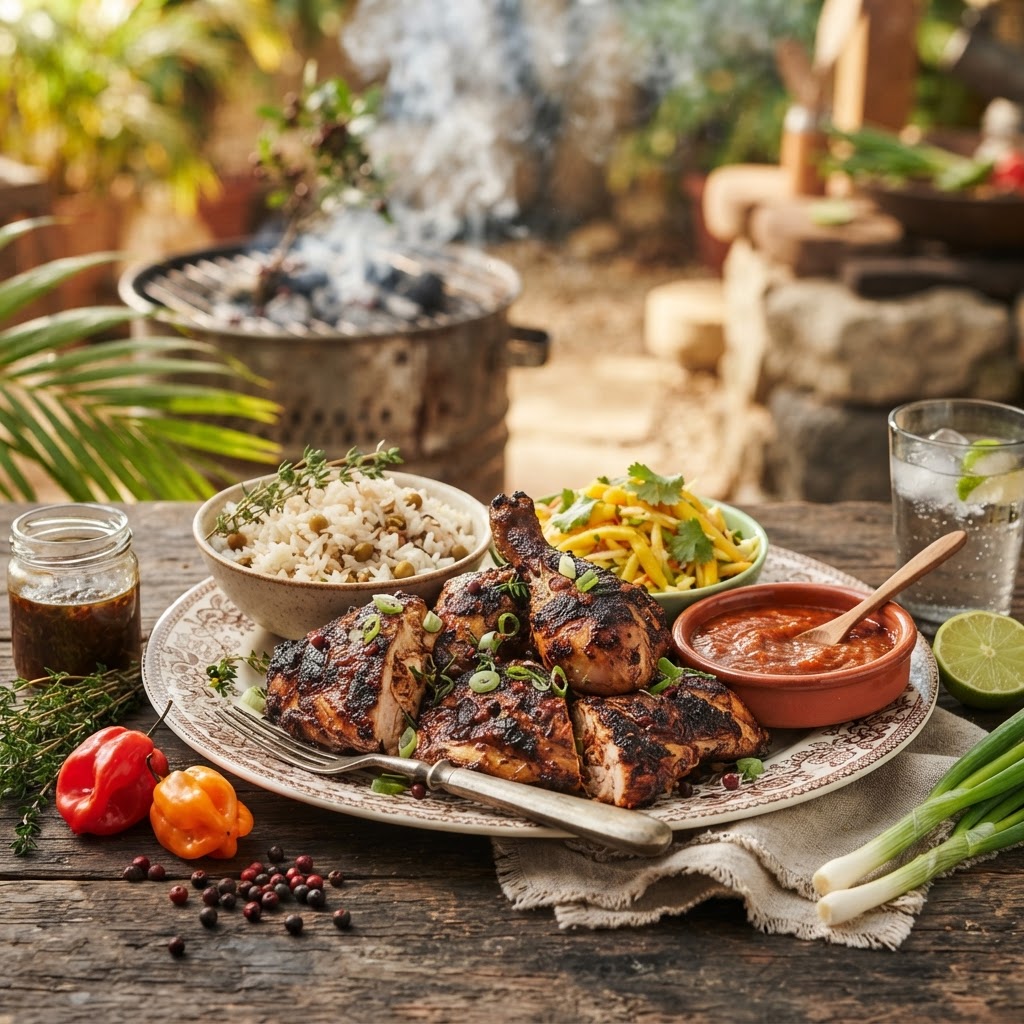
Finally, consider the sides. A true jerk meal is incomplete without the cooling influence of coconut rice and peas, the crunch of a fresh garden salad, and the sweet, fried contrast of festival or plantains. As you master the meat, begin to incorporate these traditional accompaniments to create a fully immersive dining experience. Your guests will appreciate the effort, but more importantly, you will find satisfaction in having prepared a complete, authentic meal from start to finish. Keep the fire burning, keep the spice in your pantry, and keep sharing the craft of Caribbean jerk with everyone who gathers around your table. You have the tools, the technique, and the time—now, it is time to cook.
As you look back on this guide, remember that the most important element is the joy of the process. While we have focused on technical precision, never lose sight of the fact that cooking is meant to be an act of love. Whether you are using a professional offset smoker or a small backyard charcoal grill, the intent remains the same. Use these pages as your constant reference, and don't hesitate to experiment with your own variations once you have mastered the basics. The world of Caribbean jerk is vast and vibrant, and there is always room for a new take on a timeless classic. Happy smoking, and may your jerk always be perfectly spiced, beautifully charred, and thoroughly enjoyed by all who get a taste.
As we conclude this deep dive into the world of authentic jerk, I want to leave you with one final piece of advice: don't overcomplicate it. The strength of this cuisine is its rustic simplicity. The best results often come from the simplest ingredient lists prepared with the most care. Respect the allspice, handle the Scotch Bonnet with care, and let the pimento wood do the heavy lifting. You are the architect of your own flavor, and with each session at the smoker, you are building a repertoire that will last a lifetime. Thank you for trusting me to guide you through this process—now, go make some smoke, and prepare for a meal that will linger in the memories of your guests for years to come.
Get the Next Recipe
Weekly recipes, techniques, and gear picks — straight to your inbox.
