The Home Cook’s Guide to Carryover Cooking: Mastering Residual Heat for Perfectly Finished Proteins
The sizzle of a perfectly seared steak, the tender flakiness of roasted salmon, the juicy succulence of a pulled pork shoulder – these are the hallmarks of a truly accomplished cook. While we often focus on the precise moment of cooking, meticulously timing each minute and monitoring internal temperatures with laser-like focus, there's a crucial, often overlooked, phenomenon that dictates the final success of many dishes: carryover cooking. It’s the silent partner in your culinary endeavors, the invisible force that can elevate your meal from good to absolutely sublime, or conversely, render it disappointingly overdone. Understanding and mastering this residual heat is not just for professional chefs; it's an essential skill for any home cook aiming for consistent, restaurant-quality results.
This concept, while seemingly simple, is often the culprit behind those frustrating moments when your protein seems to be cooked perfectly at rest, only to emerge a few degrees over your desired temperature after a short break. It’s a delicate dance between heat applied and heat remaining, a phenomenon dictated by the laws of thermodynamics and the inherent properties of food. By learning to anticipate and leverage carryover cooking, you gain an invaluable tool in your kitchen arsenal, allowing you to achieve a level of precision that transcends mere guesswork. It’s about working with the heat, not just against it, transforming a potentially unpredictable element into a predictable ally.
For many home cooks, the temptation is to cook proteins until they just reach the desired final temperature, often pulling them directly from the heat source at that exact moment. This is where the trap is often sprung. The residual heat within the food continues to cook it, even after it’s removed from the direct heat source. This guide will demystify the science behind carryover cooking, explain how to calculate and account for it, and provide practical strategies for applying this knowledge to a wide range of proteins and cooking methods. Prepare to elevate your cooking, reduce waste, and consistently achieve perfectly cooked results, every single time.
The Science Behind the Sizzle: What is Carryover Cooking?
Carryover cooking is essentially the process of a food item continuing to cook after it has been removed from its primary heat source. This happens because the heat energy that was transferred into the food during cooking doesn't instantaneously disappear. Instead, it gradually dissipates, and a significant portion of that retained heat continues to raise the internal temperature of the food for a period of time. Think of it like a hot cast iron skillet that continues to radiate heat long after you've taken it off the stove. The food itself acts like a thermal battery, storing and slowly releasing that stored energy.
The rate at which carryover cooking occurs is influenced by several factors. The most significant is the mass and density of the food item. Larger, denser cuts of meat will retain heat for longer and experience a more pronounced carryover cooking effect compared to smaller, thinner pieces. The initial cooking temperature also plays a role; food cooked at higher temperatures will generally have more stored heat and thus a greater carryover effect. Finally, the rest time allowed for the food is directly proportional to the amount of carryover cooking that occurs. A longer rest allows more time for the residual heat to redistribute and continue the cooking process.
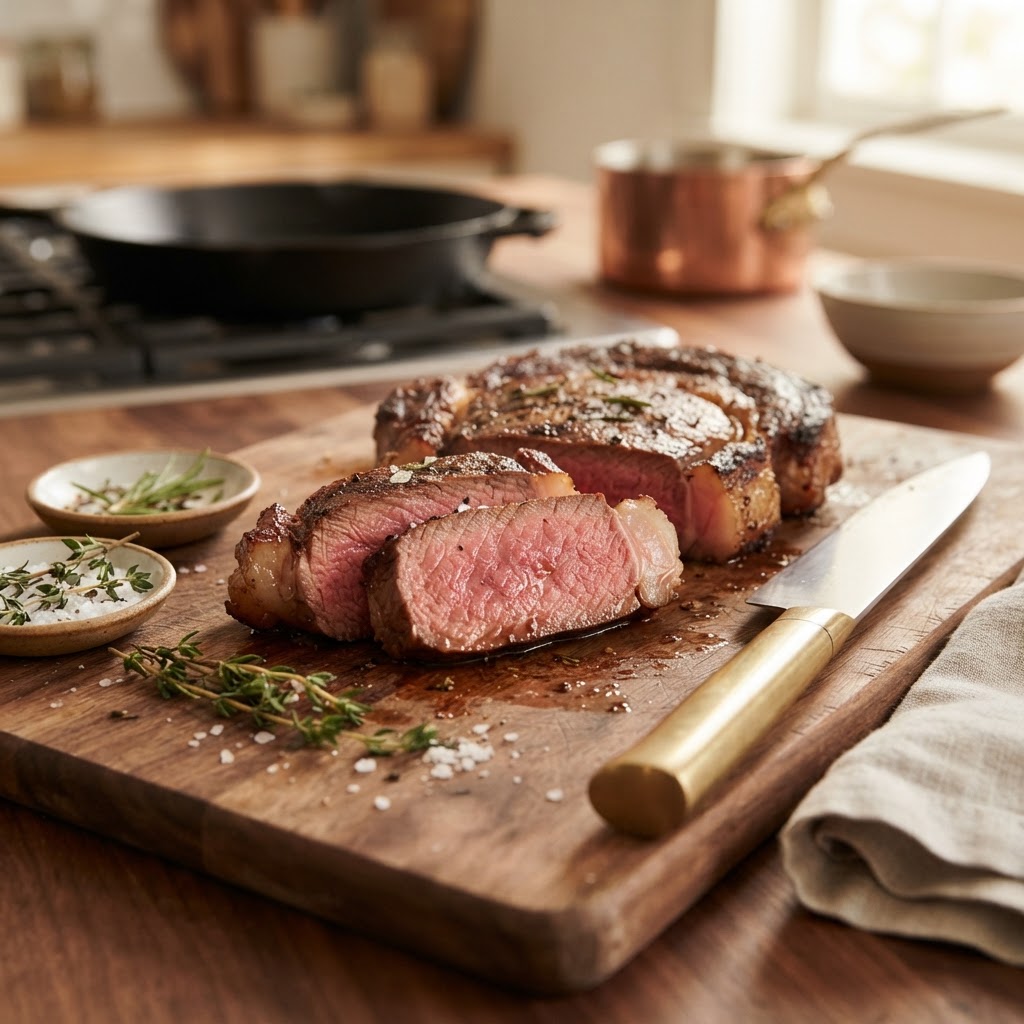
Understanding these variables allows us to predict and control carryover cooking. For instance, a thick ribeye steak cooked to a perfect medium-rare will experience a more significant temperature rise during its resting period than a thin chicken breast. This isn't a flaw in the cooking process; it's a predictable physical phenomenon that, once understood, becomes an indispensable tool for achieving precise results. The goal isn't to eliminate carryover cooking, but to harness its power to our advantage, ensuring that when our protein finally hits the plate, it's exactly at the perfect temperature.
The Crucial Role of Temperature: Understanding Internal vs. Surface Heat
The distinction between the surface temperature of a protein and its internal temperature is paramount when discussing carryover cooking. When you're actively cooking, the heat source directly impacts the surface, creating that desirable sear or crust. However, this intense surface heat needs time to transfer inwards, and this transfer is what ultimately determines the internal doneness. Carryover cooking is primarily an internal phenomenon, driven by the heat that has penetrated the core of the food.
During the active cooking phase, the surface temperature of a protein can be significantly higher than its internal temperature. For example, when searing a steak, the pan might be 400-500°F (200-260°C), while the internal temperature might only be 120°F (49°C). As the food rests, this temperature gradient begins to equalize. The hotter internal parts transfer heat to the cooler outer parts, and the overall internal temperature continues to rise until equilibrium is reached or the residual heat is no longer sufficient to raise the temperature further. This is why pulling food off the heat before it reaches its final target temperature is so critical.
"The magic happens in the rest. It's where the heat you worked so hard to impart does its final, perfect work."
Accurately measuring internal temperature is your most reliable tool here. Use a reliable instant-read thermometer and insert it into the thickest part of the protein, avoiding bone or fat pockets. By understanding your thermometer’s accuracy and knowing the typical carryover cooking ranges for different proteins and cooking methods, you can make informed decisions about when to remove your food from the heat. It’s a proactive approach to temperature control that prevents the reactive scramble of trying to salvage an overcooked piece of meat.
Quantifying Carryover: The Temperature Rise You Can Expect
The exact temperature increase during carryover cooking is not a fixed number; it's a range that varies based on the factors we've discussed. However, experienced chefs and culinary educators have established general guidelines that are incredibly useful for home cooks. For most proteins, especially larger cuts, you can expect an internal temperature rise of 5-15°F (3-8°C) during the resting period. Smaller, thinner items will experience less of a rise, perhaps only 2-5°F (1-3°C).
Here's a more specific breakdown:
Large roasts (beef, lamb, pork): Expect a rise of 10-15°F (5-8°C)*. These dense items retain a significant amount of heat.
Poultry (whole or large pieces): Expect a rise of 5-10°F (3-5°C)*. While dense, they have a slightly different thermal conductivity than red meats.
Steaks and chops (1.5 inches or thicker): Expect a rise of 5-10°F (3-5°C)*. The thickness is key here.
Fish and thinner cuts of meat: Expect a rise of 2-5°F (1-3°C)*. Their lower density and thickness mean less heat retention.
To put this into practice, if you’re aiming for a final steak temperature of 130°F (54°C) for medium-rare, and you anticipate a 5°F (3°C) carryover, you should pull the steak from the heat when its internal temperature reads 125°F (52°C). This proactive approach ensures that by the time you cut into it, it will have reached your target temperature perfectly. Mastering these numbers allows you to move from guesswork to precision cooking.
Calculating Your Pull Temperature
The formula for determining your pull temperature (the temperature at which you remove the food from the heat) is straightforward:
Pull Temperature = Target Final Temperature - Expected Carryover Temperature Rise
Let's consider a few examples:
Target: Medium-Rare Steak (130°F / 54°C)*
* Expected Carryover: 5°F / 3°C
Pull Temperature: 130°F - 5°F = 125°F / 54°C - 3°C = 51°C*
Target: Medium Pork Loin (140°F / 60°C)*
* Expected Carryover: 8°F / 4°C
Pull Temperature: 140°F - 8°F = 132°F / 60°C - 4°C = 56°C*
Target: Well-Done Chicken Breast (165°F / 74°C)*
* Expected Carryover: 3°F / 2°C (Chicken breasts are leaner and cook faster, so less carryover)
Pull Temperature: 165°F - 3°F = 162°F / 74°C - 2°C = 72°C*
It's important to remember these are guidelines. Your specific oven, grill, or stovetop, as well as the exact composition of the food, can influence the outcome. The more you practice and pay attention to the temperature readings, the more intuitive this becomes.
The Importance of Resting: More Than Just a Break
Resting your cooked protein isn't just about waiting for carryover cooking to happen; it's a vital step for juiciness and texture. When meat cooks, the muscle fibers contract, squeezing out moisture. If you cut into a piece of meat immediately after cooking, much of that internal moisture will gush out onto the cutting board, leaving the meat dry and less flavorful. Resting allows the muscle fibers to relax and reabsorb some of that lost moisture.
The amount of time you need to rest a protein depends on its size and density. As a general rule of thumb, rest larger cuts for at least 10-15 minutes, and often longer for very large roasts (up to 20 minutes or even more). Smaller items like steaks and chops typically need about 5-10 minutes. For fish, a shorter rest of 3-5 minutes is usually sufficient. During this resting period, the carryover cooking is also taking place, bringing the internal temperature up to its final desired point.
Techniques for Effective Resting
How you rest your food matters. While simply leaving it on a plate works, there are more effective methods:
Tent with Foil:* Loosely tenting the protein with aluminum foil helps to retain some heat without steaming the surface and making it soggy. Avoid tightly wrapping, as this will trap steam and soften that beautiful crust you worked hard to achieve.
Transfer to a Warm Plate or Pan:* For smaller items like steaks or fish, transferring them to a slightly warmed plate or even back into the resting pan (off the direct heat) can help maintain temperature.
Use a Wire Rack:* For larger roasts or poultry, resting on a wire rack set inside a baking sheet allows air to circulate, preventing the bottom from becoming steamed and soggy.
"Resting isn't a passive act of waiting; it's an active part of the cooking process that ensures succulence and perfect temperature distribution."
The key is to allow the temperature to equalize and the juices to redistribute. Don't be tempted to skip this step! It's the difference between a dry, tough piece of protein and a succulent, perfectly cooked masterpiece. Think of it as the final, gentle maturation of your dish before it's served.
Carryover Cooking in Action: Different Proteins, Different Approaches
The principles of carryover cooking apply across a wide spectrum of proteins, but the specific nuances can vary. Understanding these differences will help you fine-tune your approach for optimal results.
Red Meats (Beef, Lamb, Pork)
These are perhaps the most common beneficiaries of careful carryover cooking management. Thick cuts like roasts, steaks, and chops have significant thermal mass, leading to a more pronounced carryover effect. When grilling or pan-searing a thick steak, aiming for a pull temperature 5-10°F below your target is crucial. For larger roasts, like a prime rib or pork loin, the carryover can be even more substantial, up to 15°F. The longer cooking times for roasts also mean more time for heat to penetrate deeply, which contributes to this higher carryover.
Key Technique: Use a reliable instant-read thermometer and be prepared to remove the meat before* it hits your target temperature.
Resting Time:* Minimum 10 minutes for steaks and chops, 15-20 minutes for roasts.
Example:* For a medium-rare ribeye (target 130°F / 54°C), pull it from the grill when it reaches 120-125°F (49-52°C).
Poultry (Chicken, Turkey, Duck)
Poultry, particularly chicken and turkey breasts, tends to be leaner than red meats, which can sometimes lead to slightly less carryover. However, whole birds or larger cuts like thighs and legs still possess enough density to warrant attention. The critical temperature for poultry is 165°F (74°C) to ensure safety, so the margin for error is smaller. This means a more precise pull temperature is essential. For chicken breasts, the carryover might only be a few degrees, so pulling them when they reach 158-160°F (70-71°C) is often sufficient. Dark meat, with its higher fat content, can tolerate a slightly higher carryover.
Key Technique: Be extra vigilant with temperature monitoring, especially for leaner cuts. Aim to pull poultry a few degrees before* the 165°F safety threshold is reached.
Resting Time:* 5-10 minutes for breasts, 10-15 minutes for whole birds.
Example:* For chicken breasts aiming for 165°F (74°C), pull when the thermometer reads 160-162°F (71-72°C).
Fish
Fish is perhaps the most sensitive to overcooking. Its delicate muscle fibers cook quickly and can become dry and tough with even a small amount of residual heat. Therefore, carryover cooking for fish is generally minimal, often only 2-5°F (1-3°C). Many chefs prefer to cook fish until it’s just shy of the final desired temperature, allowing the residual heat to finish it off while it rests. The flaky texture of well-cooked fish is a direct result of understanding and managing this subtle carryover.
Key Technique:* Be extremely precise. Cook fish until it is just opaque and flakes easily with a fork, then remove from heat. Rely heavily on visual cues as well as temperature.
Resting Time:* A very short rest of 3-5 minutes is usually all that's needed.
Example:* For salmon cooked to a medium (125°F / 52°C), pull it when it reads 120-122°F (49-50°C).
Pork Shoulder and Brisket (Low and Slow Cooking)
While the concept of carryover cooking typically refers to the immediate post-cooking phase, it also plays a subtle role in low and slow cooking like pulled pork or brisket. These cuts are cooked to very high internal temperatures (often 195-205°F / 90-96°C) to break down connective tissues and achieve tenderness. While the immediate carryover might be less dramatic due to the already high temperature, the extended resting period (often several hours) allows for a significant redistribution of moisture and a final settling of temperatures, contributing to that melt-in-your-mouth texture.
Key Technique:* Focus on reaching the target tenderization temperature rather than a specific final serving temperature. The long rest is critical for moisture redistribution.
Resting Time:* Several hours, often wrapped in butcher paper or foil, at a warm temperature (e.g., in a cooler or a low oven).
Example:* After smoking brisket to 200°F (93°C), it's wrapped and rested for 4-6 hours, during which time the internal temperature might slightly drop and then stabilize, allowing juices to reabsorb.
Methods of Cooking and Their Carryover Impact
The way you cook your food also influences how carryover cooking behaves. Different heat transfer methods will result in different internal heat distribution and thus varying degrees of carryover.
Grilling and Broiling
These high-heat, direct cooking methods are excellent for searing and developing a crust, but they also impart a lot of direct heat. This means the surface can get very hot, and the internal temperature will rise relatively quickly. Carryover cooking is definitely a factor here, especially with thicker cuts. The intense radiant heat can also lead to uneven cooking if not managed properly, making an accurate thermometer even more crucial.
Tip: For grilling, consider indirect heat* for the final stages of cooking thicker cuts after searing. This allows the internal temperature to rise more gently and predictably, reducing the risk of overshooting your target due to intense direct heat.
Roasting (Oven Cooking)
Oven roasting is a more even form of cooking compared to grilling or broiling, as heat surrounds the food. This generally leads to a more consistent internal temperature throughout the protein. However, because roasts are often larger and cooked for longer periods, they retain a significant amount of heat, leading to substantial carryover cooking. The oven itself continues to radiate heat even after the food is removed, contributing to this.
Tip: Pay close attention to the oven temperature stability*. An oven that fluctuates wildly can make predicting carryover more challenging. An oven thermometer can be helpful here.
Pan-Searing
Pan-searing, especially with a cast-iron skillet, transfers heat very efficiently. This creates a fantastic crust quickly. The residual heat in the pan itself can continue to cook the food once removed from the direct burner. This method requires careful attention to temperature and timing, as the heat transfer is so direct and rapid.
Tip: Once you've seared your protein, you can transfer the pan to a preheated oven* (set at a lower temperature than the stovetop) to finish cooking. This provides a more even heat and allows for better control over the carryover cooking process.
Sous Vide
Sous vide cooking is unique because it cooks food in a precisely temperature-controlled water bath. This method essentially eliminates uncontrolled carryover cooking. Because the water bath is set to your desired final temperature, the food will never exceed that temperature while submerged. Any "carryover" after removing from the bath is minimal and predictable, often just a degree or two as the food cools slightly. The primary heat transfer happens during the finishing sear.
Tip: While sous vide minimizes carryover during the initial cook, you still need to account for temperature changes during the searing process*, which can add a few degrees.
Common Pitfalls and How to Avoid Them
Even with the best intentions, home cooks can fall into traps when it comes to carryover cooking. Being aware of these common mistakes can save your dinner.
The "It's Not Quite Done Yet" Syndrome
This is perhaps the most common pitfall. The instinct is to keep cooking until the thermometer reads the absolute target temperature, not realizing that the temperature will continue to climb. This leads to overcooking.
Solution: Trust your thermometer and the carryover cooking guidelines. Pull the food before* it hits the target temperature. Practice makes perfect, and the more you do it, the better you'll become at judging when to pull.
Inconsistent Thermometer Use
Using an old, inaccurate thermometer, or not inserting it correctly (e.g., into fat or bone), can lead to wildly inaccurate readings. This renders all your efforts to manage carryover moot.
Solution: Invest in a reliable digital instant-read thermometer*. Calibrate it regularly and ensure you're inserting it into the thickest part of the meat, avoiding any obstructions.
Skipping the Rest
Rushing to cut into your cooked protein without allowing it to rest is a recipe for dry, less flavorful meat. As mentioned, resting is crucial for moisture redistribution and allows carryover cooking to complete its work.
Solution:* Make resting a non-negotiable step. Plan your meal prep to accommodate at least a 5-10 minute rest for smaller items, and 15-20 minutes for larger cuts.
Over-Reliance on Time, Not Temperature
Recipes often provide cooking times, but these are only estimates. Factors like the thickness of your cut, the exact temperature of your cooking equipment, and even the ambient temperature of your kitchen can affect actual cooking time.
Solution: Always prioritize internal temperature* over cooking time. Use time as a rough guide, but rely on your thermometer for accuracy.
Professional Chef's Secrets to Mastering Carryover Cooking
Professional chefs have been leveraging carryover cooking for decades. While much of it becomes intuitive through experience, there are some key takeaways for home cooks looking to elevate their game.
Final Thoughts
Carryover cooking is not a mystical culinary secret; it's a predictable scientific principle that, once understood, can revolutionize your cooking. It's the difference between a dish that's "good enough" and one that's consistently perfect. By accurately measuring temperatures, anticipating the residual heat's effect, and allowing adequate resting time, you gain a powerful tool for achieving precisely cooked proteins every single time.
Don't let the science intimidate you. Start by applying the general guidelines for temperature rise and rest times. With each meal, observe the results, adjust your approach, and build your intuition. You'll find yourself pulling steaks and roasts from the heat with newfound confidence, knowing that the magic of carryover cooking will bring them to their ideal doneness as they rest. So, embrace the residual heat, master the pause, and prepare to serve up perfectly finished proteins, time after time. Happy cooking!

Get the Next Recipe
Weekly recipes, techniques, and gear picks — straight to your inbox.
