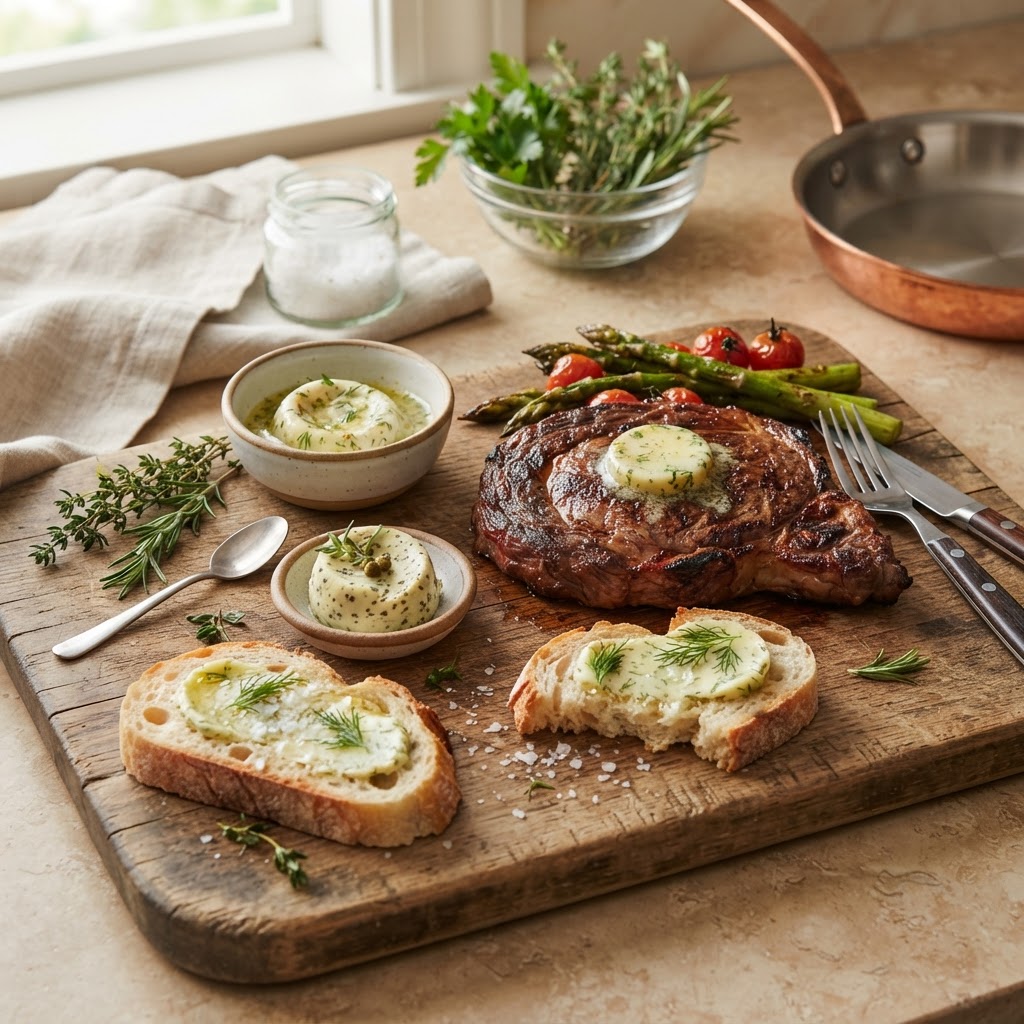
The Home Cook’s Guide to Compound Butters: Mastering Herb-to-Fat Ratios for Instant Flavor Elevation on Steaks, Vegetables, and Bread
There is a lingering secret in the professional culinary world that separates the mundane weeknight dinner from a dish that feels like it was plucked straight from the kitchen of a Michelin-starred bistro. It isn’t always about complex reductions, multi-day brining processes, or avant-garde plating techniques that require a degree in engineering. Often, the bridge between an amateur cook and a confident chef is found in the humble, slightly overlooked block of butter sitting in your refrigerator. Compound butter is the ultimate culinary "cheat code," a technique so simple yet so profoundly effective that it acts as the Swiss Army knife of flavor enhancement. By emulsifying softened fats with fresh aromatics, citrus zests, and pungent spices, you are creating a concentrated flavor bomb that, when melted over a seared protein or tossed with steamed vegetables, transforms the entire profile of a dish in mere seconds.
If you have ever wondered why a restaurant steak tastes richer, more vibrant, and undeniably more luxurious than the one you pan-sear at home, the answer is almost certainly a disk of compound butter resting atop the meat as it reaches the table. This isn't just a garnish; it is a vital part of the dining experience that balances acidity, salt, and fat, providing a glossy finish that coats the palate and lingers long after the first bite. Many home cooks are intimidated by the perceived complexity of "finishing" a dish, but compound butter requires no special equipment—just a bowl, a fork, and a bit of creativity. When you master the delicate balance of fat-to-herb ratios, you gain the ability to customize your flavors to suit the specific cut of meat or seasonal harvest you are serving. It is time to stop viewing butter as a mere cooking medium and start seeing it as a primary flavor delivery system.
In this comprehensive guide, we are going to peel back the curtain on the art of the beurre composé. We will dive deep into the science of tempering, the importance of ingredient quality, and the precise ratios that ensure your butter doesn't turn into a watery, separated mess. Whether you are aiming for a classic Maître d’Hôtel butter to grace a filet mignon, a zesty cilantro-lime infusion for charred corn, or a deep, roasted garlic and black truffle blend for crusty sourdough, this post will serve as your definitive manual. Get ready to elevate your kitchen confidence, streamline your meal preparation, and learn how to blame the chef—or better yet, become the chef—by mastering the most versatile tool in your culinary arsenal.
The Science of the Perfect Emulsion
The foundation of any exceptional compound butter lies in the temperature of the fat. If your butter is too cold, you will struggle to incorporate the aromatics, leading to uneven pockets of flavor and a grainy texture. Conversely, if the butter is melted, you are simply making a flavored oil that will refuse to hold the shape required for professional plating. You are looking for the "sweet spot" of room-temperature pliability, which is typically around 65 to 68 degrees Fahrenheit. At this stage, the butter should be soft enough to yield to a gentle press of your finger, but still structurally sound enough to be whipped into a smooth, airy consistency.
Achieving this consistency is a matter of patience rather than heat. Resist the urge to use the microwave to soften your butter, as this often leads to uneven melting where the center becomes liquid while the edges remain solid. Instead, leave your high-quality, high-fat European-style butter—look for at least 82% butterfat—on the counter for about 60 to 90 minutes before beginning. The higher butterfat content is crucial here; it provides a cleaner, creamier mouthfeel and holds the moisture of your herbs and citrus juices much more effectively than standard American-style butter, which can contain higher water percentages.
Understanding Fat-to-Aromatic Ratios
When balancing your ingredients, the general rule of thumb is to maintain a ratio of approximately four parts butter to one part solid aromatics. For every stick of butter (half a cup), you want roughly two tablespoons of finely minced fresh herbs or one tablespoon of high-intensity ingredients like garlic, chili paste, or anchovies. This ratio ensures that the fat remains the star of the show while the aromatics provide the necessary complexity. If you overload the mixture, the butter will lose its ability to solidify properly in the refrigerator, resulting in a slump of greasy, herb-heavy mush rather than a crisp, sliceable disk.
"The true magic of compound butter isn't just the flavor—it's the way it regulates the temperature and richness of the protein it graces. By creating a cold barrier that slowly melts into a hot surface, you achieve a degree of textural contrast that is impossible to replicate with simple pan drippings."
Once you have mastered the standard ratio, you can begin to experiment with "flavor bridges." For instance, adding a pinch of flaky sea salt—specifically Maldon or a high-quality fleur de sel—acts as a flavor enhancer for all the other ingredients, causing the herb notes to "pop" on the tongue. Always remember that the butter itself is the canvas, and your goal is to add enough flavor to make it interesting without turning it into a paste. Always taste as you go; the butter should be slightly over-seasoned before it chills, as the cold temperature will mute some of the bolder salt and acid profiles.
Selecting and Preparing Your Aromatics
Preparation is where the "chef's touch" truly manifests. The secret to a uniform compound butter is the consistency of your knife work. Every herb, clove of garlic, or piece of zest must be minced or grated so finely that it almost disappears into the fat. If you leave large chunks of raw garlic or tough herb stems in the mixture, you create an unpleasant texture that distracts from the meal. Use a sharp chef’s knife to chiffonade your herbs, then cross-chop them until they are finely pebbled. If you are working with citrus, use a microplane to create a fine zest, being careful to avoid the bitter white pith.
The Herb-to-Acid Balance
Herbs like parsley, chives, and tarragon are the backbone of classic compounds, but they don’t all behave the same way. Soft, leafy herbs—parsley, cilantro, dill, basil—should be washed and dried thoroughly before mincing. Moisture is the enemy of a shelf-stable compound butter. If there is excess water clinging to your herbs, the butter will separate and spoil much faster. Once you have minced your herbs, pat them dry between layers of paper towels before folding them into the softened fat. This simple step ensures that your butter remains vibrant and fresh for weeks.
When incorporating acidic elements like lemon juice, balsamic vinegar, or white wine, you must work in very small increments. Because fat and water (the base of citrus juice) are natural enemies, you run the risk of breaking your emulsion. If you are adding a liquid acid, mix it with a small amount of the butter separately before incorporating it into the main mass. This "pre-emulsification" trick is a professional secret that keeps your compound butter smooth and silky. If the mixture starts to look curdled, don't panic; just continue to beat it with a fork or a small silicone spatula, and the fats will eventually re-bind.
Techniques for Shaping and Storing
Once your butter is properly seasoned and mixed, the goal is to shape it into something that is both practical and aesthetically pleasing. The most efficient method is to transfer your butter onto a sheet of parchment paper or plastic wrap. Place the butter in the center of the sheet and use a bench scraper or the edge of a flat-bottomed spoon to shape it into a tight, uniform log. Fold the paper over the butter, then hold the ends of the paper and roll the log against the counter to tighten the cylinder. This technique, often called a "roulade," ensures that the butter is compact and ready for quick slicing.
The Importance of the Chill
Patience is required after shaping. Place your butter logs in the refrigerator for at least two hours to allow the fats to fully re-solidify and the flavors to penetrate the matrix. For the best results, let the butter sit overnight. This "curing" process is where the oils from the herbs and spices infuse throughout the fat, creating a homogenous flavor profile rather than just streaks of seasoning. Once chilled, you can slice the log into rounds, each about a quarter-inch thick. These discs can be kept in the freezer for up to three months, making them a perfect "grab and go" solution for busy weeknights.
"A well-executed compound butter is the culinary equivalent of a tailored suit. It takes something standard and gives it a bespoke quality, signaling to your guests—or yourself—that you understand the nuances of layering flavor, texture, and visual appeal."
When storing, ensure the butter is tightly wrapped. Dairy is highly susceptible to absorbing odors from the refrigerator. I recommend double-wrapping each log, first in a layer of plastic wrap and then in a layer of heavy-duty aluminum foil. Label the logs with a piece of masking tape and a Sharpie indicating the date and the flavor profile. You will soon find yourself building a library of compound butters, categorized by their intended use: a robust rosemary and cracked black pepper for winter braises, or a light lemon and chive for spring asparagus.
Pairing Compound Butter with Proteins
The most classic application of compound butter is on a hot-off-the-grill steak. When a steak rests, its muscle fibers relax and the juices redistribute. Placing a cold disk of compound butter atop the steak during this resting phase allows the butter to melt slowly, creating a luxurious sauce that mingles with the resting juices. For a New York Strip or Ribeye, try a Bercy butter—a classic combination of shallots, white wine, and parsley. The shallots provide a subtle sweetness, the white wine brings an elegant acidity, and the parsley offers a fresh, herbal finish that cuts through the rich fat of the beef.
Beyond the Steak: Poultry and Seafood
Compound butter isn't just for red meat. A roasted chicken can be elevated significantly by loosening the skin and slipping thin pats of herb-garlic butter underneath before roasting. As the chicken cooks, the butter bastes the breast meat from the inside out, keeping it succulent and infusing the skin with flavor. For seafood, consider a miso-ginger butter to accompany pan-seared scallops or white fish like halibut. The savory, umami-rich notes of the miso bridge the gap between the delicate sweetness of the shellfish and the richness of the dairy, resulting in a dish that feels incredibly sophisticated but takes only minutes to execute.
When working with lighter proteins, think about texture and color. A bright, neon-green herb butter made from basil, mint, and lemon zest is a beautiful accompaniment to grilled swordfish or even a whole-grilled trout. The key here is to keep the flavor profile focused; don't try to cram too many competing ingredients into one butter. If you are using a pungent herb like mint, let it be the star. If you are using a delicate ingredient like saffron, ensure the butter base is as neutral as possible to allow the floral notes of the spice to shine through.
Elevating Vegetables and Grains
Vegetables are often the forgotten members of the plate, frequently relegated to a side-dish status that lacks personality. A compound butter can change that narrative entirely. Consider roasted root vegetables like carrots or parsnips. While they are inherently sweet and earthy, they are rarely exciting. A simple maple-chipotle butter, added to the vegetables immediately after they emerge from the oven, creates a sweet-spicy glaze that turns a humble carrot into a star attraction. The residual heat of the vegetables melts the butter into a sauce that coats every morsel, eliminating the need for heavy, flour-thickened gravies.
Turning Grains into the Main Event
Don't ignore the potential of grains. A scoop of compound butter stirred into hot, fluffy rice, quinoa, or farro can transform a simple grain base into a flavorful dish that stands on its own. For a Middle Eastern-inspired grain bowl, try a butter infused with toasted cumin, coriander, and a touch of orange zest. It brings warmth and fragrance to the grains, creating a foundation that pairs perfectly with roasted chickpeas, feta cheese, and grilled lamb. When using compound butter in grains, aim to stir it in just before serving so the heat of the grains gently emulsifies the butter without fully breaking it down into a greasy pool.
The Art of the Breadboard Experience
While we have focused heavily on savory dinner applications, the "bread course" is perhaps where compound butter finds its most accessible expression. A high-quality sourdough or baguette deserves more than just a smear of plain, cold butter. By creating a signature compound butter for your dinner parties, you set a tone of hospitality and attention to detail. Consider a roasted garlic and rosemary butter that has been whipped until light and fluffy. Place it in a small ramekin, sprinkle it with a touch of coarse black pepper, and serve it alongside warm, crusty bread. It is an experience that invites guests to linger.
Sweet and Savory Profiles
Compound butter can also traverse the line into the sweet category. For breakfast or brunch, consider a cinnamon-honey butter or a berry-infused butter for your pancakes, waffles, or morning toast. By incorporating a small amount of powdered sugar or high-quality honey, you can adjust the sweetness level to your preference. These butters are excellent for finishing desserts as well; a pat of salted caramel butter on a warm apple crisp or a brown-butter-sage-infused butter on a savory scone can add that final layer of professional polish that guests will rave about for weeks.
When preparing sweet compound butters, it is important to balance the fat content with a pinch of sea salt. This salt is vital; it prevents the butter from tasting cloying and ensures that the flavor of your honey, berries, or spices remains balanced and sharp. For fruit-based butters, try using freeze-dried fruit powder instead of fresh fruit. Freeze-dried fruits provide an intense burst of concentrated flavor without adding unnecessary moisture, which helps keep your butter stable and prevents it from turning into a runny syrup once it reaches room temperature.
Troubleshooting Common Compound Butter Failures
Even the most seasoned chefs occasionally deal with broken emulsions or flavor imbalances. If your butter seems "grainy" or is leaking a milky liquid, it is likely because the temperature of your ingredients was inconsistent or the butter was overworked. If this happens, try placing the bowl in the refrigerator for ten minutes, then beat it vigorously with a spatula. The fats will eventually stabilize. If the flavor is too intense, the only solution is to add more plain, unsalted butter to dilute the mixture. It is always better to start with a conservative amount of aromatics and add more if needed.
Ensuring Longevity
Compound butter is best used within a week if stored in the refrigerator, but it can last up to three months in the freezer. To keep your butter tasting fresh, always store it in an airtight container or wrap it tightly. If you notice the edges of your butter log turning a darker yellow or developing an "off" aroma, it is likely due to oxidation. This occurs when the butter is exposed to air for too long. To minimize this, always press a piece of parchment paper directly against the cut surface of your butter log if you aren't using the entire thing at once.
"Cooking is an act of confidence. When you lean on techniques like compound butter, you aren't just taking a shortcut—you are mastering a fundamental principle of flavor balance. You are demonstrating a respect for the ingredients and a desire to elevate the experience of every single person at your table."
Finally, remember that the quality of your base ingredient is non-negotiable. If you start with a low-quality, flavorless supermarket butter, no amount of fresh herbs or expensive aromatics will save the final product. Invest in high-fat, cultured butter whenever possible. Cultured butter has a slight tang—a byproduct of the fermentation process—that adds another layer of complexity to your compound butter. It is these small, deliberate choices that accumulate to create truly memorable meals. You are the architect of your own kitchen, and with a few logs of herb-infused butter in your freezer, you are already one step ahead of the game.
Final Thoughts
The mastery of compound butter is a journey rather than a destination. It starts with the simple act of mixing herbs into fat, but it evolves into a sophisticated understanding of how flavor interacts with the palate. As you continue to experiment with different ratios and ingredient combinations, you will find that your instinct for what works improves. You will begin to look at a cut of meat or a bunch of seasonal greens and immediately know which aromatic profile will make it sing. That intuition is the mark of a true home chef.
Never underestimate the power of the finishing touch. Whether you are serving a formal multi-course dinner or a simple Tuesday night meal, the addition of compound butter signals that you have put thought and care into every element of the dish. It is a gesture of generosity, a way to ensure that every bite is as delicious as possible. The next time you find yourself standing in front of the stove, feeling like something is missing, remember the butter. It is waiting to be transformed, waiting to be elevated, and waiting to help you blame the chef—because with a secret weapon this powerful, you’ll be the one taking all the credit.
As you move forward, keep a notebook of your favorite combinations. Document the ratios that worked, the ones that didn't, and the feedback you receive from family and friends. This log will become your own personal culinary map, a collection of flavors that defines your kitchen's style. Keep it simple, keep it high-quality, and above all, keep it fun. Compound butter is meant to be a joyful, creative process. It is about taking the ordinary and making it extraordinary, one slice at a time. The pantry of the future isn't just about dry goods; it’s about the fresh, the flavorful, and the fatty—the three pillars of a kitchen that truly lives to eat.
Take these techniques, practice the folding and the shaping, and don't be afraid to fail. A broken butter is just a lesson in temperature control, and a flavor that isn't quite right is just a chance to adjust your ratio next time. The professional kitchen is built on repetition and constant refinement, and your home kitchen should be no different. You have the tools, you have the knowledge, and you have the ingredients. Now, go forth, clear out some space in your freezer, and start building your collection of compound butters. Your future self—and everyone who eats your cooking—will thank you for the extra effort it took to master the art of the perfect finish.
Get the Next Recipe
Weekly recipes, techniques, and gear picks — straight to your inbox.
