The Home Cook’s Guide to Compound Butters: Transforming Everyday Proteins and Vegetables with Flavored Fats
There is a quiet, unsung hero residing in the coldest corner of your refrigerator, waiting for the moment you decide to take your cooking from merely acceptable to truly restaurant-quality. We are talking about butter—not just the slab you spread on your morning toast, but the transformative, customizable, and sophisticated world of compound butters. By whipping herbs, aromatics, spices, and citrus zest directly into softened fats, you are essentially creating a multi-purpose flavor bomb that can finish a steak, enrich a pan sauce, or elevate a humble roasted carrot. It is a technique rooted in classical French training, yet it remains the most accessible secret weapon for any home cook looking to impress guests with minimal effort and maximum return on investment.
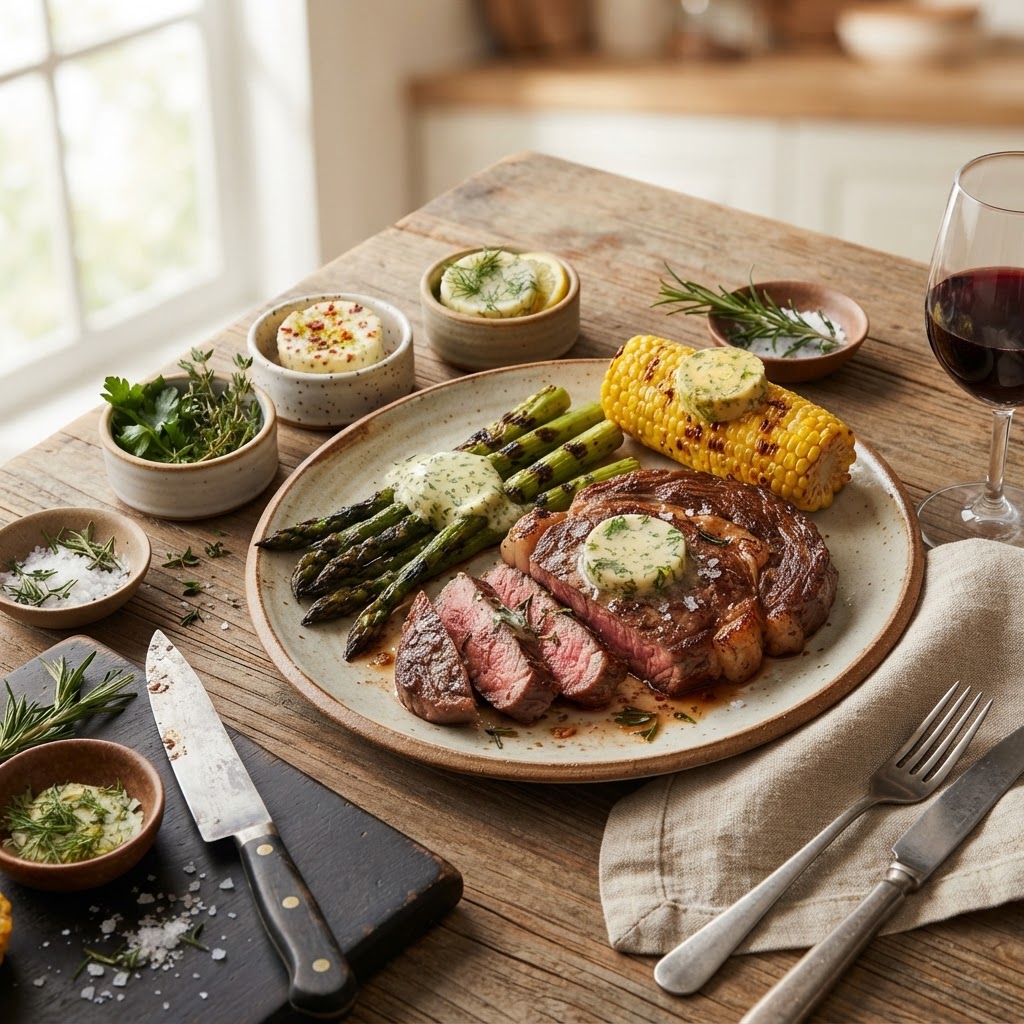
When you master the art of the beurre composé, you stop relying on bottled marinades and heavy, overly complex reductions that hide the natural character of your ingredients. Instead, you learn how to balance fat with acidity, salt, and herbaceous top notes, allowing you to tailor a profile that perfectly complements the proteins or vegetables you have spent time sourcing and preparing. Whether it is a classic maître d’hôtel butter melting over a seared ribeye or a punchy chili-lime infusion drizzled over charred corn, these fats act as the bridge between raw ingredients and a cohesive, polished plate. They represent the philosophy that cooking is often about making small, deliberate choices that ripple outward to change the entire experience of a meal.
The beauty of this process lies in its forgiving nature and the sheer creative liberty it provides to the cook in their own kitchen. You do not need a degree from a culinary institute to understand the chemistry of fat, but you do need to understand the emulsion potential and how temperature dictates the texture of your final product. In this guide, we will break down the essential ratios, the most effective techniques for whipping and rolling, and a curation of flavor combinations that will ensure you never look at a stick of butter the same way again. Put down the store-bought sauces and prepare to take control of your flavor profile with the simple, elegant power of compound butter.
The Foundation: Selecting and Preparing Your Fat
Before you can build complex layers of flavor, you must start with the right canvas. The quality of your butter is non-negotiable because it is the primary carrier of the flavors you are about to introduce. Ideally, you should be using a high-fat European-style butter, which contains a higher percentage of milk fat—often 82% to 85%—and less water than standard American butter. This higher fat content provides a silkier mouthfeel and a richer, creamier melt when it hits a hot surface. Always reach for unsalted butter so that you have total control over the seasoning level; you can always add more sea salt, but you cannot remove it once it has been folded into the churn.
Temperature is Everything
The most common mistake home cooks make when preparing compound butter is failing to achieve the perfect room temperature consistency. You want the butter to be "pomade" consistency—soft enough to be easily whipped with a fork or a paddle attachment, but not so warm that it has begun to separate or melt into an oily puddle. Aim for a temperature between 65°F and 68°F. If you are in a rush, resist the urge to microwave the butter, as this causes uneven melting and degrades the proteins. Instead, cut the sticks into half-inch cubes and let them sit on the counter for about thirty minutes.
The Tools of the Trade
You do not need a professional stand mixer to achieve a great result, though it certainly makes the process easier for larger batches. For a standard stick or two, a simple stiff-tined fork or a rubber spatula and a bowl will suffice. The goal is to aerate the butter slightly while incorporating your additives. If you are using a stand mixer, use the paddle attachment on medium speed, but be careful not to over-whip it to the point of creating an airy mousse. You want a dense, luxurious texture that will hold its shape when you eventually slice it into coins.
"The magic of compound butter lies in the temperature control; if the butter is too warm, your aromatics will not stay suspended, but if it is too cold, the flavors will never marry into the fat."
The Art of the Infusion: Aromatics and Acid
Once your butter is perfectly softened, the real culinary magic begins. Think of your butter as a flavor sponge that can absorb the essence of almost anything you toss its way. However, balance is the golden rule here. You must consider the flavor profile of the final dish. A butter intended for a delicate white fish should be brightened with lemon zest, chives, and perhaps a touch of tarragon, whereas a butter destined for a heavy, mineral-rich cut of venison or beef can handle more robust, earthy elements like smoked paprika, garlic, or even a hint of red wine reduction.
Fresh Herbs vs. Dried Spices
When utilizing fresh herbs, they should be finely minced—almost into a paste—to ensure that every bite of butter contains a uniform distribution of flavor. Tougher herbs like rosemary or thyme require a finer chop than soft herbs like parsley or cilantro. If you choose to use dried spices, bloom them in a tiny amount of neutral oil if possible, or ensure they are ground to a fine dust to prevent a gritty texture. Citrus zest is an absolute powerhouse here; it provides a sharp, volatile acidity that cuts through the richness of the fat, cleansing the palate and making the dish feel lighter than it actually is.
The Role of Salt and Umami
Do not underestimate the power of salt in this mixture. A coarse flaky sea salt provides a nice crunch and localized bursts of flavor that make the butter pop. If you want to lean into the savory side of things, consider incorporating umami-rich ingredients such as anchovy paste, finely grated parmesan, or even a dash of soy sauce or miso. These additions add a "meatiness" to the butter that works wonders on roasted vegetables like broccoli or cauliflower, effectively acting as a bridge between the plant-based protein and the savory notes of the fat.
Techniques for Rolling and Storage
Once you have meticulously folded your flavors into the butter, it is time to shape it for storage. This is where the "professional" look of your meal comes into play. The industry standard is the butter log or cylinder. To achieve this, place your prepared butter onto a sheet of parchment paper or plastic wrap, forming it into a rough line along the center. Use the paper to roll the butter into a tight, uniform cylinder, twisting the ends of the paper like a candy wrapper to compress the log and remove any air pockets.
Achieving the Perfect Coin
The twist-and-compress method is essential for ensuring that your butter doesn't crumble when you go to slice it later. Once rolled, tuck the log into the refrigerator for at least two hours, or better yet, the freezer for thirty minutes to set the structure. When you are ready to serve, pull the log out and use a sharp, warm knife to slice off rounds—or "coins"—about a quarter-inch thick. These coins can be placed directly atop a hot steak just before serving, allowing them to melt gracefully over the meat and into the pan juices, creating a self-saucing effect.
Preservation and Longevity
One of the best features of compound butter is its shelf life. Because the salt and the cold environment act as a preservative, a well-wrapped log of compound butter will stay fresh in your refrigerator for up to two weeks, and in your freezer for three months. To maximize quality, always wrap the log in parchment first and then double-wrap it in plastic film to prevent the butter from picking up the odors of other items in your freezer—nobody wants garlic-scented ice cubes.
"When you serve a perfectly seared steak, the final flourish isn't just decoration; it is the compound butter that melts into the juices, turning a good pan sauce into a masterpiece of emulsified fat and flavor."
Pairing Strategies: From Proteins to Garden Produce
Now that you have your technique down, it is time to apply it to your menu. The goal is to complement the base ingredient without overwhelming it. A general rule of thumb is to use bright, citrus-forward butters with lighter proteins like chicken, pork, or shellfish, and earthy, dark, or spicy butters with heavier cuts like brisket, ribeye, or roasted root vegetables. Consider the temperature of the dish as well; compound butter is meant to be melted, so it should be the very last thing to touch the plate before it leaves the kitchen.
The Steakhouse Classic: Maître d’Hôtel
This is the gold standard for a reason. Combine high-quality unsalted butter with chopped flat-leaf parsley, a squeeze of fresh lemon juice, a hint of minced shallot, and a generous crack of black pepper. This butter is the perfect companion for a pan-seared New York strip or a grilled porterhouse. The acidity of the lemon cuts through the intramuscular fat of the beef, while the fresh parsley provides a clean, herbaceous finish that keeps the heavy meal from feeling like a slog.
Beyond the Protein: The Vegetable Transformation
Compound butter is arguably even more powerful when used on vegetables. If you are roasting carrots, parsnips, or potatoes, toss them in a small amount of oil for the initial roast, but finish them with a garlic-chili-honey butter during the last two minutes in the oven. The honey will caramelize, the butter will emulsify with the roasting juices to create a glaze, and the garlic will toast to a golden, nutty perfection. It is a simple technique that creates a restaurant-style side dish in a fraction of the time.
Advanced Flavor Profiles to Explore
Once you are comfortable with the basics, it is time to push the boundaries of what your butter can do. You can move into the realm of sweet-savory combinations or incorporate fermented ingredients for added complexity. Think about using ingredients like gochujang for a spicy, fermented Korean kick, or smoked marrow for an indulgent, ultra-savory experience. The key is to keep the butter at the center of the experience, ensuring that your additions act as a scaffold for the flavor rather than a distraction.
The Sweet and Spicy Experiment
Try mixing softened butter with chipotle in adobo and a touch of maple syrup. This butter is incredible on grilled shrimp or even pan-seared scallops, where the sweetness of the shellfish plays beautifully against the smoky heat of the chipotle. Another favorite for the autumn months is a sage and brown butter compound—where you actually brown the butter first, chill it back to a solid state, and then whip it with fresh sage and a pinch of toasted hazelnut meal.
Fermented and Aged Additions
For the truly adventurous cook, try incorporating preserved lemon or aged miso. Preserved lemon butter is transformative when melted over steamed white fish or tossed with hot pasta and spring peas. The salty, citrusy punch of the rind adds a depth that fresh lemon juice simply cannot replicate. Miso, on the other hand, adds a profound depth of savory flavor that pairs exceptionally well with earthy vegetables like roasted mushrooms or charred bok choy.
"True culinary artistry isn't about using the most expensive ingredients, but about mastering the small techniques that transform the mundane into the memorable."
Troubleshooting Common Issues
Even with the best intentions, things can go wrong. If you find that your butter has separated or become oily, it is likely that the ingredients you added were too cold or that the butter itself was overheated. If it is just slightly separated, you can sometimes save it by placing it in the refrigerator for ten minutes and then giving it a quick, vigorous stir once it firms up. If the butter has completely melted, however, it is better to start over; it will not properly re-emulsify into a compound butter once the fat has fully liquified.
Managing Water Content
If you are adding ingredients that have a high water content—like certain fresh juices or wine reductions—you must ensure they are concentrated and cold before adding them to the butter. If the water content is too high, the butter will weep, and the flavors will not stay suspended. Reduce your liquids down to a syrup consistency over the stove first, then chill them completely before folding them into your butter base. This ensures that you are adding flavor without adding excess moisture.
Avoiding "Grittiness"
Grittiness usually occurs when you add too many solid ingredients or when those ingredients are chopped too coarsely. If you are using herbs like rosemary or woody stems, pull the leaves off and mince them finely. For spice powders, make sure they are fresh and high-quality. Remember that the butter will be melting in the heat of a pan; you don't want a "chewy" butter. Every addition should be so finely integrated that the butter remains smooth, even as it transitions from a solid to a liquid state on your finished protein.
Final Thoughts
The journey into compound butter is a journey into the heart of professional cooking. By taking the time to prepare these flavor-dense fats, you are essentially "pre-seasoning" your future meals, creating a pantry of possibilities that can be deployed at a moment's notice. It turns a boring Tuesday night dinner of roasted chicken into a bistro-style feast, and it elevates a simple bowl of steamed vegetables into a vibrant, complex side dish. The most important takeaway is that you are in control; you are no longer limited by the flavors found on the back of a sauce bottle.
As you begin to experiment, keep a notebook of what works and what doesn't. You will find that some combinations—like the classic lemon-parsley—become your go-to "safety" recipes, while others will surprise you with their complexity. Don't be afraid to fail, and don't be afraid to experiment with bold, unexpected flavors. The home kitchen is a laboratory of taste, and the compound butter is perhaps your most effective tool for conducting successful culinary experiments.
Remember to source your butter wisely, treat your herbs with respect, and always keep your logs tightly wrapped. Once you have a freezer stocked with a variety of compound butters, you will find that the barrier to entry for cooking a "gourmet" meal drops significantly. You have the skills, you have the ingredients, and you have the secret weapon. Now, get into the kitchen, start whipping, and start transforming your cooking one coin of butter at a time. Your dinner guests—and your own palate—will thank you for the extra bit of effort.
At the end of the day, cooking is about the joy of eating, and there is perhaps no greater joy than that first bite of a perfectly seared protein, coated in a melting, herb-infused fat that brings everything into perfect, harmonious balance. This is the essence of professional cooking brought into the home kitchen, and it is a skill that will serve you for a lifetime. May your butters be perfectly emulsified, your herbs be fresh, and your dinner plates be consistently spectacular. Happy cooking!
Get the Next Recipe
Weekly recipes, techniques, and gear picks — straight to your inbox.
