The Home Cook's Guide to Confit: Mastering Low-Temperature Oil Cooking for Silky Duck, Garlic, and Tomatoes
There is a quiet, almost meditative rhythm to the art of confit that escapes the frantic energy of most modern home kitchens. While we are often trained to equate high-heat searing and rapid boiling with "real" cooking, the true secret to unlocking profound flavor often lies in the gentle, patient embrace of low-temperature fat. Confit, derived from the French word confire meaning "to preserve," is an ancient technique that transforms humble ingredients into something transcendent. By submerging duck, garlic, or tomatoes in oil and holding them at a steady, barely-shimmering heat, you aren't just cooking; you are restructuring the cellular integrity of the food. It is the culinary equivalent of a slow-release masterpiece, where the fat acts as a velvet cloak, insulating the ingredient while infusing it with unparalleled moisture and complexity.
Many home cooks approach this technique with an unnecessary sense of trepidation, fearing that working with large volumes of oil is dangerous or overly complex. In reality, mastering confit is perhaps the most forgiving skill a cook can learn, provided you have a reliable thermometer and the patience to watch the clock. Unlike pan-searing, which demands constant vigilance to prevent burning, confit is a set-it-and-forget-it method that rewards the cook for stepping back. It is a technique of control and consistency, where the goal is to maintain a temperature that is hot enough to tenderize fibrous proteins or caramelize natural sugars, yet cool enough to prevent the oil from reaching a frying state. When done correctly, the results are life-changing: meat that falls away from the bone at the mere suggestion of a fork, or garlic cloves that spread like buttery, savory jam.
This guide is designed to dismantle the intimidation factor surrounding low-temperature oil cooking and provide you with a blueprint for success in your own kitchen. We will explore the science behind why this method works, the specific equipment that will make your life easier, and the nuanced differences between preserving and immediate consumption. From the classic Duck Confit that anchors a Bistro menu to the delicate Garlic Confit that will become your new secret weapon, this post will transform how you view pantry staples and proteins alike. Put on your apron, pour yourself a glass of something bright and acidic to cleanse the palate, and prepare to master the gentle, transformative heat of the confit.
The Science of the Submersion: Why Confit Changes Everything
At its core, confit is about moisture retention and collagen breakdown. When you roast a bird in the dry heat of an oven, the exterior inevitably dries out before the interior reaches the desired temperature. When you poach, water-soluble flavor compounds leach out into the cooking liquid. However, when you submerge food in fat, you create a hermetic seal of sorts. The fat prevents moisture from escaping the protein while simultaneously preventing the scorching that occurs at higher temperatures. Because fat has a higher boiling point than water, it allows us to hold the food at a consistent temperature—typically between 180°F and 200°F—which is the "sweet spot" for melting connective tissue without toughening the muscle fibers.
Understanding Fat Choice and Smoke Points
The medium you choose matters as much as the ingredient you are cooking. While duck fat is the gold standard for Duck Confit because of its depth of flavor and velvety mouthfeel, it is not strictly necessary for every application. For Garlic Confit or Tomato Confit, you want a fat that will act as a canvas for the primary ingredient rather than competing with it. Neutral oils like grapeseed or high-quality extra virgin olive oil work exceptionally well.
Duck Fat:* The traditional choice; provides a rich, meaty flavor profile.
Extra Virgin Olive Oil:* Perfect for garlic, tomatoes, and mushrooms; adds a fruity, peppery finish.
Grapeseed/Canola Oil:* Best for subtle applications where you want the primary ingredient to shine without interference.
Clarified Butter:* Used for luxurious, delicate items like fish or soft vegetables.
The Critical Role of Temperature Control
The single most important piece of equipment in your kitchen for this technique is a digital probe thermometer. You are aiming for a slow, gentle simmer, not a vigorous boil. If your oil gets too hot, you are no longer confit-ing; you are deep-frying, which leads to crispy, tough edges rather than a silky, uniform texture. You want the surface of the fat to show only the occasional tiny bubble. If the oil is jumping, your heat is far too high.
The secret of a perfect confit isn't the skill of the chef, but the unwavering patience to maintain a temperature so low that the food seems to be sleeping in the oil rather than cooking in it.
Mastering the King of Confit: Duck Leg Confit
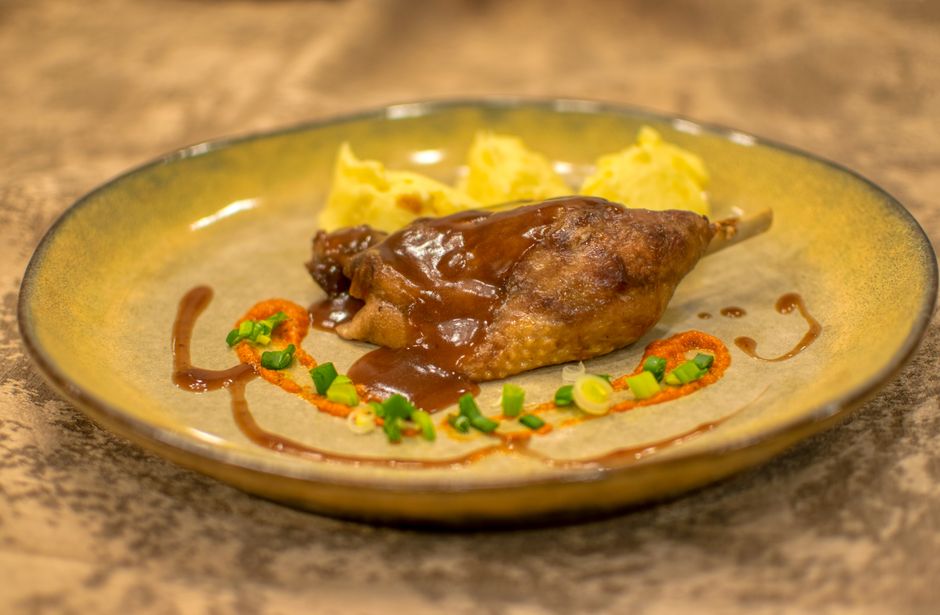
If there is one dish that defines the technique, it is Duck Confit. It is the ultimate test of preparation, requiring a "cure" before the actual cooking process begins. The curing stage is essential because it draws out excess moisture through osmosis, tightening the meat and concentrating the flavors. This preparation is what allows the duck to be preserved for months in the traditional French method, though in our modern kitchen, we are usually looking for a result we can serve within a few days.
The Curing Process
Do not skip the cure. For four duck legs, you should use roughly two tablespoons of kosher salt, a teaspoon of freshly cracked black pepper, a few sprigs of fresh thyme, and perhaps a bay leaf. Massage the seasoning into the meat, cover it, and refrigerate for at least 12 hours—though 24 is ideal. This process does more than season; it alters the texture of the duck leg, making the skin crispier later and the meat more succulent.
Finishing for Texture
Once the duck is cooked, it is essentially a tender, delicious bundle of fat-infused meat. However, if you serve it straight from the pot, it will be pale and unappealing. To achieve the perfect confit experience, you must crisp the skin. Remove the legs carefully—they will be extremely fragile—and place them skin-side down in a hot cast-iron skillet. The rendered fat remaining on the skin will sizzle and turn into a golden-brown, shattering crust. This contrast between the crisp skin and the silky, melting meat is why this dish is a hallmark of culinary excellence.
The Versatility of Garlic Confit: The Pantry Essential
If Duck Confit is the centerpiece, Garlic Confit is the supporting actor that steals the show. It is perhaps the most useful preparation you can keep in your refrigerator. Unlike raw garlic, which can be sharp, aggressive, and pungent, confit garlic loses its bite entirely. It becomes sweet, mellow, and spreadable, tasting almost like a savory roasted chestnut. It is the perfect addition to mashed potatoes, pasta sauces, salad dressings, or simply smeared on a slice of sourdough toast.
The Ratio and Technique
For Garlic Confit, the ratio of garlic to oil is quite simple: enough oil to cover the cloves completely. Use high-quality extra virgin olive oil. Peel about two cups of garlic cloves—don't be intimidated, you can buy them pre-peeled if you prefer—and place them in a small saucepan. Add a sprig of rosemary or a dried chili if you want to infuse the oil with extra aromatics.
Low and Slow:* Set your stove to the lowest possible setting. The oil should barely move.
Patience is Key:* It will take about 45 to 60 minutes for the cloves to reach the right texture.
The Indicator:* The garlic is ready when it is deep golden-brown and can be easily pierced with a toothpick. If it turns dark brown, it will taste bitter, so watch it closely.
Food Safety and Storage
Because garlic grows in the soil, it is susceptible to Clostridium botulinum spores. While rare, the anaerobic environment of oil-submerged garlic is the perfect breeding ground for this bacteria. To keep your Garlic Confit safe, always store it in a clean glass jar in the refrigerator and use it within two weeks. Never leave it out at room temperature for extended periods. When you are ready to use it, the oil will be just as flavorful as the garlic itself—use it for roasting vegetables or finishing a soup.
Garlic confit is the ultimate culinary equalizer; it takes the raw, aggressive edge of the bulb and rounds it into a soft, sophisticated ingredient that elevates every dish it touches.
Tomato Confit: Capturing Summer in a Jar
When the summer sun is at its peak and the markets are overflowing with heirlooms and cherries, Tomato Confit is the best way to preserve that fleeting sweetness. Unlike canning, which can sometimes degrade the texture of the fruit, confit gently dehydrates the tomatoes while saturating them with flavor. The result is a jammy, intense explosion of umami that works perfectly as an appetizer on crostini or stirred into a bowl of fresh spaghetti.
Preparation for Tomatoes
Choose firm, ripe cherry tomatoes for the best results. You don't need to peel them. Simply place them in a baking dish, toss them with a generous amount of olive oil, a few cloves of smashed garlic, and perhaps a pinch of red pepper flakes. The goal here is to let the tomatoes slowly lose their water content, which concentrates their natural sugars.
Using the Resulting Oil
One of the greatest benefits of making Tomato Confit is the byproduct: tomato-infused oil. As the tomatoes shrink, they release their juices into the olive oil, creating a bright, red-tinted fat that is packed with flavor. This oil is a perfect dressing for a mozzarella and basil salad, or a finishing drizzle for grilled fish. Never discard the liquid gold that remains in the pan; it is arguably as valuable as the tomatoes themselves.
The Equipment: Setting Yourself Up for Success
You don't need a professional kitchen to master the art of confit, but having the right tools makes a significant difference. The most vital component is the heavy-bottomed pot. A Dutch oven is ideal because it retains heat steadily, preventing the temperature spikes that can ruin a delicate confit. Thin-walled pans will heat unevenly, leading to "hot spots" that may burn the bottom of your ingredients while the top remains undercooked.
Thermometers: Your Best Friend
As mentioned earlier, do not attempt a confit without a digital probe thermometer. If you are using a stovetop, you will need to adjust the flame frequently to maintain that steady 180°F-200°F range. If you are doing this in the oven, check the temperature halfway through to ensure your oven isn't running hotter or colder than the dial suggests.
Storage Vessels
Since you are dealing with fat that will eventually solidify, choose your storage containers wisely. Mason jars are excellent for garlic and tomato confit because they seal tightly and are easy to clean. For duck, you want something that allows you to submerge the legs completely in the rendered fat. A small, narrow container is better than a wide, shallow one, as it requires less fat to keep the protein fully covered, which is the key to preventing spoilage.
* Ensure containers are sterilized.
* Label your jars with the date of preparation.
* Always use a clean, dry spoon to remove contents to prevent introducing bacteria.
Troubleshooting Common Confit Issues
Even experienced cooks occasionally run into trouble. The most common mistake is impatience. If you turn up the heat to speed up the process, you will inevitably end up with fried food rather than confit. If your duck or garlic feels tough, it is almost always because the heat was too high, causing the proteins to seize rather than relax. If the texture is greasy, it usually means the temperature was too low, preventing the fat from fully rendering into the tissue.
Adjusting for Altitude and Heat
If you live at a higher altitude, the boiling point of water is lower, which means your fat will also reach a "simmering" state at a lower temperature. Adjust your expectations accordingly and rely strictly on your thermometer rather than the appearance of the bubbles. Similarly, if your kitchen is particularly hot or cold, your burner's "low" setting might behave differently on different days. Always rely on the data provided by your thermometer.
Reclaiming the Fat
One of the beautiful aspects of the confit technique is that the fat is reusable. After you have finished your Duck Confit, strain the remaining fat through a fine-mesh sieve or cheesecloth to remove any bits of meat or sediment. Once cooled, store it in the refrigerator. This "duck-infused fat" is gold for roasting potatoes or sautéing mushrooms. It has been seasoned by the duck and will add a professional depth of flavor to whatever you cook next.
The beauty of confit is that it creates a cycle of flavor; every time you use the fat, it becomes more seasoned, more complex, and more valuable to your culinary repertoire.
Elevating the Final Dish: Beyond the Basics
Now that you have mastered the technique, how do you incorporate these confit components into a cohesive meal? The secret is contrast. Confit is inherently rich and soft, so it demands textures and flavors that provide balance. With Duck Confit, serve it alongside something sharp and acidic—a frisée salad with a lemon-dijon vinaigrette, or a side of pickled red onions. This cuts through the richness of the duck and cleanses the palate.
Texture and Acid
If you are using Garlic Confit, pair it with something crunchy, like toasted bread or raw, crisp vegetables. The softness of the garlic needs a partner that offers a bite. For Tomato Confit, consider the contrast of temperature. A warm tomato confit spooned over cold burrata cheese creates an incredible play on the senses. The temperature difference, combined with the contrast between the jammy fruit and the creamy cheese, is a sophisticated way to end a meal or start an appetizer course.
Presentation Tips
Presentation is the final step in the confit journey. Because the ingredients are often monochromatic or soft in texture, visual cues matter. Sprinkle fresh herbs—bright green parsley, chives, or basil—over your finished product to add a pop of color. Use a high-quality finishing salt, like Maldon, to add a crunch and a clean, sharp salinity that highlights the deep, mellow flavors of the confit. A simple, well-plated dish using these techniques will consistently impress guests who are used to the standard, high-heat methods of home cooking.
Conclusion
Mastering the art of confit is an investment in your own culinary patience. It is a technique that demands you slow down, observe the subtle changes in your food, and trust the process. Whether you are transforming duck legs into a tender masterpiece, turning raw garlic into a spreadable, golden delight, or capturing the essence of summer in a jar of tomato confit, you are engaging in a tradition that spans centuries. You are learning to use fat not just as a cooking medium, but as a flavor vessel and a protective layer that elevates humble ingredients to the height of luxury.
Do not be discouraged by the learning curve. Like any craft, confit becomes more intuitive the more you practice. Start with the garlic—it is low-risk and high-reward—and work your way up to the duck. Keep your thermometer close, keep your heat low, and never underestimate the transformative power of a slow simmer. You will find that once you have mastered this technique, your kitchen will feel like a different place. The frantic, high-heat scrambling will give way to a more thoughtful, composed style of cooking that produces better food with less stress.
Finally, remember that cooking is a cumulative skill. Every time you render fat, every time you strain a jar of oil, and every time you successfully pull a tender piece of meat from the pot, you are building a foundation of knowledge that will serve you for years to come. "Blame the chef" might be the name of the blog, but when you master confit, you will find that you have very little to blame and everything to celebrate. Take these techniques, make them your own, and enjoy the silky, slow-cooked results that await you. Your kitchen is now an extension of the traditional French bistro, and the results will speak for themselves on every plate you serve. Happy cooking, and may your oil always be at the perfect simmer.

Get the Next Recipe
Weekly recipes, techniques, and gear picks — straight to your inbox.
