The Home Cook’s Guide to Deglazing and Reducing: Mastering Pan Sauces for Professional Depth of Flavor
Have you ever finished searing a beautiful piece of steak or a succulent chicken breast, only to feel like something was missing when you sat down to eat? That golden-brown crust on the meat is a masterpiece of flavor, but the real magic often lies in what is left behind in the pan. Those dark, caramelized bits stuck to the bottom of your skillet, known as fond, are the foundation of restaurant-quality cooking that many home cooks inadvertently wash down the drain. Learning the art of deglazing and reducing is the singular transition point from a basic home cook to a confident kitchen technician. It is a fundamental skill that turns an ordinary weeknight dinner into a culinary event.
The beauty of the pan sauce is its inherent simplicity and its ability to utilize the natural juices of the protein you are already preparing. By adding a liquid—be it wine, stock, or even vinegar—to a hot pan, you dissolve those caramelized sugars and proteins, effectively "lifting" them into a flavorful base. This process requires patience, an understanding of heat management, and a willingness to embrace the Maillard reaction. Once you grasp the mechanics of this technique, you will find that you no longer need complex, store-bought sauces filled with stabilizers and excess sodium. Instead, you will be creating complex, layered flavors from the very vessels in which you cook your proteins.
In this guide, we are going to peel back the curtain on the professional techniques that chefs use to finish a dish with precision. We will discuss the best liquids to use, the science of emulsification, and how to balance acidity with fat to create a silky, mouth-coating finish. Whether you are working with stainless steel, cast iron, or carbon steel, mastering the pan sauce will change the way you view your stove. It is time to stop viewing those brown bits as a chore to scrub away and start viewing them as the most important ingredient in your pantry. Grab your favorite skillet, because we are going to learn how to turn the "mess" of cooking into the highlight of the meal.
The Science and Soul of Fond
At the center of every great pan sauce is the fond. This term, which literally translates to "base" or "foundation" in French, refers to the concentrated, browned bits of food that remain at the bottom of a pan after roasting or searing meat. When you heat a protein in a skillet, the proteins and sugars undergo a chemical reaction known as the Maillard reaction, creating complex flavor compounds that simply do not exist in the raw ingredient. If you clean your pan without extracting these bits, you are essentially throwing away the most flavor-dense component of your entire meal.
Why Surface Area Matters
The material and shape of your pan play a critical role in the development of fond. For the best results, you need a pan that provides excellent heat retention and conductivity, such as a stainless steel tri-ply skillet or a well-seasoned cast-iron pan. Non-stick pans, while convenient, are often designed to prevent food from sticking, which means they actually inhibit the formation of fond. You want the food to bond slightly with the surface of the pan, as this is the physical manifestation of those flavor compounds locking into place.
"The pan sauce is not just an accompaniment to the protein; it is the culmination of the cooking process, the final bridge between the heat of the fire and the satisfaction of the plate."
Furthermore, you must ensure that your pan is not overcrowded. If you pack a pan too tightly, the meat will release its juices, causing the temperature of the pan to drop, and the protein will steam rather than sear. When the protein steams, you lose the ability to create that deep, dark fond. Always sear in batches if necessary, maintaining a high enough temperature—typically between 375°F and 425°F—to ensure that the surface of the meat develops a deep mahogany color without burning the fat.
Selecting Your Deglazing Liquid
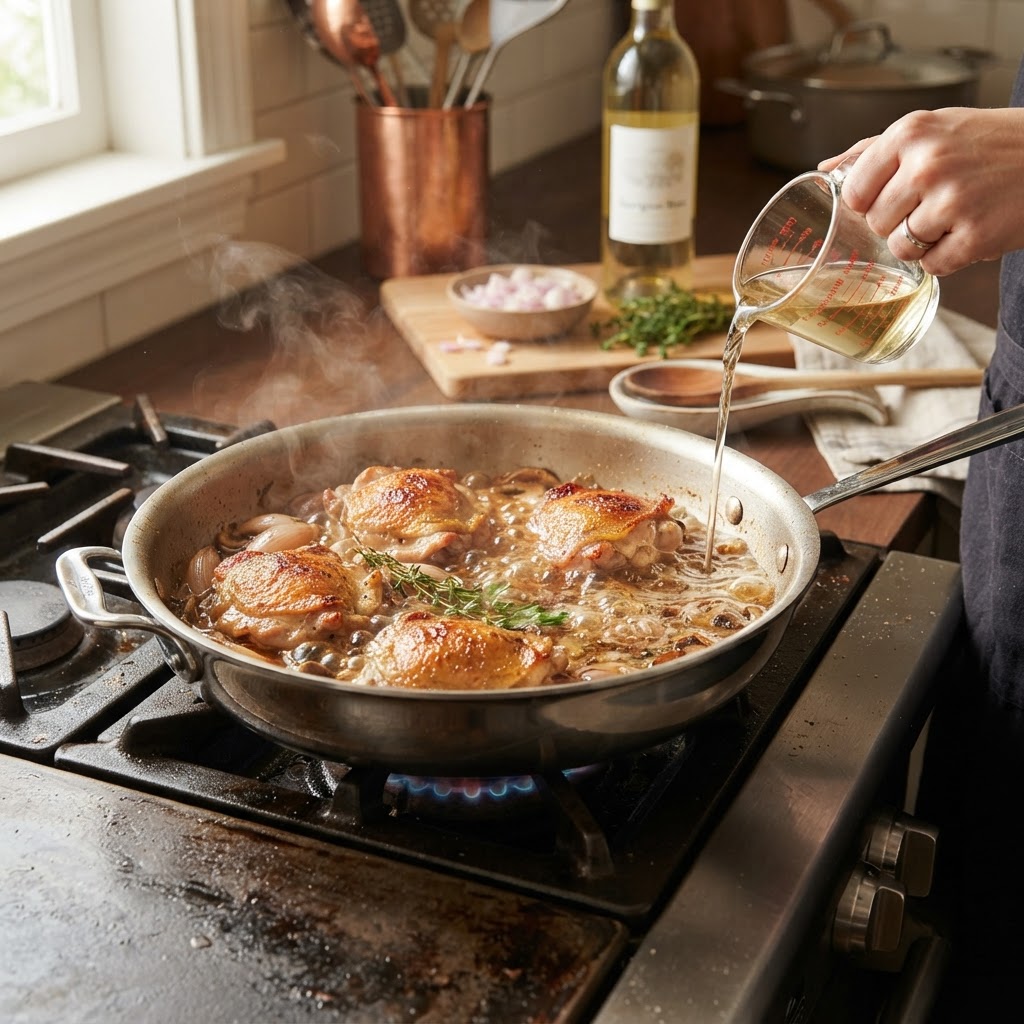
Once your protein is finished and set aside to rest, it is time for the deglazing process. This involves pouring a liquid into the hot pan to loosen the fond. The choice of liquid is entirely dependent on the flavor profile you wish to achieve. A dry white wine is a classic choice for chicken, fish, or pork, as its acidity cuts through the richness of the meat. Red wine, on the other hand, is robust and pairs perfectly with steak, lamb, or game meats, offering a depth that can stand up to heavily charred surfaces.
Acidic Foundations and Alternatives
If you prefer not to use alcohol, you have plenty of alternatives that can provide the necessary acidity to balance your sauce. Citrus juices like lemon or lime are excellent, particularly for lighter proteins. Vinegars, such as balsamic, sherry, or apple cider vinegar, provide a sharper, more nuanced acidity that can drastically shift the personality of the finished dish. For those who want a more mellow approach, a high-quality, gelatin-rich stock—ideally homemade—is the gold standard.
Always keep in mind that the liquid should be added when the pan is still hot, but remove the pan from the heat source for a brief moment before pouring to prevent a massive flare-up or excessive steam burn. The liquid will hiss and bubble immediately upon contact with the hot metal; this is exactly what you want to see. Use a wooden spoon or a heat-resistant silicone spatula to scrape the bottom of the pan, releasing every last bit of fond into the liquid.
The Art of the Reduction
Deglazing is merely the first step; the second is the reduction. This is the process of simmering your liquid until the water content evaporates, concentrating the remaining flavors. When you deglaze, you have a thin, watery liquid. If you served it immediately, it would be bland and lack texture. By allowing the sauce to boil down—typically by half or even two-thirds—you are intensifying the flavors captured from the fond and the deglazing agent.
Controlling the Viscosity
To achieve the perfect texture, you need to watch the bubbles. Large, rapid bubbles indicate a high water content. As the sauce reduces, you will notice the bubbles becoming smaller, tighter, and slower. The liquid will begin to coat the back of your spoon, a test known as nappe. This indicates that the proteins have concentrated enough to create a natural "body." If you go too far, the sauce will become syrupy and potentially too salty, so constant attention is required.
"Reduction is the chef’s secret weapon for concentration. It transforms a simple splash of wine into a complex elixir that carries the very soul of the dish."
If your pan sauce is still too thin after reduction, you have a few options. Professional chefs often use the technique of mounting with butter (monter au beurre). This involves whisking in small, cold cubes of unsalted butter at the very end of the cooking process, off the heat. The butter acts as an emulsifier, thickening the sauce and providing a glossy, luxurious mouthfeel that makes the sauce taste significantly more expensive than it actually is.
Essential Ingredients for Balancing Flavor
A truly great pan sauce requires balance. If it is too acidic, it will be harsh; if it is too salty, it will be inedible; if it is too rich, it will be cloying. Balancing these elements is a skill that develops with practice. You should taste your sauce frequently during the reduction process. If you find the flavor is too sharp, a small pat of butter or a tiny pinch of sugar can help mellow the bite. If it feels flat, a splash of high-quality sherry vinegar can wake it up.
Incorporating Aromatics
While the fond provides the backbone, you can introduce secondary flavors during the reduction phase to add complexity. Aromatics like minced shallots, garlic, fresh herbs (such as thyme, rosemary, or parsley), and peppercorns can be added to the pan after you have deglazed. Sauté these aromatics briefly in the remaining fat from the pan before you begin your reduction. This infuses the fat, which then emulsifies into your sauce, creating layers of flavor that evolve as you eat.
Shallots:* Sweet, mild, and the quintessential aromatics for French-style pan sauces.
Garlic:* Add toward the end of the aromatic stage to prevent burning and bitterness.
Fresh Herbs:* Thyme and rosemary should be added early; delicate herbs like parsley or chives should be added right before serving.
Butter:* The final touch for shine and richness. Ensure it is cold to create a stable emulsion.
When selecting your herbs, remember that dried herbs are more potent and should be added during the deglazing phase to allow them to rehydrate and release their oils. Fresh herbs, particularly woody ones like rosemary, can be thrown in as sprigs and removed before serving, or chopped finely if you want them to remain in the final sauce. The goal is to create a sauce that tastes like a unified whole, where no single ingredient dominates the palate.
Troubleshooting Common Pan Sauce Pitfalls
Even professional chefs encounter issues with pan sauces from time to time. The most common mistake is burning the fond before deglazing. If your pan is too hot and the brown bits turn black and acrid, you cannot "save" the sauce. The bitter flavor will ruin the entire dish. If you see the fond turning dark brown and releasing wisps of smoke, add your deglazing liquid immediately, even if the meat isn't quite finished searing, or remove the pan from the heat to slow the reaction.
Managing Salinity
Another common issue is over-salting. Many home cooks season their meat heavily with salt before searing. When that salt concentrates in a reduced sauce, the result can be overwhelming. To avoid this, be judicious with your seasoning on the protein itself. You can always add salt at the very end of the process, but you cannot remove it once it has been integrated into the reduction. If you find your sauce has become too salty, a splash of water or a bit of unsalted stock can help dilute it, but be prepared to reduce it again.
Scenario: Sauce is too thin.* Solution: Continue reducing or whisk in a small amount of cold butter.
Scenario: Sauce is too acidic.* Solution: Add a teaspoon of butter or a very small pinch of sugar.
Scenario: Sauce is too salty.* Solution: Add a small amount of liquid or a touch of unsalted cream to mellow the intensity.
Scenario: The fond burned.* Solution: Wipe the pan clean and start over; do not try to serve bitter, burnt flavors.
Lastly, do not be afraid of the "broken" sauce. If you add your butter too quickly or if the pan is too hot when you incorporate it, the emulsion may break, resulting in a pool of fat separate from the liquid. If this happens, remove the pan from the heat immediately and whisk in a tablespoon of cold liquid (stock or water). This often helps bring the emulsion back together, creating a smooth and glossy finish.
Perfecting the Emulsion and Finish
The hallmark of a restaurant-quality pan sauce is its emulsion. An emulsion is a mixture of two liquids that typically do not blend, such as oil (or butter fat) and water (or stock/wine). By whisking cold butter into a hot reduction, you are suspending the fat molecules in the liquid, creating a thick, velvety sauce that clings to the back of a spoon. This is the secret behind the "napé" consistency that makes professional dishes look so polished.
The Finishing Touches
Once your sauce is emulsified and perfectly balanced, the final step is to refine the texture. Many chefs will pass the finished sauce through a fine-mesh sieve (a chinois) to remove any bits of herbs or shallots, leaving a perfectly smooth, elegant sauce. While this is not strictly necessary for a casual home dinner, it is a great technique to master if you are hosting guests. It creates a refined, professional aesthetic that elevates the visual presentation of your dish.
"A glossy, perfectly reduced pan sauce is the definitive mark of a cook who understands the marriage of heat, timing, and patience."
Before you pour the sauce over your protein, ensure that the meat has rested properly. A steak or roast needs at least 5 to 10 minutes to allow the muscle fibers to relax and reabsorb their juices. Any juices that collect on the cutting board during this rest should be poured back into your pan sauce. Those juices are essentially "liquid gold"—they are pure flavor that belongs in your sauce, not left behind on the board.
Final Thoughts
Mastering the art of deglazing and reducing is not just about making a fancy topping for your dinner; it is about respecting the ingredients and the process of cooking. When you take the time to build a pan sauce, you are participating in a tradition that spans centuries of culinary practice. You are learning to read the heat of your pan, the consistency of your liquids, and the delicate balance of acidity and fat. It is a sensory experience that teaches you as much about patience as it does about technique.
Do not be discouraged if your first attempt is not perfect. The beauty of the pan sauce is that it is highly forgiving. If it is too thin, cook it a little longer. If it is too sharp, add a little butter. With every meal you prepare, you will become more intuitive, eventually reaching a point where you no longer need to look at a recipe. You will look at your pan, smell the fond, and know exactly which wine or stock will turn those brown bits into the highlight of the meal.
At the end of the day, "Blame The Chef" is about empowering you to take ownership of your kitchen. By utilizing these professional techniques, you are reclaiming the potential of every meal. You are moving beyond the recipe card and into the realm of true culinary understanding. So, the next time you hear that sizzle in the pan, remember: you are only a few moments and a splash of liquid away from greatness. Keep your pans hot, your spoons ready, and your palate sharp. Happy cooking, and may your sauces always be silky, balanced, and deeply flavorful.
Get the Next Recipe
Weekly recipes, techniques, and gear picks — straight to your inbox.
