The Home Cook’s Guide to Deglazing: Mastering Fond Scraping and Liquid Ratios for Restaurant-Quality Pan Sauces
There is a singular, transformative moment in professional kitchens that separates the novice from the practiced home cook: the precise second when a shimmering, golden-brown residue is scraped from the bottom of a hot pan. This residue, known to chefs as fond, is the concentrated essence of everything you have just cooked. Whether you are searing a thick ribeye, browning mirepoix for a stew, or rendering chicken skin, that sticky, dark layer holds the deep savory notes that define restaurant-quality dining. Many home cooks make the mistake of scrubbing their pans immediately after searing, unaware that they are essentially washing away the soul of their meal. Learning to harness this power through the art of deglazing is the single most effective way to elevate your home cooking from "functional" to "extraordinary."
Deglazing is fundamentally a bridge between the intense heat of the stovetop and the nuanced world of emulsified sauces. It is not merely a method of cleaning a pan; it is a deliberate culinary procedure that dissolves water-soluble compounds from the surface of the cookware into a liquid base. By introducing a cold or room-temperature liquid to a hot pan, you initiate a rapid steam release that lifts the caramelized proteins—the Maillard reaction products—back into the sauce. This process allows you to capture flavors that would otherwise be lost to the kitchen sink, turning a simple dinner into a masterclass in depth, acidity, and mouthfeel. Once you grasp the mechanics, you will realize that a pan sauce is not a complicated side dish, but a natural conclusion to the cooking process itself.
In this comprehensive guide, we will dismantle the fear often associated with sauce-making and replace it with technical confidence. We will examine the science of fond development, the critical role of liquid selection, and the ratios required to achieve that perfect, glossy consistency known as nappé. You will learn how to balance the richness of fats with the brightness of acids, ensuring that every reduction you create is perfectly seasoned and visually stunning. Whether you are working with stainless steel, cast iron, or enameled pans, the principles remain consistent and reliable. Prepare to stop blaming the chef for your kitchen shortcomings and start cultivating the skills that make you the master of your own culinary environment.
The Science of Fond: Understanding Caramelization
The term fond is derived from the French word for "bottom" or "foundation," and it is the bedrock upon which all great pan sauces are built. When you sear a piece of protein, you are encouraging the Maillard reaction, a chemical process between amino acids and reducing sugars that occurs at temperatures typically between 280°F and 330°F. As moisture evaporates from the meat, these proteins adhere to the pan surface, creating the dark, complex crust that serves as the flavor profile for your sauce. Without this layer of caramelized debris, a sauce will often taste one-dimensional, lacking the backbone necessary to stand up to the richness of a main course.
Managing Heat for Optimal Fond
Achieving the perfect fond requires a delicate balance of temperature and fat. If your pan is too cold, the meat will steam rather than sear, resulting in a pale, gray liquid rather than a flavorful brown crust. Conversely, if your pan is too hot—past the smoke point of your oil—the fond will turn into bitter, acrid carbon that ruins the sauce. Always use a high-smoke-point oil, such as grapeseed, avocado, or clarified butter, and ensure your protein is thoroughly patted dry before it hits the pan. Moisture is the enemy of searing; water on the surface of your steak or chicken must evaporate before the actual browning process can begin.
Pan Material and Its Effect on Crust
The choice of cookware significantly influences how your fond develops and releases. Stainless steel is the gold standard for deglazing because it allows the proteins to grip the surface firmly during the sear, creating a substantial foundation. Cast iron is equally effective, though it retains heat much longer and requires careful monitoring to ensure the fond does not darken too quickly. Avoid non-stick surfaces for sauce-making whenever possible, as they are specifically engineered to prevent food from sticking, which means you will struggle to develop the necessary fond. You need a pan that encourages the "stick" so that the "deglaze" can pull it back into the liquid.
"The difference between a sauce that sits on top of a dish and one that transforms it is the presence of fond. Never view the brown spots on the pan as a mess to be cleaned; view them as the concentrated, savory essence of your hard work."
The Deglazing Procedure: Timing and Technique
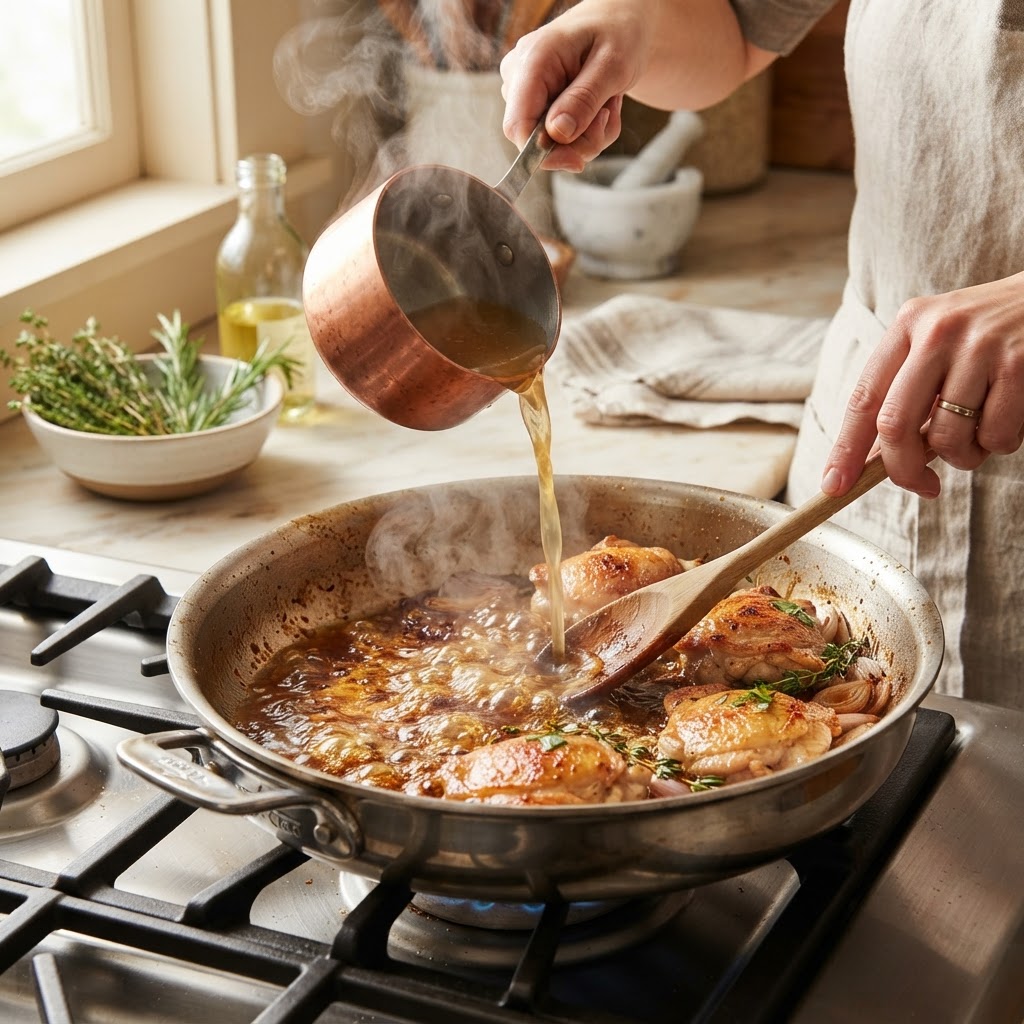
Once your protein is removed and resting on a warm plate, you are ready to deglaze. The pan should still be hot, containing the rendered fat and the concentrated fond. Start by pouring off any excess grease, leaving about one tablespoon of fat in the pan to assist in the emulsification process later. Place the pan back over medium-high heat and wait until the remaining fat begins to shimmer. At this precise moment, add your chosen liquid—whether it is wine, stock, or vinegar—to start the extraction.
The Thermal Shock
The instant the liquid hits the hot pan, you will hear a sharp hiss and see a plume of steam. This is the thermal shock required to loosen the fond from the metal surface. It is critical to use a wooden spoon or a high-heat silicone spatula to scrape the bottom of the pan immediately. Do not be timid during this stage; work the edges and the center to ensure every last bit of the browned bits is incorporated into the liquid. This process should happen rapidly, usually within 60 to 90 seconds, to prevent the liquid from evaporating too quickly before the flavor has been extracted.
Selecting the Right Deglazing Liquid
The liquid you choose sets the personality of your final sauce. Dry white wines are perfect for seafood or poultry, providing a bright acidity that cuts through butter. Red wines, particularly those with bold tannins like a Cabernet or Syrah, work beautifully with beef, lamb, or game meats. If you prefer to avoid alcohol, high-quality vinegars (such as balsamic, sherry, or apple cider) or fortified vegetable stocks can provide the necessary acidic backbone. Remember that the liquid will reduce significantly, so it will concentrate its inherent flavors; choose a wine you would actually enjoy drinking, as anything less will taste sharp and unbalanced in your sauce.
Mastering Liquid Ratios and Reductions
One of the most intimidating aspects of making pan sauces is knowing how much liquid to use and how far to reduce it. A common mistake is using too much stock or wine, which forces you to simmer the sauce for an extended period, often leading to over-concentration or an overly salty final product. For a standard pan sauce for two to four servings, start with approximately 1/2 cup to 3/4 cup of liquid. The goal is to reach a nappé consistency—where the sauce is thick enough to coat the back of a spoon without running off immediately.
The Reduction Phase
After deglazing, allow the liquid to simmer steadily. You are looking for a reduction by half or even two-thirds of the original volume. As the water evaporates, the flavors intensify and the natural gelatin from the fond helps the sauce thicken. If you are using a commercial stock that lacks body, you can add a small amount of arrowroot or cornstarch slurry at the end, though a properly reduced sauce should naturally achieve the desired texture through the concentration of proteins and the addition of cold butter.
The "Mounting" Technique
To add professional shine and velvety mouthfeel, use a technique called monter au beurre (mounting with butter). Once the sauce has reduced to your desired consistency and flavor intensity, remove the pan from the heat entirely. Add one or two tablespoons of cold, cubed, unsalted butter and whisk it in rapidly. The cold butter emulsifies into the hot liquid, creating a glossy, thickened sauce that clings to your ingredients. Do not let the sauce boil after adding the butter, as this can cause the emulsion to break, resulting in an oily, separated mess.
Balancing Flavors: Acid, Salt, and Aromatics
A perfectly executed sauce is one that hits all the right notes: savory, acidic, salty, and aromatic. During the deglazing process, the aromatics you added before the protein—such as minced shallots, garlic, or fresh thyme—become part of the sauce. If you find your sauce is lacking punch after the reduction, consider the balance. Is it too heavy? Add a squeeze of lemon juice or a splash of sherry vinegar to brighten it up. Is it too thin? Reduce it further or whisk in a touch more butter. Is the flavor muted? A small pinch of kosher salt or a crack of black pepper can wake up the entire profile.
Incorporating Aromatics
While many cooks add garlic at the very beginning of the sear, it is often better to add aromatics toward the end of the searing process, just before you pull the protein. This prevents the garlic from burning and turning bitter, which would ruin the base of your sauce. Once the meat is out, the fond and these softened aromatics provide a complex, layered start to your sauce. Feel free to introduce fresh herbs—parsley, tarragon, chives, or rosemary—in the final thirty seconds of simmering to preserve their delicate oils and color.
The Role of Salt
Be mindful of the salt content throughout the cooking process. If you have seasoned your protein heavily before searing, the fond will carry that salt forward into the sauce. Always taste your sauce after the reduction, but before the final butter mount. Because the reduction process concentrates salt, it is incredibly easy to over-salt a pan sauce. Use a low-sodium stock if possible, as it gives you total control over the seasoning. You can always add salt at the end, but you cannot remove it once the sauce has been reduced.
"A sauce is not a static recipe; it is a living entity that responds to the heat, the pan, and the ingredients. Taste early, taste often, and learn to trust your palate over the instructions on a page."
Troubleshooting Common Sauce Failures
Even experienced chefs encounter issues when making pan sauces. Perhaps the most frequent problem is an "oily" or "broken" sauce. This typically happens when the fat has separated from the liquid, resulting in a greasy layer floating on top. This often occurs if the sauce is boiled after the butter is added or if the butter was added to a pan that was too hot. To fix a broken sauce, pull the pan off the heat and whisk in a tablespoon of cold heavy cream or even a teaspoon of cold water. This can sometimes re-emulsify the mixture, bringing it back to a smooth, cohesive state.
Dealing with Burnt Fond
If you accidentally let your fond burn to a dark, acrid black color, do not attempt to salvage it. A burnt pan base will impart a harsh, medicinal flavor that cannot be balanced out by acid or fat. In this scenario, it is better to wipe the pan clean and start over. If the pan is only slightly scorched, you might be able to deglaze with a splash of wine and taste it; if the bitterness is faint, you can often mask it with a touch of sweetness, such as honey, balsamic glaze, or maple syrup, which can offset the carbon notes.
Lack of Flavor Depth
If your sauce tastes "thin" or "watery," you have likely failed to extract enough flavor from the fond or your reduction is insufficient. This is where professional chefs often rely on demi-glace or veal stock. If you find yourself frequently disappointed by the intensity of your sauces, start keeping a container of concentrated homemade stock in your freezer. Even a tablespoon of concentrated bone broth added during the deglazing phase can add a level of body and "stick-to-your-ribs" richness that simple store-bought cartons simply cannot provide.
Broken Sauce:* Whisk in cold cream or water off-heat.
Bitter/Burnt Fond:* Clean the pan and restart; don't gamble.
Thin Texture:* Increase reduction time or mount with more butter.
Muted Flavor:* Add a splash of acid or check seasoning levels.
Elevating Your Culinary Repertoire
Once you are comfortable with the basic deglazing technique, you can start experimenting with more complex flavor pairings. The classic pan sauce is the template, but the variables are endless. Consider deglazing a pork chop pan with apple cider and finishing with a dollop of Dijon mustard and heavy cream. Consider deglazing a seared duck breast pan with port wine and dried cherries. By simply changing the liquid, the aromatic, and the finishing fat, you can create dozens of different sauces from the exact same searing technique.
The Importance of Resting
Always remember that your sauce is only as good as the protein it accompanies. Never rush to make your sauce while the meat is still in the pan. Pull the meat, let it rest on a cutting board, and allow the muscle fibers to relax. This resting period is the perfect window to perform your deglazing and reduction. By the time your sauce is finished and mounted with butter, your protein will be perfectly rested, juicy, and ready to be drizzled with that incredible, pan-scraped goodness you have just created.
Developing Your Intuition
Cooking, at its core, is a sensory experience. Over time, you will stop looking at the clock and start looking at the pan. You will notice the way the bubbles change size as the liquid reduces; you will recognize the scent of the wine as the alcohol cooks off and the fruity notes intensify; you will see the shimmer on the spoon that tells you the sauce is ready. These are the markers of a cook who has moved beyond recipes and into the realm of true craftsmanship. Keep practicing the scrape, keep watching the reduction, and keep balancing the flavors until it feels like second nature.
Final Thoughts
Mastering the art of deglazing is an empowering step for any home cook. It transforms the mundane task of pan cleaning into a creative act of flavor extraction. By understanding the science of the Maillard reaction, respecting the liquid-to-reduction ratios, and mastering the emulsification of butter, you possess the tools to replicate the experience of a high-end bistro in your own kitchen. It is a technique that demands little in the way of expensive equipment—just a good pan, a heat-resistant spoon, and the patience to watch the liquid slowly transform into a liquid gold.
Remember that every pan has a story to tell, and every sear leaves behind a legacy of flavor waiting to be reclaimed. The next time you find yourself staring at a pan crusted with brown bits, don't reach for the scouring pad immediately. Reach for your liquid of choice, turn up the heat, and begin the process of building your next masterpiece. You are the architect of your own meals, and with the skills outlined in this guide, you have everything you need to build a culinary foundation that is deep, complex, and professional.
Do not be discouraged if your first few attempts at the perfect pan sauce require some tweaking. Cooking is a process of refinement, not perfection. Embrace the trial and error, adjust your ratios based on your own preferences, and never be afraid to taste as you go. You are moving from a cook who follows steps to a chef who understands the why behind the method. Now, go heat up that pan, sear something beautiful, and scrape every last drop of flavor from the bottom. Your kitchen, and your dinner guests, will surely thank you for it.
Get the Next Recipe
Weekly recipes, techniques, and gear picks — straight to your inbox.
