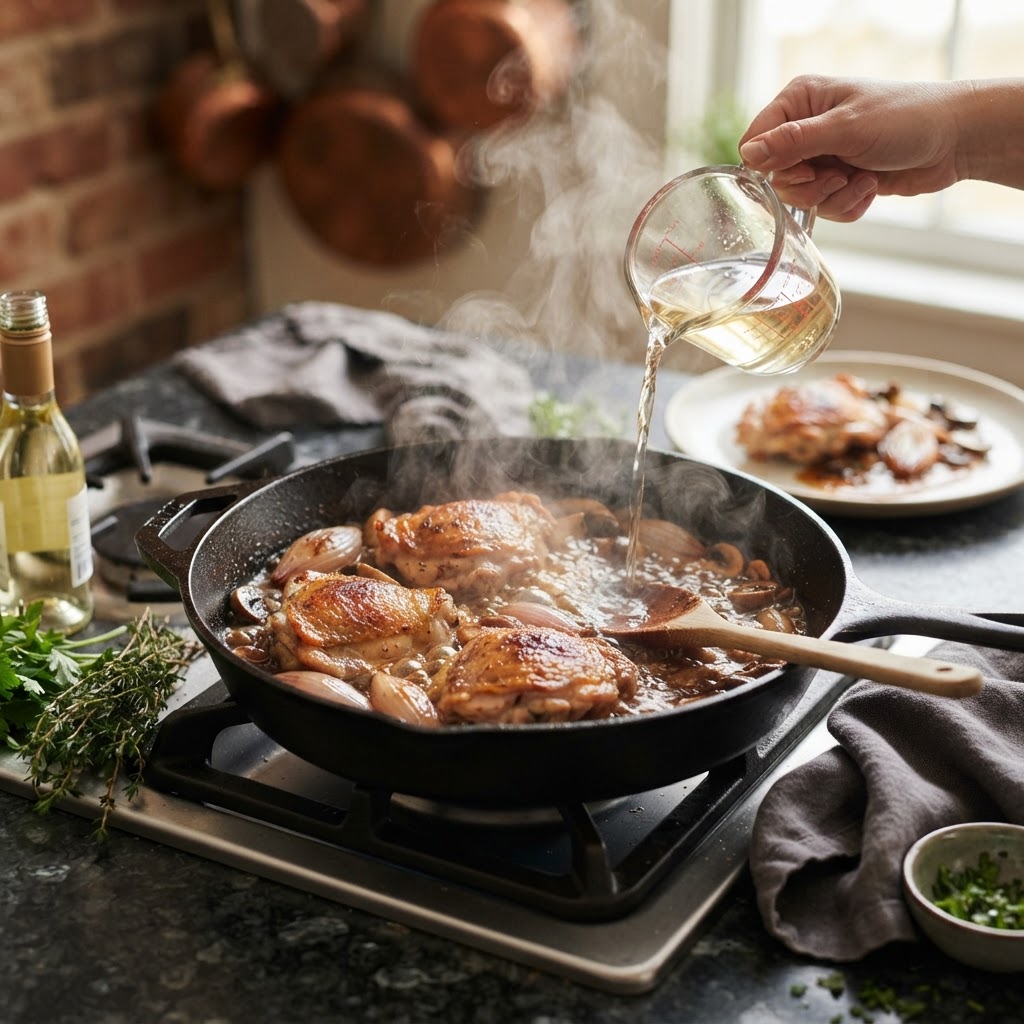
The Home Cook’s Guide to Deglazing: Mastering Pan Sauces for Professional Depth of Flavor
The secret to elevating home cooking from "perfectly edible" to "restaurant-quality" rarely lies in the most expensive ingredients or the newest kitchen gadgets. Instead, it is found in the overlooked, dark, sticky remnants left behind in the bottom of your skillet after a good sear. This substance, known in culinary circles as fond, is quite literally the foundation of professional-level flavor. By mastering the simple, yet transformative technique of deglazing, you unlock a shortcut to complex, deep, and glossy pan sauces that would otherwise take hours of stock reduction to achieve. It is a moment of culinary magic where the transition from a dry, crusty pan to a vibrant, aromatic sauce happens in mere seconds.
Many home cooks view the browned bits left in their pan as a sign that the meal is over, or perhaps that they have accidentally burned their protein. However, those caramel-colored spots are actually the concentrated essence of your meat, aromatics, and fats that have undergone the Maillard reaction. When you add liquid to a hot pan, you aren't just cleaning up; you are performing an extraction. This process is the bridge between a simple seared chicken breast and a masterpiece that requires a crusty loaf of bread to finish the plate. Understanding this technique turns your stove into a laboratory for flavor synthesis, providing you with a high-impact tool that works for everything from steak and pork chops to mushrooms and root vegetables.
As you begin to explore the art of deglazing, remember that the quality of your liquid is just as important as the quality of your sear. Whether you are using a crisp white wine, a dry vermouth, a robust beef stock, or even a splash of fruit juice, your choice sets the flavor profile of the final dish. You are not just thinning out a sauce; you are balancing acidity, salt, and fat in real-time. This guide will walk you through the science, the methodology, and the secret refinements that turn a simple pan-deglaize into a signature pan sauce that will have your guests asking which culinary school you attended. Prepare to stop discarding your flavor and start harnessing it with precision and confidence.
The Chemistry of the Fond
At its core, fond is a complex mixture of proteins and sugars that have caramelized under high heat. When you sear a piece of meat, the surface proteins denature and rearrange, resulting in those delicious, browned bits sticking to the metal of your pan. These bits are high in umami, the savory flavor that makes food deeply satisfying. If you were to wash that pan without deglazing, you would be literally pouring your flavor down the drain. By introducing a liquid, you effectively solubilize these compounds, lifting them from the surface and distributing them into your cooking medium.
Choosing Your Metal Matters
The surface you use for searing significantly impacts how much fond is created and how easily it can be lifted. Stainless steel and cast iron are the gold standards for deglazing because they are designed to form a strong bond with proteins during the sear. Non-stick pans, while convenient, are specifically engineered to prevent sticking, which means you will rarely generate the significant fond required for a robust pan sauce. If you want to master this technique, prioritize a heavy-bottomed stainless steel pan that allows for consistent heat distribution and excellent browning potential.
The Role of Heat and Surface Area
The amount of fond created is directly proportional to the temperature of your pan and the amount of surface area occupied by your protein. Professional chefs often use "crowding" to their advantage, but for the home cook, it is better to sear in batches. If you put too many cold steaks into a hot pan, the temperature drops, moisture is released, and your meat will steam rather than brown. Aim for a high smoke-point oil, such as avocado or grapeseed, and ensure your protein is patted bone-dry before it touches the pan. This dryness is the catalyst for the rapid browning that leads to a superior fond.
"Deglazing is the ultimate culinary act of alchemy; it turns the scorched history of your sear into the liquid soul of your dinner."
Selecting the Right Deglazing Liquid
The liquid you choose acts as the flavor carrier for your sauce. It is vital to consider the profile of your protein when selecting your deglazing agent. A white wine or a splash of dry vermouth is ideal for poultry and fish because the acidity cuts through the richness of butter and cream. Conversely, a bold red wine or even a splash of sherry vinegar is better suited for red meats like lamb or beef. Always remember that the liquid will concentrate significantly as you reduce it, so you want to avoid anything with added salt or excessive sweetness that might become cloying once reduced.
The Case for Wine and Spirits
Wine is the classic choice for a reason: it provides both acidity and nuance. When using wine, look for something you would actually enjoy drinking; if the wine is low quality, the sauce will reflect that in its final taste. If you are using spirits like brandy or cognac, you must be prepared for a flambé moment. Alcohol reduces quickly, leaving behind the concentrated essence of the fruit and oak. Always move your pan away from the heat source before adding high-proof alcohol to ensure safety, then return it to the flame once the initial flare-up subsides.
Beyond the Bottle: Stocks and Aromatics
If you prefer not to use alcohol, you can use high-quality, low-sodium chicken or beef stock. Because stocks lack the acidity of wine, many chefs add a small splash of vinegar or citrus juice at the end to provide that necessary "bright" top note. You can also experiment with vegetable-based liquids like pomegranate juice for a sweet-tart glaze, or even a splash of beer for a deep, malty foundation. Regardless of the liquid, the goal remains the same: use it to scrape the bottom of the pan with a wooden spoon or spatula, ensuring every bit of the fond is incorporated into the liquid.
The Step-by-Step Deglazing Process
Mastering the mechanics of the technique is about timing and temperature management. Once your protein has been removed from the pan and is resting on a cutting board, your pan will likely contain bits of browned protein and rendered fat. Do not wipe this clean. First, discard any excess grease, leaving just about a teaspoon of fat behind. This fat is essential for mounting your sauce with butter later on, as it provides the emulsion base for a velvety texture.
Sequence of Operations
Managing the Reduction
The reduction phase is where the "professional depth" occurs. You want the sauce to reach a nappe consistency, which is a culinary term for a sauce thick enough to coat the back of a spoon. If you can run your finger through the sauce on the back of the spoon and the line remains clear without the liquid running into it, you have reached the perfect consistency. If it is too thin, it will be watery and flavorless; if it is too thick or burnt, it will taste bitter. Patience is key; watch the bubbles as they start to move more slowly, indicating that the moisture content is decreasing.
"A sauce is not a secondary thought; it is the finished coat of paint on the canvas of your protein. Do not rush the reduction, or you lose the complexity you worked so hard to build."
Mounting with Butter: The Final Touch
The difference between a "pan sauce" and a "restaurant sauce" is often a technique known as monter au beurre, or mounting with butter. Once your reduction has reached the desired consistency and you have taken the pan off the heat, add one or two tablespoons of very cold, cubed unsalted butter. Whisk the butter into the sauce vigorously. The cold butter emulsifies into the liquid, creating a glossy, rich sauce that has a luxurious mouthfeel.
Why Cold Butter is Essential
When you whisk cold butter into a warm reduction off the heat, you create an emulsion where the fat particles are suspended in the liquid. If you use room-temperature butter or add it while the pan is still over a roaring flame, the sauce might "break," meaning the fat will separate and create an oily sheen rather than a creamy, cohesive sauce. The emulsion is delicate, so be sure to serve the dish immediately after the butter has been whisked in. This final step adds a richness that levels out the sharp acidity of the wine or vinegar used earlier.
Customizing Your Profile
At this stage, you can add final flavor enhancers to make the sauce your own. A teaspoon of Dijon mustard can act as an emulsifier and add a spicy kick. Fresh, finely chopped herbs—like chives, parsley, or tarragon—should only be added at the very end to preserve their bright, green color and volatile aromatics. Freshly ground black pepper or even a tiny pinch of sea salt (if the reduction needs it) are your final adjustments. This is the moment to taste. Always taste your sauce before serving; if it feels one-dimensional, a tiny squeeze of lemon juice often provides the lift needed to wake up the entire plate.
Troubleshooting Common Deglazing Issues
Even seasoned chefs occasionally run into issues when making pan sauces. One of the most common problems is a sauce that tastes too acidic or "sharp." This usually happens if you haven't reduced the wine enough, or if the wine you chose was inherently too acidic for the dish. The solution is the butter mount mentioned above, which mellows the acid. If it is still too sharp, a tiny pinch of sugar or honey can neutralize the acidity, but use this sparingly as you do not want to create a dessert-like profile.
Dealing with Burnt Bits
There is a distinct difference between brown fond and black, charred carbon. If the bits in your pan look black and smell acrid, you have scorched them. You cannot save a sauce made from burnt carbon; it will taste bitter and unpleasant. In this case, it is better to wipe the pan clean and start the sauce from scratch using fresh aromatics and stock, rather than trying to salvage the burnt flavor. Always adjust your heat down once the protein is removed to prevent the residual fat from burning while you prepare the aromatics.
The Sauce is Too Thin
If your sauce is not thickening, it is likely because you haven't reduced it long enough, or you used too much liquid initially. Do not be tempted to add flour or cornstarch, as this will create a "gravy" texture rather than the silky, translucent pan sauce we are aiming for. Instead, turn the heat up slightly and let the liquid evaporate. The sugars in the wine and the gelatin from the meat juices will naturally thicken the sauce as the water content drops. Trust the process, and remember that liquid volume disappears much faster than you anticipate once the pan is at a steady simmer.
Elevating Your Culinary Repertoire
Once you are comfortable with the basic technique, you can begin to experiment with more complex flavor profiles. Think about the seasonality of your ingredients. In the autumn, try deglazing a pork chop pan with apple cider or hard cider, adding a sprig of sage during the reduction. In the spring, use a dry white wine with a handful of ramps or scallions. By changing the deglazing liquid and the aromatic base, you can keep the technique consistent while creating an entirely different eating experience every single time you cook.
Professional Tips for Consistency
Chefs often use a "flavor loop" in their kitchens. They keep a variety of vinegars (sherry, balsamic, white wine) and stocks (chicken, beef, veal) on hand, knowing exactly which combination works best with specific proteins. For example, a heavy veal demi-glace combined with red wine is the gold standard for steak. For delicate white fish, a lemon-white wine reduction is perfection. Start keeping a small notebook of your successful combinations. Note the type of wine, the herbs used, and the result. This will allow you to replicate your best meals without relying on intuition alone.
The Psychology of the Pan
Cooking is a sensory experience. As you deglaze, listen to the hiss of the liquid hitting the hot pan. Watch how the liquid changes color as it dissolves the fond. Smell the aroma as it fills the kitchen; it should smell like the concentrated soul of the protein you just cooked. If the smell is harsh, the sauce needs more reduction or a bit of fat to round it out. If it is dull, it needs a spark of acidity. Learning to read your pan is the final step in moving from a home cook to a culinary master.
"A home cook who understands how to build a pan sauce is never more than fifteen minutes away from a meal that justifies the effort of the entire cooking process."
Final Thoughts
Mastering the art of deglazing is truly a rite of passage for any dedicated home cook. It transforms the mundane task of cleaning a pan into an opportunity for creativity and deep, resonant flavor. By respecting the fond, choosing the right liquids, and perfecting the emulsification of your butter, you are effectively taking command of the most important component of any dish: the sauce. It is a technique that demands little in terms of equipment, but returns everything in terms of satisfaction and quality.
As you move forward in your culinary journey, remember that the goal is not perfection, but rather the constant pursuit of better flavor. Every pan of chicken, steak, or roasted vegetables is a new opportunity to practice this skill. You will inevitably have batches that are thinner than you’d like or slightly more acidic than intended, but that is how you learn the nuances of your own stove and your own palate. Embrace the process, don’t be afraid to experiment with different liquids, and never, ever rinse that flavor down the drain.
Finally, remember that cooking is meant to be shared. There is a profound sense of pride that comes from serving a meal where every element, down to the final drop of sauce, was crafted by your own hands. The techniques we have explored here are the same ones used in professional kitchens around the world. By bringing them into your home, you aren't just making dinner; you are curating an experience. So, the next time you find those browned bits at the bottom of your skillet, take a breath, pour in that splash of liquid, and witness the magic of your own professional-level pan sauce. Happy cooking, and remember: if it tastes amazing, you have absolutely earned the right to take the credit, even if we are the ones who gave you the tools to get there. The kitchen is yours to conquer. Keep searing, keep deglazing, and keep pushing the boundaries of what you think you can create. Your future meals will thank you.
Building upon the foundation of pan sauces, consider how this skill branches out into other areas of the kitchen. You can use this exact logic for deglazing a roasting pan after a Thanksgiving turkey, where the fond is abundant and concentrated. By adding stock, herbs, and perhaps a touch of cream, you create a gravy that is worlds apart from the flour-thickened, bland versions often found at holiday tables. The principle remains identical: respect the browned bits, introduce the right liquid, and balance the final result with fat and acidity.
Furthermore, consider the efficiency this brings to your weeknight routine. Because a pan sauce comes together in the time it takes for your protein to rest, it is the perfect solution for busy schedules. You don't need to plan hours ahead to create a sophisticated meal. A simple seared pork loin, a quick pan sauce with apple and cider, and a side of roasted greens can be executed in under thirty minutes. This is the hallmark of a capable cook: the ability to deliver high-quality, delicious food without the stress of over-complicated recipes.
The more you practice, the more you will find that you stop relying on bottled sauces or generic flavorings. You will trust your palate, you will understand the interplay of ingredients, and you will find that you have essentially freed yourself from the constraints of store-bought shortcuts. This is the definition of culinary independence. It is the ability to walk into a kitchen, look at what you have, and know exactly how to turn it into something extraordinary.
Always keep your heat management in mind. If you find your pan is consistently smoking too much, back off the heat a touch. If you find your fond is too light, increase the heat or the duration of your sear. These small adjustments are the hallmarks of a cook who has stopped following recipes blindly and started thinking like a chef. The journey to flavor mastery is paved with hundreds of successful pan sauces, and I am thrilled to have walked through the first few steps of that journey with you today.
Take a moment to look at your equipment as well. If you have been using non-stick pans exclusively, treat yourself to a single, high-quality stainless steel skillet. The difference in the sear quality and the subsequent fond will be immediately apparent. It is a small investment that will pay dividends in every single meal you prepare from here on out. Your pan is your partner in the kitchen; treat it with the respect it deserves, and it will reward you with flavor that keeps your family and friends coming back to your table time and time again.
Continue to explore, continue to taste, and most importantly, continue to blame the chef when everything turns out perfectly. We are always here to provide the insights and the confidence you need to keep rising to the occasion in your own home kitchen. Whether it’s a quick Wednesday night dinner or a weekend feast for friends, you now have the tools to ensure every single plate is elevated by the simple, powerful, and utterly transformative process of deglazing. The flavor is already there—you just have to reach out and pull it into your sauce.
Get the Next Recipe
Weekly recipes, techniques, and gear picks — straight to your inbox.
