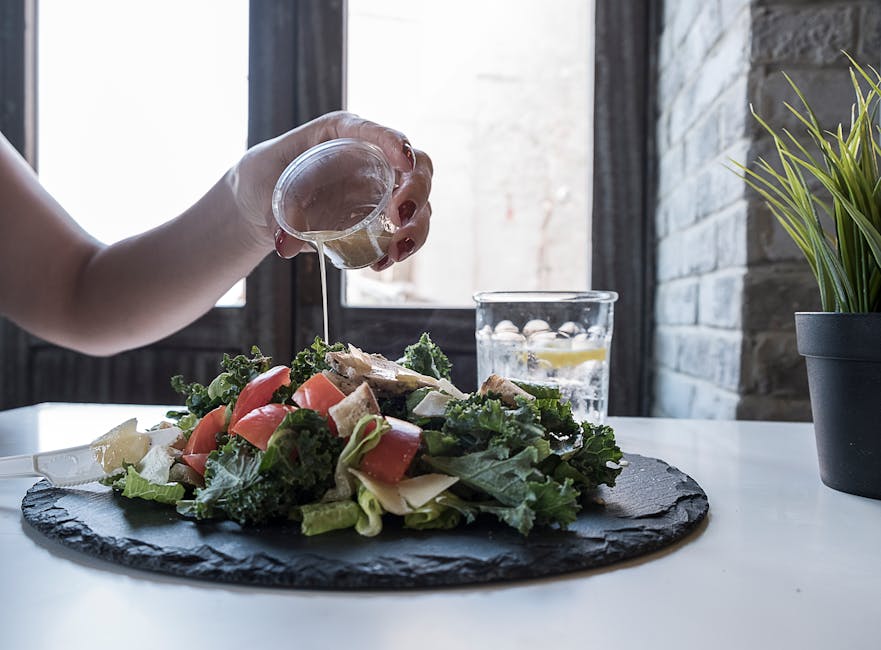
The Home Cook's Guide to Emulsification: Binding Oil and Water for Silky Sauces and Stable Dressings
There is a moment in the kitchen that separates the casual weekend cook from the true student of the craft. It usually happens over a stainless steel mixing bowl, holding a whisk in one hand and a thin stream of golden olive oil in the other. You are attempting to make a classic vinaigrette or perhaps a delicate hollandaise, and suddenly, the mixture separates. The oil slicks across the top, defiant and oily, refusing to integrate with the acidic vinegar or the tempered yolks beneath. It is a moment of profound frustration, yet it is also the threshold of culinary mastery. Understanding emulsification is not merely about preventing a broken sauce; it is about grasping the very physics that dictate the texture, mouthfeel, and success of nearly every great dish in the professional canon.
To master emulsification is to command the invisible forces of molecular biology and chemistry right on your countertop. At its core, an emulsion is simply a mixture of two liquids that typically refuse to blend—oil and water—forced into a state of temporary stability. Because these molecules are polar opposites, they naturally want to repel one another, a phenomenon known as immiscibility. When we create a successful sauce, we are creating a suspension, dispersing tiny droplets of fat throughout a water-based liquid. Achieving this requires more than just luck or a strong arm; it requires a deep understanding of surface tension, the role of surfactants, and the mechanical energy required to create a homogeneous, silky-smooth result.
This guide is designed to move you past the intimidation of "broken" sauces and into the realm of total confidence. We will explore the science of how ingredients like egg yolks, mustard, and dairy proteins act as the glue that keeps your culinary architecture from collapsing. We will walk through the precise ratios, temperatures, and techniques used in professional kitchens, stripping away the mystery so you can focus on the flavor. Whether you are aiming for a classic mayonnaise, a vibrant pesto, or a buttery beurre blanc, the principles remain identical. Once you respect the science of the bond, your home kitchen will immediately feel like a professional laboratory of flavor, and you will never again have to "blame the chef" for a sauce that separates on the plate.
The Science of the Bound Mixture
At the most basic level, water and oil are oil and water. They possess different molecular charges, and in nature, they prefer to be apart. To convince them to live together, we must introduce an emulsifier. An emulsifier is a molecule that possesses two distinct ends: one that is hydrophilic (water-loving) and one that is lipophilic (fat-loving). By adding these molecules, we create a bridge. The lipophilic tail anchors itself into the oil droplet, while the hydrophilic head reaches out to the surrounding water-based liquid. This prevents the tiny droplets of fat from colliding, clumping back together, and rising to the surface, which is exactly what happens when you see your dressing "break."
Understanding the Dispersed Phase
In any emulsion, we have two components: the dispersed phase and the continuous phase. The dispersed phase consists of the tiny droplets suspended in the other liquid. The continuous phase is the liquid that surrounds those droplets. In a classic vinaigrette, the oil is the dispersed phase, while the vinegar is the continuous phase. In butter, the roles are reversed; water droplets are suspended in a sea of fat. Understanding this distinction is vital because the stability of your sauce depends on how effectively you can break your dispersed phase into the smallest possible droplets. The smaller the droplets, the more stable the emulsion becomes, resulting in that luxurious, opaque texture we all crave.
The Role of Surfactants
Surfactants are the secret agents of the culinary world. Common household items like egg yolks, mustard, honey, and even tomato paste contain natural surfactants that act as stabilizers. When you add a dollop of Dijon mustard to your vinaigrette, you aren't just adding a zesty flavor profile; you are adding a dense concentration of proteins and polysaccharides that coat the oil droplets. This coating acts as a physical barrier, ensuring that even if the droplets drift close to one another, they cannot easily merge back into a single pool of oil. This is why a simple salad dressing made with a touch of mustard will stay stable on the table for much longer than one made with oil and vinegar alone.
"The difference between a sauce that flows like silk and one that separates like a bad breakup is not magic—it is the patience to incorporate fat with the precision of a chemist."
The Mechanics of Whisking and Shear
Mechanical energy is the catalyst for the entire process. Without energy, the oil and water will never meet, regardless of the emulsifiers present. When you whisk, you are performing a task that is twofold: first, you are breaking the oil into microscopic droplets, and second, you are dispersing those droplets evenly throughout the liquid. If you pour your oil in too quickly, the droplets remain too large, and they will naturally rise to the top or sink to the bottom depending on their relative density, leading to an immediate collapse of the sauce.
The Importance of Drip-Rate
The golden rule of emulsification is the "drop-by-drop" method. Especially in the beginning stages of making a mayonnaise or a hollandaise, your initial droplets must be nearly invisible. Think of it like building a house; you need a solid foundation. If you add the fat too quickly before the initial droplets are properly suspended and coated by the emulsifier, you will overwhelm the continuous phase. Once the emulsion has "taken" and you see that characteristic thickening, you can safely increase the flow of oil to a thin, steady stream.
Equipment Choices
While a manual whisk is the best way to develop "feel" for a sauce, modern technology offers significant advantages for the home cook. A blender or an immersion blender (stick blender) provides high-shear energy, which is far more efficient at shattering oil droplets into the tiny, stable particles required for a rock-solid emulsion. If you are struggling with a breaking sauce, moving it into an immersion blender container is often the "get out of jail free" card that saves dinner. However, learn the whisk first; the tactile feedback of the liquid tightening against the wire is a sensation you should know by heart.
Whisk:* Best for control, texture, and learning the physical limits of a sauce.
Immersion Blender:* Best for speed and stability, especially for large batches.
Food Processor:* Excellent for thick, paste-like emulsions such as aioli or pesto.
Temperature Control: The Hidden Variable
Temperature is often overlooked, but it is the silent killer of emulsions. When we speak of emulsions like hollandaise or beurre blanc, we are working with fats that transition between solid and liquid states based on heat. If your ingredients are too cold, the fat will solidify and become difficult to disperse. If they are too hot, the proteins in your emulsifier—particularly egg yolks—will coagulate, turning your smooth sauce into a scrambled mess.
The Thermal Sweet Spot
For most cold emulsions, room temperature is the standard. If your eggs are fresh from the fridge, they are often too cold to properly hold the oil. Let your eggs sit on the counter for at least 30 minutes before beginning your work. For hot emulsions, aim for a temperature range between 140°F and 155°F. At this temperature, the butterfat is perfectly molten, and the egg proteins are loose enough to bind with the fats without seizing up. If you are using a double boiler, monitor the water temperature; it should be at a gentle simmer, never a rolling boil.
Dealing with Temperature Shocks
What happens if your butter is too hot? You will create a broken sauce that looks oily and curdled. The first step is to never panic. A broken sauce can almost always be rescued. If you find your emulsion separating due to heat, stop whisking immediately. Take a separate bowl, add a tablespoon of room-temperature water or a fresh egg yolk, and begin whisking your broken sauce into the new base slowly. This adds new, stable infrastructure to the existing mixture, forcing the recalcitrant fats back into submission.
Common Emulsions and How to Master Them
To apply this knowledge, we need to look at specific categories of emulsions. We typically divide them into cold and hot preparations. Cold preparations include vinaigrettes, mayonnaise, and aioli. Hot preparations include hollandaise, béarnaise, and beurre blanc. Each requires a different approach, but the goal remains the same: a stable, creamy consistency that coats the back of a spoon.
The Vinaigrette Masterclass
A standard vinaigrette is the most common emulsion in a home kitchen. The classic ratio is 3:1—three parts oil to one part acid. While you can shake this in a jar, it will separate within minutes. To make it a permanent, creamy emulsion, you must add an emulsifier. A teaspoon of Dijon mustard or a drop of honey serves this purpose perfectly. Whisk the vinegar, mustard, and seasonings together first until fully combined, then drizzle the oil in slowly. If you use a neutral oil like grapeseed or a high-quality extra virgin olive oil, the result will be a stable dressing that stays emulsified for days.
The Hollandaise Secret
The hollandaise is the bogeyman of the home kitchen, but it is purely a function of heat and speed. It is a warm, butter-based emulsion using egg yolks as the stabilizer. The key to a stable hollandaise is the clarified butter. By removing the milk solids and water from the butter, you are left with pure fat, which creates a more stable, translucent, and professional result. Whisk your yolks and a splash of lemon juice over a double boiler until they reach the "ribbon stage"—where the mixture is thick, pale, and falls from the whisk in a continuous, folding trail. Only then should you begin to whisk in your melted butter.
"A broken sauce is not a failure; it is a lesson. Even the most prestigious chefs in the world have had to salvage a sauce. The secret isn't perfection; it's the recovery technique."
Mayonnaise and Aioli
Mayonnaise is the ultimate test of the emulsion technique. Because the percentage of oil in mayonnaise is so high—often 90% or more—the emulsion is extremely delicate. Start with one room-temperature egg yolk, a pinch of salt, and a teaspoon of acid. Start whisking and do not add the oil until you have thoroughly aerated the yolk. Once you see the mixture get tacky, you are ready to begin the drizzle. Pro-tip: If your mayo is too thick, add a teaspoon of warm water to thin it out; this increases the volume of the continuous phase and stabilizes the structure.
Troubleshooting the Broken Sauce
Even with the best techniques, sauces can break. Understanding why a sauce breaks allows you to identify the solution quickly. Usually, a break occurs for one of three reasons: adding fat too fast, inconsistent temperatures, or a failure to incorporate enough of the continuous phase.
The "Rescue" Method
If you notice your emulsion looking grainy or separating into pools of oil, do not throw it away. As mentioned earlier, the best way to rescue a sauce is to start a "seed." In a clean bowl, place a small amount of liquid (water, vinegar, or a fresh egg yolk). Whisk this base as you slowly pour your broken, separated mixture into it, just as you would have done with the oil. The emulsion will typically come back together quickly, often turning out even creamier than it was before the break occurred.
Identifying the Symptoms of a Break
Curdling:* Usually caused by heat that is too high, causing egg proteins to coagulate.
Oily Sheen:* Caused by adding fat faster than the emulsifiers can coat the droplets.
Separation:* Usually caused by a lack of an emulsifying agent or simply not whisking vigorously enough to disperse the fat.
Advanced Techniques for Home Cooks
Once you have mastered the basics, you can begin to experiment with more complex flavor profiles. You can incorporate flavor-infused oils—such as chili oil, herb oil, or roasted garlic oil—into your emulsions to create sauces that are vibrant and unique. The key is to keep the base ratio consistent while substituting the fat component.
Using Dairy as an Emulsifier
Dairy, such as heavy cream, Greek yogurt, or crème fraîche, is a natural emulsifier because it contains both water and fat, held together by milk proteins. Adding a spoonful of crème fraîche to a pan sauce can help you bind the butter and the stock into a silky glaze. This is the classic pan sauce technique used in French cooking. After searing a steak or chicken breast, deglaze the pan with wine or stock, reduce it by half, and then whisk in a cold knob of butter—this is a "mounted" sauce, another form of a temporary emulsion.
Stabilizing with Starches
While not a classic emulsion in the chemical sense, using a small amount of starch (like potato starch or cornstarch) can help stabilize sauces that you plan to hold for a long time. These starches thicken the continuous phase, making it much harder for oil droplets to move through the liquid and clump together. This is a common trick in modern gastronomy to ensure sauces remain consistent on a buffet line or during a long dinner service.
Conclusion
Mastering the science of emulsification is one of the most rewarding steps a home cook can take. You move from following rigid, confusing recipes to understanding the fundamental behavior of your ingredients. When you understand that a vinaigrette is a physical state you are creating, rather than just a mixture you are assembling, you gain the freedom to improvise. You stop fearing the "broken" sauce and start seeing it as a minor hurdle that you have the tools to jump over.
The kitchen is a place where science meets art, and the emulsion is the perfect intersection of the two. It requires the precision of a scientist to balance your ratios and the heart of an artist to emulsify with rhythm and intent. Take the time to practice your whisking, learn the feel of the oil taking hold, and always keep your temperature in check. By the time you serve your next dinner, the silky, uniform texture of your dressings and sauces will be the evidence of a chef who has truly mastered their craft.
Remember that every great sauce begins with a single drop of oil. If you have the patience to start small, to respect the emulsifier, and to maintain the right energy, you will find that there is almost no combination of ingredients that you cannot master. So go back to the bowl, pick up your whisk, and start building your emulsion. Your sauces are about to become the talk of your table, and for once, you can rightfully take all the credit for the delicious, silky, and stable results that come from your hard work. Keep experimenting, keep measuring, and most importantly, keep cooking. The difference is in the bond, and now, you have the keys to create it.
Final thoughts: Keep your tools clean, your ingredients at the proper temperature, and your whisking motion constant. When you respect the physics, the physics rewards you with culinary perfection. Every sauce you break is a lesson on how to build the next one better. Embrace the process, trust the science, and enjoy the silky, refined results that come from your new understanding of the art of binding oil and water. Your kitchen is now an extension of your own ingenuity, and your potential is only limited by how much you are willing to learn.
Get the Next Recipe
Weekly recipes, techniques, and gear picks — straight to your inbox.
