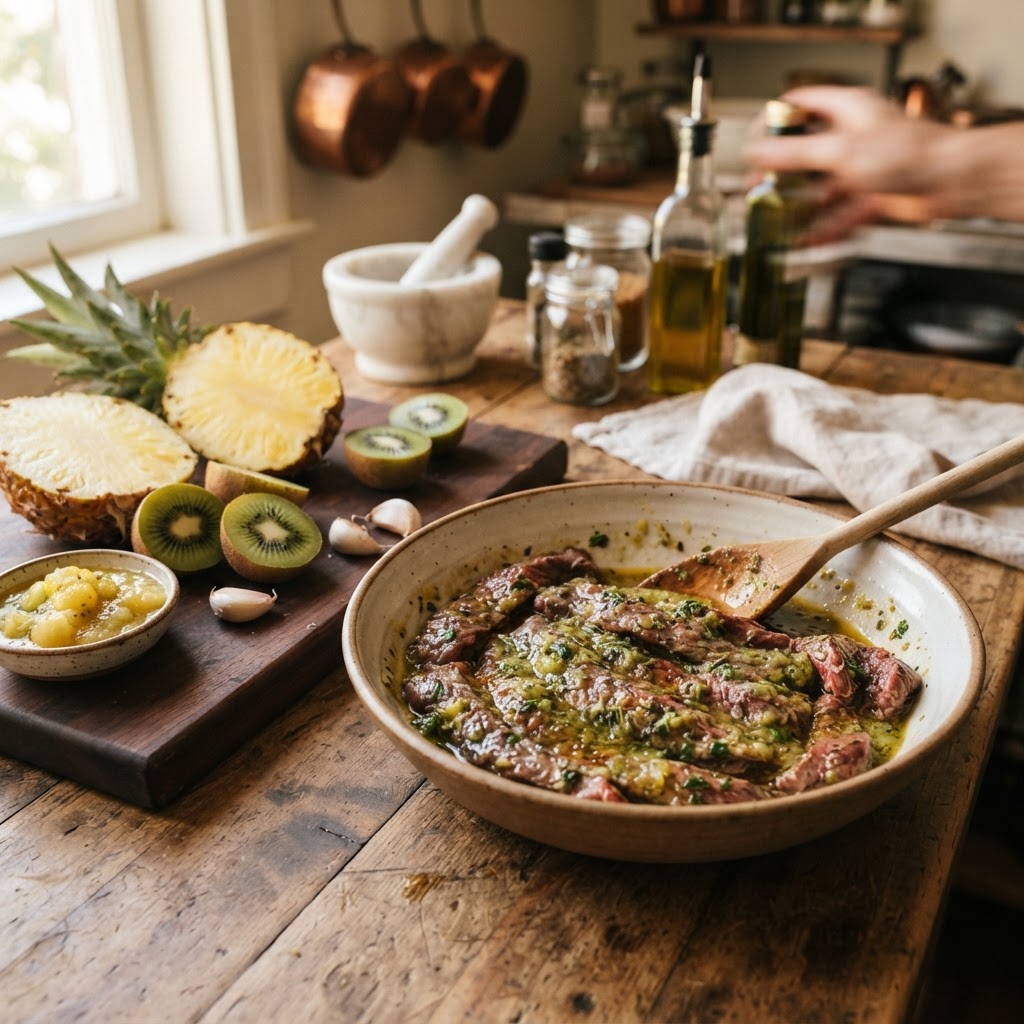
The Home Cook’s Guide to Enzymatic Tenderization: Mastering Fruit-Based Protease Ratios for Perfectly Succulent Meats
Every home cook eventually reaches that point of frustration where the vision of a perfectly tender, melt-in-your-mouth steak is thwarted by the reality of a tough, chewy piece of protein. We spend hours sourcing high-quality cuts and perfecting our searing technique, only to be left chewing indefinitely on fibers that refuse to yield. This is where the culinary arts intersect with the fascinating world of biochemistry, a place where professional kitchens have lived for decades while home cooks often rely on luck or expensive equipment. Enzymatic tenderization is not just a scientific curiosity; it is a reliable, accessible, and powerful tool that transforms the toughest cuts of meat into culinary gold. By understanding the interaction between natural fruit proteases and muscle fibers, you gain total control over the texture of every dish you serve.
The secret weapon in this process is the protease, a type of enzyme that specializes in the breakdown of proteins into smaller polypeptides or single amino acids. When we introduce these enzymes—found naturally in specific tropical fruits like pineapple, papaya, and kiwi—to the structural proteins of meat, we are essentially outsourcing the work of chewing. Collagen and myofibrillar proteins, which are often the culprits behind tough meat, begin to degrade when exposed to these biological catalysts. While many home cooks have heard of using fruit juices to tenderize, few understand the nuance required to prevent the meat from turning into a mushy, unpalatable mess. Mastering these ratios is the difference between a succulent, buttery bite and a texture that feels like pulverized wet sand.
In this guide, we will explore the delicate balance of proteolytic activity, the specific fruits you need to keep in your pantry, and the strict timelines that prevent your dinner from falling apart before it hits the pan. We will move beyond the myths and delve into the technical reality of how bromelain, papain, and actinidin function within the muscle matrix. By adopting a professional approach to these enzymes, you can elevate affordable cuts like flank steak, chuck, or skirt steak to a level of tenderness that rivals the most expensive wagyu. Prepare to change the way you think about marinating and prep, ensuring that the only thing left for your guests to complain about is that they didn’t get a larger portion.
The Chemistry of Proteolytic Tenderization
At the heart of the tenderization process lies the protease enzyme, a biological molecule that functions like microscopic scissors. When you apply fruit-based enzymes to meat, you are initiating a controlled breakdown of the connective tissue, primarily collagen, and the structural proteins that give meat its firm integrity. These enzymes do not differentiate between the tough connective tissue and the delicate muscle fibers, which is why the "timing" aspect of this technique is non-negotiable. If you let the process run too long, the enzymes will continue to work until the structural integrity of the meat is entirely compromised, resulting in a protein that lacks texture entirely.
Understanding the specific enzymes involved is crucial for any chef aiming for consistency. Bromelain, found abundantly in fresh pineapple, is arguably the most aggressive of the group. It is remarkably efficient at breaking down collagen, making it the perfect candidate for very tough cuts of beef. Conversely, papain, sourced from the latex of the papaya, is slightly more subtle, while actinidin from kiwi offers the most delicate action, making it ideal for lighter meats like poultry or veal. Each of these enzymes operates optimally within specific temperature ranges, though they are most active during the room-temperature or refrigerator-stage marinating process.
"Enzymatic tenderization is not about force; it is about precision. When you respect the enzyme, the enzyme rewards your patience with a texture that is impossibly soft and consistently delicious."
The Role of pH and Temperature
While these enzymes are workhorses, they are also sensitive to their environment. pH levels significantly impact how these enzymes bind to protein chains. For instance, most proteases favor a slightly acidic environment, which is why they work so well in conjunction with wine, vinegar, or citrus-based marinades. However, adding too much acid can lead to a "cooked" surface texture that changes the color and flavor of the meat before it even hits the heat.
Understanding Active Sites
The efficiency of these enzymes is also limited by the number of active sites available on the protein molecules. When you use a marinade, you are essentially saturating the surface of the meat, allowing the enzymes to begin their work. This is why thin-sliced meats react much faster than thick, whole-muscle roasts. The total surface area dictates the speed of the enzymatic reaction, which is a key variable to track during your prep.
Selecting the Right Fruit for Your Cut
The choice of fruit is not merely a matter of flavor profile; it is a tactical decision based on the toughness of the cut you are working with. If you are preparing a flank steak, you need the heavy lifting provided by pineapple. If you are working with a more delicate protein, you want the mildest enzyme available to ensure you don't ruin the structural integrity of the meat. Matching the power of the enzyme to the density of the connective tissue is the first step toward mastery.
Pineapple: The Heavy Lifter
Pineapple is the powerhouse of the enzymatic world. Containing bromelain, it is capable of breaking down even the most stubborn connective tissues in just a few minutes. However, because it is so potent, you must be incredibly careful with your timing. If you leave pineapple-based marinade on meat for more than 30 to 60 minutes, you risk turning the exterior into a mushy, paste-like substance that loses all its ability to brown or sear properly.
Papaya: The Balanced Professional
Papaya is widely considered the "chef’s choice" for a balanced tenderization. Its primary enzyme, papain, is effective without being overly aggressive. It is easier to control than bromelain, making it a safer bet for home cooks who are just starting to experiment with these techniques. Papaya is also fantastic because its flavor is relatively neutral, allowing it to meld well with savory marinade ingredients like soy sauce, garlic, and ginger.
Kiwi: The Gentle Restorer
For those dealing with delicate cuts or those who are very prone to over-tenderizing, kiwi is your best friend. Actinidin is far slower to act than its counterparts, providing a window of safety that is much wider than pineapple or papaya. This makes it an excellent choice for a longer, overnight marinade where you want a subtle improvement in texture without risking a complete breakdown of the protein.
The Science of Ratios and Timing
A common mistake made by home cooks is the "more is better" fallacy. They assume that doubling the amount of fruit juice in the marinade will result in a better steak, but this leads to rapid over-tenderization. You are not looking to saturate the meat in acid or enzymes; you are looking to introduce enough of the catalyst to initiate a gentle degradation. A good rule of thumb is to use the fruit as a percentage of your total marinade, not as the base itself.
The 10 Percent Rule
For most fruit-based marinades, you should aim for the fruit juice or purée to make up roughly 10 to 15 percent of the total volume of your marinade. If you are using a whole fruit purée, start with even less. For example, in a cup of marinade composed of soy sauce, oil, and aromatics, you only need about two tablespoons of crushed pineapple to achieve a significant tenderizing effect without compromising the texture of the meat.
Precision Timing Charts
To avoid the dreaded "mush effect," follow these suggested timing intervals based on the protein and the enzyme used. Always remember to perform a spot test if you are trying a new fruit or an unfamiliar cut of meat.
"The clock is the most important ingredient in your kitchen. When dealing with proteolytic enzymes, it is better to under-tenderize and rely on a proper resting period than to over-tenderize and be left with a structural disaster."
Proper Marination Technique
How you apply your marinade is just as important as the ingredients within it. Many cooks simply toss meat in a bowl and walk away, but this does not ensure an even application of the enzymes. To get the best results, you need to ensure the marinade is in contact with the protein consistently. Air pockets or uneven coating will result in sections of the meat that are perfectly tender next to sections that remain tough.
The Vacuum-Seal Advantage
If you have a vacuum sealer, use it. By removing the air from the bag, you force the marinade into the pores of the meat, drastically increasing the efficiency of the enzymatic breakdown. This allows you to use even less of the fruit enzyme, effectively creating a more consistent texture throughout the entire thickness of the meat. Even if you don't have a vacuum sealer, using a heavy-duty freezer bag and removing as much air as possible by hand will provide significantly better results than a shallow dish.
Temperature Control
Keep your meat refrigerated throughout the entire marinating process. While enzymes are active at room temperature, the increased speed at which they work at higher temperatures makes it nearly impossible to control the outcome. By keeping the meat at 38°F to 40°F, you slow down the enzymes just enough to give yourself a wider margin for error, resulting in a more predictable and succulent finish.
Dealing with the Heat: Post-Marination Searing
Once your meat has finished its enzymatic bath, the preparation for the pan becomes paramount. You have effectively changed the structure of the exterior of the meat, making it slightly more prone to burning or losing its shape. The goal now is to lock in the flavor and develop a Maillard reaction (the browning process) without overcooking the delicate protein structure you have worked so hard to create.
The Rinse-and-Dry Protocol
This is the most critical step that home cooks often skip. Before the meat hits the heat, you must remove the excess marinade. If you leave the fruit-based enzymes on the surface, they will continue to work while the meat is cooking, and the natural sugars in the fruit will cause the meat to char or burn prematurely.
High-Heat Searing
Because the structural proteins have already been partially degraded, the meat will cook faster than it would if it hadn't been treated. Use a high-heat method, such as a cast-iron skillet or a blazing-hot grill. You want to achieve that dark, savory crust as quickly as possible. Don't be afraid of the high heat; it is your best friend when ensuring the interior remains medium-rare or medium, keeping the center succulent while the outside develops a robust flavor profile.
Troubleshooting Common Issues
Even with the best planning, things can go wrong. Perhaps you got distracted by a phone call and left the steak in the pineapple marinade for an hour too long. Or perhaps the meat didn't tenderize as much as you had hoped. These are common hurdles, and they are easily navigated once you understand the underlying chemistry of the enzymes involved.
What if it turns to mush?
If you have left the meat for too long and the texture has become pasty, don't throw it out. While you may have ruined a high-end steak, you can salvage the protein by repurposing it. Because the texture is now softer, this meat is perfect for stir-frys, tacos, or enchiladas, where the texture of the individual fibers is less critical. Use high heat to brown the exterior quickly, and incorporate it into a sauce that can mask the texture change.
What if it’s still tough?
If you find that the meat is still tougher than you would like after the recommended time, it is likely that the enzyme concentration was too low or the cut was simply too dense for the time allotted. Rather than just adding more fruit and risking a total breakdown, try a secondary mechanical tenderization. A quick, cross-hatch scoring of the surface of the meat will allow heat to penetrate more evenly and provide a physical way to break down those tougher fibers before the next cooking session.
The Myth of Frozen Enzymes
Some cooks believe that freezing their marinade will stop the enzymes completely. This is a partial truth. Freezing does slow down the enzymatic activity significantly, but it does not destroy the enzymes entirely. If you plan to freeze your marinated meat, keep the marination time extremely short, or, ideally, vacuum seal the meat and keep it separate from the enzymes until the day you plan to cook it.
"The goal of any technique is to provide you with the tools to express your culinary creativity. Once you master the ratio, you aren't just following a recipe; you are manipulating nature to produce the perfect bite."
Final Thoughts
Mastering the art of enzymatic tenderization is about more than just softening a tough cut of meat; it is about reclaiming the potential of affordable ingredients. When you stop relying on high-cost steaks and start understanding how to manipulate the proteins in a chuck roast or a bottom round, you change the way you shop and the way you cook. You begin to see the possibilities in every ingredient, recognizing that with a little bit of science and the right timing, every meal has the potential to be a restaurant-quality experience.
The process of trial and error is the hallmark of any great cook. Do not be discouraged if your first attempts at using pineapple or papaya result in a texture that isn't quite right. Keep a kitchen journal, note the times, the cuts of meat, and the results. Over time, you will develop an intuitive sense of how these enzymes behave in your kitchen, allowing you to bypass the guesswork entirely.
Remember the core tenets we have discussed: the 10 percent rule, the importance of proper rinsing and drying, and the absolute necessity of temperature control. These are the pillars of the "Blame The Chef" approach to culinary science—practical, effective, and focused on delivering the best results for your dinner table. As you continue your journey, keep experimenting, keep tasting, and most importantly, keep cooking with confidence. Your perfectly succulent, tender meat is just one enzyme-controlled marinade away. When the results are this consistent, you'll find that your home-cooked meals are better than what you could find at most local steakhouses. That, after all, is the mark of a true home chef.
Consistency is a practice, and like any technique, enzymatic tenderization improves with every repetition. If you have any questions or experiences to share, I would love to hear how these ratios worked for your specific cuts of meat. Join our community in the comments below, and share your favorite combinations of tropical fruits and aromatics. There is always more to learn in the world of culinary science, and I am thrilled to have you here on this journey with me. Until next time, keep your knives sharp and your curiosity sharper. Happy cooking!
***
Bonus Chef Tip: Balancing Flavor Profiles
One final piece of advice before you head into the kitchen: always consider the flavor profile of the fruit you choose. While the enzymes provide the texture, the fruit provides an aromatic undertone.
By strategically selecting your fruit, you aren't just managing texture; you are building a cohesive flavor profile that enhances the meat rather than distracting from it. Think of the fruit as a foundation, not just a tool. If you are making a beef bulgogi, the pineapple acts as both the tenderizer and a natural sweetener, perfectly complementing the traditional aromatics of ginger, sesame oil, and garlic. If you are doing a Mediterranean-style roast, the papaya's relative neutrality allows the olive oil, lemon zest, and fresh herbs to remain the star of the show.
Always taste your marinade before adding the meat. If it tastes heavily of the fruit, you might want to dilute it slightly with your base ingredients. The goal is a subtle harmony, not a clashing of flavors. As you develop your palate, you will find that these fruit-based tenderizers become an essential part of your culinary arsenal, sitting right next to your salt and pepper as a fundamental component of your kitchen workflow. Enjoy the process of refinement, and remember that the best chef in the room is the one who understands why the food tastes the way it does.
Finally, consider the environmental impact of your choices. Using the entire fruit—including the skins and cores of pineapple or papaya—can actually lead to more potent enzymatic results. The cores, in particular, are often where the highest concentration of bromelain is found in pineapples. Instead of discarding them, pulse them in a blender to create your tenderizing paste. It’s an efficient, waste-conscious way to get maximum value from your produce, proving that being a great chef is as much about respect for the ingredients as it is about the final result. Keep these tips in mind, and you will be well on your way to mastering the succulent, tender meat you have always dreamed of creating at home.
Stay tuned for our next installment, where we will dive into the nuances of dry-brining and how it pairs with enzymatic treatment for a two-stage approach to total protein perfection. We have only scratched the surface of how to manipulate texture, and I cannot wait to explore the rest with you. Keep experimenting and, as always, keep the fire hot and the ingredients fresh. This is the "Blame The Chef" promise: no more tough meat, no more frustration—just perfect results, every single time.
Get the Next Recipe
Weekly recipes, techniques, and gear picks — straight to your inbox.
