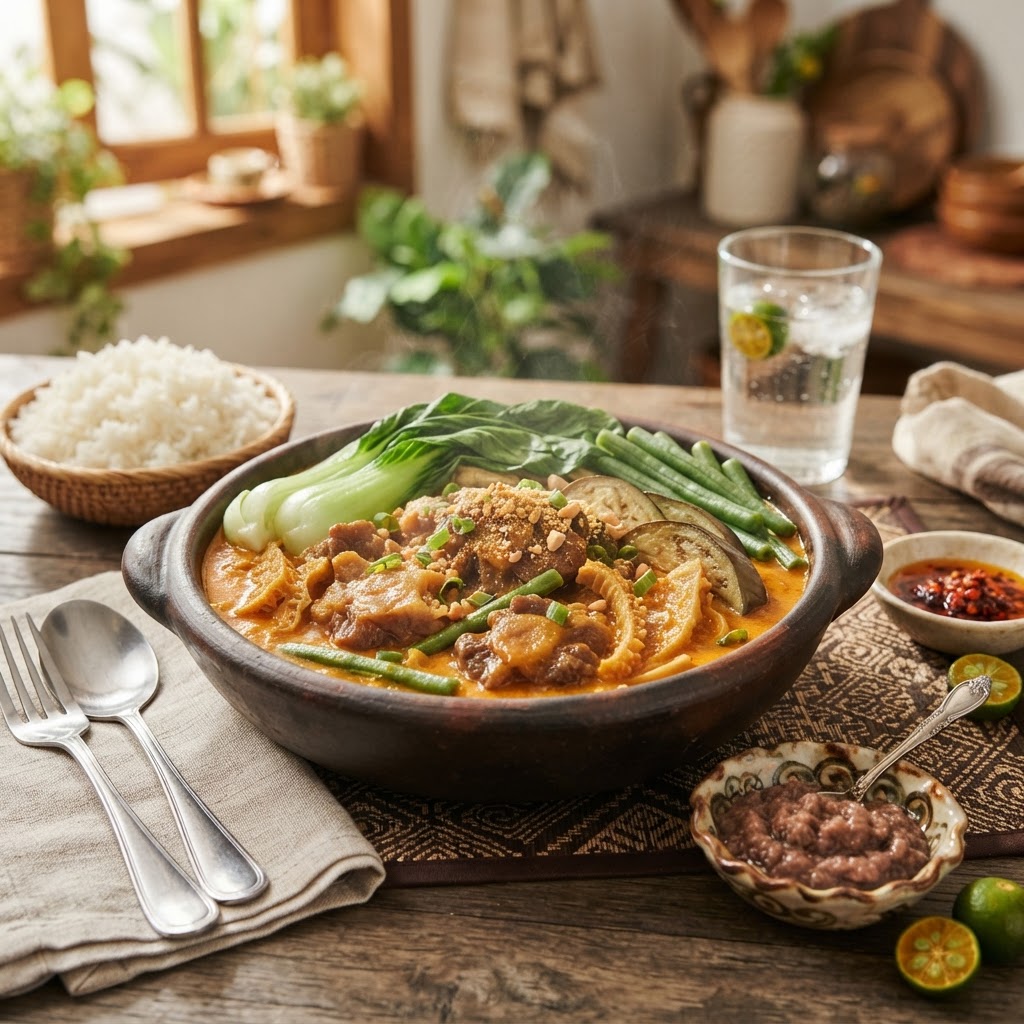
The Home Cook’s Guide to Filipino Kare-Kare: Mastering Peanut-Annatto Sauce Ratios for Authentic Oxtail Stew
The art of Filipino cooking is a delicate balance of patience, tradition, and the courage to experiment with deep, complex flavor profiles that tell the story of an archipelago. Among the pantheon of iconic dishes, Kare-Kare stands as a monumental achievement of culinary engineering, blending the humble earthiness of peanuts with the vibrant, sunset-hued essence of annatto. It is more than just a stew; it is a labor of love that requires a home cook to understand how to layer textures and aromas. When done correctly, the meat should yield to the slightest pressure of a fork, while the sauce clings to the spoon with the viscosity of liquid velvet. Many shy away from this dish due to its reputation for difficulty, but once you master the foundational ratios, it becomes a rite of passage for every aspiring chef in the home kitchen.
To truly understand Kare-Kare, one must appreciate the marriage of the bagoong alamang (fermented shrimp paste) and the creamy, nutty base of the stew. This dish is inherently designed to be incomplete without its salty, pungent counterpart, creating a perfect binary of sweet, nutty, and savory-salty notes. Achieving this harmony is where the magic happens, specifically in the transformation of toasted rice flour and peanut butter—or freshly ground peanuts—into a thickening agent that never turns grainy. We are moving beyond the instant mixes that populate supermarket shelves and returning to the roots of the recipe, where the quality of your stock and the intensity of your spice infusion dictate the final result. Prepare yourself for a journey through the pantry, because today we are stripping back the layers of this Filipino classic.
As we dive into the technicalities, remember that Kare-Kare is a dish that thrives on the quality of its components. Whether you are choosing the fattiest cut of oxtail for a gelatinous mouthfeel or selecting the crispest local long beans, each ingredient plays a pivotal role in the structural integrity of the dish. We will discuss the precise calibration of heat when handling annatto seeds, the importance of long-term braising for connective tissue breakdown, and the subtle art of color management. Let us banish the fear of the "failed sauce" and embrace the confidence that comes with mastering one of the world's most misunderstood, yet beloved, stews. This is your comprehensive roadmap to a restaurant-quality meal served from your own hearth.
The Foundation of Flavor: Mastering the Oxtail Braise
The soul of any authentic Kare-Kare lies in the broth produced from the primary protein. While some modern variations use tripe, pork hock, or even beef shank, the gold standard remains the oxtail. The high collagen content of the oxtail is non-negotiable if you are aiming for that authentic, lip-smacking finish that characterizes a high-end stew. You must commit to a low-and-slow approach, allowing the connective tissue to dissolve into gelatin, which provides the body of the sauce before you even introduce the peanut thickener.
Selecting and Preparing Your Meat
When buying oxtail, look for pieces with a good ratio of lean muscle to white, opaque fat. Avoid pieces that are excessively bloody or grey, as these will lead to a cloudy, metallic-tasting stock. Before you begin the braise, it is crucial to blanch the oxtail. Bring a large pot of water to a rolling boil, drop in your pieces, and boil for ten minutes until the scum rises to the surface. Drain, rinse each piece under cold running water, and scrub the bone surface to remove any lingering impurities. This step is the professional secret to a crystal-clear base.
The Braising Process
Once cleaned, return the oxtail to a heavy-bottomed Dutch oven or a pressure cooker. Cover with fresh, filtered water, add a bouquet garni of peppercorns, onions, and garlic, and simmer until the meat is fork-tender. If using a traditional pot, this will take approximately three to four hours. Using a pressure cooker reduces this to about 45 to 50 minutes. The resulting stock should be rich, opaque, and deeply savory. Do not discard this liquid; it is the canvas upon which your peanut sauce will be painted.
"The true test of a great Kare-Kare is not the thickness of the sauce, but the tenderness of the oxtail. If the meat does not surrender to the spoon without a fight, the dish is still in progress."
The Annatto Infusion: Capturing the Golden Hue
The visual appeal of Kare-Kare is dictated by annatto (atsuete), a seed derived from the achiote tree. It provides a vibrant, earthy-red color that is signature to the dish. Many home cooks struggle with bitterness when using annatto, which usually stems from over-toasting the seeds or using too much of the powder form. The goal is to extract the pigment and the delicate, slightly peppery flavor without scorching the material.
Techniques for Oil Extraction
To prepare your annatto oil, heat a half-cup of neutral-tasting vegetable oil over medium-low heat. Add two tablespoons of annatto seeds and gently stir for three to five minutes. You will know it is ready when the oil reaches the color of a vibrant sunset and the seeds have released their essence. Remove the pan from the heat immediately. If you leave the seeds in the hot oil, they will continue to darken and eventually turn bitter, which will ruin the nuance of the peanut base. Strain the oil into a glass jar and discard the seeds.
The Role of Annatto in the Sauce
This oil is not just for color; it is the flavor foundation. By folding this into your peanut base, you create a complex interplay of flavors that cuts through the richness of the peanut butter. Think of the annatto oil as the light that illuminates the shadows of the nutty, heavy sauce. It bridges the gap between the animal fats of the oxtail and the plant-based density of the thickening agents.
Balancing the Thickener: Peanuts and Rice Flour
The "Kare" in Kare-Kare implies a curry-like thickness, though it is distinctly Filipino in execution. The primary thickening agents are toasted rice flour and peanut butter. Getting the ratio wrong is the most common reason for a gritty or overly chalky sauce. The secret is to toast your rice flour until it turns a light, golden brown, which unlocks a nutty aroma and removes the raw starch flavor.
Achieving the Perfect Viscosity
To achieve the ideal consistency, use a mixture of high-quality, unsweetened peanut butter and ground toasted peanuts. The ground peanuts add texture, while the peanut butter provides the emulsification. If your sauce is too thin, it will slide off the meat; if it is too thick, it will feel like paste. Aim for a consistency that coats the back of a wooden spoon—the nappe stage—so that the flavors cling to every surface of the oxtail and the accompanying vegetables.
Pro-Tips for Emulsification
* Always whisk your rice flour into cold stock or water before adding it to the boiling stew to prevent lumps.
* Temper your peanut butter by adding a ladle of hot broth to it in a separate bowl before incorporating it into the main pot.
* Monitor the heat closely during the final thickening stage; peanut butter can burn at the bottom of the pot if the heat is too high.
"A sauce is an emulsion of intentions. When you balance the rice flour with the oils, you are creating a matrix of flavor that carries the identity of the dish to the palate."
Preparing the Vegetables: Timing is Everything
The vegetables in Kare-Kare—typically banana blossoms (puso ng saging), eggplant, string beans (sitaw), and bok choy (pechay)—provide a necessary freshness and snap that counters the intensity of the sauce. The biggest mistake home cooks make is overcooking these vegetables, turning them into a mushy landscape within the pot. Each vegetable has a different rate of decomposition and should be added accordingly.
Vegetable Hierarchy
Blanching vs. Stewing
Alternatively, for a professional presentation, consider blanching the vegetables separately in boiling salted water and placing them on top of the stew just before serving. This ensures that every vegetable is cooked to its optimal texture and maintains a bright, inviting color. This technique also prevents the vegetables from soaking up too much of the sauce, keeping the stew's profile clean and focused.
The Essential Accompaniment: Bagoong Alamang
No discussion of Kare-Kare is complete without addressing bagoong alamang. This fermented krill paste is the "salt" of the dish. It provides the umami bomb necessary to balance the sweet, creamy peanut profile. Serving this dish without bagoong is, by culinary standards, an unfinished task. However, bagoong can be aggressive, so knowing how to temper it is key.
Sautéing the Bagoong
Do not serve your bagoong straight from the jar. Take the time to sauté it with minced garlic, shallots, and a touch of brown sugar. This mellows the harsh, salty edges and transforms it into a condiment that complements the stew rather than overpowering it. If you want a bit of heat, add thinly sliced siling labuyo (bird's eye chili) into the sauté. The resulting mixture should be dark, aromatic, and deeply savory.
Serving Ratios
When plating, provide a side dollop of the sautéed bagoong for each diner. This allows the guest to control the ratio of saltiness they desire per bite. It is a fundamental rule of Filipino dining that the diner becomes a participant in the seasoning of the dish. By allowing this level of customization, you respect the complexity of the sauce while empowering the guest to find their own perfect bite.
Troubleshooting the Common Kitchen Pitfalls
Every home cook faces the occasional disaster. Perhaps the sauce broke, or the meat turned out stringy. Let’s look at how to recover your Kare-Kare should things go sideways. If your sauce appears oily and separated, this means the emulsion of the peanut butter and stock has failed. You can rectify this by adding a small amount of cornstarch slurry and whisking vigorously over low heat until the emulsion re-stabilizes.
Addressing Salt and Spice
If you find the dish is too salty, do not panic. Do not add water, as this will dilute the body of the sauce. Instead, add a splash of coconut milk or a teaspoon of brown sugar. If you find the flavor too one-dimensional or "flat," a drop of fish sauce (patis) or a squeeze of calamansi can brighten the profile significantly. These small adjustments are the hallmarks of a chef who tastes as they go.
Storage and Reheating
Kare-Kare is a dish that arguably tastes better the next day, as the proteins and aromatics continue to marry in the refrigerator. When reheating, do so on the stovetop over low heat. Add a splash of stock or water if the sauce has thickened too much overnight. Avoid the microwave if possible, as it tends to cook the proteins unevenly and can cause the oil in the peanut sauce to separate violently.
Final Thoughts
Mastering Kare-Kare is a testament to your growth as a cook. It demands attention to detail, a respect for the ingredients, and a patience that is rarely required in modern, quick-fire cooking. When you gather your family around a table to serve this golden, rich stew, you are sharing more than just a meal; you are sharing a piece of history. The process, from the initial blanching of the oxtail to the final sauté of the bagoong, is a narrative of care.
Never feel discouraged if your first attempt is not "perfect." The beauty of this dish is that it is a dialogue between the chef and the pot. The thickness, the sweetness, and the intensity of the annatto are all variables that you can manipulate to suit your personal palate. As you continue to cook, you will develop an intuition for the sauce, a sense of when the flavors have reached that elusive, harmonious peak.
Finally, remember that the "Blame The Chef" philosophy is built on the idea that every mistake is an opportunity for learning. If your sauce is too thin, you learn about reduction. If your vegetables are soft, you learn about timing. Take these lessons, keep your kitchen organized, and above all, enjoy the process of turning simple ingredients into a masterpiece. Now, grab your apron, heat up that Dutch oven, and start your Kare-Kare journey with the confidence that you are prepared to create something truly exceptional. Your table is waiting, and the reward for your hard work will be a dish that brings comfort and joy to everyone who takes a bite. Happy cooking, and may your sauce always be perfectly emulsified.

Get the Next Recipe
Weekly recipes, techniques, and gear picks — straight to your inbox.
