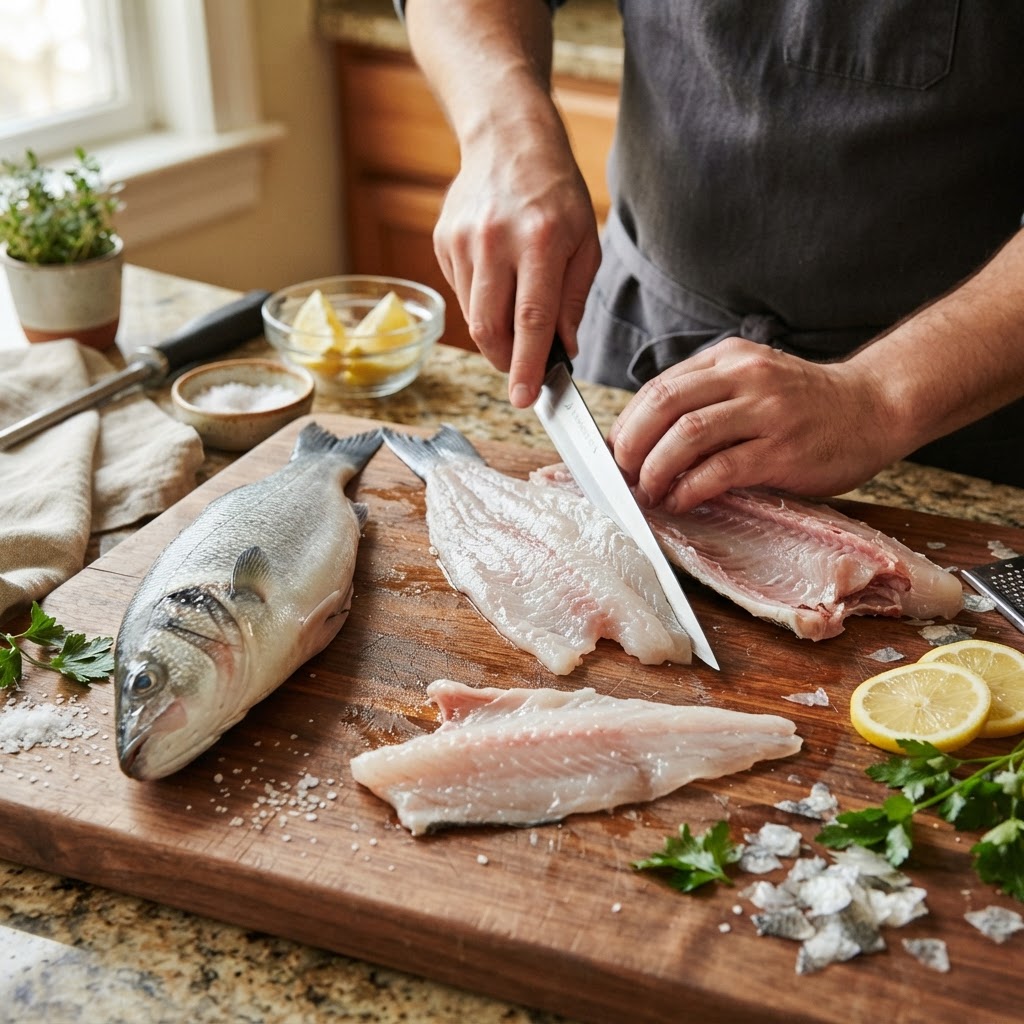
The Home Cook’s Guide to Fish Butchery: How to Clean, Fillet, and Portion Whole Fish at Home
There is an undeniable magic to walking into a high-end fish market, the air crisp and briny, rows of whole fish resting on beds of crushed ice like shimmering silver currency. For the home cook, however, this experience is often followed by a moment of hesitation: how do you actually turn that beautiful, intact creature into the pristine fillets you see in a professional kitchen? There is a prevailing myth that fish butchery is a dark art reserved only for those who have spent years behind a line under the tutelage of a stern mentor. The truth is far more liberating, as mastering the basic anatomy of a fish is one of the most rewarding skills you can add to your culinary repertoire. By learning to break down your own fish, you not only ensure the absolute peak of freshness but also unlock a level of kitchen autonomy that transforms your relationship with seafood forever.
Beyond the sheer satisfaction of the craft, there is a profound economic and environmental argument for purchasing whole fish. When you buy pre-cut fillets, you are often paying a premium for the convenience of someone else’s labor, and you are rarely getting the freshest product available. A whole fish, protected by its skin and scales, retains its moisture and integrity far longer than a piece of meat that has been exposed to the air. Furthermore, the scraps—the heads, the bones, and the trimmings—are gold mines for those who understand the value of a homemade fumet or a rich, gelatinous fish stock. When you take control of the butchery process, you minimize waste, maximize yield, and gain access to high-quality ingredients that simply aren’t sold in the retail case.
In this guide, we will peel back the curtain on the world of seafood fabrication, breaking down the process into accessible, repeatable steps that anyone can perform in their home kitchen. We aren't looking for perfection on day one; we are looking for an understanding of the structure, the grain, and the technique that allows you to handle any species with confidence. Whether you are dealing with a sturdy round fish like snapper or a delicate flat fish like sole, the principles of leverage and blade control remain the same. Prepare to get your hands a little messy, embrace the process, and remember: if you slip, it is just dinner, and if you succeed, you are suddenly the most capable cook at your own table.
The Essential Toolkit for Home Butchery
Before you even think about touching a fish, you must ensure your equipment is up to the task. Many home cooks struggle with butchery not because of their lack of skill, but because they are fighting against dull or improper tools. Your most important instrument is a filleting knife, which should be thin, flexible, and razor-sharp. Unlike a heavy chef’s knife, a filleting knife is designed to glide along the skeleton of the fish, allowing you to follow the natural contours of the spine without tearing the flesh. The flexibility is non-negotiable; you need a blade that gives slightly as you move over the rib cage to ensure you aren't leaving precious meat behind on the bones.
In addition to your knife, you will need a sturdy cutting board and, if possible, a pair of high-quality fish tweezers. While you can use needle-nose pliers from the garage in a pinch, professional fish tweezers are engineered to grip small pin bones without shredding the delicate muscle fibers. You should also keep a clean, damp kitchen towel nearby at all times to wipe your blade and your hands. A clean workspace is the mark of a pro, and it prevents your knife from sliding on slick surfaces, which is where accidents happen.
Finally, consider the hygiene aspect of your station. Keep your fish chilled throughout the process—a large bowl of ice water is your best friend. If you are butchering a large salmon or a whole snapper, you want to keep the temperature of the flesh below 40°F (4°C) to maintain the texture and safety of the protein. If the fish sits out on a warm counter, the fat begins to soften, and the flesh becomes mushy and difficult to cut cleanly.
Why Sharpness Matters
A dull knife is the most dangerous tool in any kitchen. When your edge is compromised, you have to apply more pressure to get through the skin and connective tissue. That added pressure is exactly what leads to slips and potential injuries. A sharp knife, conversely, requires almost no downward force; it simply separates the flesh as you guide it along. Honing your blade frequently during the butchery process is essential. Keep a honing steel or a fine-grit stone close by to touch up the edge every few minutes.
"The difference between a clumsy tear and a professional cut lies entirely in the tension of your knife and the patience of your hand. Never force the blade through resistance; let the steel do the work, and the fish will yield to you."
Selection and Inspection of the Whole Catch
Walking up to the fish counter can be intimidating, but there are four simple indicators that tell you everything you need to know about the quality of the fish. First, look at the eyes. They should be bright, clear, and slightly bulging. As a fish ages, the eyes become cloudy and sunken, which is a sure sign that the rigor mortis has long since faded and the flesh is beginning to degrade. If the fish looks like it is staring back at you with clarity, it was likely caught recently.
Second, check the gills. They should be a vibrant, deep red. Avoid any fish with brown, grey, or slimy-looking gills, as this indicates oxidation and bacterial growth. Third, smell the fish. Fresh seafood should smell like the ocean—clean, briny, and crisp. It should never have a strong "fishy" odor, which is actually a sign of ammonia release as the proteins break down. If the fish smells like anything other than the sea, walk away. Finally, touch the flesh. It should be firm and elastic. If you press your thumb into the side of the fish and the indentation remains, the structure has already collapsed.
Handling and Storage Tips
Once you have made your purchase, transport the fish in a cooler with plenty of ice. If you aren't going to butcher it immediately, keep it stored in the coldest part of your refrigerator, ideally on a rack over a tray of ice. Leaving a fish sitting in its own juices is a recipe for accelerated decay. Always try to butcher your fish within 24 hours of purchase; the closer you can get to the catch, the more profound the flavor will be.
Mastering the Clean: Scaling and Gutting
The process begins with scaling, a task that many home cooks find messy, but it can be managed with a few simple tricks. Place the fish on your cutting board and use a dedicated fish scaler or the back of a chef’s knife. Start from the tail and work your way toward the head using short, firm strokes. To prevent scales from flying all over your kitchen, you can perform this step inside a clean kitchen sink or even inside a large plastic bag. The scales are most dense near the tail and along the lateral line, so pay extra attention to those areas.
Once the scales are removed, it is time to eviscerate. You will need to make a small incision near the vent (the small opening on the belly near the tail) and run your knife up toward the gills. Be careful not to plunge the knife too deep, as you don't want to rupture the gall bladder or the stomach, which can impart a bitter flavor to the surrounding meat. Once the cavity is opened, pull out the viscera in one clean motion. You will see a small, dark vein running along the spine inside the cavity; this is the kidney line. Use your thumb or the edge of a spoon to scrape this out under cold running water, as it carries a strong metallic flavor that you do not want in your final dish.
The Importance of Rinsing
After gutting, give the entire fish a quick, thorough rinse in ice-cold water. Pat the interior and exterior completely dry with paper towels. Excess moisture is the enemy of a good sear, and it is also the primary environment for bacterial growth. A dry fish is a happy fish, and it makes the filleting process much easier to manage because the fish won't be sliding around on the board.
The Anatomy of the Fillet
Filleting a round fish, such as sea bass, snapper, or trout, follows a specific geometric path. You want to make your first cut just behind the gills, angling the knife toward the head to capture the meat near the collar—this is often the most flavorful part of the fish. Once you have reached the spine, turn your blade so that it is parallel to the bone. Use long, smooth, fluid strokes to glide down the length of the fish. Your goal is to keep the knife pressed firmly against the backbone the entire time. If you can hear the faint scraping of the knife against the bone, you are doing it perfectly.
Repeat this process on the other side. Some people prefer to flip the fish over, while others prefer to approach the second side by simply rotating their body. Whatever is most comfortable for you is the right way, provided the result is clean. Once you have two fillets, you will notice a row of tiny bones running down the center of each, known as the pin bones. These are the bones that connect to the rib cage. You can remove these by gently feeling for them with your fingers and pulling them out with your tweezers, always pulling in the direction the bone grows to avoid tearing the flesh.
Skinning Techniques
If a recipe calls for skinless fillets, the skinning process is the final step. Place the fillet skin-side down on the edge of your cutting board, tail end facing you. Make a small cut between the skin and the flesh at the very tip of the tail. Hold the skin firmly with a dry towel, then angle your blade slightly downward against the skin. Using a gentle sawing motion, move your knife forward as you pull the skin backward. Do not try to rush this; let the knife do the work.
"Patience is the secret ingredient in butchery. If you feel like you are struggling, stop, reset your grip, and breathe. The fish isn't going anywhere, and your technique will improve with every single cut."
Portioning for Perfection
Now that you have your clean, boneless fillets, it is time to portion them for service. Professional chefs usually look for uniform thickness to ensure even cooking. If you are working with a long, thin fillet, you might choose to cut it into larger, square-shaped portions. If the tail end is very thin, fold it under itself to create a uniform thickness, or save those thinner pieces for a ceviche or a fish stew where the cooking time is minimal.
A standard serving size is typically 5 to 7 ounces per person. When portioning, aim for clean, vertical cuts. A single, confident slice is always better than a "sawing" motion, which will result in jagged, uneven edges that look unappealing on the plate. If you are hosting a dinner party, try to keep your portions as identical as possible. This isn't just about aesthetics; it ensures that every person at your table receives a piece of fish that cooks in the exact same amount of time, preventing the disappointment of one overcooked portion while another is still raw.
Using the Scraps
Never discard the carcass! That skeleton, once cleaned of excess blood and rinsed, is the foundation of a world-class fish stock. Simmer it with aromatics like fennel, leek, onion, and a splash of dry white wine for 20 to 30 minutes. Strain it through a fine-mesh sieve, and you have a base for bouillabaisse, risotto, or a delicate sauce that will taste like it came from a Michelin-starred kitchen.
Temperature and Cooking Science
Understanding the temperature at which fish is cooked is the final bridge between the butchery and the plate. Unlike beef or chicken, fish proteins are extremely delicate and prone to becoming dry very quickly. The magic number for most white fish is an internal temperature of 130°F to 135°F (54°C to 57°C). At this temperature, the proteins have coagulated enough to be opaque and flaky, but they haven't lost the moisture that keeps the fish succulent.
If you are searing, the pan should be at a medium-high heat with a high-smoke-point oil like grapeseed or avocado oil. Lay the fish into the pan away from you to prevent splashing. Resist the urge to poke it or move it. Let the Maillard reaction do its work. You will know it is ready to flip when the edges start to turn opaque and the fillet releases easily from the pan. If it’s sticking, leave it alone for another thirty seconds; the fish will tell you when it is ready to be turned.
The Resting Period
Much like a steak, fish benefits from a brief rest. Pulling the fish off the heat when it hits 125°F is often ideal, as the residual heat will carry it to the perfect serving temperature while it rests for 2–3 minutes on a warm plate. This allows the juices to redistribute throughout the fibers, resulting in a much more tender and flavorful bite.
Final Thoughts
The journey from a whole fish on ice to a perfectly plated, home-cooked meal is one of the most satisfying transformations in the culinary world. It demands a level of focus and respect for the ingredient that elevates the act of cooking from a chore to a craft. As you become more comfortable with the knife, you will find that the "fear" of the whole fish evaporates, replaced by the excitement of discovering what each unique species has to offer. You are no longer just a consumer; you are a practitioner of a trade that has fed humanity for millennia.
Remember that every master butcher started by ruining a fillet or two. You might tear the skin, you might leave a bit too much meat on the bones, or you might find a pin bone that you missed during the inspection. These are not failures; they are the tuition you pay for mastery. Take the time to practice, keep your tools sharp, and always keep your work area cold and clean. The more you engage with the process, the more you will appreciate the subtle textures and flavors that are lost in the mass-produced, pre-packaged seafood found in most grocery stores.
As you refine your skills, don’t be afraid to experiment with different varieties of fish. Try a flat fish like flounder, a thick round fish like halibut, or even something more robust like a monkfish or swordfish. Each species has a slightly different structure, and learning those nuances is part of the joy of the kitchen. Eventually, you will reach a point where butchering a fish feels as natural as chopping an onion, and at that moment, the entire ocean becomes your pantry.
Lastly, share the results of your labor. Cooking for others is the ultimate purpose of this craft, and there is nothing quite like the look on a guest's face when they realize the beautiful piece of fish on their plate was cleaned and filleted by your own hands. It adds a narrative to the meal, a story of effort and care that simply cannot be replicated by a quick trip to the fish counter. Keep honing your edge, keep exploring, and keep blaming the chef—because after all, you’re the one running the show now. Enjoy the process, enjoy the fish, and happy cooking.
One final piece of advice: maintain your consistency. If you only butcher fish once every six months, you will struggle to regain your rhythm. Try to incorporate a whole fish into your routine once every few weeks. Whether it is a whole roasted branzino, a batch of grilled mackerel fillets, or a delicate cod, repetition is the architect of muscle memory. Keep your standards high and your blade higher, and you will find that the intimidation of the "fish market" is a thing of the past. You have the tools, you have the technique, and now, you have the confidence to create professional-grade seafood dishes in your own home. Welcome to the ranks of those who know that the best meals aren't bought—they are crafted.
To further your education, look for local seafood markets that offer classes or observe the fishmongers when they are working. Watch how they move, how they position their fingers, and how they use the weight of their body to steady their work. While you are at home, you have the luxury of time, which is something a professional chef in a high-pressure kitchen often lacks. Use that time to be methodical. If you are struggling with a specific cut, slow down. If you need to make three small cuts instead of one long one, do it. The result on the plate is what matters, not how fast you arrived there.
In the end, fish butchery is about honoring the product. By utilizing the bones for stock, the collar for a quick snack, and the fillets for the main event, you are practicing a sustainable and respectful approach to food that is increasingly rare in our modern world. It is a quiet, meditative practice that grounds you in the kitchen. So, the next time you see a beautiful, glassy-eyed sea bass or a hefty, firm-fleshed salmon, don’t look for the pre-cut fillets. Buy the whole fish, pick up your knife, and step into the rewarding challenge of the butchery block. Your kitchen, your guests, and your palate will thank you for it.
The journey doesn't end with the final cut. It continues as you learn how to cure your own gravlax, how to smoke your own trout, and how to properly store the trimmings for a quick fish fumet that can transform a simple pasta dish into a restaurant-quality feast. You have opened the door to a world where you are in control of the quality, the presentation, and the ultimate experience of your seafood. That is the true power of the home cook. Every time you sharpen your blade and approach the board, you are making a choice to elevate your standards and deepen your understanding of what it means to be a chef in your own home.
So, go forth and experiment. Seek out new species, ask your fishmonger about the seasonal catch, and treat each fish as a unique opportunity to practice your technique. The more you do it, the more you will realize that fish butchery is not just about convenience; it is about connection. It is about understanding the life that nourished you and the work that went into bringing it to your kitchen. Treat the process with the gravity it deserves, but never lose the sense of wonder that comes with seeing a professional-level fillet emerge from a whole, raw fish. You are officially ready to take on the fishmonger's mantle, one beautiful, shimmering fillet at a time. Enjoy every moment of the process, and may your knife always be sharp and your fish always be fresh.
As you continue to grow, remember that there is no single "right" way to butcher every fish. While the anatomy remains constant, the way you choose to hold your knife, the angle at which you make your incisions, and the way you maneuver the fish will eventually become your own unique signature. You will develop a style that works for you, based on your physical comfort and your specific kitchen setup. Embrace that evolution. The goal is to reach a state of flow where the butchery becomes an extension of your own intention, a seamless transition from the whole product to the finished plate.
If you find yourself overwhelmed, step back. The fish is just a biological structure—no more, no less. It has bones, it has muscle, and it has skin. It follows the laws of physics, and it will respond to your blade in a predictable manner. The only variable is your own focus. Take a deep breath, clear your counter, and return to the basics. The fundamentals we discussed—proper sharpening, temperature control, and the "less is more" approach to cutting—will see you through any species you decide to tackle. You have all the information you need; now, all that remains is the practice.
Stay tuned to the blog for future entries on specific techniques for flatfish, the nuances of different regional catches, and a deep dive into the world of cured and fermented seafood. We are just scratching the surface of what you can achieve in your home kitchen. Until then, keep your knives sharp and your curiosity sharper. You are becoming a master of your own culinary domain, and the world of fish butchery is now firmly under your belt. Cheers to your next successful butchery session and the incredible meals that will inevitably follow. Don’t hesitate to reach out with questions—after all, that’s exactly what the "Blame The Chef" community is here for. We learn together, we grow together, and we eat very, very well together.
The final piece of advice for the aspiring home butcher is to keep a record. Start a small notebook or a digital file where you note the type of fish, the weight, the yield you achieved, and any challenges you faced during the process. Did the skin tear? Was the flesh softer than you expected? Did you miss any pin bones? Over time, this data will become your most valuable resource. You will start to identify patterns, such as "Snapper usually has a bit more give in the ribs," or "Salmon bellies are easier to skin if I chill them longer." This kind of intentional observation is what separates a casual cook from a true culinary artist.
As you progress, try to branch out into sustainable, lesser-known species. Many home cooks stick to the "Big Three"—salmon, tuna, and cod—but there is an entire world of incredible, under-utilized fish that are often cheaper, more sustainable, and equally delicious. Species like mackerel, porgy, black sea bass, and rockfish are fantastic to work with and offer a wide range of flavors that you simply won't find in the standard supermarket offerings. By learning to butcher these unique fish, you increase your culinary range and support more diverse, healthy fishing practices.
Finally, remember that the "Blame The Chef" philosophy is all about empowerment through knowledge. We aren't here to tell you there is only one way to do things; we are here to provide the framework so you can develop your own expertise. Butchery is a physical skill, and like any other sport or craft, it requires patience and dedication. Be kind to yourself as you learn, celebrate your successes, and don't be afraid to laugh at your mistakes. You are doing something that very few people in the modern world can do, and that is a victory worth celebrating. Now, go grab that fish and let's get to work.
If you ever feel like you've hit a plateau, remember the very first time you looked at a whole fish and felt intimidated. Look at how far you've come. The ability to handle a whole fish is a gateway skill that opens up so many other possibilities in your cooking. It gives you the confidence to tackle a whole roast fish for a dinner party, the skill to craft your own delicate appetizers, and the knowledge to ensure that every single ingredient you serve is of the highest possible quality. You are on the right path, and the culinary world is your oyster—or, perhaps more appropriately, your snapper.
Keep the momentum going. Look for our next post, where we will dive into the specific seasoning profiles and heat-application techniques that work best for the fillets you just butchered. We will cover the subtle differences between pan-searing, poaching, roasting, and steaming, and how to choose the right cooking method based on the fat content and texture of the fish you have on hand. It is an exciting time to be a cook, and you are right at the forefront of it. Don't stop learning, don't stop practicing, and as always, keep the fire burning in your kitchen.
If you have enjoyed this guide, please share it with your fellow home cooks and let us know in the comments which species you plan to tackle first. We love seeing your photos and hearing about your breakthroughs, so don't be a stranger! Whether you’re a total beginner or a seasoned pro, there is always something new to discover when it comes to the art of the fish. We’re in this together, exploring the bounty of the sea and the beauty of the craft. Thank you for joining us on this journey—it is an honor to be a part of your culinary education.
We will continue to provide these detailed, technique-focused guides because we know that when you have the right information, there is no limit to what you can achieve in your kitchen. From the very first cut to the very last bite, you are the architect of your own culinary success. Believe in your ability, trust the process, and enjoy the fruits of your labor. The next fish you buy won't be an intimidating challenge; it will be an invitation to create something spectacular. Happy butchering, and we will see you at the next lesson.
The community here is growing every day, and your questions, tips, and experiences are what make this space so special. Whether you’re sharing a tip on how to handle an exceptionally slippery fish or asking about the best way to sharpen a specific type of fillet knife, you’re helping others build their own confidence. Keep the dialogue open, keep the questions coming, and keep striving for that perfect fillet. We are building something great here, one fish at a time. Thank you for your passion, your curiosity, and your dedication to the craft.
As we wrap up this comprehensive guide, reflect on the simplicity of the act. A knife, a board, a fish, and your hands. It is one of the oldest and most fundamental human activities, a direct connection between the environment and the table. By taking ownership of this process, you are honoring the fish in the most profound way possible—by ensuring that every ounce of its value is recognized and utilized. That is the mark of a true cook, and you should be proud of the skill you have begun to master today.
So, here’s to the home cooks—the ones who aren't afraid to get their hands dirty, the ones who seek out the challenge, and the ones who understand that the real magic of cooking happens when you take control of every step of the process. You are the heartbeat of the culinary world, and it is a privilege to share this journey with you. Let’s keep cooking, keep learning, and keep making sure that the only person to blame for a perfect meal is the chef—you.
One final note: keep those knives sharp, keep your workspace clean, and always, always keep the fish on ice. You are ready. Go forth, butcher with confidence, and make every single piece of fish a masterpiece. The world of seafood is yours to explore, and you have exactly the tools and the knowledge to do it right. Congratulations on taking this step, and we’ll be waiting to hear about your latest kitchen triumph. The next fish is waiting—go make it yours.
In the spirit of continuous improvement, I’ll leave you with this: the best way to learn is to teach. Once you’ve mastered these steps, invite a friend or a family member over and show them how to fillet their first fish. Not only will you solidify your own knowledge by explaining it, but you’ll also be sharing a skill that can change their relationship with cooking for the better. It’s the ultimate culinary pay-it-forward. Good luck, and may your fillets always be clean, your pin bones absent, and your meals absolutely unforgettable.
Lastly, never underestimate the power of a well-prepared meal. When you take the time to butcher your own fish, you are pouring intention into your food. That intention is palpable to anyone you serve. It transforms a meal from a simple necessity into an act of love and care. Keep that perspective, keep your standards high, and most importantly, keep enjoying the process. You’ve got this, and we’re right here with you, every step of the way. Cheers to your future success in the kitchen!
We have covered the basics, the equipment, the selection, the cleaning, the filleting, the portioning, and even the cooking. You now have a complete, end-to-end understanding of how to handle whole fish at home. This is the foundation upon which you will build your future as a home chef. Don’t rush, don’t stress, and above all, have fun with the work. The kitchen is your playground, and the fish is your medium. Now, it’s time to start creating. I can’t wait to hear how it goes.
The journey continues in the next post, where we will explore the specific needs of different fish species and how to tailor your butchery to suit them. From the firm, dense meat of a tuna loin to the delicate, flaky fillets of a fluke, each fish offers a unique set of challenges and rewards. We are just getting started on this adventure. Stay curious, stay hungry, and keep pushing your boundaries. You are a "Blame The Chef" cook now, and there’s nothing you can’t handle.
Final words: consistency is key. Don't look for the quick win; look for the steady, incremental improvement. You will find that after just a few sessions, your hands will move with a confidence you didn't know you had. Trust your instincts, respect your tools, and always keep the fish chilled. You are going to be amazed at how quickly your skills translate into better meals and a more fulfilling kitchen experience. Happy butchering, and we’ll see you soon.
Remember, the fish market is a gold mine of opportunity. Don't let the whole fish intimidate you—it’s just a puzzle waiting to be solved. And you? You’re the best person for the job. Get to it!
Final Thoughts
Mastering the art of fish butchery is not about achieving the perfection of a sushi master on your first attempt; it is about the sustained commitment to understanding your ingredients. When you stop viewing a whole fish as a daunting, mysterious object and start seeing it as a series of anatomical structures that you can manipulate and refine, you have crossed a threshold. You have moved from a cook who relies on the pre-packaged convenience of the modern world to a chef who commands the raw materials of the sea. This autonomy is the ultimate reward, providing you with a sense of accomplishment that simple recipe-following can never replicate.
As you move forward, keep these three pillars of the "Blame The Chef" method in mind: equipment integrity, temperature control, and deliberate, measured technique. When you invest in a quality filleting knife and maintain its edge, you aren't just buying a tool; you are investing in your own safety and the quality of your finished dish. When you keep your fish on ice, you are respecting the biology of the animal and ensuring the most delicious experience possible. And when you slow down to focus on your blade work, you are practicing a form of culinary mindfulness that will inevitably show in the final presentation.
Do not fear the occasional mistake. Whether you lose a bit of flesh to the bone or struggle with a stubborn set of pin bones, recognize these moments for what they are: vital feedback in the learning process. The best chefs in the world are those who have made every possible mistake and learned from each one. Your kitchen is your laboratory, and your butchery board is your workbench. Approach your next project with the same curiosity and respect that you have for the final meal.
Finally, remember why you are doing this. You are doing this because you care about quality, you care about flavor, and you care about the craft of cooking. These are the traits of a true chef. Embrace the mess, enjoy the process, and always be proud of the work you put onto the plate. You have all the tools you need to succeed—now, go make the ocean your own. We look forward to seeing what you create, hearing about your triumphs, and continuing this culinary journey together. Happy butchering, and as always, keep the fire burning!

Get the Next Recipe
Weekly recipes, techniques, and gear picks — straight to your inbox.
