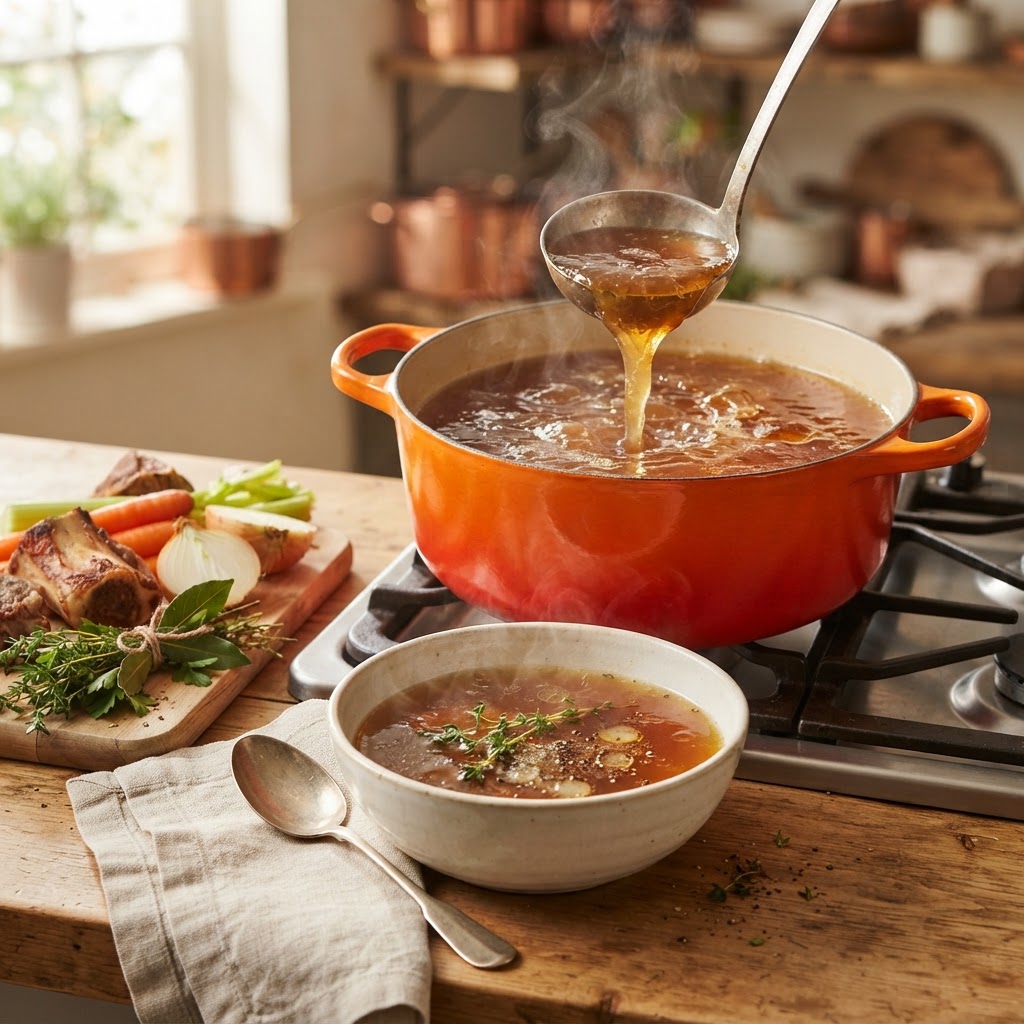
The Home Cook’s Guide to Gelatinous Stocks: Mastering Collagen Extraction for Restaurant-Quality Mouthfeel in Soups and Sauces
There is a profound, almost primal satisfaction found in a pot of stock simmering on the stove, scenting the air with the deep, savory promise of future meals. For many home cooks, stock is an afterthought, something purchased in a carton from a grocery store aisle or ignored entirely until a recipe demands it. However, the secret that professional chefs keep tucked away in their back pockets is that the foundation of any truly transcendent soup, sauce, or braise is the quality of the stock itself. Mastering the art of the gelatinous stock is the singular most effective way to elevate your home cooking from "tastes good" to "restaurant quality," bridging the gap between flat, watery broths and those that possess a luxurious, lip-smacking richness.
The magic behind this transformation is collagen, a structural protein found in the connective tissues, skin, and bones of animals. When heat and moisture are applied over a long period, collagen breaks down into gelatin, which is the holy grail of culinary texture. It provides that viscous, velvety mouthfeel—the way a sauce clings to the back of a spoon or a soup coats the palate—that distinguishes a professional kitchen's output from the average home meal. Understanding how to extract this substance is not a matter of expensive equipment or top-tier culinary school credentials, but rather a grasp of chemistry, patience, and the right selection of raw materials.
In this guide, we will dismantle the mystery surrounding stock-making and transform your approach to kitchen basics. We will explore the specific types of bones that yield the highest concentration of collagen, the precise temperatures required for the denaturation process, and the subtle techniques that keep your stock clear, clean, and flavor-forward. By the end of this journey, you will no longer view stock as a chore, but as an essential ritual of the craft. Whether you are a beginner looking to understand the fundamentals or an experienced cook aiming to refine your technique, this is the ultimate roadmap to achieving that elusive, silky body in your liquid gold.
The Science of Collagen and the Art of Extraction
At its core, a gelatinous stock is a delicate balancing act between heat and time. Collagen is a triple-helix protein that acts as the "glue" in animal bodies, holding muscles to bones. When we apply heat to these connective tissues in the presence of water, we initiate a process called hydrolysis. If the temperature is too high, the protein structures shatter, but if it is held in that "sweet spot" just below a rolling boil, the collagen slowly unspools and dissolves into the water. This is why you must avoid the frantic, roiling boil that plagues amateur stocks; high heat emulsifies fats into the broth, resulting in a cloudy, greasy liquid that lacks the pure, clean intensity of a well-crafted gelatinous base.
To maximize extraction, you must select bones that are naturally high in connective tissue. While marrow bones provide richness and flavor, they are not the primary source of gelatin. For that, you need the "ugly" bits: chicken feet, veal knuckles, pork trotters, and oxtail. These items are densely packed with collagen. A good rule of thumb is to ensure at least 25% of your total bone weight comes from these high-collagen sources. When you combine these with more standard roasted meaty bones, you achieve a stock that is both deeply savory and structurally thick enough to set into a solid jelly once it reaches refrigerator temperatures.
Temperature management is the secret weapon here. You want to maintain a gentle, "smiling" simmer—the surface of the liquid should barely tremble. If you can measure the internal temperature of your pot, aim for the 180°F to 195°F range. This allows for the steady, efficient conversion of collagen into gelatin without the turbulence that leads to impurities. Once you have reached this consistency, you are well on your way to a professional-grade product that will form the backbone of everything from classic French demi-glace to simple vegetable soups that feel substantial and nourishing.
"A stock without body is like a painting without pigment; it may show you the shape of the flavor, but it will never truly captivate the soul of the dish."
Understanding the Ratio of Bones to Liquid
A common mistake made by home cooks is using too much water. A 1:1 ratio of weight (bones to water) is the professional standard for a high-quality stock. If you fill your pot to the brim with water, you are essentially diluting the potential gelatin concentration. You want the bones to be just barely submerged. As the water evaporates during the long simmer, you are not losing flavor; you are concentrating it, which is the exact opposite of what happens when you use too much liquid from the start.
The Role of Blanching and Roasting
Before the long simmer begins, you must address the issue of clarity. Blanching bones in boiling water for ten minutes, then rinsing them thoroughly, removes the coagulated proteins and blood that cause a murky stock. Following this with a hard roast in the oven—until the bones reach a deep mahogany color—adds a layer of complexity and savory depth through the Maillard reaction. These two steps are the bridge between a bland, watery liquid and a rich, amber elixir.
Selecting Your Ingredients for Maximum Flavor
While collagen provides the texture, your aromatic components provide the soul. The classic mirepoix of onions, carrots, and celery is the industry standard for a reason: it creates a neutral, balanced foundation that works across almost every cuisine. However, do not be afraid to customize your aromatic profile depending on the intended final use. For an Asian-inspired broth, swapping celery for ginger and scallion whites is a total game-changer. Regardless of the vegetable selection, the timing of their addition is crucial. Vegetables should only be added during the final two hours of the stock-making process to preserve their bright, crisp flavor notes.
Beyond the mirepoix, the use of herbs and spices can elevate a stock from a simple liquid to a concentrated essence. A standard bouquet garni—thyme, parsley stems, and a bay leaf tied with kitchen twine—is essential for a classic veal or chicken stock. Some chefs prefer to add peppercorns, which provide a subtle, warming heat. However, avoid adding salt during the cooking process. You want your stock to be a blank canvas that you can season to perfection when you eventually use it in a final sauce or soup. Salt reduction is key here; by keeping the stock unsalted, you ensure that as it reduces into a sauce, it doesn't become overly saline or inedible.
Consider the "umami bombs" you might add to your pot to enhance depth. A single dried shiitake mushroom or a tablespoon of tomato paste can add layers of savory intensity without overpowering the delicate gelatinous quality of the stock. These ingredients work in harmony with the collagen to create a robust profile that feels satisfying even without the addition of meat. Remember: the goal is balance. You are not trying to make a soup; you are making a concentrated building block, and it should feel harmonious, not chaotic.
The Importance of Bone Quality
Always source the highest quality bones you can find. Grass-fed, pasture-raised animal bones offer a cleaner flavor and a better fatty acid profile. If you have a local butcher, ask them to save you bags of chicken feet or veal knuckles; they are often inexpensive, yet they are the most valuable items in the kitchen when it comes to creating high-quality stock. Don't be shy about asking for these "waste" products—any butcher worth their salt will appreciate your culinary dedication to using the whole animal.
Managing Fat Content
Fat is the enemy of a clear, stable stock. During the simmer, a thin layer of fat will rise to the surface. It is vital to skim this fat periodically throughout the cooking process. A large, shallow ladle is the best tool for this. By removing the fat as it rises, you prevent it from emulsifying into the stock, which keeps the liquid clear and prevents it from going rancid over time. If you chill the stock in the refrigerator after it is finished, any remaining fat will harden into a solid disk on the surface, which can then be easily removed and discarded.
The Long Simmer: Technique and Timing
The cooking process is a test of patience, but it is not one that requires your constant attention. Once the pot has reached a simmer, it can largely be left to its own devices. For a chicken stock, 4 to 6 hours is the sweet spot. For beef or veal, where the bones are larger and more dense, you may want to aim for 12 to 24 hours. The goal is to see the bones start to break down and become brittle. If you can easily snap a chicken wing bone with your fingers after simmering, you have extracted the maximum possible gelatin.
Consistency is key during these long hours. Keep the lid slightly ajar to allow for some evaporation, which helps intensify the flavor. If the liquid levels drop too far, add just enough boiling water to keep the bones submerged. It is crucial that the water is already hot when added, as adding cold water will shock the bones and halt the protein extraction process, potentially leading to a cloudy or bitter result. Remember: the "gentle smile" is the look you want your stock to have. If it starts boiling, turn the heat down immediately.
Once your time is up, the process of straining is just as important as the simmer. Do not press down on the solids in the colander! Pressing on the vegetables and bones will squeeze out cloudy fats and sediment that you have worked so hard to avoid. Simply pour the contents through a fine-mesh strainer lined with cheesecloth or a clean kitchen towel. Let the liquid gravity-drain into a clean pot or bowl. This gentle filtration is the difference between a rustic broth and a professional-grade, crystalline-clear stock.
"A well-made stock is the ultimate test of a chef's discipline; it rewards the patient, the methodical, and the observant with a depth of flavor that cannot be faked or purchased."
Cooling and Storage Best Practices
Cooling down a massive pot of stock quickly is vital for food safety. The "danger zone" for bacterial growth is between 40°F and 140°F. Never leave a large pot of stock on the stove overnight to cool down. Instead, place the pot in an ice bath in your sink, stirring occasionally to distribute the heat, until it reaches room temperature. Once cooled, store your stock in smaller, airtight containers. It will keep in the refrigerator for about five days, or you can freeze it for up to six months. Investing in small, individual containers allows you to pull out exactly what you need for a single pan sauce without having to thaw an entire gallon.
The "Gel Test" for Quality
How do you know you have succeeded? Once your stock has been chilled in the refrigerator, it should have a wobble or even a solid, jelly-like consistency. This is the gelatin you worked so hard to extract. If you can turn the container upside down without it pouring out, you have achieved the perfect level of collagen extraction. When you heat this jelly back up, it will melt into a luscious, liquid gold that provides an unparalleled mouthfeel to your dishes.
Troubleshooting Common Stock Issues
Even the most experienced chefs run into problems from time to time. The most frequent issue is a cloudy stock. This usually happens because the heat was too high or the bones were not blanched properly. If you find yourself with a cloudy stock, do not throw it away! You can clarify it using an egg white raft. By whisking together egg whites and finely chopped cold meat/aromatics, then stirring them into the simmering stock, the proteins will coagulate and rise to the surface, trapping the impurities in a "raft" that you can then skim off. It is an old-school technique that yields crystal-clear results.
Another common complaint is a lack of flavor. If your stock tastes thin and uninspired, it usually means your ingredient ratio is off, or the bones were not roasted long enough. Remember, the deeper the color of the bones (without burning them), the deeper the flavor of the final stock. If you realize your stock is weak mid-simmer, you can try adding a concentrated base or even a splash of high-quality fish sauce to boost the umami levels, though the best solution is simply to roast more bones next time and reduce the stock further.
Finally, avoid the temptation to add too many different types of vegetables. Adding things like broccoli, cauliflower, or bitter greens will destroy the neutrality of your stock and make it taste "vegetal" in an unpleasant way. Stick to the classics: onion, carrot, celery, leeks, and perhaps a bit of parsnip. If you are aiming for a specific regional flavor profile, add those aromatics toward the end of the cooking process rather than at the beginning, ensuring they don't lose their character over the long simmer.
The Importance of the "Raft" Technique
If you are aiming for a consommé—a perfectly clear, elegant broth—the egg white raft is your best friend. It requires some effort, but it turns a home kitchen into a professional laboratory. By creating a layer of proteins on top of the simmering liquid, you essentially create a filter that captures even the smallest particles of fat and sediment. The result is a golden, transparent liquid that looks like liquid amber and tastes like the absolute essence of your ingredients.
What to Do with Spent Bones
After you have strained your stock, don't just throw those bones away. If you have used high-quality ingredients, you might find that you can pull another, lighter stock from them. Some chefs do a "remouillage" (literally "rewetting"), where they cover the bones with fresh water and simmer them again for a few hours. While this second stock won't have the same gelatinous body, it is excellent for deglazing pans, cooking grains, or using as a liquid base for braises where you want more flavor than water but don't need the heavy body of a primary stock.
Integrating Gelatinous Stocks into Your Cooking
Once you have mastered the technique, the real fun begins: putting your liquid gold to work. The most immediate application is a pan sauce. After searing a steak or a chicken breast, remove the meat and add a splash of wine or vinegar to the pan to deglaze it. Then, add a ladle or two of your gelatinous stock. As it reduces over high heat, the collagen will emulsify with the browned bits from the pan (the fond), creating a glossy, rich sauce that clings perfectly to your food. This is the hallmark of professional-level cooking.
For soups, gelatinous stock is transformative. A simple chicken noodle soup made with water or store-bought broth feels thin and watery, but when made with a true collagen-rich stock, it becomes a hearty, satisfying meal that coats the throat and warms the bones. The gelatin also acts as a natural thickener; you will find that you need to use far less flour or starch to achieve the consistency you want in your stews, as the dissolved protein naturally provides a silky texture that satisfies the palate on its own.
Don't forget the power of these stocks in vegetable dishes, either. Braised greens, slow-cooked lentils, or even a simple risotto can be elevated exponentially by using a rich chicken or beef stock instead of water. The gelatin brings a meaty depth to plant-based ingredients, creating a sense of luxury that feels substantial. It is the ultimate "chef's secret" to making simple home food feel like a fine dining experience, providing that missing link of richness that most home cooks struggle to identify.
"Cooking is the art of manipulating the building blocks of nature, and when you extract the collagen from the bone, you are capturing the very structural heart of the animal to nourish your own."
The Power of Reduction
If you want to save space in your freezer, reduce your stock into a demi-glace. By taking your finished stock and simmering it until it has reduced by three-quarters or more, you create a thick, syrupy concentrate that can be stored in ice cube trays. When you are ready to cook, just pop one or two cubes into your pan, add a splash of water, and you have instant, deep-flavored sauce base. It is the most efficient way to maintain a stock supply without cluttering your kitchen with giant tubs.
Finishing with Fat
To truly finish a sauce made with gelatinous stock, many professional chefs employ the technique of monter au beurre—mounting with butter. Once your sauce has reached the desired consistency and depth, remove it from the heat and whisk in a tablespoon of cold, unsalted butter. The fat of the butter emulsifies with the gelatin in the stock, creating a sauce that is not only rich in flavor but incredibly shiny and smooth. This is the final touch of the professional kitchen, the technique that makes a dish look like it belongs under the heat lamp of a top-tier restaurant.
Final Thoughts
The journey to making a truly great, gelatinous stock is one of the most rewarding paths a home cook can take. It requires a shift in perspective—moving away from the "get it done quickly" mentality of modern life and leaning into the slow, deliberate process of extraction. You are engaging with the chemistry of heat and the biology of the animal, turning what is often discarded as "waste" into the most flavorful, nutritious, and luxurious part of your kitchen's repertoire.
Remember that there is no single "correct" stock. Your version will be uniquely yours, based on the bones you find, the aromatics you prefer, and the intensity you demand. It is a living, breathing craft that grows better the more you practice it. Don't be discouraged by a cloudy batch or a less-than-perfect result on your first attempt. Each time you put that pot on the stove, you are honing your intuition, learning the "feel" of the simmer, and deepening your connection to the food you put on the table.
In a world filled with processed, high-sodium shortcuts, taking the time to craft your own stock is an act of defiance and a gesture of love. Whether you are cooking for a crowd of friends or just preparing a quiet Tuesday night dinner for your family, the quality of your foundation matters. When you serve a bowl of soup that has body, or a pan sauce that glistens with a perfect, sticky richness, you will know exactly why it tastes that way. It tastes that way because you took the time to do it right. Blame the chef? No, you should credit the chef—because after mastering these techniques, that chef is you.
Keep your pots simmering, your bones roasting, and your curiosity piqued. The art of the stock is the foundation of all culinary excellence, and with this knowledge, you are ready to build a library of flavor that will last a lifetime. Happy cooking, and may your stocks always be as rich and gelatinous as the professional kitchens of your dreams. Every great dish starts with this simple, humble, and beautiful process, and now you possess the keys to unlock it. Your kitchen is no longer just a place to prepare meals; it is a laboratory of flavor, and you are the lead scientist in charge of the gold.


Get the Next Recipe
Weekly recipes, techniques, and gear picks — straight to your inbox.
