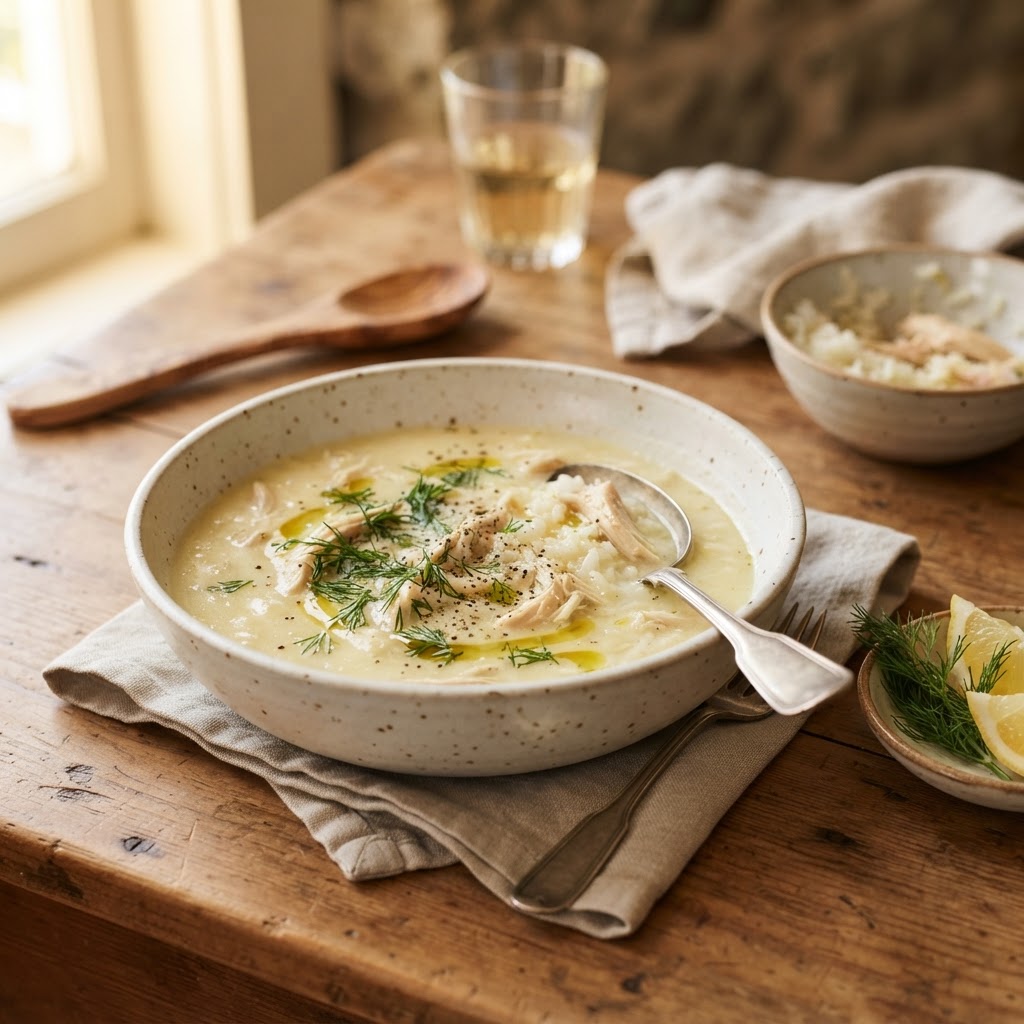
The Home Cook’s Guide to Greek Avgolemono: Mastering Tempering and Starch Ratios for Silky, Lemon-Egg Soup
There is a specific kind of magic that occurs in a kitchen when simple, humble ingredients are transformed into something transcendent through nothing more than heat, patience, and technique. Greek Avgolemono—that iconic, golden-hued chicken and rice soup—is the ultimate masterclass in this culinary alchemy. At its heart, it is a marriage of rich chicken broth, tender starch, and the emulsion of eggs and fresh lemon juice. For many home cooks, the mere mention of whisking hot broth into eggs induces a mild sense of panic, conjuring images of curdled, grainy soups that were meant to be velvet. However, when you understand the science behind the proteins and the delicate balance of acidity, you gain the confidence to create a restaurant-quality bowl that defines comfort.
The beauty of Avgolemono lies in its minimalism, which means there is nowhere for subpar ingredients to hide. This is not a soup you can bury in heavy cream or aggressive aromatics; its flavor profile depends entirely on the clarity of your stock, the brightness of your citrus, and the integrity of your emulsion. Many beginners make the mistake of rushing the final stage, dumping the lemon-egg mixture into a boiling pot with reckless abandon, only to be met with the dreaded "scrambled egg" consistency. By reframing the process as a deliberate, slow integration, we remove the fear and replace it with the rhythmic, meditative art of tempering. Once you grasp the mechanics of this process, you will find that Avgolemono is perhaps the most rewarding dish you can add to your repertoire.
In this guide, we are going to move beyond the recipe cards and dive into the granular details that separate a good soup from a legendary one. We will explore the specific starch ratios that provide body without turning the soup into wallpaper paste, and we will dissect the thermal dynamics of tempering until it becomes second nature. Whether you are looking for a soul-soothing meal on a rainy Tuesday or a sophisticated starter for a dinner party, the following pages will serve as your blueprint for success. Prepare your whisk, gather your lemons, and let’s get to work on mastering the most misunderstood, yet most essential, soup in the Greek kitchen.
The Foundation: Building a Superior Stock
The success of any Avgolemono is predicated entirely on the quality of the liquid base. Because this soup relies on the delicate balance of egg and lemon, a weak or thin stock will inevitably lead to a watery, underwhelming result. You need a collagen-rich stock that possesses natural body even before the eggs are introduced. If you are using store-bought bouillon, you are already starting at a disadvantage; the secret here is a long-simmered, bone-in chicken preparation that extracts the gelatin necessary for that luxurious mouthfeel.
Sourcing and Simmering
When choosing your chicken, prioritize bone-in, skin-on pieces. A whole chicken or a mix of thighs and wings is ideal, as the wings are packed with connective tissue that breaks down into gelatin. Simmer your aromatics—carrots, onions, celery, and a bundle of fresh parsley—along with the chicken at a very low, gentle bubble for at least two hours. If the boil is too vigorous, you risk emulsifying the fats into the liquid, which creates a cloudy stock that obscures the beautiful, sunny finish we are aiming for.
"A soup is only as good as the liquid that carries its flavor. If you start with a hollow, store-bought stock, you are merely dressing up a ghost. Invest the time in a real bone broth; your patience will be rewarded with a depth of flavor that no additive can replicate."
Once the stock is finished, strain it through a fine-mesh sieve to ensure the liquid is pristine. You want a clear, golden broth that glows when held up to the light. If you find your stock is lacking that essential stickiness that coats the back of a spoon, don't be afraid to reduce it further. A concentrated, flavorful base is the safety net that ensures your Avgolemono stands up to the acidity of the lemon juice.
Understanding the Starch: Rice and Orzo Dynamics
The starch in Avgolemono serves a dual purpose: it provides the essential textural contrast to the silky soup and, through the release of its natural amylopectin, it helps to thicken the broth. The choice of starch is a stylistic preference, but each type demands a different level of vigilance. Traditional Greek recipes often favor long-grain white rice for its subtle bite, while others prefer orzo, which mimics the texture of tiny pasta and holds its shape exceptionally well under the heat.
Ratios for Success
The golden ratio for a standard gallon of soup is typically one-half cup of dry starch. Exceeding this can lead to a soup that thickens into a porridge overnight as the starch continues to absorb liquid. Remember that the starch will continue to swell after the heat is turned off, so aim for an al dente texture during the initial cooking phase. If you are using rice, ensure it is thoroughly cooked through before you begin the tempering process, as you will not be able to cook the rice further once the eggs are added.
The Role of Starch in Emulsification
Interestingly, the starch in the soup does more than just fill the bowl; it acts as a stabilizer for the egg-lemon emulsion. By having a small amount of starchy, viscous liquid present in the broth, you create a more stable environment for the eggs to incorporate without curdling. This is why many chefs recommend cooking the rice directly in the broth rather than in a separate pot of water; that starchy cooking water is a secret weapon that contributes to the final silky mouthfeel of the dish.
The Art of Tempering: Science Over Fear
Tempering is the process of gradually increasing the temperature of a cold or room-temperature ingredient by slowly adding small amounts of a hot liquid. In the context of Avgolemono, it is the critical bridge between your raw, whisked egg-lemon mixture and your simmering broth. If you introduce the eggs too quickly, the heat denatures the proteins in the egg whites instantly, resulting in white, rubbery curds. Tempering mitigates this shock, gently "bringing the eggs up to temperature" until they can safely be incorporated into the main pot.
The Technique of Steady Integration
Start by whisking your eggs and lemon juice in a large, heat-proof bowl until the mixture is frothy and uniform. Using a ladle, slowly drizzle a small amount—perhaps a quarter cup—of the hot broth into the eggs, whisking constantly and vigorously. This is not the time to be distracted; your focus must be on the continuous motion of the whisk. As you add the broth, you will feel the mixture thicken and warm. Repeat this process until you have incorporated at least two cups of hot broth into your eggs.
"Tempering is not just a technique; it is a conversation between your ingredients. You are gently inviting the eggs into the heat, coaxing them to accept the broth's warmth without rebelling. Treat the process with the slow, deliberate care that high-quality cooking demands."
Equipment and Temperature Control
The choice of your bowl matters immensely. A shallow, wide bowl is generally easier to work with than a deep, narrow one, as it gives your whisk better contact with the bottom and sides. Additionally, always ensure that your broth is just off the heat. While the broth needs to be hot enough to thicken the eggs, a rolling boil will almost always result in an inferior texture. Aim for the near-boiling point, where the surface is shimmering but not violently churning.
Lemon: The Balancing Act
Lemon is the soul of Avgolemono, but it is also the component that most home cooks struggle to calibrate. Too little, and the soup is merely a bland, creamy chicken broth; too much, and the acidity becomes aggressive, clashing with the delicate proteins of the eggs. The goal is a bright, acidic finish that cuts through the richness of the chicken fat and the density of the rice. Always use fresh, room-temperature lemons, as their juice is more vibrant and easier to extract than cold fruit pulled straight from the refrigerator.
The Acidity Threshold
The acidity of the lemon juice plays a functional role beyond flavor: it slightly inhibits the proteins in the egg from bonding too quickly, which actually aids in the smoothness of the final emulsion. When whisking your eggs and lemon, start with a conservative ratio—usually two medium lemons for every three large eggs. Taste the mixture after your first few ladles of broth have been integrated. If it lacks that signature citrus zing, add more lemon juice to the egg mixture before you pour it back into the pot.
Zest vs. Juice
While the juice provides the essential tartness, some chefs argue for the inclusion of a small amount of finely grated zest. Use caution here, as the bitter white pith can ruin the entire profile. If you decide to include zest, ensure it is micro-planed to the point of being a powder, and stir it into the eggs right before the final tempering stage. This adds a layer of aromatic complexity that elevates the dish, providing a top note that cuts through the rich, savory base.
Advanced Finishing: Achieving Velvet Texture
Once you have tempered your eggs and successfully incorporated them back into the pot, your work is not quite finished. The soup must reach a final, gentle temperature threshold to "set" the emulsion. This is the moment where the soup transforms from a liquid into a velvet-like sauce. This final step requires the most patience, as you must maintain a very low, consistent heat to thicken the soup without ever letting it come to a boil.
The "Nappe" Consistency
In professional culinary terms, we look for a nappe consistency, which means the soup is thick enough to coat the back of a spoon. When you dip a spoon into your Avgolemono, run your finger through the coating on the back; if the line remains clear and the liquid does not immediately run back into place, you have achieved the perfect texture. This silky, luxurious quality is the hallmark of a masterfully prepared Avgolemono.
Troubleshooting Common Mishaps
If, despite your best efforts, you notice small bits of egg white beginning to form, pull the pot off the heat immediately. A quick, aggressive whisk might incorporate the smaller pieces, but if the soup has already curdled, you can try passing the entire mixture through a chinois or fine-mesh strainer. While this won't change the flavor, it will remove the unwanted bits and salvage the aesthetic. Do not panic—even professional chefs have to strain a batch of Avgolemono from time to time.
Serving and Accompaniments
Avgolemono is a complete meal, but it is deeply enhanced by the right accompaniments. Because the soup is already rich, bright, and creamy, you want side dishes that offer a contrast in texture and temperature. Think of a crusty, toasted sourdough bread that can soak up the velvet liquid, or perhaps a sharp, acidic salad of arugula and shaved fennel to contrast the warmth of the bowl.
Elevating the Presentation
When serving, think about the visual impact. A small drizzle of high-quality extra virgin olive oil over the top just before serving adds a fruity, peppery note that beautifully complements the lemon. A sprinkle of fresh, finely chopped dill or parsley brings a vibrant green color that pops against the pale yellow background. These final touches are not just for aesthetics; they are functional components that enhance the overall sensory experience of the meal.
"A bowl of Avgolemono is an invitation to slow down. When you see that pale, golden liquid resting in the bowl, you aren't just looking at soup; you are looking at the result of a process that values precision over speed. Serve it hot, serve it with love, and don't forget the bread."
Consider the vessel as well. Deep, ceramic bowls work best as they retain heat, keeping the soup at the perfect temperature throughout the meal. If you are serving this for a dinner party, consider pouring the soup tableside from a beautiful tureen. It emphasizes the luxurious, creamy nature of the emulsion and allows your guests to fully appreciate the effort you have put into the texture.
Final Thoughts
Mastering Avgolemono is a rite of passage for any cook who values the intersection of traditional technique and home-style comfort. It is a dish that humbles you, requiring you to discard the "set it and forget it" mentality in favor of direct engagement with the ingredients. You are managing proteins, starches, and acids in a delicate dance that, once mastered, becomes a source of immense pride. Remember that the quality of your stock is the foundation upon which everything else is built, and your willingness to spend time on the tempering process is the key to the silkiness that defines this soup.
Do not be discouraged by the prospect of a curdled batch. Every chef has learned the hard way that temperature is the ultimate arbiter of success in the kitchen. If you find yourself struggling, return to the basics: reduce the heat, slow down the flow of the broth, and keep that whisk moving. As you gain familiarity with the way the broth responds to the egg-lemon mixture, you will begin to do it by intuition rather than by following a list of rules. You will learn to feel the thickness of the liquid change as you add the broth, and you will learn to hear the sound of the whisk as it passes through the thickening soup.
Ultimately, Avgolemono is about providing comfort through clarity. It is a dish that clears the palate, warms the spirit, and rewards the patience of the cook. Whether you are serving this for a solitary, quiet dinner or as the centerpiece of a family gathering, you are participating in a culinary tradition that has spanned generations. So, take your time, keep your focus on the whisk, and enjoy the process of creating one of the most sublime soups in the Greek repertoire. When you finally sit down to that first, velvety spoonful, you will know exactly why this dish remains a timeless, essential classic in kitchens around the world. Happy cooking, and remember—if it’s perfect, you can take the credit; if it’s not, you can always blame the chef!



Get the Next Recipe
Weekly recipes, techniques, and gear picks — straight to your inbox.
