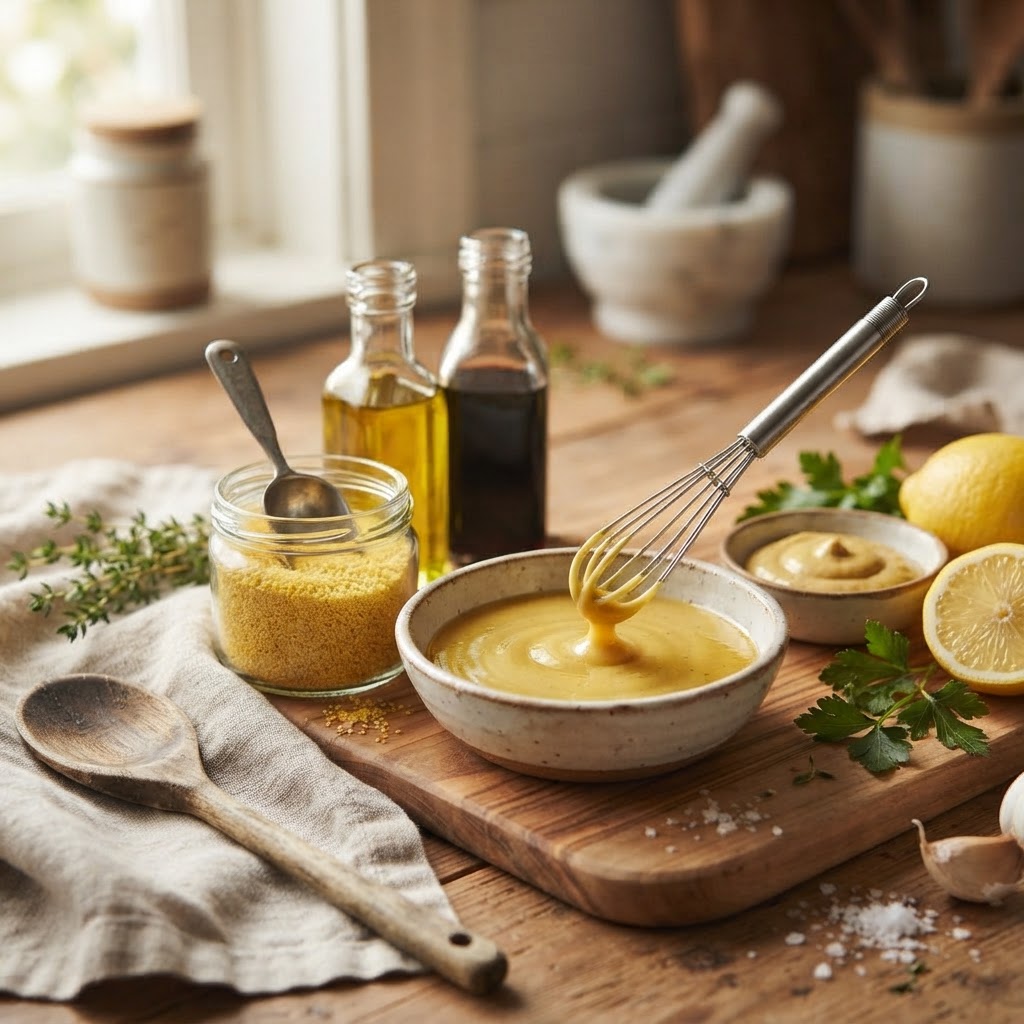
The Home Cook’s Guide to Hydrolipophilic Balancing: Mastering Lecithin-to-Liquid Ratios for Stable, Restaurant-Quality Emulsions
The kitchen is a place of alchemy, where simple raw materials are transformed through heat, agitation, and the careful marriage of disparate elements. We often look at restaurant-quality sauces, velvety vinaigrettes, and pillowy foams with a sense of intimidation, assuming they require expensive equipment or a culinary degree to replicate at home. However, the secret behind most of these luxurious textures lies in a fundamental scientific principle known as emulsification. When we talk about bringing oil and water together, we are essentially fighting against the laws of physics, as these two liquids naturally recoil from one another like magnets with the same polarity. Mastering this dance requires more than just a whisk and a prayer; it demands an understanding of the molecular bridge that makes the impossible possible.
At the center of this culinary bridge is lecithin, a powerhouse ingredient that acts as an emulsifying agent to hold our creations together. You have likely encountered it in your pantry without realizing it, perhaps in the form of soy or sunflower lecithin powder, or perhaps naturally occurring in the yolks of eggs. Understanding how to manage the hydrolipophilic balance—the ratio between water-loving and fat-loving components—is the singular skill that separates a "broken" sauce from a professional, glossy masterpiece. By controlling this balance, you gain the ability to manipulate the viscosity, stability, and mouthfeel of everything from vinaigrettes to stabilized foams. It is time to demurely step out of the shadow of the restaurant kitchen and claim this technique for your own home cooking.
In the following pages, we are going to deconstruct the chemistry of stability so you can stop blaming your technique when a sauce splits and start blaming the math instead. This guide is designed to move you beyond simple recipes and into the realm of true culinary intuition, where you can look at an emulsion and immediately sense how much more fat, liquid, or stabilizer is required to bring it to a state of perfect harmony. We will explore the specific temperatures, mixing speeds, and ratios that define professional standards, turning your kitchen into a laboratory of flavor. Prepare to leave behind the fear of broken hollandaise and curdled ganache; we are about to master the art of the perfect emulsion.
The Chemistry of the Emulsifying Bridge
At its most basic level, an emulsion is a colloidal dispersion of two immiscible liquids, meaning they refuse to mix under normal conditions. Water and oil, vinegar and butter, or fruit juices and fats all seek to separate into distinct layers due to their differing polarities. To overcome this, we use surfactants, or surface-active agents, which possess both a hydrophilic (water-attracting) head and a lipophilic (oil-attracting) tail. These molecules embed themselves at the interface of the oil droplet and the surrounding water, effectively neutralizing the tension that would otherwise cause the emulsion to collapse and "break."
When you use lecithin, you are introducing a natural phospholipid that excels at this task. Because it is amphiphilic, it acts as a molecular tether. The lipophilic tail dissolves into the oil phase, while the hydrophilic head remains in the water phase. This creates a protective barrier around the oil droplets, preventing them from coalescing back into a separate pool of fat. Without these surfactants, you would be forced to use constant high-speed agitation, which is exhausting and ultimately temporary, leading to the dreaded "split" sauce that ruins the aesthetics and texture of your plate.
Understanding this mechanism allows you to troubleshoot almost any emulsion failure in real-time. If you find that your emulsion is too thin or separating rapidly, it is almost always a sign that you have exceeded the saturation point of your emulsifier or that your liquid-to-fat ratio has skewed too far toward one phase. By keeping a small supply of pure lecithin—either liquid or powdered—you effectively have an "insurance policy" for every sauce you make. It turns a volatile culinary process into a repeatable, controlled science experiment that yields the same smooth, velvety results every single time.
Why Temperature Matters
The temperature of your ingredients plays a critical role in the speed and efficacy of the emulsion. If your fat is too cold (as in butter) or too hot, the emulsifier may struggle to integrate effectively. For most delicate emulsions like hollandaise or beurre blanc, keeping your base around 140°F to 150°F is ideal. This temperature allows the lipids to remain fluid enough to be dispersed into the water phase without causing the proteins (if using egg yolks) to seize and curdle.
"True culinary mastery is not about following a recipe to the letter, but about understanding the molecular interactions that turn raw ingredients into a cohesive, sensory experience. When you understand the balance of the emulsion, you hold the power to dictate the texture of every dish you create."
Selecting Your Emulsifying Agent
Not all emulsifiers are created equal, and choosing the right one for your specific application is paramount. Egg yolks are the gold standard for classic sauces because they contain a rich concentration of natural lecithin, along with proteins that provide additional structural support. However, yolks are limited by their coagulation temperature; once you hit about 158°F, the proteins denature, which can ruin the texture of a sauce if not carefully managed. This is where modern alternatives like soy or sunflower lecithin powders become invaluable tools.
Sunflower lecithin is increasingly preferred in the professional world because it is allergen-friendly and lacks the potential hormonal concerns sometimes associated with soy products. It is highly concentrated, meaning you only need a very small percentage—usually between 0.5% and 1% by weight of the total liquid volume—to achieve a stable result. Unlike eggs, lecithin powder is not affected by high temperatures in the same way, allowing you to create warm, stable foams or intense butter-based sauces that can hold their structure even under a heat lamp or during extended service.
When deciding between raw ingredients and refined powders, consider the final texture you want to achieve. Egg yolks add a richness and a "creamy" mouthfeel that is hard to replicate with lecithin alone. Conversely, if you want a light, translucent sauce that shines on the plate without being weighed down by the opacity of egg proteins, a pure lecithin-based stabilizer is the superior choice. Most home cooks find that a combination—using the lecithin to "boost" the stability of a traditional egg-based emulsion—provides the best of both worlds.
Integrating Powdered Lecithin
To successfully integrate lecithin powder into your liquids, do not simply dump it into your oil. Instead, hydrate the powder in the water-based component of your emulsion (such as vinegar, wine, or water) using an immersion blender. Lecithin is hydrophilic in its initial state and will hydrate best in the water phase before the oil is added. This ensures that the emulsifier is fully dispersed and ready to act as a bridge the moment the oil is introduced.
The Art of the Ratio: Balancing Oil and Water
Achieving a restaurant-quality emulsion requires an obsessive attention to ratios. A standard vinaigrette might utilize a 3:1 oil-to-vinegar ratio, but a highly stabilized foam or a thickened sauce might shift that ratio dramatically. The key is to start with a "foundation" of liquid and slowly incorporate the fat, checking the viscosity as you go. If you add the fat too quickly, you risk overwhelming the emulsifier, leading to a "broken" emulsion where the fat simply floats on top of the liquid.
Consider the saturation threshold. Every emulsifier has a limit to how much oil it can hold in suspension before the droplets become too crowded and begin to collide. If you are using egg yolks, one large yolk can typically emulsify about 6 to 8 ounces of oil. If you exceed this, the emulsion will become unstable and likely collapse. If you are using refined lecithin, you can often push this ratio significantly further, creating much lighter, more airy textures that rely on the stabilizing power of the surfactant rather than the density of the yolk.
To practice this, start by measuring your ingredients by weight rather than volume. Kitchen scales are the home cook’s best friend for a reason; liquids can be deceiving, but grams are absolute. Start with 100g of your water-based liquid (vinegar, lemon juice, stock) and add 0.5g of lecithin powder. Use your immersion blender to achieve a completely smooth base. Then, slowly drizzle in your oil, measuring how much you add until the emulsion reaches the desired thickness. You will quickly find your "sweet spot" for every sauce you make.
Troubleshooting a Broken Sauce
If your emulsion breaks, do not panic and do not throw it away. A broken emulsion simply means the oil droplets have coalesced. To fix it, pour the broken sauce into a clean bowl, add a fresh teaspoon of water or lemon juice, and whisk vigorously. Once the liquid begins to emulsify again, slowly add the broken mixture back into the new base, drop by drop. This "repair" technique saves the emulsion by re-introducing the water-to-fat interface needed for the lecithin to re-bond the droplets.
"A broken sauce is not a failure; it is a lesson in patience. The culinary arts are defined by our ability to recover from these small disasters, using the science of emulsions to bridge the divide between ingredients that naturally pull apart."
Techniques for Professional-Grade Stability
The equipment you use dictates the final particle size of your emulsion. While a whisk is traditional and offers a great deal of control, a high-speed immersion blender (often called a "burr mixer" or "stick blender") is the king of stability. The shear force generated by an immersion blender is significantly higher than that of a hand whisk, which breaks the oil into much smaller, more uniform droplets. The smaller the droplet, the more stable the emulsion becomes over time.
For an even higher level of stability, many chefs use a process of step-wise incorporation. Start by emulsifying a small amount of oil with all of your water and lecithin to create a very thick, stable "mother emulsion." Once this base is thick and creamy, you can then whisk in the remaining oil in a steady, thin stream. This ensures that the concentration of the emulsifier remains high enough to capture the oil droplets as they are added, preventing them from coalescing before they are properly trapped.
Temperature control is also a technique for stability. If you are making a butter-based sauce, clarify your butter first to remove the milk solids. Pure butterfat is much easier to emulsify than whole butter, which contains water and proteins that can interfere with your lecithin’s efficiency. Keeping your sauce at a constant temperature—ideally around 120°F to 130°F—ensures the fat stays liquid enough to integrate but not so hot that it "burns" the emulsion.
Scaling Up and Holding
When preparing large batches for a dinner party, the holding time becomes a major factor. Emulsions made with lecithin are far more stable than those made with eggs, meaning they can sit at room temperature or in a warm water bath (a bain-marie) for hours without breaking. If you find your sauce is becoming too thick as it sits, simply whisk in a tablespoon of warm water to "loosen" the emulsion back to its ideal consistency.
The World of Stabilized Foams
One of the most exciting applications of lecithin-based emulsions is the creation of "airs" or foams. Unlike a traditional foam created by beating egg whites, a lecithin-stabilized foam is light, translucent, and intensely flavorful. These are common in high-end molecular gastronomy but are incredibly easy to pull off at home once you understand the math. To make a stable foam, you are essentially emulsifying air into a liquid base.
This technique works because the lecithin molecules stabilize the thin film of liquid surrounding the air bubbles, preventing them from bursting. Because the foam is mostly air, it provides a massive surface area for flavor, which means a small spoonful of an herb-infused foam can deliver as much impact as an entire cup of sauce. It is a brilliant way to garnish a plate and add a professional, modern touch to your cooking.
Choosing Your Liquid
Not every liquid creates a great foam. Liquids with high sugar content can become sticky, while very acidic liquids may require a slightly higher concentration of lecithin. Test your liquids first by whisking a small sample in a glass to see how the bubbles hold. If the bubbles collapse immediately, add another half-percent of lecithin and try again. The key is to find the minimum amount of emulsifier needed to get the job done, keeping the flavor of your ingredient the star of the show.
Advanced Emulsion Troubleshooting
Even the best chefs occasionally face an emulsion that just won't behave. Beyond the standard "add water and whisk" technique, there are other variables to consider. The pH level of your liquid can drastically affect the efficacy of lecithin. If you are working with extremely acidic components, such as a heavy vinegar reduction or a sharp citrus reduction, you may find that the lecithin struggles to bridge the interface. In these cases, adding a pinch of salt—or even a tiny amount of a neutral buffering agent—can help stabilize the environment.
Another common issue is particle interference. If you are adding solid ingredients, such as herbs, spices, or zest, ensure they are pulverized into a fine paste. Larger chunks of ingredients can physically disrupt the delicate emulsion layer, effectively "poking holes" in the protective barrier the lecithin has built around the fat droplets. Always blend your solid flavorings into the liquid base before adding the fat to ensure a seamless final product.
Finally, consider the purity of your ingredients. If you are using a cheap oil or a low-quality vinegar, the impurities can sometimes act as anti-foaming or anti-emulsifying agents. For the best results, use high-quality, refined oils for neutral emulsions (like grapeseed or high-quality avocado oil) and reserve extra-virgin olive oils for cold emulsions where the flavor is the focus and the emulsion doesn't need to be perfectly stable for long periods.
The Role of Viscosity Modifiers
If you are struggling to get the desired thickness, consider adding a secondary stabilizer such as xanthan gum. While lecithin is an emulsifier (it connects the two phases), xanthan gum is a thickener (it increases the viscosity of the water phase). By using a tiny amount of xanthan gum—literally just a pinch—along with your lecithin, you create a "double lock" on your emulsion. The xanthan gum thickens the water, making it harder for the oil droplets to move and collide, while the lecithin holds them in place. It is a professional trick that makes your sauces virtually indestructible.
Final Thoughts
Mastering the hydrolipophilic balance is more than just learning to make a better hollandaise; it is about taking control of the very structure of your food. By understanding how ingredients interact on a molecular level, you strip away the mystery that often keeps home cooks from experimenting with advanced techniques. When you stop fearing the "break," you start looking for ways to push the boundaries of texture and flavor, creating dishes that feel as good as they taste.
Remember that emulsification is a skill that improves with repetition. Start by focusing on your ratios, keep your immersion blender clean and ready, and don't be afraid to experiment with different liquids and fats. Whether you are creating a classic vinaigrette, a rich butter sauce, or a light, airy foam, the same scientific principles apply. The kitchen is indeed a laboratory, and with the right knowledge, you are the lead scientist in charge of your next great masterpiece.
So, the next time you find yourself staring down a curdled mess, don't blame the chef, don't blame the heat, and certainly don't throw it out. Take a deep breath, analyze the ratio of your liquids and fats, reach for your emulsifier, and use the science we have discussed to bring your creation back to life. You have the tools, the knowledge, and the power to turn any kitchen into a world-class culinary space. Now, get back in there and start emulsifying—the perfect sauce is only a few whisks away.
If you find that you are still struggling with consistency, keep a log of your trials. Note down the temperature, the ratio by weight, and the type of agitation you used. Much like a laboratory notebook, this record will quickly reveal patterns, helping you identify exactly what works best in your specific cooking environment. Consistency in the kitchen is not a stroke of luck; it is the natural result of disciplined observation and the willingness to learn from every drop that doesn't quite hold together.
Finally, keep your palate engaged. An emulsion is not just about structure; it is about flavor delivery. The lecithin should be invisible to the taste, acting only as the invisible hand that holds your ingredients together. If you find your sauces are lacking punch, remember that emulsions often require a bit more seasoning than non-emulsified sauces, as the fat can coat the tongue and dampen the impact of salt and acid. Always taste and adjust at the very end of the process, once the sauce has reached its final, stable state.
In the end, cooking is an act of love, but it is also an act of intelligence. By bridging the gap between the scientific and the sensory, you elevate your home cooking to something truly memorable. Go forth and emulsify with confidence, knowing that you have the expertise to handle anything your pantry throws at you. The kitchen is yours to conquer, one perfectly stable, glossy, and delicious emulsion at a time. Happy cooking, and may every sauce you make be as smooth as the science that creates it.
As you continue your journey, keep exploring new emulsifying agents and ratios. Perhaps you will move into the world of hot-held emulsions, or maybe you will master the art of the perfect, thick, stable emulsion that stays suspended for days. Whatever direction you choose, keep that focus on the hydrolipophilic balance, and you will never go wrong. The beauty of these techniques is that they are entirely scalable and adaptable to any cuisine you choose to explore, from French classics to Asian-inspired sauces and beyond.
Stay curious, stay scientific, and always keep your whisk close by. Whether you are using traditional yolks or modern lecithin powders, the principles remain the same. Mastery comes from the combination of theory and practice, and you have all the tools you need to succeed. There is no greater satisfaction than seeing a perfectly emulsified sauce coat the back of a spoon, reflecting the light and holding its structure. It is the hallmark of a great cook, and it is officially within your grasp.
Reflecting on everything we have covered, remember that simplicity is often the ultimate sophistication. You don't need a hundred ingredients to create a stunning sauce; you only need the right ones in the right proportions. Trust the math, trust your technique, and above all, trust your palate. The kitchen is a place for discovery, and every time you master a new technique like this, you unlock a whole new world of culinary potential. Keep creating, keep tasting, and keep pushing your boundaries—because at "Blame The Chef," we know that the only thing holding you back is the desire to learn more.
This guide is just the beginning. The world of hydrocolloids, stabilizers, and emulsifiers is vast, but you have now laid a solid foundation. Whether you are cooking for your family on a weeknight or hosting a dinner party that will be remembered for years to come, you now have the professional-grade skills to ensure your sauces are the highlight of the meal. Never be afraid to fail, for in the failure of an emulsion, we find the greatest lessons about the nature of our food.
We look forward to seeing the incredible emulsions you will create. Tag us, share your results, and keep the conversation going. The culinary community is built on the sharing of knowledge, and your success is a testament to the hard work you’ve put into mastering this craft. The perfect emulsion is waiting for you; you just have to reach out and mix it into existence. It has been a pleasure guiding you through the science of stability—now, go make it your own.
Lastly, don't forget to clean your tools thoroughly between uses. Lecithin is sticky and persistent, and a clean blender is a happy, efficient blender. Treat your equipment with the same respect you treat your ingredients, and your kitchen will reward you with consistency and quality for years to come. Now, clear your station, get your prep bowls ready, and let the science of the kitchen lead you to your next great culinary victory. The stage is yours, and we cannot wait to hear how it turns out.
As we conclude this deep dive into the world of hydrolipophilic balancing, reflect on how far your culinary perspective has shifted. It is no longer just about "following the steps"; it is about understanding the "why" behind every action you take. This is the hallmark of a seasoned cook. Continue to be the master of your kitchen, the architect of your own flavors, and the scientist of your own successes. Happy emulsifying, and we look forward to the next time we can explore the fascinating, delicious, and deeply satisfying world of professional cooking techniques together.
Remember, the goal is not just to imitate the restaurant, but to create something uniquely yours, informed by the best techniques the industry has to offer. You have moved beyond the basics and into the realm of true culinary capability. Keep up the momentum, keep testing the limits of your ingredients, and most importantly, enjoy every delicious bite along the way. You have earned your seat at the table of the great home cooks—now, go ahead and serve your masterpiece to the world.


Get the Next Recipe
Weekly recipes, techniques, and gear picks — straight to your inbox.
