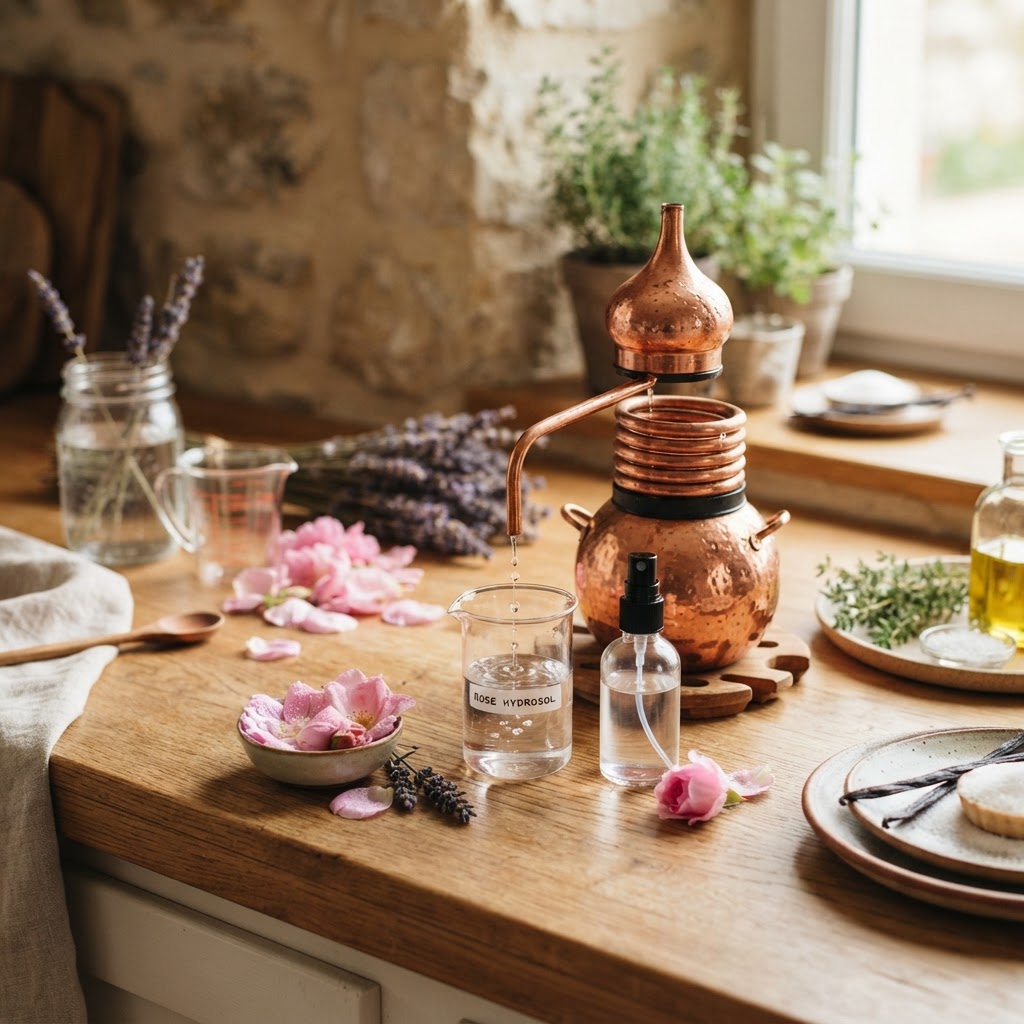
The Home Cook’s Guide to Hydrosol Extraction: Mastering Flower-to-Water Ratios for Infusing Delicate Aromatics into Savory and Sweet Dishes
The allure of culinary innovation often lies not in the creation of entirely new ingredients, but in the skillful rediscovery and application of ancient techniques. For centuries, kitchens across the globe have harnessed the power of botanicals to elevate their dishes, imbuing them with nuanced flavors and intoxicating aromas. While many home cooks are familiar with infusing oils and vinegars, a less explored, yet incredibly potent, method lies in the realm of hydrosols. These aromatic waters, born from the steam distillation of plant material, offer a delicate and pure expression of their source, perfect for both the subtlest of sweet pastries and the most robust of savory stews. Mastering the art of hydrosol extraction at home opens a new dimension of flavor possibilities, transforming everyday meals into extraordinary culinary experiences.
Understanding the fundamental principles behind hydrosol creation is key to unlocking their potential. Unlike essential oils, which are highly concentrated and potent, hydrosols are water-based and possess a milder, more ethereal quality. This makes them incredibly versatile, allowing for a more generous hand in their application without overwhelming a dish. The magic lies in the steam distillation process, where steam gently coaxes volatile aromatic compounds from the plant matter. As this aromatic steam cools, it condenses back into liquid, yielding a beautiful, fragrant water that carries the very essence of the flower, herb, or spice it originated from. The flower-to-water ratio becomes a critical dial to turn, dictating the intensity and character of the resulting hydrosol, and thus, its suitability for various culinary applications.
The journey from garden to gourmet is a rewarding one, and with a little knowledge and the right equipment, any home cook can embark on this flavorful adventure. This guide aims to demystify the process of hydrosol extraction, focusing on the crucial aspect of flower-to-water ratios and how to manipulate them for optimal infusion. We will explore the science behind the steam, the best botanicals to choose for both sweet and savory dishes, and the practical steps to achieve professional-quality results in your own kitchen. Prepare to awaken your senses and expand your culinary repertoire as we delve into the captivating world of home-brewed hydrosols.
The Science of Steam: Understanding Hydrosol Extraction
At its core, hydrosol extraction is a gentle process of capturing botanical essence. It relies on the principle of steam distillation, a method that has been utilized for millennia to extract aromatic compounds from plant materials. When water is heated to boiling, it produces steam, which then rises and passes through a chamber containing the plant matter – in our case, flowers, herbs, or spices. The heat and moisture of the steam cause the plant cells to rupture, releasing their volatile aromatic molecules. These aromatic molecules, along with the steam, then travel into a condenser, typically a coiled tube cooled by circulating water. As the hot steam and aromatic vapors cool, they condense back into liquid form.
This liquid condensate is a mixture of water and the water-soluble aromatic compounds from the plant. This is our precious hydrosol. Unlike essential oils, which are oils that are not soluble in water and are typically separated from the hydrosol, hydrosols contain only the water-soluble aromatic molecules and a very small percentage of essential oil. This makes hydrosols significantly milder and more approachable for culinary use. The concentration of these aromatic compounds is directly influenced by several factors, most importantly the amount of plant material used in relation to the amount of water that produces the steam, and the duration of the distillation.
**The beauty of hydrosols lies in their subtle, layered complexity. They are not a blunt force of flavor, but a delicate whisper that can enhance and transform a dish without dominating it.**
The efficiency of extraction is also dependent on the type of plant material and the specific volatile compounds it contains. For instance, flowers often have delicate aromatic molecules that can be easily degraded by excessive heat or prolonged distillation times. Herbs, on the other hand, might have more robust compounds that can withstand a slightly longer process. Understanding the nature of your chosen botanical is as important as understanding the mechanics of the still. This guide will focus on achieving the right balance through precise flower-to-water ratios, ensuring that the resulting hydrosol sings with the intended aroma and flavor.
Selecting Your Botanical Symphony: Choosing Ingredients for Hydrosols
The world of botanicals is vast and wondrous, offering an almost endless palette for the creative home cook. When embarking on your hydrosol journey, the initial step is selecting the right plant material. Not all botanicals lend themselves equally well to hydrosol extraction, and some yield more desirable results than others. For culinary purposes, it's crucial to choose plants that are known for their aromatic qualities and that are safe for consumption. This means sourcing culinary-grade herbs and edible flowers, ideally organic and free from pesticides, as these will be directly infused into your food.
For those drawn to the sweet side of the culinary spectrum, edible flowers are a natural starting point. Roses, lavender, elderflower, and chamomile are perennial favorites, each offering a distinct and delightful aromatic profile. Rose hydrosol, for instance, is incredibly versatile, lending a floral elegance to cakes, cookies, custards, and even delicate fruit salads. Lavender hydrosol can add a sophisticated touch to shortbread, crème brûlée, and even certain savory dishes like roasted lamb. Elderflower hydrosol brings a bright, sweet, and slightly citrusy note, perfect for summer desserts, mousses, and cocktails. Chamomile hydrosol offers a gentle, calming aroma and flavor, ideal for soothing teas, baby-friendly baked goods, and dairy-based desserts.
**Think of your hydrosol as a concentrated essence, a liquid perfume for your palate. A little goes a long way, so choose your botanicals with intention, considering how their aroma will complement the other flavors in your dish.**
On the savory front, herbs reign supreme. Rosemary, thyme, basil, mint, and even more robust spices like star anise and cardamom can be transformed into potent and flavorful hydrosols. Rosemary hydrosol, with its piney and slightly peppery notes, is a revelation when used to deglaze a pan for roasted meats or added to potato dishes. Thyme hydrosol offers an earthy, herbaceous complexity, perfect for enriching soups, stews, and vegetable sautés. Basil hydrosol can bring the vibrant, fresh essence of summer to pasta sauces, pestos, and Caprese salads. Even more unexpected ingredients like cucumber peels or citrus zest can yield fascinating hydrosols with unique flavor profiles.
The Art of the Ratio: Mastering Flower-to-Water for Intensity
The cornerstone of successful hydrosol extraction for culinary applications lies in understanding and manipulating the flower-to-water ratio, often referred to as the plant-to-water ratio or botanical load. This ratio dictates the concentration of aromatic compounds in your final hydrosol, directly influencing its intensity, flavor, and suitability for different dishes. A higher ratio of plant material to water will result in a more potent, concentrated hydrosol, while a lower ratio will yield a milder, more delicate infusion. There is no single "correct" ratio; it depends entirely on the specific botanical you are using, the desired intensity of your hydrosol, and the culinary application.
For delicate flowers like roses or elderflower, it's generally advisable to start with a higher botanical load. This is because their aromatic compounds are often more volatile and can be easily lost during distillation. A starting point for these might be a ratio of 1:1 (by weight) or even 1.5:1 of fresh, packed flowers to water used to generate the steam. This means for every pound of fresh rose petals, you would use one pound of water in your still to create the steam that passes through them. The goal here is to ensure that the steam is saturated with as many aromatic molecules as possible before condensation.
**Experimentation is your best friend. Keep detailed notes on your botanical loads, distillation times, and the resulting hydrosol's aroma and flavor. This will build your personal library of successful ratios for different ingredients.**
For more robust herbs like rosemary or thyme, you might find a slightly lower ratio works well, perhaps starting with 0.75:1 or 1:1. This is because these herbs often contain more stable aromatic compounds that can be efficiently extracted with less plant material. Similarly, if you are using dried botanicals, you will generally need less material than fresh, as dried ingredients have a more concentrated aromatic profile. A good starting point for dried herbs might be 0.5:1. It’s crucial to remember that these are starting points, and the art comes in refining them based on your results.
The Hydrosol Extraction Process: A Step-by-Step Culinary Guide
While professional-grade stills are available, it is entirely possible to create excellent hydrosols at home using relatively simple equipment. The most common DIY method involves a pot with a lid, a heat-resistant bowl or rack to hold your botanicals above the water, and a way to collect the condensed hydrosol. The principle remains the same: steam passing through botanicals, then condensing.
Here's a breakdown of the process, emphasizing the importance of controlling your variables:
1. Prepare Your Botanical Material:
Fresh is best:* For optimal flavor and aroma, use fresh, high-quality, culinary-grade botanicals. Wash them gently if necessary and pat them thoroughly dry. Remove any non-aromatic parts like thick stems or woody bases, focusing on the leaves, petals, or fragrant parts.
For dried botanicals:* Use good quality dried herbs or flowers. They are often more potent, so you'll need less.
2. Set Up Your Still (DIY Method):
The Pot:* Use a large, heavy-bottomed pot with a tight-fitting lid. This will be your boiler.
The Water: Pour enough water into the bottom of the pot to create steam, but ensure it does not reach the level of your botanical basket*. The amount of water here will dictate how long you can distill. A common starting point is 2-3 inches of water.
The Botanical Basket:* Place a heat-resistant rack or an inverted heat-proof bowl inside the pot, on top of the water. This will hold your botanicals. The goal is to keep the botanicals from sitting directly in the water, as this will boil rather than steam them.
The Lid:* Place the lid on the pot upside down. The condensation will form on the cooler lid and drip down the sides, ideally into a collection vessel placed in the center.
3. Add Your Botanicals:
* Loosely pack your prepared botanical material into a fine-mesh basket or directly onto the inverted lid, ensuring it's not so dense that steam cannot circulate freely.
Crucially, consider your ratio here.* If your still has a fixed volume for water, you'll be adjusting the amount of botanicals you add to achieve your desired ratio. If you are using a more advanced still, you will fill the still with the appropriate amount of water and then add your botanicals according to your chosen ratio.
4. Distill:
Heat Control:* Bring the water to a gentle simmer over medium-low heat. You want a consistent, gentle stream of steam, not a rolling boil, which can scorch the botanicals and degrade their delicate aromas.
Condensation:* As the steam rises and comes into contact with the cooler, inverted lid, it will condense. The steam will then trickle down the sides of the lid and drip into a collection vessel placed strategically. Some setups use a separate condenser, but the upside-down lid method is a common DIY approach.
Collection:* Collect the fragrant liquid that drips into your vessel. This is your hydrosol.
Time:* Distillation time can vary. For delicate flowers, 30-60 minutes might be sufficient. For more robust herbs, you might extend this to 1-2 hours. Monitor the aroma – when it fades significantly, the extraction is likely complete.
5. Cool and Store:
* Once distillation is complete, carefully remove the collection vessel and allow the hydrosol to cool completely.
Strain and store:* Strain the hydrosol through a fine-mesh sieve or cheesecloth to remove any fine particles. Store in clean, airtight glass bottles in the refrigerator. Hydrosols are water-based and can spoil, so they are best used within a few weeks to a month. For longer storage, consider adding a small amount of high-proof alcohol (like vodka) as a preservative, though this may alter the flavor profile slightly.
Culinary Applications: Sweet and Savory Infusions
The true magic of hydrosols unfolds when they are incorporated into your cooking. Their subtle yet distinct aromatic profiles can elevate both sweet and savory dishes in ways that are both surprising and delightful. The key is to use them judiciously, allowing their fragrance to enhance, rather than overpower, the other flavors on the plate.
Sweet Applications: A Whisper of Floral Elegance
In the realm of desserts, hydrosols are a revelation. They offer a way to imbue baked goods, custards, and creams with delicate floral or herbaceous notes that are far more nuanced than extracts or flavorings. Imagine a rose hydrosol lending a whisper of perfume to a simple vanilla panna cotta or a batch of shortbread cookies. A little goes a long way; a tablespoon or two in a standard cake recipe can provide a delightful floral undertone that complements fruits and chocolate beautifully.
Lavender hydrosol can transform a simple crème brûlée into something extraordinary, its floral notes cutting through the richness of the custard. For a more subtle effect, consider adding a teaspoon of chamomile hydrosol to a batch of baby muffins or a soothing chamomile tea-infused yogurt. Elderflower hydrosol is a fantastic addition to summer desserts like berry tarts, lemon cakes, or even a light fruit salad dressing. It brings a bright, floral sweetness that pairs exceptionally well with citrus and stone fruits.
**When incorporating hydrosols into sweet dishes, start small. You can always add more, but you can’t take it away. Taste as you go, allowing the hydrosol to contribute its essence without becoming the dominant flavor.**
Here are some specific ideas:
Cakes and Cupcakes:* Add 1-2 tablespoons of rose or lavender hydrosol to your batter.
Cookies:* Incorporate 1-2 teaspoons of lavender or elderflower hydrosol into shortbread or sugar cookie dough.
Custards and Puddings:* Whisk 1-2 tablespoons of your chosen hydrosol into the liquid base (milk, cream) before cooking.
Fruit Salads:* Toss fresh fruit with a light dressing of honey, lemon juice, and a tablespoon of elderflower or rose hydrosol.
Mousses and Ice Cream:* Add a few teaspoons to your base mixture for a subtle aromatic twist.
Savory Applications: Enhancing Depth and Complexity
Don't limit your hydrosol adventures to the dessert table! Savory dishes offer a fantastic canvas for their aromatic qualities. Hydrosols can add a layer of complexity and freshness that elevates even the simplest of meals. Think of rosemary hydrosol as a sophisticated deglazing liquid for pan-seared chicken or lamb. A splash can add an herbaceous depth that’s more nuanced than fresh rosemary alone.
Thyme hydrosol is a natural partner for roasted vegetables, soups, and stews. It imparts an earthy, slightly peppery note that complements root vegetables, mushrooms, and braised meats. Imagine adding a tablespoon of thyme hydrosol to a rich beef stew for an extra layer of savory aroma. Basil hydrosol, when it's in season, can bring the vibrant essence of summer to pasta sauces, tomato-based dishes, or even a simple Caprese salad.
**For savory dishes, think of hydrosols as a finishing touch or an enhancement to existing aromatics. They can brighten a dish, add a subtle herbaceousness, or provide a complex fragrant base.**
Consider these savory applications:
Soups and Stews:* Whisk in 1-2 tablespoons of thyme or rosemary hydrosol towards the end of cooking.
Sauces and Deglazing:* Use 1-4 tablespoons of rosemary or basil hydrosol to deglaze a pan after searing meat or vegetables.
Marinades:* Incorporate 1-2 tablespoons into marinades for poultry, fish, or vegetables.
Vegetable Dishes:* Drizzle a tablespoon of your favorite herb hydrosol over roasted or steamed vegetables.
Rice and Grains:* Add a teaspoon or two to the cooking liquid for rice, quinoa, or couscous for a subtle aromatic infusion.
Troubleshooting Common Hydrosol Extraction Issues
Even with the best intentions, hydrosol extraction can sometimes present challenges. Understanding these common issues and their solutions can save you frustration and help you achieve consistently excellent results. The most frequent culprits are weak hydrosols, off-flavors, or insufficient yield.
One of the most common problems is producing a weak or flavorless hydrosol. This often stems from an insufficient botanical load. If your ratio of plant material to water is too low, the steam will not become adequately saturated with aromatic compounds. Solution: Increase the amount of fresh or dried botanical material you use in your next batch. Ensure your botanicals are fresh and potent; old or dried-out ingredients will yield weaker results. Another factor can be low-temperature distillation. If the water is not simmering gently, insufficient steam will be produced. Solution: Ensure your heat is set to a gentle simmer, producing a steady, visible stream of steam, but not a violent boil.
Another issue can be scorched or burnt flavors in your hydrosol. This typically occurs when the botanicals come into direct contact with the boiling water, or if the heat is too high. Solution: Ensure your botanicals are elevated above the water level. Use a rack or an inverted bowl. Maintain a gentle simmer, avoiding a rolling boil. If using dried herbs, they can scorch more easily, so monitor the heat closely.
**Patience is paramount. Hydrosol extraction is a slow, gentle process. Rushing it by turning up the heat or cutting the distillation time short will almost always result in a less-than-ideal product.**
A low yield of hydrosol can be disheartening. This can be due to a variety of factors. If you are using a DIY still with an inverted lid, some of the condensation might evaporate before it can be collected. Solution: Ensure your lid fits snugly. You can also try placing a small collection dish inside the pot, on a rack, directly under the dripping point of the lid, but ensure it's stable and won't tip. If you are distilling for too short a period, you won't capture the full potential of the botanicals. Solution: Extend your distillation time, but monitor the aroma. If the aromatic output significantly fades, it's time to stop.
Finally, cloudy or murky hydrosols can sometimes appear. While some cloudiness is normal, excessive murkiness might indicate fine particles from the plant material have entered the hydrosol. Solution: Strain your hydrosol thoroughly through a fine-mesh sieve lined with cheesecloth. If the cloudiness persists and is concerning, it might be best to discard the batch, especially if you are unsure of the cause. Ensuring your botanicals are clean and dry before distillation also helps prevent this.
Preserving Your Aromatic Elixirs: Storage and Shelf Life
Once you’ve successfully extracted your beautiful, fragrant hydrosols, the next critical step is proper storage to preserve their delicate aromas and flavors. Hydrosols are primarily water-based and, unlike essential oils, contain a higher concentration of water-soluble compounds. This makes them more susceptible to microbial growth and degradation over time. Therefore, understanding their shelf life and how to maximize it is essential for any home cook using these precious infusions.
The most important factor in preserving your hydrosols is temperature. Because they are essentially aromatic water, hydrosols should always be stored in the refrigerator. This significantly slows down the growth of bacteria and mold, extending their usability. Use clean, airtight glass bottles for storage. Dark glass is preferable as it offers protection from light, which can also degrade aromatic compounds. Ensure the bottles are thoroughly washed and sterilized before filling.
**Treat your hydrosols like a fresh ingredient. They are not shelf-stable like dried herbs or essential oils. Proper refrigeration and prompt usage are key to enjoying their peak freshness.**
The typical shelf life for a properly stored, unpreserved hydrosol is generally 2-4 weeks in the refrigerator. For delicate floral hydrosols, this might be even shorter, perhaps 1-2 weeks. It’s always best to rely on your senses: if the hydrosol develops an off-smell, changes color noticeably, or appears cloudy, it's time to discard it.
For those who wish to extend the shelf life of their hydrosols, particularly if they are producing larger batches or live in warmer climates, adding a preservative is an option. A common and effective method is to add a small amount of high-proof neutral alcohol, such as vodka (at least 80 proof). A general guideline is to add about 10-20% alcohol by volume to your hydrosol. For example, if you have 100ml of hydrosol, you would add 10-20ml of vodka. This alcohol acts as a bacteriostatic agent, inhibiting microbial growth. Be aware that this will slightly alter the flavor profile, adding a subtle alcoholic note, so it might be more suitable for savory applications or desserts where a slight alcohol presence is not detrimental.
Another method, though less common for home cooks and potentially affecting delicate aromas, is using natural preservatives like grapefruit seed extract or rosemary extract, following product instructions carefully. However, for most home culinary use, the refrigeration method with prompt consumption is the safest and often the most effective way to enjoy your homemade hydrosols.
Final Thoughts
The journey into the world of hydrosol extraction is an exciting exploration that rewards the adventurous home cook with a unique and subtle way to infuse dishes with the pure essence of botanicals. By understanding the principles of steam distillation and, crucially, mastering the art of the flower-to-water ratio, you can unlock a new dimension of flavor and aroma for both your sweet and savory creations. From the delicate perfume of rose petals in a cake to the herbaceous depth of rosemary in a rich stew, hydrosols offer a refined elegance that traditional extracts often cannot replicate.
Remember that experimentation is your greatest tool. Start with reputable sources for your botanicals, maintain meticulous notes on your ratios and processes, and don't be afraid to adjust as you learn. Each distillation is a lesson, and with practice, you’ll develop an intuitive understanding of how to coax the most beautiful aromas from your ingredients. Treat your hydrosols with the care they deserve, storing them properly to preserve their freshness, and use them with intention, allowing them to whisper their fragrant stories onto your palate. The culinary landscape is vast, and with hydrosols, you now hold a key to unlocking its more ethereal and enchanting territories. Happy distilling, and even happier cooking!


Get the Next Recipe
Weekly recipes, techniques, and gear picks — straight to your inbox.
