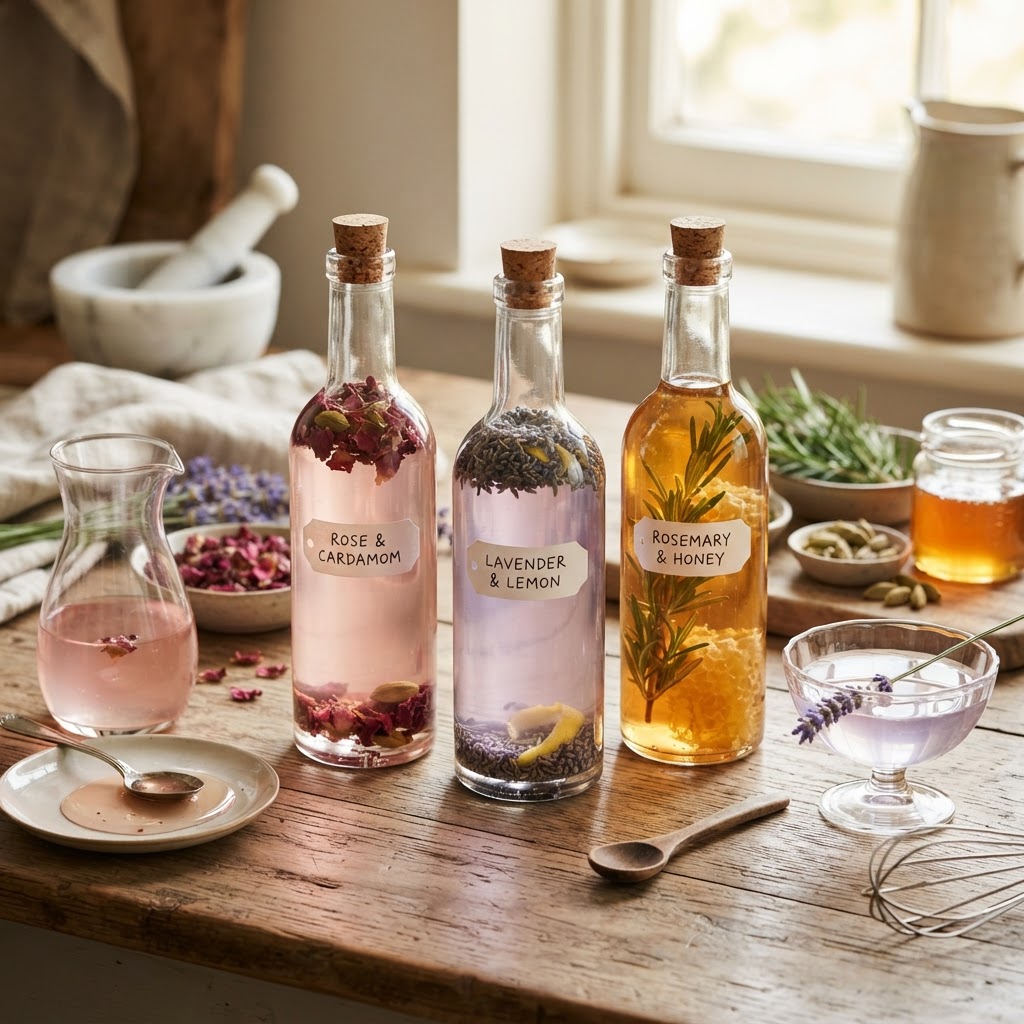
The Home Cook’s Guide to Hydrosol-Infused Syrups: Mastering Floral and Herb Extraction Ratios for Sophisticated Beverages and Desserts
The world of craft beverages and artisanal desserts has long relied on the subtle, nuanced bridge between aromatics and flavor. While many home cooks are comfortable macerating fruit or steeping common herbs in simple syrup, the realm of hydrosols offers a sophisticated, ethereal dimension that standard infusions simply cannot replicate. A hydrosol, often referred to as floral water, is the aromatic byproduct of steam distillation. By incorporating these potent essences into your pantry, you elevate the ordinary into the extraordinary, turning a basic soda or a standard cake soak into a professional-grade culinary experience that lingers on the palate long after the first bite.
Stepping into the world of extraction requires a fundamental shift in how we perceive ingredients. We are moving away from the heavy-handedness of concentrated extracts toward the delicate, complex chemical structures found in plant volatile oils. When you learn to balance these aromatic compounds with sugar and acidity, you gain the ability to manipulate perception, using scent as a primary driver of flavor. This guide is designed to demystify the process, offering you a roadmap to creating bespoke syrups that feel like they belong in the back bar of a high-end cocktail lounge or the pastry station of a Michelin-starred kitchen.
As we journey through this guide, we will explore the science of flavor stability, the importance of precise ratios, and the essential techniques for preventing oxidation and degradation. You will learn that the "chef's touch" is rarely about secret recipes, but rather about the meticulous calibration of ratios and the patience required for proper melding. Whether you are aiming to capture the fleeting notes of spring lavender or the deep, resinous character of rosemary, the principles remain the same. Let us discard the intimidation factor and embrace the artistry of floral and herbal extraction, ensuring that when guests ask for your secret, you can confidently tell them—or blame the chef.
The Chemistry of Aromatics and the Hydrosol Advantage
Understanding what a hydrosol truly is serves as the cornerstone of this practice. Unlike essential oils, which are highly concentrated and can be toxic if ingested in large quantities without professional oversight, hydrosols are water-soluble extracts containing a trace amount of essential oil and botanical solutes. This inherent water solubility makes them the perfect candidate for aqueous infusion, as they do not require an emulsifier to integrate seamlessly into your simple syrups. When you blend a hydrosol with a base syrup, you are essentially extending the botanical volatile compounds, ensuring they remain suspended and aromatic over time.
The primary advantage of using a hydrosol over a raw infusion is consistency and cleanliness. When you steep fresh flowers directly in sugar water, the resulting syrup can often take on "vegetal" or "muddy" notes, especially if the stems or chlorophyll-rich parts of the plant are left too long in the heat. A high-quality hydrosol, conversely, provides a clean, singular expression of the plant’s scent profile. This allows you to stack flavors—perhaps pairing a rose hydrosol with a touch of strawberry maceration—without the flavors competing for dominance or becoming murky.
Stability and Shelf Life
For the home cook, the greatest challenge is the degradation of aromatics. Volatile compounds are notoriously fragile and are susceptible to heat and light damage. When crafting your syrups, the cold-mixing technique is often superior to boiling. While you must boil your base syrup (water and sugar) to dissolve the solutes, you should only introduce the hydrosol once the mixture has dropped below 140°F (60°C). This temperature threshold is critical; anything higher risks the "flashing off" of the most delicate top notes, essentially turning your expensive rose water into sweetened, inert water.
"True culinary artistry lies not in the intensity of the flavor, but in the clarity of the aromatics. When you stop overpowering the palate and start inviting it to explore, you have transitioned from a cook to a creator."
Mastering the Foundation: Standard Ratios and Brix Density
Every syrup begins with the relationship between water and sugar, often referred to as the Brix level or the density of the syrup. For most cocktail and dessert applications, a 1:1 simple syrup (by weight) is the gold standard. To achieve this, use equal parts granulated sugar and filtered water. However, when introducing hydrosols, we must account for the volume of the hydrosol as a part of the total liquid weight. If your hydrosol is highly aromatic, you should substitute a portion of your water for the hydrosol, rather than adding it on top of the established ratio, to avoid thinning the syrup too much.
When working with professional-grade, highly concentrated floral waters, a good rule of thumb is a 1:10 ratio of hydrosol to syrup base. If you are using a more dilute, home-distilled product, you might push this to 1:5. Start conservative; you can always add more aroma, but you cannot remove it once the syrup is bottled. It is highly recommended to record your ratios in a kitchen journal, noting not just the ingredient but the brand or the batch date of the hydrosol, as these factors fluctuate significantly based on seasonal harvest conditions.
Scaling and Storage
Always prepare your syrups in small, manageable batches. A 250ml yield is ideal for home use, as it ensures you consume the product while the aromatic integrity is at its peak. Store your syrups in sterilized glass bottles, preferably amber or cobalt, to shield them from ultraviolet light. If you are preparing a large batch for an event, consider adding a tiny percentage of high-proof neutral spirit (like vodka) or a drop of citric acid to adjust the pH, which further stabilizes the mixture against microbial growth.
Extraction Techniques: Beyond the Basics
While we focus on the use of hydrosols, many home cooks want to supplement their aromatics with fresh botanicals. This is where the infusion-maceration hybrid technique becomes essential. If you are making a lemon-thyme syrup, for example, you might use a lemon hydrosol as the liquid base and fresh, organic thyme sprigs for the maceration. The key here is the "steep time." Heat the syrup to 180°F, remove from heat, add the fresh herbs, and cover tightly. Let the mixture cool naturally to room temperature before straining. This process captures the deep, earthy notes of the thyme while the hydrosol provides the bright, citrusy top note.
Texture is just as important as aroma. When your syrup is finished, it should have a luxurious mouthfeel. If you find your syrup is too thin, you can gently reduce the mixture, but remember that prolonged heat is the enemy of aromatics. A better method for achieving a syrupy viscosity is to use a slightly higher sugar content (a 1.5:1 ratio) or, in professional pastry applications, to introduce a small amount of liquid glucose. Liquid glucose adds body and prevents crystallization, which is vital if your syrup is intended for use in cocktails that will be stirred with ice.
Preventing Oxidation
Oxidation is the silent killer of delicate syrups. It turns a vibrant, clear floral syrup into a dull, brownish sludge. To prevent this, ensure that your syrup is completely airtight. Use high-quality swing-top bottles with silicone gaskets. If you are using a standard screw-top, place a small piece of plastic wrap over the opening before tightening the cap to create a secondary seal. Keep these bottles in a cool, dark cabinet or the refrigerator—never on the counter where they are exposed to ambient temperature swings.
"Hydrosols are the whispers of the garden. If you shout over them with too much heat or excessive sweeteners, you lose the conversation entirely."
Pairing Profiles: Crafting Sophisticated Flavor Maps
The secret to a "sophisticated" beverage is understanding the balance between sweetness, acidity, and aroma. A rose syrup is classic, but it becomes pedestrian if it is just "sweet." Pair your rose hydrosol with a squeeze of fresh lime juice and a splash of sparkling mineral water. The acid cuts through the sugar, causing the rose notes to "pop" on the tongue. In the world of dessert, a lavender hydrosol shines when paired with dark chocolate or a honey-based panna cotta, where the floral notes provide a necessary brightness to counteract the richness of the fats.
Consider the following pairing suggestions for your home laboratory:
The Importance of Salt
Do not fear adding a tiny pinch of sea salt to your finished syrups. Salt acts as a flavor enhancer that bridges the gap between the sugary sweetness and the botanical aroma. A mere 1/8 teaspoon of kosher salt per 250ml of syrup can transform a "flat" syrup into something vibrant and three-dimensional. It mimics the natural salinity found in fresh fruit, making your extracts taste more like the "real thing" rather than a synthetic interpretation.
Troubleshooting Common Culinary Issues
One of the most frequent complaints home cooks face is the "soapy" aftertaste. This occurs when an infusion is allowed to sit too long with the botanical matter, or when the hydrosol itself is of inferior quality. If you find your syrup tastes like perfume, you have likely over-extracted the terpenes or used a hydrosol that was not properly distilled. To correct a syrup that is slightly too perfumed, try adding more acid (like lemon or citric acid) and a tiny bit more salt. If that fails, dilute the syrup with a fresh batch of 1:1 simple syrup to "stretch" the flavor profile.
Another issue is crystallization. This often happens when the sugar is not fully dissolved or when the syrup is boiled too aggressively. Always use filtered or distilled water—tap water contains minerals that can encourage crystallization. If you see sugar crystals forming on the neck of your bottle, do not shake the bottle; this simply introduces more crystals into the liquid. Instead, gently warm the bottle in a warm water bath until the crystals dissolve, and ensure you are using a clean, dry pour spout.
Measuring by Weight
In professional kitchens, we never use volume measurements like cups or tablespoons for syrup base. We use grams. The density of sugar fluctuates based on the brand, how tightly it is packed, and the humidity in your kitchen. Use a digital scale to ensure your 1:1 ratio is exact. Precision here allows you to replicate your successes. If you make a batch of lavender syrup that everyone loves, but you don't know the exact weight of the water, sugar, and hydrosol used, you will never be able to recreate that magic.
Advanced Techniques: Alcohol Infusions and Macerations
Once you have mastered the hydrosol-infused simple syrup, you may want to move into alcohol-based aromatic extractions. By using a base of high-proof neutral spirit (100-proof vodka or grain alcohol), you can extract aromatics that are not water-soluble. This is particularly useful for woody or resinous herbs like juniper, clove, or cinnamon. You can then add this "tincture" to your simple syrup to create a complex, multi-layered sweetener. The ethanol in the tincture also acts as an excellent preservative for your syrup.
When combining a tincture with a hydrosol-based syrup, do so at the very end of the process. Add the tincture drop by drop, tasting frequently. The goal is to create a "heart note" (the tincture) and a "top note" (the hydrosol). This creates a flavor journey where the scent hits the nose, the sugar hits the tongue, and the deep, resinous finish rounds out the experience. It is the same principle used in high-end perfumery, applied directly to the palate.
Proper Labelling and Record Keeping
Create a logbook specifically for your extractions. Include the following fields for every entry:
Date of Creation*: Essential for tracking shelf life.
Botanical Used*: Specify the variety (e.g., "English Lavender" vs. "French Lavender").
Brix Ratio*: The weight of sugar vs. weight of water.
Hydrosol Concentration*: The exact weight of hydrosol added.
Tasting Notes*: Was it too sweet? Did it need more acid?
Intended Use*: Is this better for cocktails or for soaking a sponge cake?
"The most important tool in your kitchen isn't a knife or a copper pot; it's your logbook. Without documentation, you are just guessing. With documentation, you are building a library of flavors."
Final Thoughts
Mastering the art of hydrosol-infused syrups is a journey of refinement. It requires a departure from the "measure by eye" philosophy and an embrace of the scientific precision that defines professional pastry and cocktail work. By controlling your temperatures, respecting the volatility of your aromatics, and maintaining a rigorous standard for your ratios, you unlock a level of complexity that is rarely seen in home kitchens.
Remember that ingredients are only as good as the care you take with them. Treat your hydrosols with the respect they deserve—keep them cool, keep them dark, and never expose them to unnecessary heat. As you experiment with different botanicals and floral pairings, you will develop a palate for what works and, more importantly, what sings. When you present a dessert or a drink that uses your custom-crafted syrups, you aren't just serving a treat; you are sharing a sensory experience that speaks to your dedication and your craft.
Take these techniques, start with a simple batch of rose or orange blossom syrup, and pay attention to the subtle nuances. Observe how the aroma changes as the syrup settles. Adjust your acid, tweak your salinity, and above all, have fun with the process. When your friends and family ask how you achieved such a delicate, professional flavor profile, just smile, hand them the bottle, and tell them to blame the chef. Your journey into the world of sophisticated extraction has only just begun, and the possibilities for innovation are limited only by your imagination and your willingness to measure carefully. Happy infusing.
Get the Next Recipe
Weekly recipes, techniques, and gear picks — straight to your inbox.
