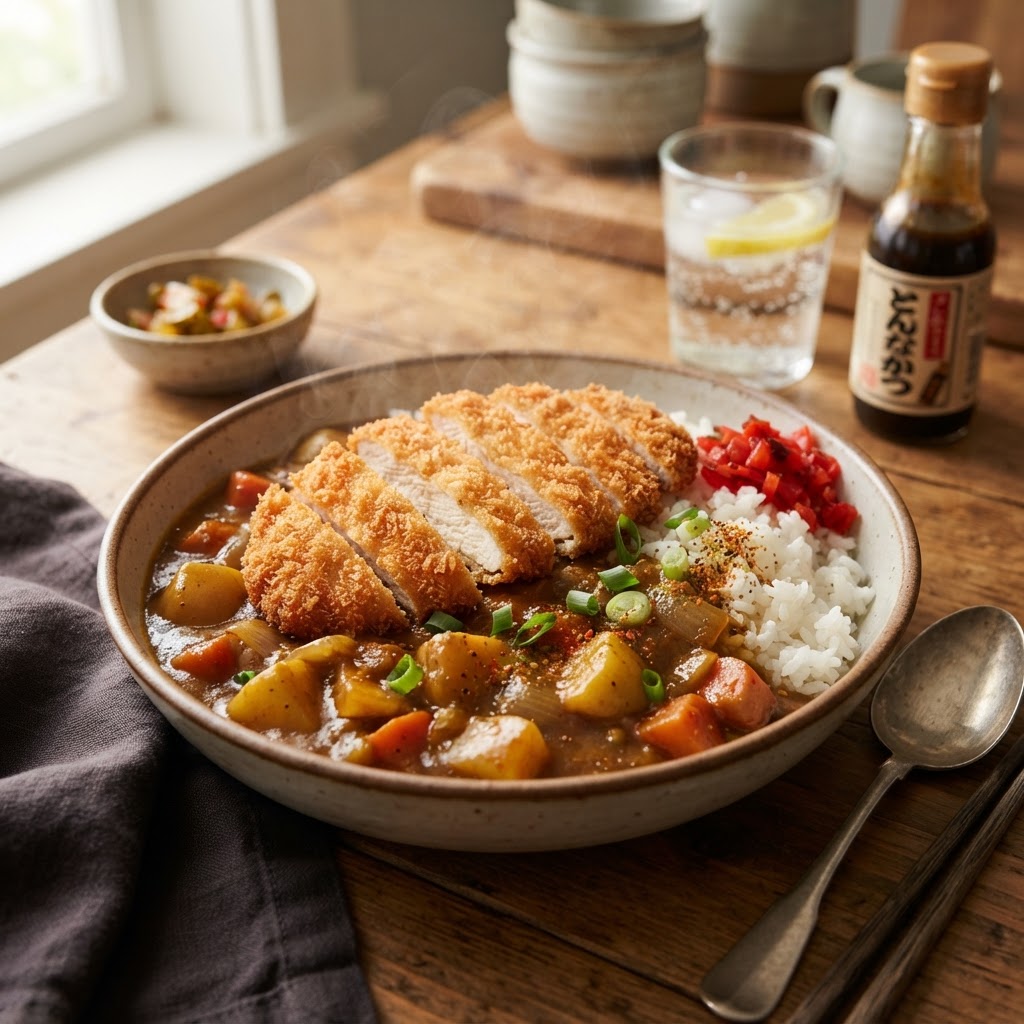
The Home Cook’s Guide to Japanese Curry: Mastering the Roux-Based Thickening Technique for Rich, Comforting Katsu-Style Stews
There is something undeniably transformative about the scent of Japanese curry wafting through a home kitchen. Unlike the spice-forward, searing heat of an Indian vindaloo or the fragrant, herbaceous profile of a Thai green curry, Japanese curry—or karē—is an exercise in deep, velvety comfort. It is a dish that prioritizes a harmonious, mellow sweetness and a thick, glossy texture that coats the back of a spoon with ease. For the uninitiated, it is often dismissed as "just a stew," but for those who have mastered the art of the roux, it represents the absolute pinnacle of Japanese comfort food, bridging the gap between Western colonial influence and traditional umami-heavy aesthetics.
When you look at the evolution of this dish, you are essentially looking at the history of the Meiji era in a bowl. Originally introduced to Japan via the British Royal Navy, the curry was adapted to suit the Japanese palate, which favored thickness and a softer spice profile. Over decades, it has solidified its place as the quintessential "everyday" meal, appearing in school lunches, hiking cabins, and high-end bistros alike. Mastering it at home isn't about chasing the perfect spice blend, but rather understanding the physics of the roux-based thickening technique and the delicate balance of aromatics that give it its signature character.
At "Blame The Chef," we believe that every home cook should have a repertoire that can turn a few humble vegetables and a piece of protein into a meal that feels like a warm embrace. Japanese curry is perhaps the most reliable candidate for this culinary endeavor because it is remarkably forgiving yet endlessly complex. Whether you are aiming for a classic chicken katsu curry or a hearty vegetable-forward stew, the principles remain the same. By the end of this guide, you will move past the reliance on store-bought boxed blocks and begin to craft your own rich, soulful sauce from scratch, using nothing but flour, butter, and a curated selection of spices.
The Chemistry of the Roux: The Foundation of Texture
The secret to a perfect Japanese curry lies almost entirely in the roux, or rū as it is called in Japanese kitchens. In French cooking, a roux is typically a base of equal parts fat and flour, cooked just until the raw flour taste disappears. In the context of Japanese curry, however, the roux serves a secondary, more aggressive function: it is the primary flavor carrier. When you cook your roux to a deeper shade—somewhere between a light chestnut and a dark mahogany—you are performing a chemical reaction known as the Maillard reaction, which deepens the nuttiness and complexity of the flour base before it even hits the stew liquid.
Balancing Fat and Flour
For an optimal home kitchen batch, you want to maintain a ratio of 1:1 by weight. A common starting point is 50 grams of unsalted butter (or a blend of butter and rendered animal fat like lard for extra depth) to 50 grams of all-purpose flour. The butter acts as the carrier, and as it melts, the flour begins to hydrate. It is vital that you do not rush this stage. If the flour is not sufficiently toasted, the sauce will have a gummy, raw mouthfeel that detracts from the elegance of the finished dish.
Controlling the Heat
Temperature control is the difference between a silk-smooth sauce and a lumpy, burnt mess. You should work over a medium-low flame, constantly whisking the mixture. As the roux deepens in color, it will begin to smell like toasted hazelnut or dark cocoa. This is the precise moment you want to incorporate your spice blend. By adding the spices directly into the hot fat, you are blooming the essential oils, which releases a fragrance that cannot be achieved by adding the spices directly to the broth later in the cooking process.
"A roux is not merely a thickening agent; it is the culinary engine of the dish. If you treat the flour with respect, the roux will reward you with a texture that is nothing short of velvet."
Building the Umami Base: Aromatics and Depth
Once your roux is prepped and set aside, the foundation of your actual stew begins. The "holy trinity" of Japanese curry consists of onions, carrots, and potatoes, but the way you treat these ingredients is paramount. The onions are the most important variable here. You aren't just sweating them; you are looking for a deep, slow caramelization that lasts at least 25 to 30 minutes. This provides the inherent sweetness that contrasts beautifully with the savory, spice-heavy roux.
The Role of Onions
When you start with thinly sliced yellow onions, keep the heat low and perhaps add a pinch of salt to draw out the moisture. You want them to turn a deep, jammy brown. This process, known as caramelizing, converts the sugars in the onions into a complex, savory flavor profile. If you skip this, your curry will taste flat, missing that essential soulfulness that characterizes the best katsu-style gravies.
Complementary Aromatics
Beyond the trinity, professional chefs often incorporate secondary aromatics to push the flavor into the realm of the extraordinary. A tablespoon of finely grated ginger and garlic added during the final minutes of sautéing the vegetables adds a sharp, punchy counterpoint. For an even deeper layer of umami, you might add a splash of soy sauce, a teaspoon of Worcestershire sauce, or even a square of dark chocolate or a dollop of apple puree. These additions are not meant to make the curry taste like apples or chocolate, but rather to round out the acidity of the tomatoes or the intensity of the curry powder.
Selecting Your Protein and Achieving the Perfect Katsu
While Japanese curry can be served as a vegetarian stew, the "Katsu" style implies a breaded and deep-fried protein—usually chicken or pork. The interplay between the crisp, crunchy exterior of the panko-crusted cutlet and the rich, flowing curry sauce is the reason this dish is globally beloved. The contrast in textures is essential: if the cutlet is soggy or the curry is too thin, the experience is diminished.
Preparing the Katsu Cutlet
To achieve the perfect cutlet, you must ensure the meat is pounded to an even thickness of about 1/2 inch. This ensures that the protein cooks through at the same rate that the crust browns. Use high-quality panko breadcrumbs, which are coarser and crispier than standard Western breadcrumbs, to ensure maximum surface area for the sauce to cling to without making the coating fall off. The meat should be seasoned with salt and white pepper, dredged in flour, dipped in beaten egg, and then pressed firmly into the panko.
The Frying Technique
You should aim for a frying temperature of 350°F (175°C). Use a neutral oil with a high smoke point, such as grapeseed, canola, or peanut oil. Fry the cutlet for about 3-4 minutes per side until the panko is golden brown and the internal temperature of the chicken has reached 165°F. Once removed from the oil, let the cutlet rest on a wire rack—never on a paper towel—for at least three minutes. Resting is essential; if you slice into the hot meat immediately, the juices will run out, loosening the breading and causing it to peel away when it hits the curry.
"The magic of a great katsu curry is in the architecture of the plate. You want the crispness of the fried protein to maintain its integrity against the encroaching richness of the sauce."
Crafting Your Custom Spice Blend
Most home cooks rely on store-bought curry blocks, which are undeniably convenient. However, these blocks are often loaded with stabilizers and excessive sodium. By crafting your own spice blend, you gain complete control over the flavor profile, ranging from mild and floral to bold and aggressive. The core of any good Japanese curry powder is turmeric, coriander, and cumin, but the secret weapons are fenugreek and cardamom.
The Anatomy of the Blend
To make enough for several batches, mix the following in a dry bowl:
* 3 tablespoons ground coriander
* 2 tablespoons ground turmeric
* 1 tablespoon ground cumin
* 1 tablespoon ground ginger
* 1 teaspoon cayenne pepper (adjust to your heat preference)
* 1/2 teaspoon ground cardamom
* 1/4 teaspoon ground cloves
* 1/2 teaspoon ground cinnamon
Storage and Bloom
Store this blend in an airtight jar in a cool, dark place. When you are ready to make your curry, remember that spices are fat-soluble. Never add your ground spices into the water directly. Instead, incorporate them into your roux while it is still warm and liquid. This process, known as blooming, extracts the essential oils from the ground particles, creating a much more aromatic and cohesive flavor profile that permeates the entire stew.
The Simmering Process: Time and Patience
After you have combined your caramelized vegetables, your protein (if not serving katsu on top), and your stock, the final stage is the simmer. Many beginners rush this process, but the flavor development here is cumulative. You need the vegetables to release their starches into the stock, which, when combined with your roux, will create that signature thickened viscosity.
Choosing the Liquid
While water is the traditional base, using a high-quality chicken or beef stock will exponentially increase the depth of flavor. If you are going the vegetarian route, a kombu (dried kelp) dashi is the superior choice, as it provides a naturally high concentration of glutamic acid, the very essence of umami. Bring your liquid to a simmer, then gently add the roux, whisking constantly to ensure there are no clumps.
The Low and Slow Approach
Once the roux is fully integrated, drop the heat to the lowest setting. The stew should be at a gentle "lazy" simmer. You want the sauce to thicken slowly, allowing the flavors to meld. If the curry becomes too thick, simply add a tablespoon of stock at a time to reach your desired consistency. It should be thick enough to coat a ladle, but thin enough to pour gracefully over steamed short-grain white rice.
Troubleshooting Common Issues
Even the most experienced home cooks run into trouble occasionally. Because Japanese curry is so reliant on the roux and the simmering process, most errors are easily corrected if you know what to look for. The most common mistake is a "grainy" or "lumpy" sauce. This usually happens when the roux isn't fully whisked into the liquid or if the liquid was added all at once rather than in stages.
Fixing Lumps
If your sauce turns out lumpy, don't panic. You can pass the entire sauce through a fine-mesh sieve or use an immersion blender to smooth it out. Ideally, add your liquid to the roux in small, ladle-sized increments, whisking vigorously after each addition until a smooth paste forms. Once the paste is smooth, you can add the remaining liquid with confidence, knowing the base is fully integrated.
Balancing Flavors
If the curry tastes too bitter, it is usually because the roux was over-toasted or the spices were burnt. A small amount of honey or a grated apple can balance that bitterness. If the curry lacks "punch," it isn't necessarily a lack of spice, but often a lack of acid. A teaspoon of vinegar or a squeeze of fresh lemon juice added at the very end can brighten the heavy flavors and make the dish feel "cleaner" on the palate.
The Final Presentation: Serving for Impact
Presentation in Japanese culinary culture is not merely about aesthetics; it is about respecting the ingredients. When serving a katsu curry, the rice should be perfectly steamed, short-grain, and glossy. Use a mold to create a neat mound on one side of the plate. Place the katsu cutlet alongside or slightly overlapping the rice, and then pour the curry over the exposed section of the plate, being careful not to soak the entire cutlet, as you want to preserve that initial crunch.
The Accompaniment: Fukujinzuke
No Japanese curry is truly complete without fukujinzuke, the bright red, crunchy pickled vegetable condiment. The acidity and crunch of the pickles provide a vital counterpoint to the soft, heavy curry sauce. A small pile of these pickles on the side of the plate serves as a palate cleanser between bites, ensuring that you don't grow fatigued by the rich, savory nature of the stew.
Garnishing
For a touch of freshness, garnish with finely sliced scallions or a sprinkle of toasted sesame seeds. If you are feeling indulgent, a soft-boiled egg (marinated in soy sauce and mirin) adds a creamy, decadent element that pairs beautifully with the earthy notes of the curry spices.
"Cooking is the process of putting yourself into a dish. When you take the time to build a roux from scratch, you aren't just making dinner—you are crafting a memory."
Final Thoughts
Mastering Japanese curry is a journey of patience and sensory awareness. It is a dish that demands you pay attention to the subtle color changes in your pan, the aroma of your spices as they hit the heat, and the slow, rhythmic transformation of simple ingredients into a complex, satisfying gravy. When you walk away from the convenience of a store-bought block, you aren't just changing how you cook; you are changing how you perceive the pantry. You are learning that a few tablespoons of flour, a knob of butter, and a thoughtful selection of spices can become a masterpiece of culinary architecture.
Take the time to experiment. Try using different stocks, different ratios of spices, or even varying the types of onions you use. Each iteration will teach you something new about the chemistry of the sauce and the balance of the dish. Remember, there is no "correct" way to enjoy your curry; whether you prefer it mild and sweet or fiery and bold, the goal is always the same: to create a meal that brings warmth and comfort to your table. So, don't blame the chef if the first batch isn't perfect—blame the chemistry, adjust your technique, and try again. Your perfect bowl of katsu curry is well within your reach, and the process of getting there is just as delicious as the result.
At the end of the day, Japanese curry is about the shared experience of comfort. It is a dish meant to be enjoyed on a rainy afternoon, after a long week, or whenever you need a reminder that simple, honest ingredients can be elevated into something truly extraordinary. Treat the roux with kindness, respect the blooming process of your spices, and most importantly, enjoy every single bite. Happy cooking, and may your sauce always be smooth and your katsu always be perfectly crisp.

Get the Next Recipe
Weekly recipes, techniques, and gear picks — straight to your inbox.
