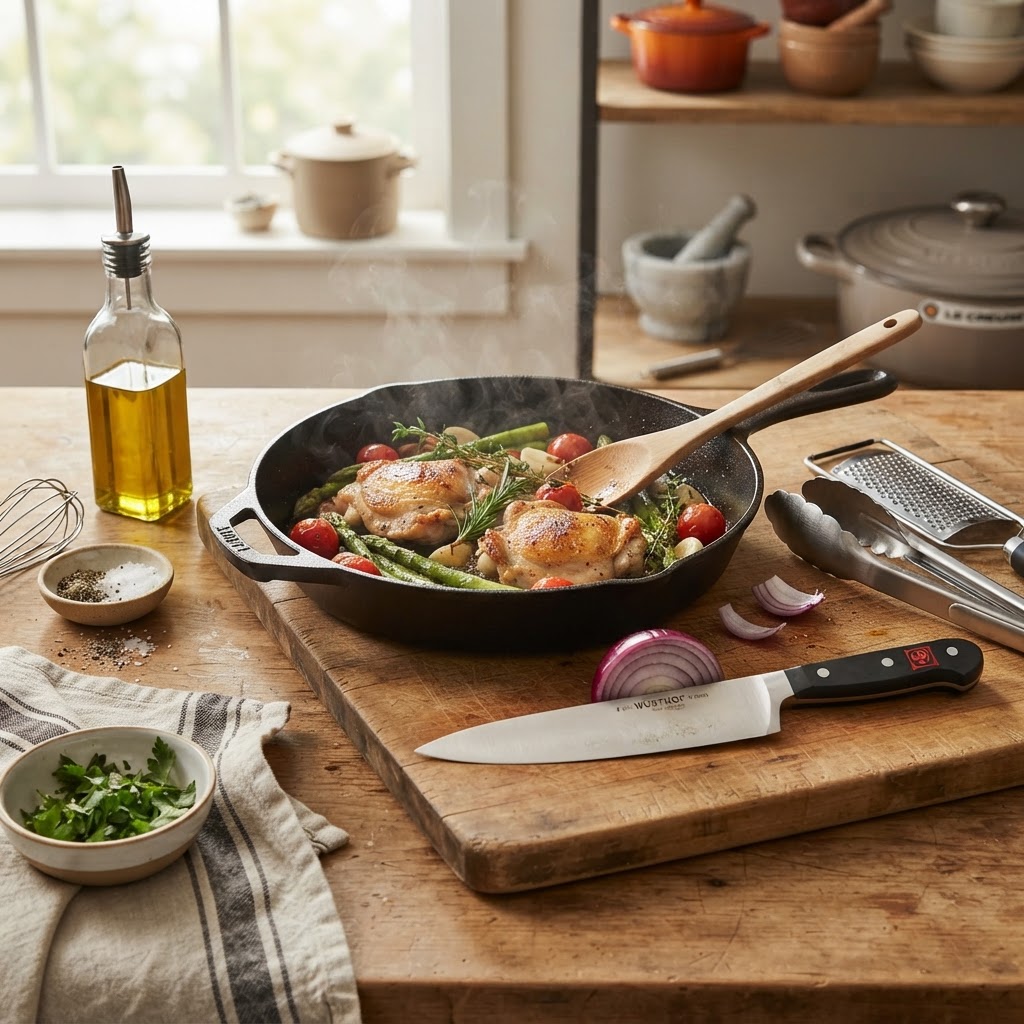
The Home Cook’s Guide to Kitchen Equipment: Essential Tools for Every Cooking Method
Every home cook has experienced that sinking feeling when they reach for a tool that simply isn't up to the task at hand. You are mid-sear, the pan is shimmering with oil, and suddenly you realize your flipper is flimsy, or worse, you are using the wrong material entirely. Cooking is fundamentally a series of chemical reactions, and the equipment you choose acts as the vessel for those reactions. Understanding your tools is just as vital as understanding your ingredients, yet many novices fall into the trap of purchasing expensive gadgetry they will only use once a year. By curating a kitchen with high-quality, versatile essentials, you create a seamless workflow that allows you to focus on the nuance of flavor rather than the struggle of execution.
The goal of this guide is to demystify the vast landscape of kitchen equipment and distill it down to the non-negotiables. We will explore the physics of heat conduction, the importance of ergonomic design, and why certain materials outperform others in the crucible of the stovetop. Whether you are aiming to master the delicate art of a French omelet or the rigorous demands of a long-braised brisket, having a reliable toolkit is the greatest shortcut to culinary success. We believe that when you are properly equipped, your confidence grows, and the kitchen transforms from a place of chores into a sanctuary of creativity. Blame The Chef is here to ensure that every tool in your drawer earns its keep by serving a clear, functional purpose.
When setting up your station, prioritize durability and ease of maintenance above all else. There is a common misconception that a "professional" kitchen requires an array of high-tech, digital-first devices, but the reality is that the best chefs rely on simple, robust designs that can withstand decades of abuse. Throughout this post, we will break down the essential categories—from cutlery and cookware to precision gadgets—that will elevate your home cooking from amateur to artisan. We are going to delve deep into the mechanics of heat, the geometry of blades, and the chemical composition of your surfaces, giving you the knowledge to invest in equipment that pays dividends for years to come. Let’s strip away the clutter and focus on the bedrock of the home kitchen.
The Foundation of Cutlery: Mastering the Edge
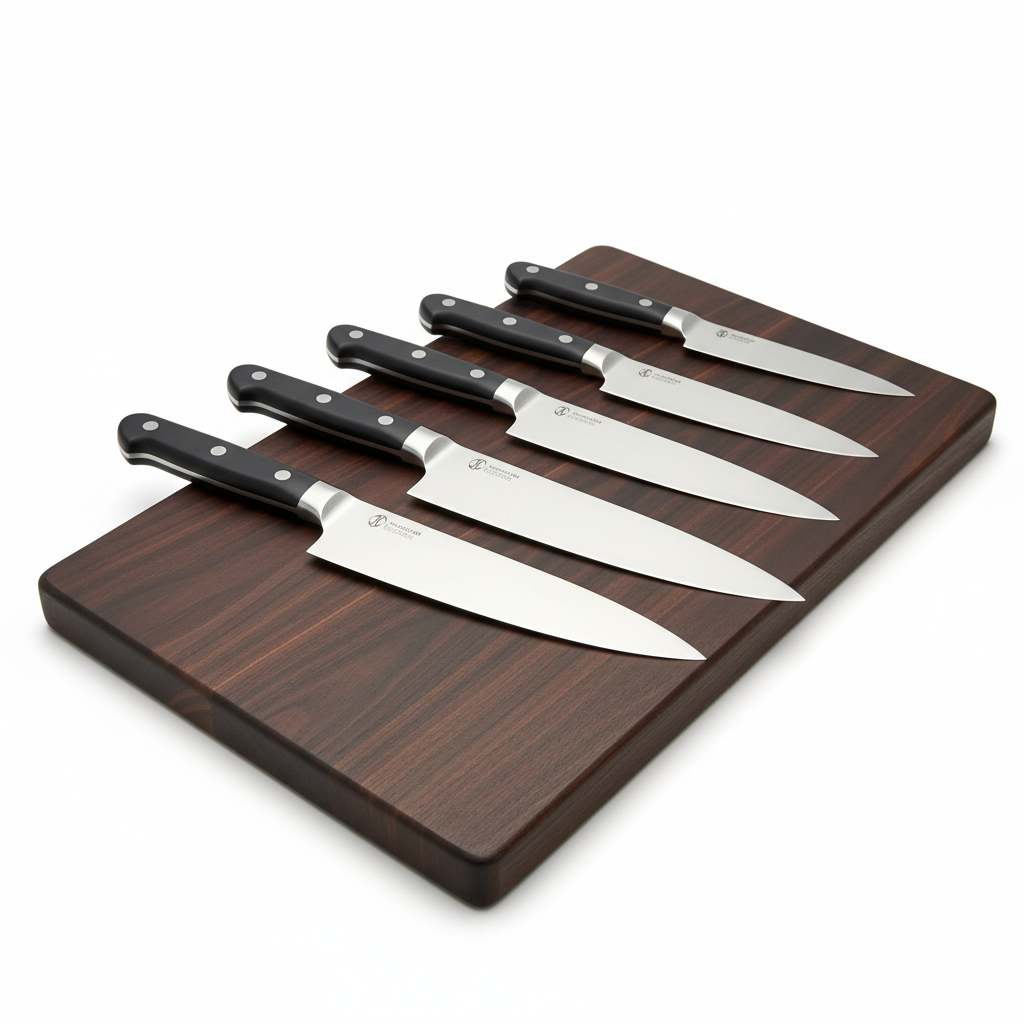
The heart of any kitchen is its knives. Many beginners start with a large, mismatched block of bargain-bin steel, only to find that these tools dull quickly and lose their shape. A professional chef requires only three primary blades: a 8-inch Chef’s Knife, a serrated bread knife, and a small paring knife. The Chef’s Knife should be considered an extension of your arm, featuring a balanced handle and a high-carbon stainless steel blade that holds a sharp edge through hours of prep work. Investing in one high-quality, forged knife is infinitely better than buying a twelve-piece set that will inevitably clutter your counters.
Anatomy of a Blade
When selecting your primary blade, look for full tang construction, which means the metal of the blade extends all the way through the handle. This provides balance and ensures that the knife won’t snap under pressure. You should also pay attention to the bolster, the thick junction between the handle and the blade, which offers a finger guard and helps balance the weight. A blade with a slight curve is ideal for "rock-chopping" herbs and aromatics, while a flatter profile is better for straight-down slicing of proteins. Always test the "heft" of a knife in your own hand; ergonomics are subjective, and if it feels awkward at the store, it will feel disastrous after five minutes of mincing onions.
Maintenance and Sharpening
A sharp knife is significantly safer than a dull one, as a dull blade requires excessive force and is prone to slipping off the surface of your ingredients. To maintain your edge, use a honing steel every time you cook to realign the microscopic teeth of the metal. Furthermore, learn to use a whetstone to sharpen your blade once every three to six months. Never place a high-quality knife in the dishwasher; the heat and detergent can compromise the handle’s integrity and wreak havoc on the blade’s edge. Hand-wash your knives immediately after use, dry them thoroughly, and store them in a knife block, on a magnetic strip, or in a protective sheath to prevent damage to the cutting surface.
"A sharp knife is not just a tool for efficiency; it is an instrument of precision that honors the ingredients. When the blade bites cleanly into the fiber of a vegetable, you preserve the moisture and texture that make for a superior final dish."
The Art of Heat: Choosing Your Cookware
Heat transfer is the silent protagonist in every recipe. Your cookware must be chosen based on how it interacts with the heat source and the food itself. For most cooking methods, a combination of cast iron, stainless steel, and hard-anodized aluminum is the gold standard. Cast iron is unparalleled for heat retention and developing a deep, dark crust on a ribeye, whereas stainless steel offers the best versatility for pan sauces and acidic ingredients. Avoid thin, non-stick pans for high-heat tasks; they are designed for delicate items like eggs or fish, not for searing or deglazing.
The Stainless Steel Advantage
Stainless steel is the workhorse of the professional kitchen because it is non-reactive, meaning you can cook tomatoes, wine reductions, and vinegar-based sauces without a metallic taste leaching into the food. Look for clad construction, which means a core of highly conductive aluminum or copper is sandwiched between layers of stainless steel. This layering eliminates hot spots, ensuring that your delicate shallots don't burn while the center of your pan stays cool. When searing meat in stainless steel, patience is key—the Leidenfrost effect ensures that if the pan is properly preheated, the meat will naturally release from the surface once a proper crust has formed.
Cast Iron and Carbon Steel
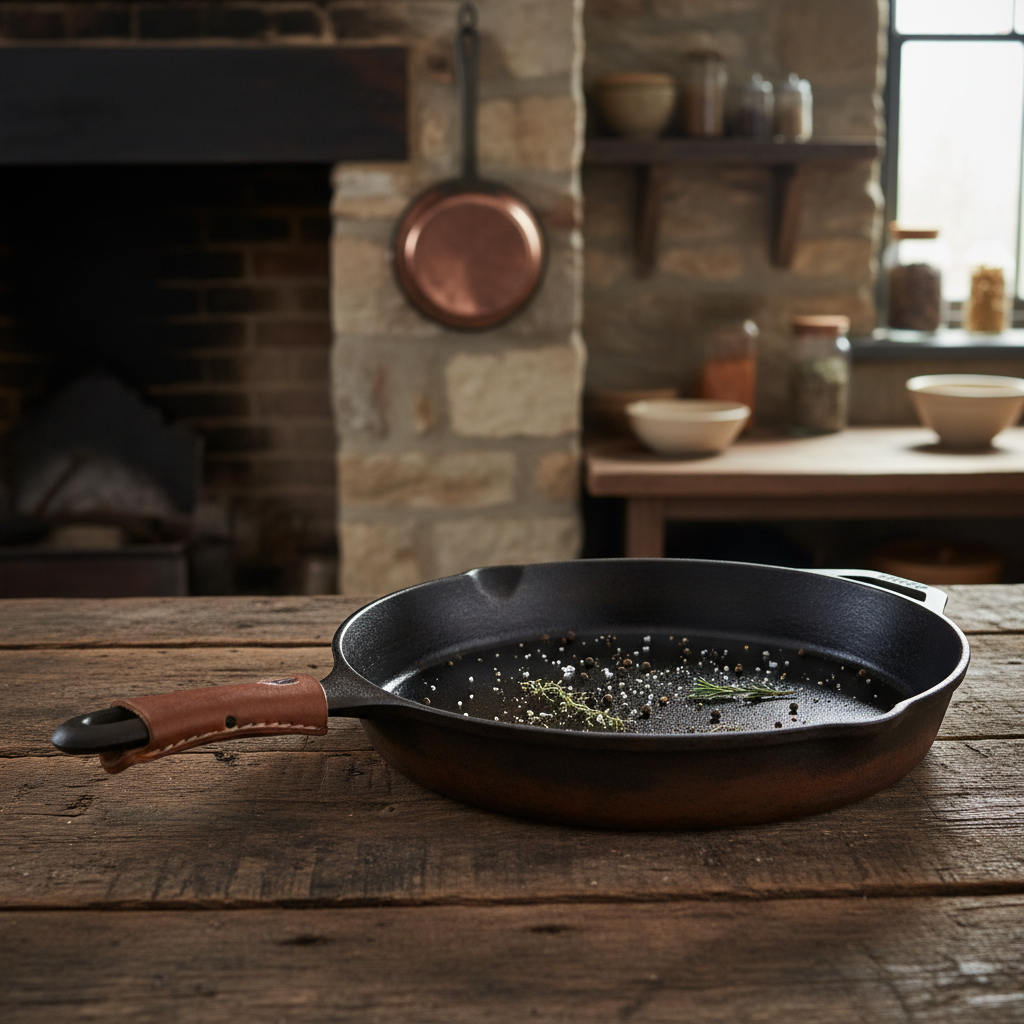
Cast iron is the ultimate tool for heat retention. Because it is thick and heavy, it takes longer to heat up, but once it is hot, it stays hot. This makes it perfect for roasting, deep frying, and high-heat searing. Over time, you will build up a seasoning, which is a layer of polymerized oil that acts as a natural non-stick surface. Carbon steel is a lighter, more responsive alternative to cast iron, often used in professional restaurants for tossing vegetables or searing proteins. Both require specific care: never soak them, scrub them with harsh abrasives, or leave them wet, as they will rust almost immediately.
Precision Tools: Measurements and Timing
Cooking is an art, but baking is a science. If you want consistent results, you must move away from the "dash and pinch" method and embrace digital precision. A digital kitchen scale is the single most important purchase for any home baker or serious cook. Measuring flour by volume is notoriously inaccurate, as it can be packed tighter or looser depending on the humidity and how you scoop it. By measuring in grams, you eliminate variables, ensuring that your hydration ratios for bread or your emulsification ratios for dressings are spot-on every time.
The Utility of Thermometry
One of the most frequent mistakes made by home cooks is relying on the "color" of meat to determine doneness. A chicken breast that looks cooked on the outside might be raw in the middle, or worse, dry as leather if overcooked. An instant-read digital thermometer is a non-negotiable tool. For poultry, aim for an internal temperature of 165°F (74°C). For medium-rare beef, pull the meat from the heat when it hits 125°F (52°C) and let it rest; the carryover heat will bring it to the perfect 130°F (54°C). This simple tool prevents food-borne illness and ensures that your protein remains juicy.
Small Gadgets That Matter
Beyond scales and thermometers, keep your drawers organized with high-quality silicone spatulas, microplanes, and tongs. Silicone spatulas are heat-resistant and perfect for scraping every bit of sauce from a bowl, reducing waste. A microplane is the best tool for zesting citrus, grating fresh ginger, or shaving hard cheeses like Parmesan directly onto a dish. Invest in a pair of locking tongs with scalloped edges; these become an extension of your hand for turning proteins, tossing pasta, and moving items around the stovetop without fear of splashing hot oil.
"If you cannot measure it, you cannot control it. In the high-pressure environment of a commercial kitchen, precision is the difference between a masterpiece and a mistake."
Preparation Stations: Cutting Boards and Containers
Your workspace is just as important as your stove. Many home cooks make the mistake of using a small, slippery plastic cutting board that slides around the counter. Instead, invest in a large, stable end-grain wooden cutting board. Wood is easier on your knife blades, which prevents them from dulling as quickly, and it provides a "self-healing" surface that is safer than glass or stone. If your board moves, place a damp paper towel or a non-slip silicone mat underneath it to keep it firmly in place while you work.
Storage and Mise en Place
The French term *mise en place* literally translates to "everything in its place." Before you turn on the heat, all your ingredients should be chopped, measured, and staged. Use small glass bowls or ramekins to hold your spices, oils, and aromatics. Not only does this keep your prep area tidy, but it also prevents the panic of trying to chop garlic while your butter is browning in the pan. Glass containers are superior to plastic for storage because they do not retain odors or flavors from previous ingredients and can go directly from the fridge to the microwave or oven.
Sanitation Practices
Cross-contamination is the enemy of the home chef. Always keep at least two cutting boards: one dedicated to raw meat and poultry, and another for vegetables and herbs. This prevents bacteria like Salmonella or E. coli from migrating into your fresh greens. If you work with raw protein, sanitize your board immediately with hot water and soap, or a mild bleach solution if you prefer extra caution. Maintaining a clean station is the mark of a pro; it reduces stress and keeps your workspace efficient throughout the cooking process.
Essential Techniques for the Modern Kitchen
Equipment is useless if you don't know the technique to match it. One of the most critical skills is learning how to control your heat. High heat is for searing and sautéing, while medium-to-low heat is for sweating aromatics and slow-cooking proteins. If your butter is foaming and turning brown, you are in the "browning" zone, perfect for flavor development. If your oil is smoking, you have pushed the temperature too far and are likely destroying the delicate flavors of your food. Learning to read your pan is just as important as learning to read your recipe.
The Power of Emulsification
Many home cooks struggle to make a vinaigrette or a hollandaise that doesn't "break." The secret is a slow, steady addition of fat into your liquid base while whisking constantly. Using a bowl with a weighted base or placing it on a damp towel helps keep it stable so you can focus on the whisking. When creating a sauce, use a whisk with a round profile to reach the edges of the pan, ensuring no clumps of flour or starch remain. These techniques turn simple ingredients into restaurant-quality emulsions that cling to your food rather than pooling at the bottom of the plate.
Roasting and Braising
For roasting, your baking sheet should be sturdy and heavy-duty to prevent warping at temperatures above 400°F (204°C). Use a rimmed sheet pan to catch juices and prevent grease from dripping onto the bottom of your oven. When braising, a Dutch oven is the quintessential piece of equipment. Its thick walls and heavy lid create a self-basting environment, trapping moisture and allowing collagen in tough cuts of meat to slowly break down into succulent, tender fibers. Remember that a braise is a low-and-slow process; do not rush it by turning up the heat.
Investing for the Future
When shopping for kitchen equipment, think of it as an investment in your lifestyle. You don't need to buy the entire store at once. Start with the basics: a solid Chef's Knife, one cast-iron skillet, a stainless steel saucier, and a reliable scale. As you grow more comfortable in the kitchen, add specialty items like a high-end blender or a sous-vide circulator, but only when you find a specific need for them. Quality equipment will survive years of heavy use, while cheap alternatives will cost you more in the long run as you replace them time and again.
Quality Over Quantity
Walk into any high-end professional kitchen, and you will notice a lack of clutter. The walls are not filled with niche gadgets; they are filled with essential, multipurpose tools. Avoid the "single-tasker" traps like avocado slicers, egg cookers, or strawberry hullers. These items occupy valuable drawer space and offer little return on investment. Instead, cultivate a set of high-quality, professional-grade items that can perform a dozen different tasks. A good knife can slice fruit, mince herbs, and break down a chicken; it is the ultimate multipurpose tool.
Ergonomics and Comfort
Never underestimate the physical nature of cooking. If you have trouble gripping a thin handle, look for knives or utensils with wider, ergonomic grips. If you have back pain, consider an anti-fatigue mat for your standing area. Creating a comfortable kitchen is the key to longevity in your culinary hobby. The more comfortable you are, the more likely you are to experiment with new techniques and recipes. Treat your kitchen with the same level of care you treat your own health, and it will reward you with years of delicious meals.
"The best tool in the kitchen is not a gadget or a machine; it is the intuition you build by using your equipment day in and day out. Eventually, you stop noticing the tools and start focusing entirely on the craft."
Final Thoughts
Building a collection of kitchen equipment is a journey, not a destination. You are curating a space that reflects your personality and your culinary goals. Do not feel pressured to have the "perfect" setup overnight; some of the best kitchens are built over a decade of careful selection and replacement. By prioritizing quality, versatility, and precision, you provide yourself with the foundation necessary to learn, grow, and eventually master the complex world of flavor. Remember that the equipment is merely a partner in your process, and your own hands, combined with your growing knowledge, are the true catalysts of great cooking.
As you navigate your culinary path, remember to stay curious. Try new methods, test the limits of your cookware, and don't be afraid to make mistakes. A burned sauce or a poorly seared steak is just a lesson in heat control. Keep your knives sharp, your surfaces clean, and your digital scale handy. At Blame The Chef, we believe that the barrier between a good cook and a great cook is often simply the quality of the tools they reach for in a moment of inspiration. Take the time to invest in yourself and your equipment, and you will find that the kitchen becomes the most rewarding room in your home.
Finally, keep in mind the social aspect of cooking. Your tools should not only help you feed yourself but also enable you to share your passion with friends and family. A well-equipped kitchen allows you to prepare larger, more complex meals with ease, inviting connection and celebration. Whether you are hosting a holiday dinner or just whipping up a quick Tuesday night stir-fry, the reliability of your equipment serves as a constant companion. Cherish these tools, clean them well, and treat them with the respect that good instruments deserve. Happy cooking, and may your pans always be seasoned, your knives always be sharp, and your kitchen always be full of life.
Continuing on our theme of essential maintenance, let's briefly touch upon the environmental impact of our kitchen habits. High-quality tools are inherently more sustainable than "fast" kitchenware. When you buy a knife that lasts twenty years, you avoid throwing away half a dozen low-quality knives that end up in a landfill. When you buy a heavy-duty stainless steel pan, you bypass the need for non-stick pans that have a limited lifespan and often rely on chemical coatings. By choosing durability, you are not only saving money, but you are also making a conscious choice to reduce your overall waste.
The psychology of cooking is also tied to your tools. There is a distinct sense of calm that comes from working with equipment that performs exactly as expected. When you know your pan will heat evenly, or your knife will slice through a tomato without bruising the flesh, your mind is free to focus on seasoning, aroma, and presentation. If you are constantly battling your equipment, your focus is fragmented, and your cooking reflects that lack of control. By streamlining your inventory, you are essentially streamlining your cognitive load, allowing you to enter the state of "flow" that defines the best culinary experiences.
One often overlooked component is lighting. While it isn't a traditional "kitchen tool," proper lighting is essential for evaluating the state of your food. You need to see the deep golden brown of a sear, the translucent shimmer of translucent onions, and the exact shade of a sauce as it reduces. If your kitchen is dimly lit, install under-cabinet LED strips or brighten your workspace with high-CRI bulbs. This allows you to judge your progress visually, which is a major part of learning the subtle cues that indicate a dish is finished.
Finally, let’s discuss the philosophy of "The Chef’s Mindset." A professional cook isn't defined by having the most expensive copper pots or a wall full of Japanese steel. They are defined by their respect for the craft and their ability to get the most out of whatever is available. Use your tools, abuse them a little, clean them, and repeat. Do not let your equipment become a "museum piece" that you are afraid to scratch or wear down. A seasoned cast-iron skillet looks better with every use, and a well-worn wooden cutting board tells the story of every meal you have prepared. Embrace the wear and tear as evidence of a life well-cooked.
In closing, the essential tools we have covered—the Chef’s knife, the cast-iron skillet, the stainless steel saucepan, the digital scale, the thermometer, and the silicone spatula—form a complete ecosystem. They represent the intersection of tradition and modern precision. With these items, there is virtually no technique you cannot master, no ingredient you cannot transform, and no dinner party you cannot successfully host. Treat these tools as extensions of your own creative will, and you will see your cooking reach new heights of excellence. Now, step into your kitchen, evaluate your current inventory, and start filling in the gaps. Your best meals are still ahead of you.
Every piece of equipment you own should be a source of confidence. When you reach for your tongs, you should know exactly how they will grip. When you put a pan on the burner, you should know its thermal characteristics. This intimate knowledge is what separates someone who "follows a recipe" from someone who "cooks." Build your foundation, honor your tools, and never stop learning the intricacies of your craft. Whether you are blanching, braising, roasting, or reducing, your equipment is the bridge between your desire and the delicious reality on the plate. Go forth and create something extraordinary today, knowing that you have the right tools for the job.
If you ever find yourself struggling, always return to the basics. Is your knife sharp enough? Is your pan at the right temperature? Did you measure your ingredients by weight? These are the questions a professional asks when a dish isn't turning out quite right. Often, the solution isn't adding more complexity or a secret ingredient; it’s simply returning to the fundamentals of heat, weight, and edge. By mastering these variables, you gain an immense amount of freedom to experiment. The kitchen is a place of endless possibility, provided you have the discipline to maintain the tools that make that possibility a reality. Stick to these core principles, and the joy of cooking will remain a constant in your life for many years to come.
Get the Next Recipe
Weekly recipes, techniques, and gear picks — straight to your inbox.
