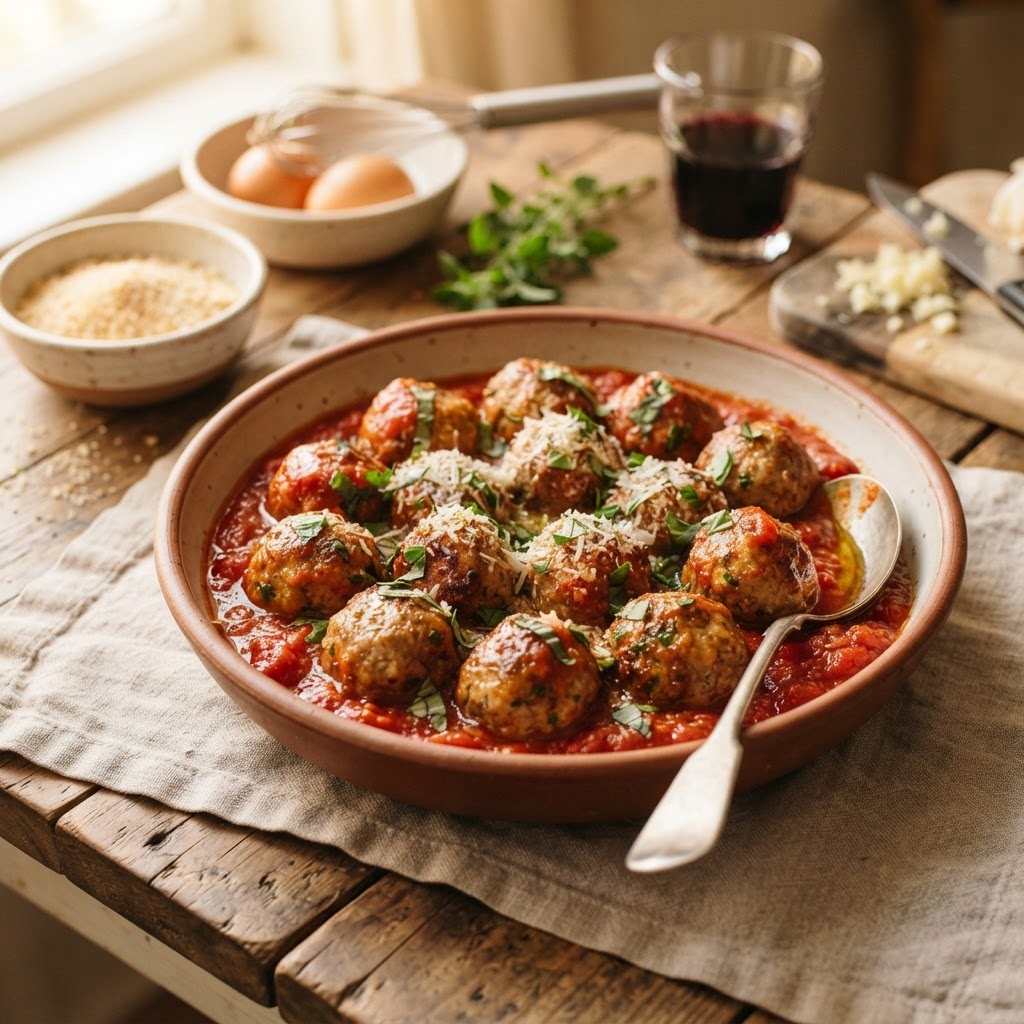
The Home Cook’s Guide to Meatball Binding: Mastering Egg and Breadcrumb Ratios for Perfectly Tender Results
The pursuit of the perfect meatball is perhaps the most enduring rite of passage for any home cook, a humble endeavor that sits at the intersection of chemistry and comfort. We have all experienced the tragedy of the "meat-rock"—those dense, rubbery spheres that seem more suited for a slingshot than a plate of steaming spaghetti. Alternatively, there is the frustration of the disintegrating meatball, which crumbles into an unrecognizable ragù the moment it touches the pan or hits the simmering sauce. Mastering the craft requires moving past guesswork and into the realm of precise ratios, understanding exactly how proteins, fats, and binders interact under heat. This guide is designed to deconstruct those mechanics so you can finally achieve that elusive, melt-in-your-mouth tenderness every single time.
At its core, the meatball is an exercise in structural engineering where the binder is your mortar and the protein is your brick. When we talk about binding, we are essentially managing moisture retention and structural integrity simultaneously, ensuring that the meat remains hydrated even as it firms up. It is not merely about throwing ingredients into a bowl and mixing; it is about creating a network of proteins that trap juices and flavor compounds. By manipulating the proportions of bread-to-liquid and understanding the role of the humble egg, you can transform a standard recipe into a culinary masterpiece. This is a scientific journey that rewards the patient, the observant, and the hungry.
Welcome to the kitchen, where we stop blaming the ingredients and start blaming the technique. Today, we are stripping away the myths surrounding meatballs and focusing on the non-negotiables that separate a mediocre effort from a legendary meal. Whether you are using a classic mix of beef, pork, and veal, or opting for a leaner turkey or plant-based alternative, the rules of binding remain remarkably consistent. Grab your mixing bowl, sharpen your chef’s knife, and let us embark on the quest for the ultimate tender meatball. It is time to stop settling for average and start demanding excellence from your meatballs, one perfectly bound sphere at a time.
The Chemistry of the Binder
The primary purpose of a binder in a meatball is to provide structure without sacrificing the final texture. If you use too much bread, you end up with a meat-flavored loaf that lacks the satisfying chew of quality protein. If you use too little, the meatball lacks the internal support to hold onto its own rendered fats and juices, causing it to shrink and toughen during the cooking process. The binder serves as a sponge, holding on to moisture that would otherwise evaporate into the air or leak into the cooking liquid.
The Role of the Breadcrumb
Breadcrumbs are not just filler; they are the backbone of a tender meatball. When breadcrumbs—or better yet, panade—are introduced to the mixture, they swell with moisture. This prevents the proteins in the meat from binding too tightly to each other as they heat up. When protein fibers contract, they squeeze out moisture; the breadcrumbs sit between these fibers like tiny, hydrated cushions. This is why professional kitchens almost exclusively prefer fresh bread soaked in milk over dry, store-bought crumbs.
Understanding the Panade
A panade is simply a mixture of starch—usually bread—and a liquid, like milk, cream, or stock. By pre-soaking the bread before it ever touches the meat, you ensure that the crumbs are fully hydrated and soft. This prevents the "crunchy bits" that often plague home-cooked meatballs. When you mix a panade into your meat, you are creating a uniform distribution of moisture throughout the entire batch.
"The secret to a meatball that defies gravity while remaining impossibly soft lies entirely in the hydration of your starch; never skip the panade if you value texture over convenience."
The Essential Egg Ratio
Eggs act as the glue that holds the entire assembly together. While the breadcrumbs provide the internal cushioning, the egg proteins coagulate during cooking, creating a solid mesh that prevents the meatball from falling apart. However, there is a very real danger in over-using eggs. Too much egg will turn your meatballs into dense, rubbery bouncy balls, as the egg protein itself becomes quite tough when fully set.
Finding the Golden Ratio
For most standard meatball recipes, the goal is to use exactly enough egg to bind the meat and bread without turning the mixture into a custard. A reliable starting point is one large egg per pound of meat. If you find your mixture is still too loose, do not reach for another egg; instead, reach for a little more breadcrumb or chill the mixture longer. The temperature of the mixture often dictates its consistency more than the amount of binder you use.
Whisking and Incorporation
Always beat your eggs thoroughly before adding them to the meat mixture. This ensures that the proteins are already partially broken down and distributed evenly. If you dump a raw, un-whisked egg into the center of the bowl, you risk creating pockets of concentrated egg white, which will set differently than the surrounding meat. Uniformity is the hallmark of a professional kitchen, and it begins with the preparation of your binding agent.
Protein Selection and Fat Content
You cannot build a tender meatball out of lean, dry meat. Meatballs require fat to remain succulent throughout the cooking process. If you are using ground beef, a 20% fat content—often labeled as 80/20—is non-negotiable. This fat renders during the cooking process, basting the meat from the inside out and providing that essential mouthfeel that signals a high-quality bite.
The Triple-Meat Approach
Many chefs swear by the "tri-mix" of ground beef, pork, and veal. Each brings something unique to the table:
Beef:* Provides deep, savory flavor and chew.
Pork:* Adds richness and high fat content for tenderness.
Veal:* Offers a delicate, light texture that balances the heavy beef.
Using this combination creates a complex profile that is superior to the sum of its parts. If you cannot find veal, a simple 50/50 mix of beef and pork is an excellent alternative that still delivers incredible results.
Managing Protein Contraction
The most common mistake home cooks make is overworking the meat. When you mix a meatball, your hands are generating heat, and the mechanical action of kneading causes the proteins to align into long, tough strands—the same way you would knead bread dough to develop gluten. For meatballs, you want the opposite. Mix just until the ingredients are incorporated, and never over-mix. Handle the meat as gently as possible, almost as if you are folding a delicate mousse.
Temperature Control and Chilling
The temperature of your ingredients is the invisible factor that determines the success of your final product. When you mix your meat, the friction of your hands warms up the fat. If that fat gets too warm before the meatball hits the pan, it will melt out immediately, leaving you with dry meat and a greasy mess. Keeping your ingredients cold is vital to maintaining the integrity of the fat-to-protein emulsion.
The Chilling Protocol
Once you have mixed your meat, breadcrumbs, eggs, and seasonings, chill the mixture for at least 30 to 60 minutes. This serves two purposes:
Cooking Temperatures
When you are ready to cook, ensure your pan or oven is properly preheated. If you are searing your meatballs on the stovetop, a medium-high heat is ideal. You want to develop a deep, caramelized crust—the Maillard reaction—which adds flavor and acts as a secondary structural seal. If the pan is too cold, the meatballs will stick and tear; if it is too hot, the outside will burn before the inside is cooked through.
"A meatball that is handled with cold hands and chilled before cooking will always outperform a room-temperature mixture, as the fat stays encapsulated within the protein matrix."
The Art of the Fold: Proper Mixing Techniques
Mixing is not just a chore; it is an act of culinary precision. When you combine your meat and binder, you should be using a folding motion rather than a squeezing motion. Use your fingertips to gently incorporate the breadcrumbs and seasonings. If you find the meat is getting sticky, your hands are likely too warm, or you are overworking the protein. Stop immediately and put the bowl back in the refrigerator.
Seasoning Integration
Seasoning is best added during the mixing phase, not just sprinkled on top. Your salt, grated cheeses like Parmigiano-Reggiano, finely minced garlic, and fresh herbs should be distributed so that every bite tastes exactly the same. Do not be afraid of salt; it is the most important component for drawing out the flavor of the meat. A good rule of thumb is roughly one teaspoon of kosher salt per pound of meat.
Forming Consistent Sizes
Use a spring-loaded scoop to portion your meatballs. This ensures that every meatball is the exact same size, which means they will all cook at the exact same rate. If you have a tray of meatballs where some are the size of golf balls and others are the size of tennis balls, you will never achieve a uniform finish. Precision in portioning is a sign of a professional-minded cook.
Cooking Methods for Tenderness
How you finish your meatballs—whether in the oven, in the sauce, or fried—will drastically change their final texture. For the absolute most tender result, many chefs prefer a two-step process: browning in a pan to develop flavor, followed by a gentle simmer in a rich tomato sauce to finish cooking. This "braising" effect ensures the meatballs remain moist even after they are fully cooked.
Oven-Baking
If you are cooking a large batch, the oven is your best friend. Preheat your oven to 400°F (200°C) and place the meatballs on a parchment-lined sheet pan. Bake for 15 to 20 minutes until they reach an internal temperature of 165°F (74°C). This method is cleaner and allows for more even cooking without the risk of breaking them in a crowded pan.
Sauce-Simmering
If you choose to finish your meatballs in the sauce, do so only after they have been seared. Browning them first creates a "shell" that prevents them from disintegrating into the liquid. Once added to the sauce, keep the heat on a low simmer. Never let the sauce reach a rolling boil, as the agitation can break apart even the best-bound meatballs.
Flavor Development and Add-ins
While the base of meat, bread, and egg is the structural foundation, the flavor is where the home cook truly shines. Fresh herbs such as parsley and basil add a bright, aromatic quality that cuts through the richness of the meat. Grated cheese adds a salty, umami kick that binds the flavors together. Always use freshly grated cheese, as pre-grated varieties are often coated in cellulose to prevent clumping, which can interfere with the binding of your meatball.
The Inclusion of Aromatics
Finely minced onions or shallots are a common addition, but be careful—raw onions contain a high amount of water that can make your meatball soggy. For the best result, sauté your aromatics until soft and let them cool completely before adding them to the meat. This ensures they don't introduce excess moisture and creates a deeper, more mellow flavor profile that permeates the meat.
The Role of Acid
A splash of balsamic vinegar or even a squeeze of fresh lemon juice can brighten up the flavors of a heavy meatball. Think of your meatball as a canvas: the protein is the structure, the binder is the paint, and the aromatics and seasonings are the light. Balance is key. If your mixture feels too heavy, a little bit of acid can provide the contrast needed to make the flavors pop.
Fresh Herbs:* Flat-leaf parsley is the gold standard for its clean, peppery finish.
Cheese:* Use high-quality Parmesan or Pecorino Romano for the best umami impact.
Garlic:* Use a microplane to grate your garlic into a paste so you don't end up with large, pungent chunks.
Spices:* A pinch of freshly grated nutmeg is an old-world Italian secret that elevates the depth of pork and veal.
"True culinary depth isn't found in a single secret ingredient, but in the harmonious balance of fat, salt, acid, and texture achieved through careful, deliberate preparation."
Final Thoughts
Mastering the meatball is a journey that starts with the humble understanding of how ingredients work together. By treating your breadcrumbs as a hydration reservoir and your eggs as a structural anchor, you eliminate the guesswork that leads to dry, dense, or crumbling results. Remember that the meatball is not just a vehicle for sauce; it is a standalone component of the meal that deserves just as much attention as your hand-rolled pasta or slow-simmered ragù.
The next time you find yourself standing over a bowl of raw meat and breadcrumbs, take a moment to reflect on the process. Are your ingredients cold enough? Have you made a proper panade? Are you folding the mixture with the gentleness it deserves? These are the moments where the "blame the chef" mentality shifts from a humorous disclaimer to a point of pride. When you take control of the variables, you take control of the outcome.
There is no greater satisfaction in the kitchen than serving a meal that brings people together, and the meatball—with all its comforting history—is the perfect vessel for that connection. Do not be afraid to experiment with your ratios once you have mastered the basics, but always return to the fundamental rule: keep it cold, keep it light, and respect the protein. Happy cooking, and may your meatballs always be the talk of the table.
Further Refinement: Troubleshooting Your Results
Even the best chefs encounter issues. If you find your meatballs are consistently too dense, you are likely either over-mixing or using too little bread. Conversely, if they fall apart, you may need more egg or you may be cooking them too aggressively too soon. Keep a log of your ratios. Record how much milk you used for your panade, how many eggs you cracked per pound of meat, and how long you chilled the mixture. You will be surprised at how quickly you can identify the perfect combination for your specific ingredients and preferences.
The meatball is a versatile dish, and its potential for adaptation is endless. Once you have perfected the classic beef and pork recipe, consider experimenting with different proteins. Lamb meatballs with a hint of cumin and feta are a fantastic way to branch out. Turkey meatballs, when made with a slightly higher bread-to-meat ratio, can be surprisingly tender and light. The beauty of this recipe is that it is a framework, not a cage. Use this guide as your starting point, and let your own palate lead you to new and exciting variations that you can be proud to call your own.
Finally, remember that practice is the only way to true mastery. Do not get discouraged by a batch that doesn't meet your exacting standards. Each time you adjust the ratio of breadcrumbs, change the duration of your chill, or refine your mixing technique, you are learning more about the chemistry of cooking than any cookbook could teach you. The perfect meatball is out there, and with these techniques in your arsenal, you are well on your way to claiming it as your signature dish.
Stay curious, stay hungry, and keep refining. Whether you are serving them atop a mountain of al dente spaghetti or tucked into a toasted sub roll with melted provolone, your perfectly bound meatballs will be the highlight of the meal. Remember that the journey of a home cook is never truly finished; it is a constant evolution of technique and taste, and every meatball is an opportunity to improve. Now, go forth and craft the perfect meatball, and don't forget to enjoy the process as much as the result.
Your kitchen is your laboratory, and your ingredients are your variables. By maintaining a professional standard of precision, you elevate your home cooking from a daily chore to a creative, rewarding art form. Trust the process, respect the science, and most importantly, have fun with the creation. After all, the best ingredient in any recipe is the care and attention the chef brings to the plate. You are the architect of your own culinary success, and I cannot wait to hear how your next batch turns out. Keep sharing your triumphs and your learning moments, because that is how we all grow as cooks.
The mastery of the meatball is truly a lifelong skill, and I am honored to be a part of your journey toward culinary excellence. Keep honing your ratios, keep experimenting with flavors, and never settle for anything less than tender, perfectly seasoned results. Your dinner guests will thank you, and more importantly, you will know that you have mastered a classic that stands the test of time. Here is to many more successful, delicious, and perfectly bound meatballs in your future kitchen adventures.
Finally, always remember to taste as you go. Before cooking the entire batch, fry off a small, test-sized meatball. This allows you to check the seasoning and the texture before you commit the whole mixture to the heat. If it needs more salt, add it now. If it’s too firm, add a little more milk. This final quality control check is what separates the enthusiastic home cook from the truly skilled chef. Use it, practice it, and you will never serve a sub-par meatball again.
Consistency is the ultimate goal. When you can walk into your kitchen, pull together a meal, and know with 100% certainty that the texture will be perfect, you have reached the pinnacle of home cooking. It is not about luck; it is about the mastery of these foundational principles. You have the knowledge now—the rest is up to you. Get out there and make something truly special.
Closing Checklist for the Perfect Meatball
Before you start your next session, follow these steps to ensure total success:
By adhering to this checklist, you are effectively programming yourself for success. Each item on this list addresses a specific point of failure that we discussed today. When you internalize these steps, they become second nature. You will no longer need to check the guide because you will understand the why behind every motion. That is the moment you truly become the master of your kitchen.
Never lose the wonder of the process. Even when you are cooking on a busy weeknight, take pride in the way the ingredients come together. A meatball is more than just a ball of meat—it is a symbol of nourishment, heritage, and the simple joy of creating something beautiful from raw components. Treat your work with respect, and your food will always taste better for it.
Thank you for joining me on this deep dive into the science of binding and the art of the meatball. Keep pushing your limits, keep asking questions, and above all, keep cooking. I look forward to hearing about your results and seeing how you adapt these techniques to your own unique culinary style. Until next time, may your sauce be rich, your pasta be perfectly al dente, and your meatballs be the most tender in the neighborhood. Keep building, keep binding, and keep enjoying the delicious fruits of your labor. The kitchen is yours.
In every meatball, there is a story of patience. Whether you are cooking for a crowd or a quiet dinner for two, the care you put into these small details creates a narrative of quality that is unmistakable to anyone who tastes your food. Never take the short path when the long path yields such superior results. Your future self—and your future dinner guests—will thank you for the extra effort you put into mastering these essential techniques.
Lastly, don't be afraid to document your progress. Snap photos, write down your ratios in a kitchen journal, and pay attention to what changes when you swap out one brand of breadcrumbs for another. Your kitchen journal is the most valuable tool you will ever own. It transforms your cooking from a series of isolated events into a cumulative body of knowledge. Over time, you will find that you are not just cooking recipes, but creating your own legacy of flavors.
I am proud of the progress you are making. Keep this guide nearby, share it with a friend who is struggling with their own meatball woes, and continue to reach for that higher standard. The world is full of mediocre meatballs; let’s make sure yours are the exception. You have the tools, the technique, and the encouragement you need to succeed. Now, go make it happen. I’ll see you in the next post, and until then, happy cooking!
Get the Next Recipe
Weekly recipes, techniques, and gear picks — straight to your inbox.
