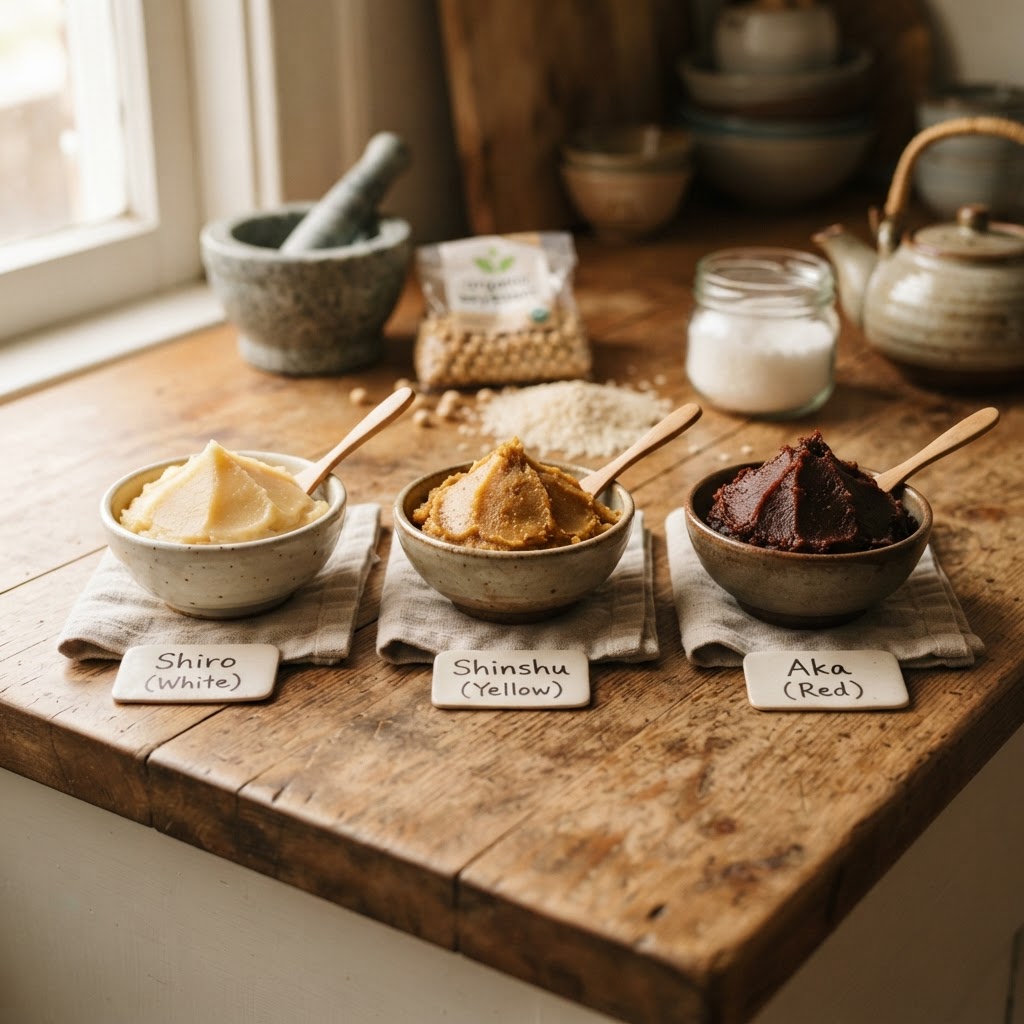
The Home Cook’s Guide to Miso Varieties: Decoding Fermentation Age and Flavor Profiles for Savory Depth
If you have ever found yourself staring at a wall of beige, brown, and near-black containers in an Asian grocery store, you are certainly not alone. Miso, the ancient Japanese seasoning produced by fermenting soybeans with salt and koji (a starter culture), is one of the most transformative ingredients you can stock in your pantry. It is the culinary equivalent of a structural foundation, providing a deep, resonant hum of umami that elevates everything from salad dressings to chocolate chip cookies. Understanding the nuances of these fermented pastes is not just about following a recipe; it is about learning how to manipulate salt, sweetness, and acidity to build complex, layered flavors in your own kitchen.
Many home cooks are intimidated by miso, fearing that its pungent aroma or intense salinity might overpower their dishes. However, the beauty of miso lies in its variety, which ranges from the delicate, whisper-light sweetness of white miso to the brooding, smoky intensity of long-aged red miso. By treating miso as a tool for seasoning rather than just a soup base, you unlock the ability to season with depth that salt alone can never provide. This guide is designed to peel back the layers of fermentation science and demystify the color-coding of these pastes, ensuring you always reach for the right jar when inspiration strikes.
As you embark on this journey into the world of koji-based fermentation, keep in mind that miso is a living product. While store-bought versions are often pasteurized for shelf stability, they still possess a complexity born from weeks, months, or even years of careful aging. We are going to explore the critical role of fermentation time, the ratios of grains to soybeans, and the subtle interplay between the microorganisms and the environment. Prepare your palate for a masterclass in savory depth, because once you master miso, you will find it nearly impossible to cook without it.
The Chemistry of Umami: How Miso is Born
At the heart of every batch of miso is koji, which is steamed rice, barley, or soybeans inoculated with the Aspergillus oryzae fungus. This mold produces enzymes—proteases and amylases—that act as the keys to a molecular pantry. When mixed with cooked soybeans and sea salt, these enzymes begin to break down the proteins into amino acids and the complex carbohydrates into simple sugars. It is this breakdown that results in umami, the savory "fifth taste" that provides that satisfying, mouth-filling sensation we crave.
The process of making miso is a marriage of time, temperature, and salt content. The ratio of koji to soybeans dictates the sweetness and the fermentation speed; more koji results in a sweeter, faster-maturing miso, while a higher soybean content yields a heartier, more robust product. Furthermore, the salt acts as a regulator, preventing harmful bacteria from colonizing the mixture while allowing the beneficial lactic acid bacteria to thrive. Balancing these variables is a practice that dates back centuries, yet the fundamental science remains as fascinating today as it was in the Muromachi period.
"Miso is not merely a condiment; it is a time capsule of flavor. Each jar represents a controlled evolution of proteins and sugars, carefully curated by the environment and the steady hand of the maker. When you taste miso, you are tasting the history of fermentation science."
Understanding the Role of Koji
The koji starter is the soul of your miso. Without it, you are simply looking at salted, cooked beans. The Aspergillus oryzae fungus converts starches into glucose, which feeds the yeast and bacteria that eventually develop the deep, nutty, and savory notes we associate with finished miso. If you decide to experiment with home-fermenting your own miso, temperature control is paramount. Keeping your fermentation vessel between 60°F and 80°F (15°C–27°C) is ideal to encourage the right microbial activity while inhibiting undesirable spoilage.
The Impact of Salt Concentrations
Salt is the gatekeeper of fermentation. A lower salt content (roughly 5-7%) allows for a faster fermentation, leading to a sweeter, lighter-colored paste. Conversely, a higher salt content (10-12% or more) inhibits the speed of fermentation, requiring months or even years of aging to reach maturity. This is why lighter misos are often sold in the refrigerated section as "fresh" products, while the deeper, saltier misos can sit on the pantry shelf indefinitely. Understanding this balance helps you choose which miso will provide the right profile for your intended application.
Decoding the Color Spectrum: From Shiro to Hatcho
The color of miso is one of the most reliable indicators of its age and strength. While there are infinite variations, they generally fall into three categories: Shiro (White), Aka (Red), and Awase (Mixed). The progression from white to red is caused by the Maillard reaction, a chemical process where amino acids and sugars interact over time, creating darker pigments and deeper, more caramelized flavors.
Shiro miso is typically fermented for only a few weeks to a few months. Because the fermentation time is short, the enzymes have not broken down the components as aggressively, resulting in a product that is mellow, slightly sweet, and relatively low in salt. It is the perfect miso for delicate applications, such as whisking into a light vinaigrette, swirling into a creamy soup, or even using as a secret ingredient in pastry glazes.
Aka miso, on the other hand, undergoes an extensive fermentation period, sometimes lasting for years. During this time, the soybeans darken significantly, and the flavor profile shifts from sweet to intense, earthy, and pungent. This is the heavy lifter of the miso family, perfectly suited for long-simmered stews, hearty braises, and bold marinades for steak or root vegetables.
Why Color Matters for Your Recipe
When deciding which miso to buy, look at your recipe’s intention. If you are making a light, elegant miso soup with silken tofu and wakame, a dark, heavy Aka miso will likely overpower the delicate tofu. Conversely, if you are braising short ribs, a sweet Shiro miso will vanish into the background, failing to provide that crucial contrast to the rich fat of the meat. Always match the intensity of your miso to the intensity of your other ingredients.
The Versatility of Awase Miso
For the home cook who wants the best of both worlds, Awase miso is the answer. It is a pre-blended mix of white and red miso, offering a balanced profile that works in almost any context. If you only have space in your refrigerator for one tub of miso, make it an Awase. It provides the depth of red miso without being aggressive, and the sweetness of white miso without being one-dimensional. It is the "utility player" of the condiment world.
Professional Techniques for Incorporating Miso
Incorporating miso into your cooking requires a bit of finesse. Because it is a heat-sensitive, fermented product, exposing it to boiling temperatures for long periods can diminish its delicate aromatics and potentially kill off the beneficial enzymes—though, in cooking, we often prioritize the flavor development over the probiotic benefits. A professional chef knows that miso should be treated as a finishing touch or added with specific techniques to ensure it emulsifies properly.
One of the most important rules when using miso in hot liquids is the tempering method. Never drop a cold clump of miso directly into a boiling broth; it will not dissolve evenly and you will end up with salty, fermented lumps at the bottom of your pot. Instead, take a small ladle of your warm broth and whisk it into the miso in a small bowl until it forms a smooth, pourable paste. Once emulsified, pour this mixture back into your main pot just before serving, and never let it boil aggressively again.
"The secret to a great miso soup is not just the broth, but the timing of the miso addition. By whisking it into the liquid just before the pot leaves the heat, you preserve the volatile aromatics that make miso so captivatingly savory."
The Emulsification Trick for Dressings
Miso acts as a fantastic emulsifier for salad dressings and sauces. Because it contains protein and natural fats from the soybeans, it helps bridge the gap between oil and vinegar. To create a perfect miso dressing, start with your miso, a splash of rice vinegar, and a teaspoon of honey. Whisk in a neutral oil like grapeseed or a high-quality sesame oil in a slow, steady stream. The miso will act as a stabilizing agent, resulting in a thick, creamy dressing that clings perfectly to your salad greens.
Glazing and Caramelization
Miso is an incredible tool for glazing proteins and vegetables. The high sugar content developed during fermentation makes it prone to beautiful, mahogany-colored caramelization under high heat. When making a miso glaze, combine miso with mirin, sake, and a touch of brown sugar. Brush this onto salmon or eggplant during the last few minutes of broiling. Watch it closely, though—the high sugar content means it can go from golden-brown to burnt in a matter of seconds.
Beyond the Soup Pot: Miso in Modern Cuisine
If you think miso only belongs in Japanese soup, you are missing out on its true potential. Because it functions as a concentrated salt-and-umami bomb, it can replace anchovy paste, Worcestershire sauce, or even salt in a wide variety of Western dishes. The key is understanding that you are adding flavor depth, not just saltiness.
Consider the role of miso in baking. Yes, you heard that right. A tablespoon of mellow white miso added to a chocolate chip cookie batter or a brownie mix provides an incredible savory counterpoint to the sweetness of the sugar. The miso highlights the chocolate notes and adds a subtle, complex finish that will have your guests asking, "What is that secret ingredient?" It works similarly to a sprinkle of sea salt on a caramel, but with a much deeper, broader flavor profile.
Savory Pastas and Sauces
Try swapping your usual salt for white miso when finishing a creamy mushroom pasta. The earthy, nutty profile of the miso pairs perfectly with the fungi and helps to thicken the sauce, lending it a glossy, professional finish. You can also mix a small amount of miso into softened butter to create a miso-compound butter, perfect for finishing a grilled steak or melting over steamed broccoli.
Pickling with Miso
Did you know you can "pickle" vegetables in miso? This technique, known as Misozuke, involves burying vegetables like cucumbers, carrots, or daikon in a bed of miso. Over the course of 24 to 48 hours, the osmotic pressure draws the moisture out of the vegetables while forcing the savory miso flavor inside. The result is a crunchier, more flavorful vegetable that retains its vibrant color and takes on a delicious, tangy, umami-rich character.
The Equipment and Pantry Management
Maintaining your miso correctly is essential for ensuring it lasts and retains its quality. While miso is a stable product, it does not like extreme heat or direct sunlight. The best place for your miso is in the refrigerator, where the cool temperatures will stabilize the fermentation process and keep the flavor consistent over many months, if not years.
When you purchase miso, look for containers that have a tight-fitting lid. Some high-quality artisanal misos are sold in bags or tubs with a "breather valve," which allows the miso to off-gas without letting air in. If your container doesn't have this, it is standard practice to place a piece of parchment paper or plastic wrap directly against the surface of the miso before putting the lid on. This prevents the top layer from drying out or becoming oxidized, which can create an off-flavor.
Sourcing Your Miso
When shopping, check the ingredient list. The best misos consist of nothing more than soybeans, rice or barley (the grain), salt, and the koji culture. Avoid misos that include additives like alcohol, artificial sweeteners, or preservatives like potassium sorbate. High-quality miso naturally preserves itself through its salt content and acidity, so if you see a long list of chemicals on the label, put it back.
How Much to Buy?
Because miso is so concentrated, a little goes a long way. If you are a casual cook, start with two smaller tubs—one white and one red—or a single tub of high-quality Awase. You do not need to hoard it; a 500-gram tub will last the average household several months. If you find yourself cooking with it multiple times a week, you might choose to buy in bulk from a reputable Japanese grocer, which is almost always more cost-effective.
Troubleshooting Common Miso Pitfalls
We have all been there: the soup tastes too salty, or the glaze burned. Working with miso requires learning how to pivot. If you have accidentally made your soup too salty, the solution is not to dump it out but to "dilute and balance." Add more liquid—water or a gentle dashi—but also introduce a touch of sweetness, like a dash of mirin or honey, to counteract the aggressive salinity of the miso.
If you find that your miso has developed a white, powdery layer on top, do not panic. This is often just a harmless accumulation of yeast or crystallized amino acids—a byproduct of the fermentation process. Simply scrape off the top layer and the miso underneath should be perfectly fine to use. However, if you see mold that is black, green, or fuzzy, or if the miso smells distinctly like rotting fruit or ammonia, it is time to discard it.
"A kitchen without miso is a kitchen without a backbone. Learn the rhythm of your ingredients, and you will find that miso can solve almost any flavor imbalance you encounter on the stove."
Balancing the Profiles
If your dish feels "flat" despite having enough salt, you might be missing acidity or umami. Miso is the perfect fix. If a tomato sauce tastes thin, a teaspoon of red miso provides the body that a long simmer would usually take hours to achieve. If a salad dressing is too oily, a bit of white miso helps bind the fat and provides the necessary acid-balancing savory note to make the greens pop.
Knowing When to Stop
There is a point of diminishing returns when adding miso. Because it is highly concentrated, start with a conservative ratio. A good rule of thumb is 1 tablespoon of miso per cup of liquid for a soup, or 1 tablespoon per half-cup of marinade for a protein. You can always add more, but you cannot take the salt out once it is integrated into your sauce. Always taste as you go, and always whisk, whisk, whisk.
Final Thoughts
The world of miso is one of the most rewarding areas of the culinary arts for a home cook to master. It demands patience, curiosity, and a willingness to step outside the boundaries of traditional western cooking. By understanding the science of fermentation—from the humble rice koji to the long-aged, dark, and complex red pastes—you are essentially learning how to harness the power of living organisms to create flavor.
Remember that miso is not a monolith. There is a vast landscape of flavor contained within those jars, from the delicate sweetness of Shiro to the commanding earthiness of Hatcho. Don't be afraid to experiment with these varieties. Use the white miso to brighten your vegetable purees and the red miso to deepen the character of your slow-cooked stews. Treat your miso with the respect it deserves, store it properly, and it will reward you with countless meals of depth and complexity.
As you continue your culinary journey, view each tablespoon of miso as an opportunity to practice the art of balance. Whether you are using it to create a classic soup, a modern salad dressing, or a secret ingredient in your next batch of cookies, you are engaging in a tradition that spans generations. So, the next time you are standing in that aisle of the grocery store, skip the hesitation. Pick up a tub, bring it home, and let the fermentation begin. Your kitchen, and your palate, will be better for it.
Start your morning by whisking a tiny bit of white miso into your breakfast oats or a savory congee, and end your evening with a miso-glazed vegetable dish that celebrates the bounty of the season. Cooking is a constant conversation between you and your ingredients, and with miso in your repertoire, that conversation will always be rich, savory, and undeniably deep. Happy cooking, and remember: if it tastes good, you deserve the credit, but if you need to blame someone for the depth of flavor in your cooking, you can always blame the miso.
The journey does not end here. As you grow more comfortable with these ingredients, consider venturing into the world of making your own miso. While it is a process that requires months of waiting, there is nothing quite like the satisfaction of cracking open a container of miso that you fermented yourself. You will find that the subtle differences in the beans you choose, the local rice you source, and the environment of your own pantry will create a product that is entirely unique to your kitchen.
Finally, never underestimate the power of simplicity. A bowl of perfectly cooked rice, a swirl of high-quality miso, and a pinch of toasted sesame seeds is a meal that sustains the soul. It is a reminder that the best food is often the result of respecting the ingredients and understanding the science that makes them tick. You are now equipped with the knowledge to decode the nuances of miso—so go forth, experiment, and enjoy the savory, umami-filled results of your hard work.
As we conclude this deep dive, keep one final tip in mind: clean your spoons. Never double-dip your miso container with a used spoon, as this can introduce foreign bacteria that may jeopardize the shelf life of your paste. Use a clean, dry utensil every single time. It is a small habit, but it is one that separates the amateur from the pro, and it will keep your miso as fresh and vibrant as the day you brought it home. Your culinary mastery is only as good as your attention to detail, and in the world of fermentation, the details make all the difference.
So go and create. Whisk it into sauces, rub it on your meats, bake it into your desserts, and stir it into your soups. Miso is waiting to transform your kitchen, one tablespoon at a time. The depth you’ve been looking for isn't hidden in a secret, expensive ingredient; it’s hidden in the simple, ancient power of fermented soybeans. Now, go turn your stove on and let’s get to work. Your next great meal is only a scoop away.


Get the Next Recipe
Weekly recipes, techniques, and gear picks — straight to your inbox.
