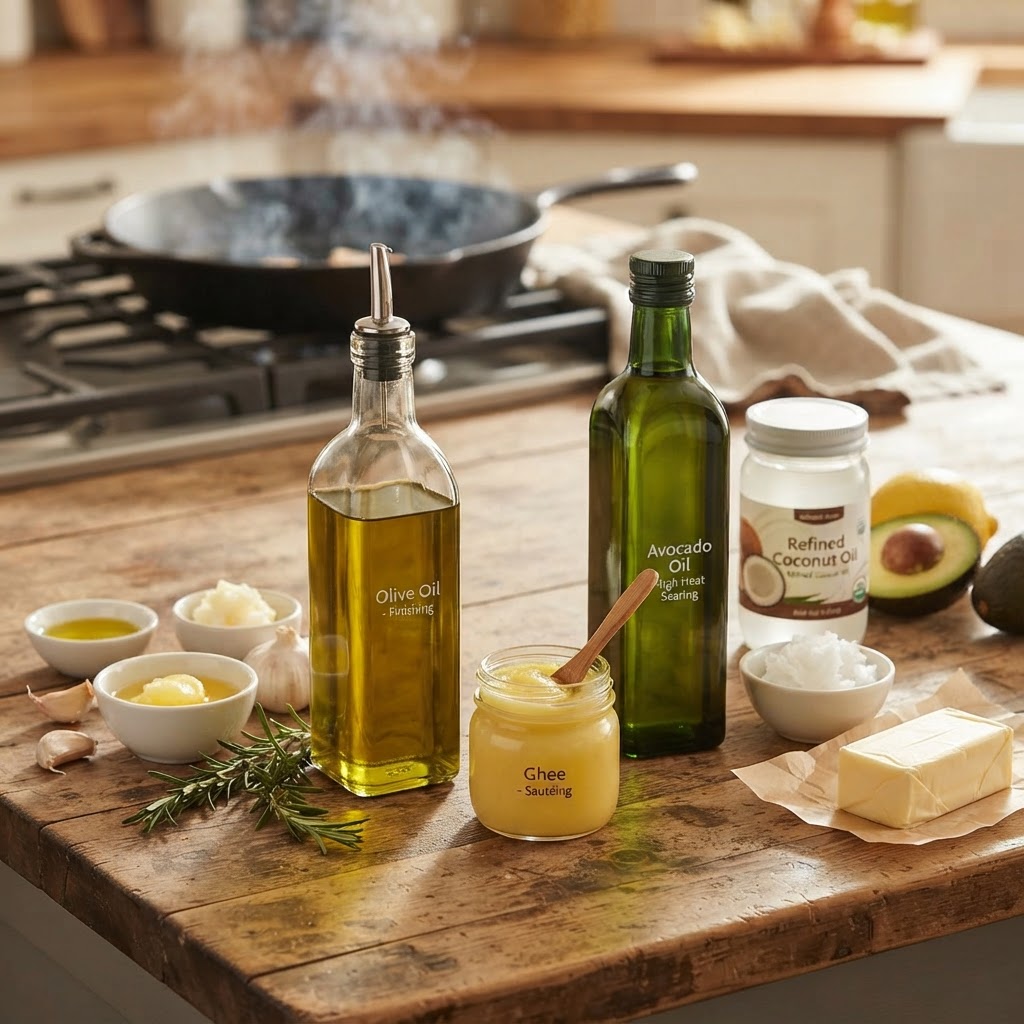
The Home Cook’s Guide to Nutritional Fats: Mastering Smoke Points and Flavor Profiles for Superior Searing, Sautéing, and Finishing
Cooking at home is often an exercise in intuition, a dance between ingredients that occasionally feels like a mystery. You have likely found yourself standing before a stovetop, skillet smoking aggressively, wondering if you’ve chosen the right fat for the job. We have all been there—the frantic kitchen air filling with acrid haze, the steak searing too fast on the outside while remaining cold in the center, or the delicate fish filet clinging desperately to the pan. Mastering the world of culinary fats is not just about health; it is the single most effective way to elevate your home cooking from amateur to professional, ensuring that every sear is golden and every sauté is perfectly crisp.
The fundamental truth of professional kitchens is that fat is flavor, but it is also a vehicle for heat. Without a deep understanding of how different oils and fats react to thermal energy, you are essentially working blind. Whether you are reaching for a bottle of refined avocado oil for a high-heat sear or a knob of grass-fed butter for a silky finish, each choice alters the chemistry of your meal. This guide is designed to strip away the confusion surrounding labels like "cold-pressed," "extra virgin," and "refined," giving you the technical knowledge to make decisive choices that result in superior textures and depth of flavor in every bite.
In this deep dive, we will explore the architecture of fats, how to choose the right medium for every culinary task, and why the smoke point is your most important benchmark. We are moving beyond the surface-level advice of "use oil for this and butter for that" to provide a nuanced, chef-driven perspective on culinary science. When you stop blaming the equipment or the ingredient and start understanding the physics of the pan, you finally take control of the plate. Prepare to refresh your pantry, re-evaluate your techniques, and fundamentally change how you approach the medium of cooking itself.
The Chemistry of Smoke Points and Thermal Stability
Understanding the smoke point is the baseline for every home cook. Simply put, this is the temperature at which a fat begins to break down, releasing free radicals and acrid smoke into your kitchen. When an oil reaches its smoke point, it is not just ruining the flavor of your food by introducing a bitter, burnt profile; it is undergoing chemical degradation that strips away its beneficial properties. To achieve a superior sear, you must match the temperature of your pan to the thermal tolerance of your chosen fat.
Why Refinement Matters
Many beginners assume that "raw" or "cold-pressed" is always better, but in the realm of high-heat cooking, refinement is your best friend. Refining oils removes impurities and particulate matter that burn quickly at lower temperatures. When you are looking for a neutral, high-heat workhorse for searing proteins, refined oils are superior because they offer a clean palate and a higher threshold of endurance.
Heat Thresholds for Common Fats
"A kitchen without a deep understanding of thermal thresholds is a kitchen built on accidents. Mastering your fat is the difference between a golden crust and a carbonized regret."
When you are searing a thick-cut ribeye, you want to maintain a constant pan temperature between 400°F and 450°F. If you use a fat with a low smoke point, you will be choking on smoke long before a beautiful Maillard reaction forms on the surface of your beef. Always select an oil that sits at least 50 degrees above your target cooking temperature to ensure a consistent, clean sear.
The Art of the Sear: Choosing the Right Medium
Searing is a high-stakes technique. You are looking for an intense, rapid transition of protein surface moisture into steam, followed by the browning of the proteins and sugars—the Maillard reaction. The fat you choose acts as a conductor, filling the microscopic valleys between the meat and the metal pan, ensuring uniform contact. Without the right fat, you get uneven browning and hot spots that can cause the meat to stick or burn in patches.
The Problem with Cold Pans
Never add your oil to a cold pan and then turn on the heat. This allows the oil to begin breaking down as the pan slowly warms. Instead, get your pan to the desired temperature first, then add the oil. As the oil hits the hot surface, you should see it shimmer and thin out almost instantly. This is your cue to add your protein. If the oil is not moving like water, it is not hot enough, and your protein will soak up the grease rather than searing against it.
Proper Fat Ratios for Pan Searing
For a standard cast-iron or stainless steel pan, you do not need to drown the ingredients. Aim for a thin, even layer of fat that just coats the bottom of the pan—typically one to two tablespoons for a 10-inch skillet. Overloading the pan with oil will lead to shallow frying rather than searing, which makes the exterior greasy rather than crisp. If you are searing a fatty cut, such as a skin-on duck breast, start with a cold pan and no added fat, allowing the natural fat to render out as the metal warms.
Butter and Clarification: The Chef’s Secret Weapon
Butter is arguably the most seductive ingredient in the kitchen, but it is also the most temperamental. Because it contains milk solids—proteins and sugars—it begins to burn once it crosses the 300°F threshold. However, these same solids are what provide the rich, nutty aroma that makes butter superior to neutral oils for finishing. The professional solution to this conundrum is clarification, the process of separating pure butterfat from the water and milk solids.
Mastering Ghee and Clarified Butter
Ghee is essentially butter that has been cooked until the water evaporates and the milk solids brown, creating a nutty, shelf-stable fat with an exceptionally high smoke point. For the home cook, making your own ghee is a rite of passage. By gently simmering unsalted butter and skimming away the foam, you are left with a golden, liquid gold that can withstand almost any searing task while retaining the luxurious flavor of dairy.
The Basting Technique (Arroser)
Once you have seared your protein to the desired crust, the classic French technique of arroser (basting) is where butter shines. By adding a knob of whole, unsalted butter to the pan in the final minutes of cooking, you introduce a layer of flavor that oil cannot match. As the butter melts and foams, tilt the pan slightly and spoon the foaming butter over the protein continuously. This process cooks the meat gently while infusing it with the essence of browned milk solids.
"The basting process isn't just about adding flavor; it's about temperature control. That foaming butter acts as a heat buffer, cooking the exterior of the protein gently while ensuring the center remains juicy."
Always finish with whole butter rather than ghee if you want that specific, complex, nutty aroma. Since the protein is already mostly cooked by the time you begin basting, the butter won't have enough time to burn, even if you are using high heat. This creates a finish that is visually stunning, deeply fragrant, and undeniably professional.
Plant-Based Oils and Their Culinary Profiles
Walking down the oil aisle can be overwhelming, but your pantry only requires a few strategic selections. The goal is to have one neutral, high-heat oil and one flavor-forward, low-heat finishing oil. When you understand the origin of your oils, you understand the "terroir" of your dish. From the peppery finish of a cold-pressed olive oil to the grassy notes of avocado oil, these fats are as much a seasoning as salt and pepper.
Neutral Oils for Versatility
Neutral oils are the workhorses of the kitchen. They disappear into your cooking, allowing the flavor of your ingredients to stand front and center. Grapeseed oil is a favorite among professional chefs because of its clean, light flavor and high smoke point. Canola or sunflower oil are standard, but look for non-GMO, cold-pressed versions if you are concerned about processing methods. These are your go-to options for everything from frying potatoes to searing chicken.
The Nuance of Finishing Oils
A finishing oil is never meant to see the heat of a pan. These oils, which include premium Extra Virgin Olive Oil (EVOO), cold-pressed walnut oil, or toasted sesame oil, are intended to be drizzled over the finished product. The delicate chemical bonds that give these oils their distinct flavor profiles are destroyed by high heat. Using an expensive olive oil for frying is not just a waste of money—it is a culinary crime that masks the delicate, fruity notes you paid a premium for.
Toasted Sesame Oil:* Essential for finishing Asian-inspired dishes; add just a few drops at the very end.
Walnut/Nut Oils:* Perfect for dressing salads or drizzling over roasted root vegetables.
EVOO (High-End):* Best for dipping crusty bread, finishing soups, or drizzling over fresh tomatoes and mozzarella.
Animal Fats: Rendering for Depth and Tradition
Before the industrialization of the vegetable oil industry, home cooks relied on animal fats for almost every application. Duck fat, beef tallow, and lard are not just relics of the past; they are unparalleled for achieving specific textures and depths of flavor. If you want the crispiest roasted potatoes of your life, duck fat is non-negotiable. If you are looking for the flakiest pie crust, high-quality leaf lard remains the gold standard.
Rendering Your Own Fat
Rendering is the process of melting down fatty tissue from animals to purify the fat. To render your own beef tallow or duck fat, dice the raw fat into small, uniform pieces and cook it in a heavy pan over very low heat. Strain the liquid fat through a fine-mesh sieve or cheesecloth into a glass jar. Stored properly in the refrigerator, these fats will last for months and provide a depth of flavor that no store-bought oil can emulate.
When to Use Animal Fats
These fats contain flavor compounds from the animal, which means they add a layer of umami to your cooking. When you use duck fat, you are effectively "seasoning" your roasted vegetables with the flavor of the bird. This is the logic used in professional kitchens to achieve that distinct, savory punch that seems impossible to replicate at home. Do not be afraid of animal fats; respect them as a foundational ingredient that brings history and heart to the table.
Safety and Storage: Preserving Your Culinary Assets
Fats are organic compounds and, like all organic matter, they degrade over time. Exposure to light, heat, and oxygen—the "triple threat" of oxidation—will turn your high-quality oils rancid. A rancid oil tastes like old crayon or wet cardboard and will ruin even the most carefully prepared dish. Proper storage is the final, often overlooked step in your journey toward mastering fats in the home kitchen.
The Storage Hierarchy
Your oils should be stored in a cool, dark place, away from the stove. Many home cooks store their oil bottles right next to the burner for convenience, but the constant fluctuations in temperature will significantly shorten the shelf life of the product. Invest in a dedicated cupboard or a pantry shelf where the temperature remains stable. If you buy oil in bulk, keep a small, manageable amount in a dark glass bottle for daily use and store the bulk container in a cool place, or even the refrigerator if you won't use it quickly.
Identifying Rancidity
It is important to be able to identify when an oil has gone bad. Before adding oil to a hot pan, take a quick sniff. If it smells like play-dough or has a sharp, medicinal odor, it is likely rancid. Fresh oil should smell neutral or have a clean, pleasant aroma associated with its source (such as olives or nuts). If you have any doubt, do not use it. It is better to discard a bottle of oil than to spoil a meal that represents hours of your effort.
"A pantry is not a trophy case. Your oils should be fresh, used, and appreciated. If an oil has been sitting in your cupboard for more than a year, it is time to say goodbye."
The Science of Emulsification and Fat-Based Sauces
Once you have mastered searing and finishing, you enter the world of emulsification—the art of using fat to create sauces. Mayonnaise, Hollandaise, and Beurre Blanc are all emulsions, representing the stability of fat trapped in a liquid medium. Understanding how to integrate fats into a sauce is what separates the home cook from the chef. The key is in the ratio and the temperature, as well as the mechanical force used to incorporate the fat.
The Emulsification Rule
An emulsion is basically a suspension of tiny fat droplets within a liquid. To hold these droplets together, you need an emulsifier, such as egg yolks, mustard, or even proteins in a reduction. When making a Beurre Blanc, you are slowly whisking cold, cubed butter into a warm reduction of vinegar, wine, and shallots. If you add the butter too quickly or if the heat is too high, the emulsion will break, leaving you with a pool of oil rather than a silky, velvety sauce.
Troubleshooting Broken Emulsions
If your sauce separates, do not panic. This is a common occurrence even in high-end kitchens. To fix a broken emulsion, take a separate, clean bowl and add a small amount of warm water or an extra egg yolk. Very slowly whisk the broken sauce into this new base, drop by drop, as if you were starting the emulsion from scratch. Patience is your primary tool here; if you try to dump the sauce back in all at once, it will remain broken.
Cold Butter:* Always use chilled butter for mounting sauces (monter au beurre).
Consistent Whisking:* Steady, vigorous motion is required to keep the molecules dispersed.
Low Heat:* Never boil a finished emulsion, as high heat will cause the fat to separate from the proteins immediately.
Mastering these emulsions allows you to use your fat not just for cooking, but for finishing. A well-executed Beurre Blanc poured over a piece of seared salmon creates a harmony of textures and flavors that is truly restaurant-quality. It shows that you understand the chemistry of the ingredients well enough to manipulate them into a new form, which is the ultimate goal of the culinary arts.
Final Thoughts
The journey to becoming a confident home cook is not paved with complicated gadgets or expensive tricks; it is paved with a deep, scientific understanding of the ingredients you touch every day. Fats are the foundation of this knowledge. By respecting the smoke points, choosing the right medium for your specific technique, and learning to properly store and emulsify your fats, you are gaining the ability to shape the outcome of every meal. You are no longer just following a recipe; you are analyzing the requirements of the food and selecting the tools—in this case, fats—that will achieve the best results.
Remember that failure is part of the process. If you burn your butter or let your emulsion break, look at it as a data point in your culinary education. Next time, you will know to lower the heat, or to add the butter more slowly, or to use an oil with a higher smoke point. Each mistake is an opportunity to refine your internal "chef's intuition." As you move forward, keep experimenting. Try rendering your own duck fat for the holidays. Seek out a high-quality finishing olive oil and compare it to a standard supermarket variety. The more you explore the world of culinary fats, the more you will realize that you have the power to create professional-level flavors in your own kitchen.
Ultimately, "Blame The Chef" is about taking responsibility for the food on your plate. When you are the one in control—when you know exactly how your ingredients react to the heat of the fire—the results are no longer left to chance. Your sear will be perfectly golden, your sauté will be vibrant and crisp, and your finishes will be rich and complex. Continue to refine your technique, stay curious about the science, and most importantly, enjoy the process. The kitchen is your laboratory, and every meal is a chance to perfect your craft. Now, go turn on the stove, select the right fat, and start cooking with intent.
Get the Next Recipe
Weekly recipes, techniques, and gear picks — straight to your inbox.
