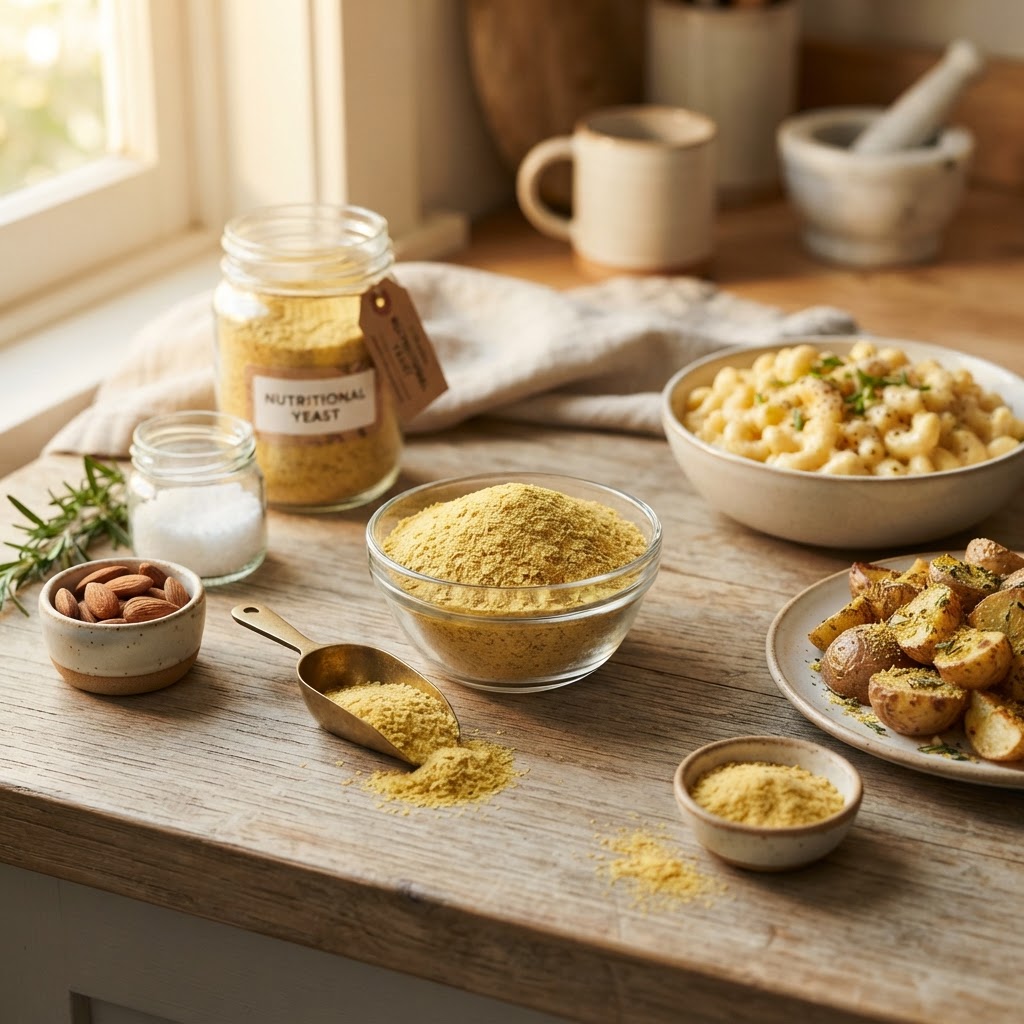
The Home Cook’s Guide to Nutritional Yeast: Mastering Savory, Cheesy Flavor Profiles for Vegan and Plant-Forward Cooking
In the vast, sprawling landscape of modern pantry staples, few ingredients possess the transformative power of nutritional yeast. Often affectionately referred to as "nooch" by those in the plant-based community, this deactivated yeast is far more than a mere substitute for dairy. It acts as a culinary workhorse, providing a complex, savory depth that elevates everything from steamed kale to roasted popcorn. For the home cook navigating the complexities of vegan or plant-forward cooking, understanding the nuances of this golden flake is the first step toward achieving a truly satisfying flavor profile.
Beyond its impressive flavor capabilities, nutritional yeast serves as a nutritional powerhouse that can seamlessly integrate into your daily meals. Rich in B-complex vitamins, protein, and essential trace minerals, it offers a functional benefit that few other seasonings can match. Whether you are aiming to reduce your dairy intake or simply looking to add a layer of umami to your soups, stews, and sauces, incorporating this ingredient requires a basic understanding of its chemical properties. By mastering the art of the "cheesy" finish, you unlock a realm of culinary possibilities that would otherwise remain elusive in the world of vegetable-centric cuisine.
At Blame The Chef, we believe that every home cook deserves the tools to craft restaurant-quality meals with ingredients that are accessible and reliable. Our exploration of nutritional yeast today will not only focus on the what and the why, but the how—the specific techniques, temperature considerations, and ingredient ratios that turn a basic dish into a masterpiece. Prepare to look at your spice rack with fresh eyes, as we dive deep into the golden world of nooch and learn how to wield this potent ingredient with the precision of a professional.
The Chemistry of Umami and the Role of Nooch
Umami, often described as the fifth taste, is the savory sensation that makes food feel complete and deeply satisfying. While typically associated with meats, cheeses, and fermented foods, umami is widely available in the plant kingdom, and nutritional yeast is arguably its most concentrated, shelf-stable form. This savory quality is derived from the high levels of glutamic acid—an amino acid that triggers our taste buds to perceive richness—which is preserved during the drying process of the Saccharomyces cerevisiae yeast. Unlike active baking yeast, nutritional yeast is heat-treated to ensure it is inactive, meaning it won’t cause dough to rise, but it will pack a significant punch of flavor.
When integrating this into your cooking, think of it as a seasoning rather than a bulk ingredient. Because of its concentrated flavor profile, you don't need to empty half a container into your recipes to achieve the desired effect. The key is to build the flavor in stages. Start by using small, precise amounts—usually a tablespoon for every two cups of liquid—and taste as you go. Many home cooks make the mistake of using too much too early, which can result in a bitter aftertaste that masks the delicate notes of your fresh vegetables or legumes.
Understanding the texture of the flakes is equally important. You will typically find nutritional yeast in two forms: flakes and powder. Flakes are better for adding texture and visual appeal, acting almost like a breadcrumb or a garnish, while the powder is far more efficient for emulsifying into sauces. If your recipe calls for a smooth, velvety cheese sauce, the powder will disperse more rapidly, preventing the grittiness that can sometimes plague poorly prepared vegan mac and cheese.
Sourcing and Storage Best Practices
To ensure you are getting the highest quality, always look for fortified nutritional yeast, which ensures you receive your necessary B12 supplementation. Store your yeast in an airtight glass jar in a cool, dark pantry. Moisture is the enemy here; it can cause the delicate flakes to clump and degrade in flavor over time. If stored correctly, a high-quality jar of nooch can remain vibrant for up to 12 months, though the intensity of the nutty flavor will begin to fade after about half a year.
"The true magic of nutritional yeast lies in its ability to bridge the gap between vegetable-forward nutrition and the deeply craveable savory profiles we associate with traditional comfort food. When you learn to balance nooch with acidity and salt, you stop missing dairy entirely."
Emulsification: The Secret to Perfect Vegan Cheese Sauce
One of the most frequent requests I get at Blame The Chef is how to achieve a "cheese sauce" that actually coats pasta correctly. The biggest hurdle is usually a lack of emulsification. To build a truly cohesive sauce, you must rely on a fat base combined with a starch and the savory backbone of nutritional yeast. A classic ratio for a standard mac and cheese sauce is 1/2 cup of raw cashews (soaked in hot water for 30 minutes), 1/4 cup of nutritional yeast, 1 cup of unsweetened plant milk, and a squeeze of fresh lemon juice.
The technique is all about the blending cycle. Start by processing your soaked cashews and plant milk on high until they are completely liquefied. Only once the mixture is smooth should you introduce your nutritional yeast and seasonings. This ensures that the flakes are fully integrated into the fat of the cashews, creating a buttery, luxurious mouthfeel. If you add the yeast while the cashews are still grainy, you will end up with a gritty, disappointing sauce that lacks the refined consistency of a restaurant-style dish.
Temperature control is also paramount here. You want to heat your sauce slowly over medium-low heat, stirring constantly with a silicone spatula. Do not allow the sauce to reach a rolling boil, as the high heat can cause the proteins in the nutritional yeast to break down and release a slightly metallic, bitter flavor. If you find the sauce is thickening too much, adjust with a tablespoon of reserved pasta water—the starch in the pasta water acts as an additional emulsifier, giving the sauce a professional, glossy sheen.
Building Complexity with Aromatics
To take your basic cheese sauce to the next level, always incorporate aromatics before the liquid goes into the blender. A simple sauté of shallots and garlic in a touch of olive oil, cooked until translucent but not browned, will provide a base layer of flavor that complements the nuttiness of the yeast perfectly. When you blend these cooked aromatics with the nutritional yeast, you are essentially building a depth of flavor that mimics the aging process of traditional cheddar.
The Art of the Savory Sprinkle and Coating
Sometimes the most effective way to use nutritional yeast is simply as a finishing touch, but there is a technique to ensuring it adheres to your food. Whether you are making popcorn, roasted cauliflower, or a simple avocado toast, you need a "tackiness" for the yeast to stick to. For popcorn, this is easily achieved by tossing the hot, freshly popped kernels in a tablespoon of melted coconut oil or high-quality avocado oil. Once the kernels are coated, dust the nutritional yeast evenly over the bowl while tossing vigorously to ensure every piece is covered.
For roasted vegetables, such as broccoli or Brussels sprouts, apply the nutritional yeast after roasting. If you bake the yeast along with the vegetables, the high oven temperatures (usually 400°F and above) will toast the yeast too aggressively, turning it from savory to burnt. By tossing your hot, roasted veggies with the yeast in a mixing bowl immediately after taking them out of the oven, the residual heat will help the yeast cling to the vegetable, creating a crisp, savory crust.
When working with textures like toasted bread or grain bowls, mix your nutritional yeast with complementary dry spices to create a "table seasoning". A combination of 3 parts nutritional yeast, 1 part sea salt, and 1 part smoked paprika makes an incredible all-purpose sprinkle. Keep this mixture in a glass shaker at your dining table, and you will find yourself reaching for it far more often than salt alone. It adds a sophisticated layer of flavor to salads, soups, and roasted tubers that instantly makes a meal feel "chef-prepared."
"Don't underestimate the power of the finishing sprinkle. A dish that feels flat or one-dimensional is often just one savory, earthy element away from greatness. Nutritional yeast isn't just an ingredient; it is a catalyst for flavor balance."
Mastering Vegan Savory Baking and Dough
Did you know that nutritional yeast can be incorporated into your baking? While it isn't a leavening agent, its nutty, cheesy characteristics work exceptionally well in savory crackers, biscuits, and scones. When adding nooch to dry dough ingredients, sift it alongside your flour to ensure it is evenly distributed. This prevents "hot spots" of yeast in your baked goods, which can lead to uneven texture. A good rule of thumb is to replace approximately 10% of your total flour volume with nutritional yeast if you are making a cracker or savory cookie.
The key to successful savory baking with nooch is the fat interaction. Because nutritional yeast is naturally dry, you may find that your dough feels a bit more brittle than a traditional recipe. To compensate, increase your fat content (usually cold butter or plant-based shortening) by about 5-8%. This will ensure the final product retains a tender, flaky crumb while benefiting from the deep, complex flavors of the yeast. Always chill your dough for at least 30 minutes before baking to let the fats solidify, ensuring a superior rise and better structure.
For toppings on biscuits or focaccia, mix nutritional yeast with toasted sesame seeds or poppy seeds. As the bread bakes, the yeast will toast slightly, taking on a nutty quality that is reminiscent of parmesan. If you are baking at a temperature above 375°F, apply a light egg-wash (or a soy milk wash for a vegan version) to the top of your dough before sprinkling the yeast mixture. This will help the yeast adhere and prevent it from simply blowing off in the convection currents of your oven.
Troubleshooting Your Bake
If you find your bread is becoming too dark before the center is cooked, lower your oven temperature by 25 degrees and add 5-10 minutes to the baking time. Nutritional yeast can brown quickly due to its protein content; keeping an eye on the color of your crust is the best indicator of doneness. If the crust is browning too rapidly, a simple tenting of aluminum foil over the top of your baking tray will protect the delicate yeast particles from burning.
The Professional Chef’s Pantry: Beyond the Basics
In a professional kitchen, nutritional yeast is often used to create "vegan parmesan" that can be held for service. To make a high-end version that holds up well, combine one cup of raw cashews, 1/2 cup of nutritional yeast, 1 teaspoon of sea salt, and a dash of garlic powder in a food processor. Pulse the mixture—do not let it run continuously—until you achieve a coarse, sand-like texture. This mixture can be kept in a squeeze bottle or a glass jar and used to top everything from pastas to roasted winter squash.
Another professional trick is the use of nutritional yeast in emulsified vinaigrettes. Most home cooks struggle with balsamic or apple cider vinaigrettes separating in the bottle. By adding a teaspoon of nutritional yeast to your mustard, vinegar, and oil base before emulsifying with an immersion blender, you add a stabilizer that helps the oil and acid stay bonded for much longer. Furthermore, the nooch provides a bridge between the sharp acidity of the vinegar and the richness of the olive oil, softening the bite and creating a more rounded, elegant dressing.
Finally, consider the role of nutritional yeast in vegan stocks and braising liquids. If you are making a mushroom-based risotto or a lentil stew, add a tablespoon of nutritional yeast to the liquid base while it is simmering. The glutamates in the yeast will amplify the earthy notes of the mushrooms and the depth of the lentils, making the entire dish taste like it has been simmering for hours longer than it actually has. It is the ultimate shortcut for building "aged" flavor profiles in a time-efficient manner.
Elevating Your Stocks
* Add 1 tablespoon of nooch per 4 cups of vegetable stock.
* Whisk it in at the very beginning of the stock-making process to allow it to fully dissolve.
* Combine with bay leaves, peppercorns, and roasted garlic for a deeply complex base for soups.
Nutritional Yeast in the Context of Health and Wellness
While the culinary benefits are undeniable, the nutritional profile of this ingredient is equally impressive. As a complete protein, nutritional yeast contains all nine essential amino acids that the human body cannot produce on its own. This makes it an invaluable addition to the diet of athletes and those following a plant-forward lifestyle. When you integrate it into a bowl of oats or a smoothie—yes, it works surprisingly well in savory breakfast smoothies—you are not just adding flavor; you are adding a significant boost of high-quality macronutrients.
The B-vitamin complex found in fortified yeast is particularly vital. Many of us suffer from subtle deficiencies in B12, Thiamine, and Riboflavin, which can manifest as fatigue and brain fog. By making nutritional yeast a daily habit, you are essentially "bio-hacking" your pantry. Whether you sprinkle it over your morning avocado toast or stir it into a post-workout lentil stew, you are fueling your body with the building blocks it needs for optimal energy metabolism.
However, moderation is still the golden rule. While nutritious, nutritional yeast is a concentrated substance. A standard serving size is typically one to two tablespoons per day. Going significantly beyond this may cause digestive discomfort for those with sensitive systems, specifically due to the high fiber and protein density. Listen to your body and find the rhythm of intake that works for your personal health goals. Always remember that the best diet is one that is diverse, colorful, and built on the foundation of whole, real ingredients.
"True health in the kitchen is not just about counting calories; it is about finding ingredients that satisfy both the palate and the body. Nutritional yeast is one of the few items that truly delivers on both fronts, making it an essential tool for the modern, conscious cook."
Final Thoughts
Mastering the use of nutritional yeast is a rite of passage for any cook interested in the potential of plant-based culinary arts. It is a humble ingredient that demands respect and precision, but rewards the home cook with flavors that are complex, savory, and deeply comforting. From the delicate emulsion of a cashew-based mac and cheese sauce to the sharp, savory crunch of a well-seasoned popcorn, nooch is the bridge between the vegetable garden and the dinner table.
As you continue your journey, don't be afraid to experiment with your ratios and flavor pairings. The beauty of this ingredient lies in its versatility. Try blending it with sun-dried tomatoes for a Mediterranean twist, or mix it with toasted pine nuts for a decadent, dairy-free pesto. Every dish you prepare is an opportunity to learn, adjust, and refine your technique. Trust your taste buds, keep your ingredients fresh, and remember that the most delicious meals are those prepared with intention and care.
At Blame The Chef, we are always pushing the boundaries of what home cooking can be. By incorporating the techniques we’ve discussed—from proper blending cycles to the strategic timing of your seasonings—you are well on your way to becoming a master of your own kitchen. Thank you for joining us on this deep dive into the world of nutritional yeast. Keep cooking, keep experimenting, and most importantly, keep enjoying the process of creating beautiful, savory food that fuels your life and delights your guests.
Summary of Best Practices for Your Nooch Pantry
As you look ahead to your next kitchen adventure, remember that your pantry is your playground. Whether you are a seasoned vegan chef or a curious home cook just starting to explore plant-based options, nutritional yeast is the one ingredient you should never be without. It is the secret weapon that turns "just vegetables" into a feast, providing that elusive, craveable depth that makes plant-forward cooking not just a choice, but a preference. Go forth, sprinkle generously, and enjoy the savory, cheesy magic you are now fully equipped to create in your own home.


Get the Next Recipe
Weekly recipes, techniques, and gear picks — straight to your inbox.
