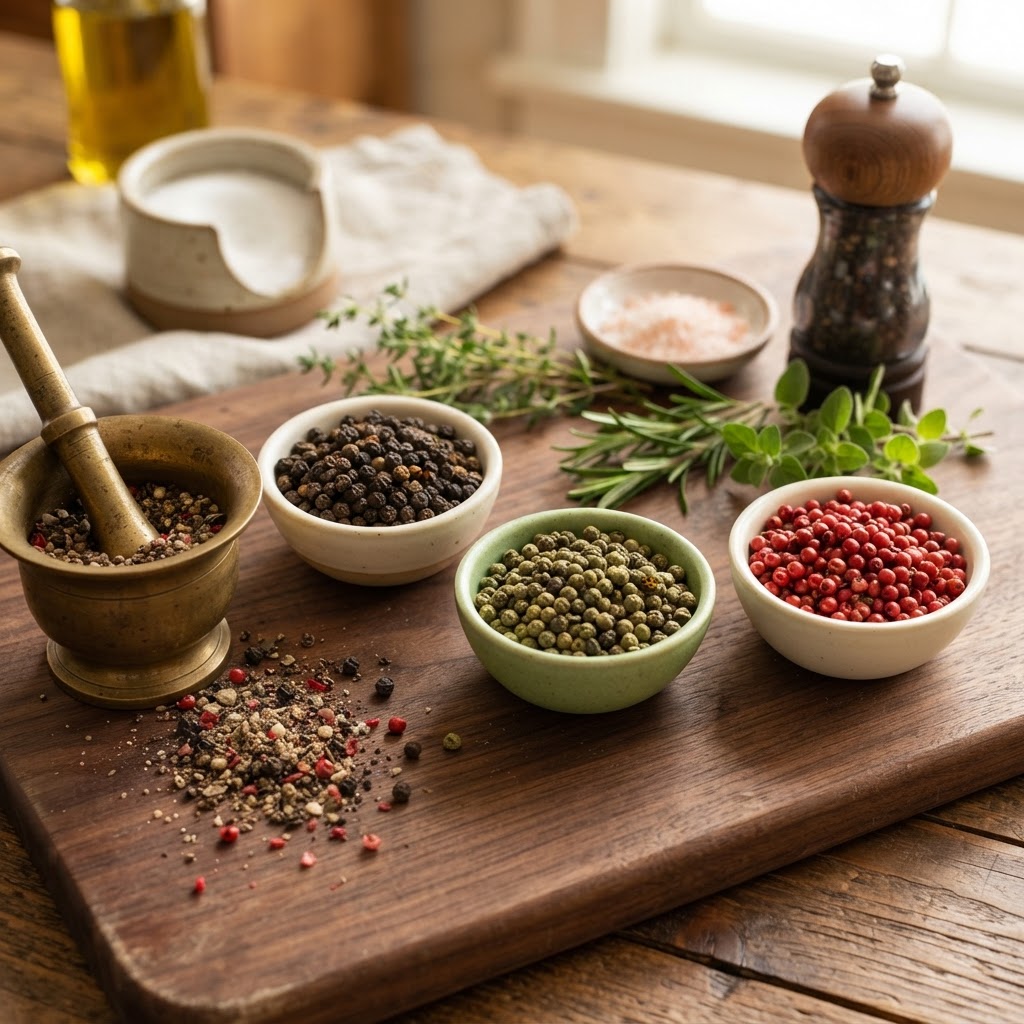
The Home Cook’s Guide to Peppercorns: Mastering Floral, Piney, and Pungent Flavor Profiles for Superior Seasoning
The humble peppercorn is far more than a dusty shaker of generic black powder sitting on the back of your pantry shelf. For many home cooks, pepper is treated as an afterthought, a mere utility player used to dull the sharp edges of a dish or to satisfy a vague recipe requirement. In reality, peppercorns are the backbone of global flavor profiles, offering a complex chemical architecture that ranges from the citrus-forward brightness of high-altitude harvests to the smoldering, woodsy depths of fermented berries. When you begin to treat individual varieties of pepper as distinct ingredients rather than a singular commodity, your cooking undergoes a transformation that is both immediate and profound.
To truly master the art of seasoning, one must understand that peppercorns are botanical chameleons capable of shifting the entire narrative of a meal. Whether you are working with the earthy intensity of a Tellicherry or the numbing, electric buzz of Szechuan peppercorns, the volatile oils trapped within these dried fruits are the key to unlocking depth. Great chefs don't just "add pepper"; they select the appropriate varietal to complement the specific acidity, fat content, or protein structure of their creation. By moving beyond pre-ground dust and embracing the nuance of the whole spice, you are finally taking the wheel in your own kitchen, transitioning from someone who follows directions to a true artisan of flavor.
In this guide, we will peel back the layers of the peppercorn industry, exploring how geography, harvesting times, and processing methods dictate the profile of the spice in your mortar and pestle. We will cover the technical aspects of toasting, grinding, and blooming these spices in fat, ensuring that you can extract the maximum sensory impact from every peppercorn you purchase. This is a culinary journey of discovery, designed to help you elevate the mundane into the extraordinary. Put away the pre-ground tin, sharpen your senses, and prepare to rethink everything you thought you knew about the world’s most essential spice.
The Botanical Spectrum of Peppercorns
The term "peppercorn" is often used as a catch-all in the culinary world, but from a botanical perspective, the landscape is incredibly diverse. True peppercorns originate from the Piper nigrum vine, a flowering climber native to the Malabar Coast of India. The color variations you see on the store shelf—black, white, and green—are not different species, but rather different stages of maturity and processing techniques applied to the same berry. Understanding this progression is the first step toward becoming an educated consumer.
Black peppercorns are picked while the berries are still green and then dried in the sun, causing the outer skin to shrivel and turn black as it oxidizes. This process concentrates the essential oils, particularly piperine, which provides the signature pungent heat, and various terpenes that contribute to the woody, piney aromatics. White peppercorns, by contrast, are harvested at full ripeness and soaked in water to remove the outer husk, leaving only the seed. This results in a much cleaner, more floral, and less complex heat, making them ideal for delicate sauces or dishes where the visual impact of black flecks is unwanted.
Green peppercorns are harvested young and either brined, dried, or freeze-dried to preserve their fresh, vegetal bite. Unlike their black counterparts, they lack the deep, fermented complexity of the fully dried fruit, offering instead a bright, grassy, and somewhat acidic pop. By keeping a selection of these three primary forms in your pantry, you can pivot between styles of cooking with the precision of a professional, using the green for fresh emulsions, the white for refined French technique, and the black for hearty, slow-cooked braises.
Beyond Piper Nigrum: The Impostors
It is essential to acknowledge that many spices labeled as "peppercorns" are not part of the Piper family at all. Pink peppercorns, for example, are the dried berries of the Schinus molle tree, a member of the cashew family. They possess a sweet, floral, and slightly resinous quality but contain almost no piperine, meaning they provide aromatic flair without the tongue-numbing heat. Similarly, Szechuan peppercorns (Zanthoxylum) are actually citrus-family husks that trigger hydroxy-alpha-sanshool, a molecule that creates a tingling, buzzing sensation on the tongue.
"The magic of pepper lies in its duality. It is simultaneously a bridge that connects disparate ingredients and a spotlight that highlights the unique character of the protein it seasons."
When building a spice blend, don't be afraid to experiment with these "false" peppers alongside traditional Piper nigrum. The combination of the piney, earthy heat of black pepper with the citrusy, numbing vibration of Szechuan provides a multi-dimensional sensory experience that is impossible to achieve with a single spice. These blends are particularly effective when paired with fatty proteins like duck or pork belly, as the numbing sensation helps to cut through the richness, keeping the palate refreshed and ready for the next bite.
Sourcing and Storage: The Lifecycle of Flavor
The quality of your seasoning begins long before you reach for the grinder. Peppercorns are agricultural products, and like coffee or wine, they are subject to the vagaries of climate, harvest timing, and storage conditions. The most common mistake home cooks make is purchasing pre-ground pepper. Once the internal structure of the peppercorn is broken, the volatile oils that provide its distinct aroma begin to oxidize and evaporate immediately. Within 24 to 48 hours, you have lost over 80% of the spice's actual flavor, leaving behind only the dull, monotonous heat of ground dust.
Always purchase your peppercorns whole and in small quantities. Look for reputable spice merchants who provide information about the origin and harvest year of their stock. A peppercorn from the high-altitude regions of Tellicherry, India, will have a vastly different profile—more complex, fruity, and bold—than a mass-produced peppercorn sourced from a large, lowland plantation. By buying smaller amounts frequently, you ensure that the oils remain protected within the intact berry until the exact moment you are ready to introduce them to the heat of the pan.
Storage is equally critical to maintaining potency. Spices should be kept in an opaque, airtight container away from light, heat, and moisture. The common practice of storing a pepper mill on the stove is a culinary crime; the ambient heat and steam from your cooking will degrade the quality of the peppercorns in the hopper faster than you can use them. Keep your primary supply in a cool, dark pantry, and only fill your grinder with enough for a few days of use.
The Importance of the Mill
The mechanism you use to process your peppercorns is just as important as the quality of the berry. Cheap, plastic-geared mills often crush the peppercorns rather than slicing them, resulting in an uneven grind that produces bitter dust alongside large, flavorless chunks. Invest in a high-quality mill with hardened steel burrs. A professional-grade mill allows you to adjust the grind size with precision, providing a consistent flake that releases its oils evenly when it hits the heat of your food.
The Alchemy of Toasting and Blooming
If you want to move your cooking from "tasty" to "memorable," you must learn the technique of blooming. Raw spices, while aromatic, are often tightly packed with complex compounds that need heat to fully release their potential. Dry toasting a handful of whole peppercorns in a heavy-bottomed skillet over medium heat for 60 to 90 seconds is the most effective way to unlock these trapped aromatics. You are looking for the moment the peppercorns become fragrant and the oils begin to glisten on the surface of the skin.
Once toasted, the peppercorns can be ground fresh or left whole to infuse into a liquid. The difference between a sauce seasoned with raw pepper and one seasoned with toasted, bloomed pepper is night and day. Toasting mellows the sharp, medicinal edge of the piperine while intensifying the woody, fruity, and piney notes. This process is essential for sauces, marinades, and braising liquids where the pepper is intended to be a foundational element rather than just a final garnish.
Blooming in fat is the next logical step in this evolution. If you are preparing a stir-fry or a curry, add your cracked peppercorns to the hot fat—oil, butter, or ghee—at the very beginning of the cooking process. As the spices sizzle, they infuse the fat with their flavor, creating a seasoned base that will permeate every other ingredient in the pan. This technique ensures that the pepper flavor is not just sitting on the surface of your food, but is physically integrated into the fat that carries flavor to your taste buds.
Temperature Control and Timing
Be vigilant when applying heat to peppercorns. Because the oils are highly volatile, it takes very little time to transition from "beautifully toasted" to "acrid and burnt."
Dry Toasting*: Use a stainless steel or cast-iron skillet. Shake constantly. Remove immediately once you smell the shift from raw to nutty.
Blooming in Fat*: Do this at the start of your aromatics stage (after onions, before garlic). The temperature should be moderate; if the fat is smoking, you have gone too far, and the pepper will turn bitter.
Liquid Infusion: If adding whole peppercorns to a soup or stock, tie them in a sachet d'épices* using cheesecloth. This allows you to remove them before serving, ensuring you get the depth of flavor without the unpleasant texture of a whole berry.
"To bloom a spice is to invite it to wake up. By heating the peppercorn, we are essentially breaking down the cellular walls and releasing the essential oils into a medium that can carry them directly onto the palate."
Master-Level Application: Matching Profiles to Ingredients
Not all peppercorns belong on all dishes. A nuanced approach to pairing requires an understanding of the individual "personality" of your spice shelf. Black Malabar pepper, for instance, is the quintessential "all-purpose" pepper—it is sharp, punchy, and traditional. It is the perfect companion for a simple pan-seared steak, where the heat of the pepper stands up to the charred crust of the meat without overwhelming its natural beefy flavor.
On the other hand, white pepper is largely defined by its lack of sharp, pungency and its increased floral notes. Because it is processed to remove the skin, it lacks the earthy "funk" of black pepper. This makes it an invaluable tool for cream-based sauces, béchamel, or potato-based dishes. In these contexts, the visual of black specks can be distracting, and the aggressive heat of black pepper might clash with the delicate, fatty mouthfeel of the cream. White pepper provides the necessary structural backbone to these dishes while remaining elegantly subtle.
When venturing into international cuisines, look for geographically specific varieties. Tellicherry peppercorns are harvested later than Malabar, giving them a larger size and a much more complex, citrusy, and deeply aromatic profile. They are best reserved for finishing dishes where the flavor of the pepper can be appreciated in its own right, such as over a piece of fresh, high-quality fish or a simple salad dressed in an acidic vinaigrette.
Creating Your Own House Blend
Don't be afraid to create a signature house blend. A balanced ratio for a general-purpose table blend might look like:
* 50% Tellicherry Black Peppercorns (for depth and base heat)
* 25% Pink Peppercorns (for color and floral brightness)
* 15% White Peppercorns (for a clean, sharp finish)
* 10% Szechuan Peppercorns (for a subtle, tingling complexity)
By mixing these in a small mortar and pestle, you create a seasoning that is truly unique. Experiment with the ratios based on your personal preference. If you enjoy a more intense heat, increase the black. If you prefer something lighter and more aromatic, lean into the white and pink varieties. This level of customization is the mark of a confident, thoughtful home cook.
Mastering the Grind: Texture as a Flavor Element
The physical state of the peppercorn—how coarse or fine it is—has a massive impact on how your food is perceived. This is not just a matter of aesthetics; it is a matter of surface area and dissolution. A very fine, powder-like grind of pepper will dissolve quickly into a sauce or a soup, creating a uniform, pervasive heat that coats the entire palate. This is ideal for liquids where you want the pepper to act as a background hum, supporting the other flavors without ever drawing attention to itself.
Conversely, a coarse, cracked grind offers a textural counterpoint. When you bite into a freshly cracked piece of coarse pepper on a steak or a piece of grilled asparagus, you get a localized "burst" of flavor. This contrast keeps the palate engaged. In professional kitchens, we often use different grind sizes at different stages of the cooking process. We might use a fine grind to incorporate flavor into a dough or a marinade, and a coarse, hand-cracked grind for a finishing flourish that adds both crunch and immediate, concentrated aromatics.
To achieve this, you need a high-quality mill that maintains consistency. If your mill produces a mix of dust and large boulders, you are doing yourself a disservice. A great mill allows you to calibrate the grind so that every single particle is the same size, allowing for even cooking and a balanced flavor distribution. If you do not have a high-quality mill, a mortar and pestle is your next best friend. The mortar and pestle allows you to control the exact level of coarseness with absolute precision, and it avoids the friction-based heat that some cheaper, high-speed grinders might accidentally apply to the spice.
The "Crack" Technique
When finishing a dish, try the "cracking" technique. Place whole, high-quality peppercorns into a heavy mortar. Give them a few sharp, decisive strikes with the pestle. You are not looking to turn them into dust; you want to shatter the husk and expose the inner seed. This results in irregular, jagged pieces that offer a variety of textures and release their oils at different rates on the tongue. This is how you achieve that professional, multi-layered seasoning effect that restaurant food always seems to possess.
Peppercorns in Emulsions and Vinaigrettes
The way you incorporate pepper into cold or room-temperature preparations is an entirely different beast than using it in a hot pan. Because there is no heat to help release the volatile oils, you have to be more strategic. If you are making a vinaigrette, for example, whisking in pre-ground pepper is a mistake. The pepper will simply settle to the bottom of the jar or sit as a gritty, flavorless layer on your salad greens.
Instead, consider blooming your peppercorns in the oil you plan to use for the vinaigrette. Warm a tablespoon of your oil over very low heat, add your cracked peppercorns, and let them infuse for ten minutes. Let the oil cool completely, then strain it (or leave the peppercorns in, if you prefer the texture) and proceed with your vinaigrette as usual. The result is a dressing that has the essence of black pepper infused into every drop, providing a much cleaner and more sophisticated profile.
This technique is also incredibly effective for emulsions like mayonnaise or aioli. By infusing the base fat with the peppercorns before emulsifying, you ensure that the pepper flavor is distributed evenly throughout the entire volume of the sauce. This avoids the common issue of having "hot spots" of pepper that can overpower the delicate balance of the emulsion.
The Science of Cold Infusion
If you don't have time to heat the oil, you can use the "maceration" technique. Crush your peppercorns into a coarse powder and add them to your acid (vinegar or lemon juice) at least 30 minutes before you intend to serve. The acidity of the vinegar will begin to draw out the aromatics of the pepper, essentially "marinating" the spice. This is a brilliant way to ensure that your cold sauces have a bright, lively, and fully developed pepper flavor that feels integrated rather than added.
"A well-executed vinaigrette is not merely a mixture of oil and acid; it is a vehicle for flavor. When you infuse your oils with high-quality peppercorns, you turn a simple dressing into a sophisticated component of the dish."
The Final Polish: Finishing Techniques
The final seasoning of a dish is the most critical stage of the cooking process. It is the last chance you have to correct the balance of flavor before the food hits the table. At this stage, you should be using your pepper as a seasoning agent, just like salt. Ask yourself: does this dish need more brightness? If so, reach for a white or pink peppercorn grind. Does it need more earthy, grounded intensity? Go for a freshly toasted and cracked black peppercorn.
Many chefs advocate for a "pepper-forward" finish on dishes that are naturally rich and heavy. A dollop of beef tallow-fried potatoes, for instance, becomes a transformed dish when topped with a generous dusting of coarse, toasted black pepper. The sharpness of the pepper cuts through the density of the fat, cleansing the palate and making the next bite as exciting as the first. This is the secret to high-end comfort food: the tension between the heavy and the bright.
Finally, do not underestimate the power of visual presentation. While we often think of pepper as just a flavor, its appearance on a plate adds a professional touch. A consistent, medium-coarse grind scattered over a perfectly grilled vegetable or a finished steak provides a sense of intentionality. It tells the person eating the food that you have considered every element of the experience, from the depth of the flavor to the visual appeal of the final presentation.
Final Thoughts
Mastering the use of peppercorns is a lifelong culinary pursuit, one that begins with curiosity and ends with intuition. When you stop viewing pepper as a basic necessity and start seeing it as a diverse, complex spice with its own regional identities and chemical profiles, you open the door to a higher level of cooking. We have explored the botanical differences between berries, the critical importance of proper storage and grinding, and the transformative power of toasting and blooming.
The next time you reach for your pepper mill, pause for a moment. Consider what the dish needs—is it a subtle floral note from a white peppercorn, or the deep, piney intensity of a Tellicherry? By making this deliberate choice, you are taking ownership of your flavor profile. Your pantry is a collection of possibilities, and your mortar and pestle are the tools with which you will realize them. Continue to experiment, continue to taste as you go, and never settle for the pre-ground. Your kitchen, and your guests, will certainly notice the difference. Stay curious, keep seasoning, and most importantly, remember that every great dish is built on the foundation of the right ingredients used with intent. Happy cooking, and may your grinders always be full of the freshest, most vibrant peppercorns available.

Get the Next Recipe
Weekly recipes, techniques, and gear picks — straight to your inbox.
