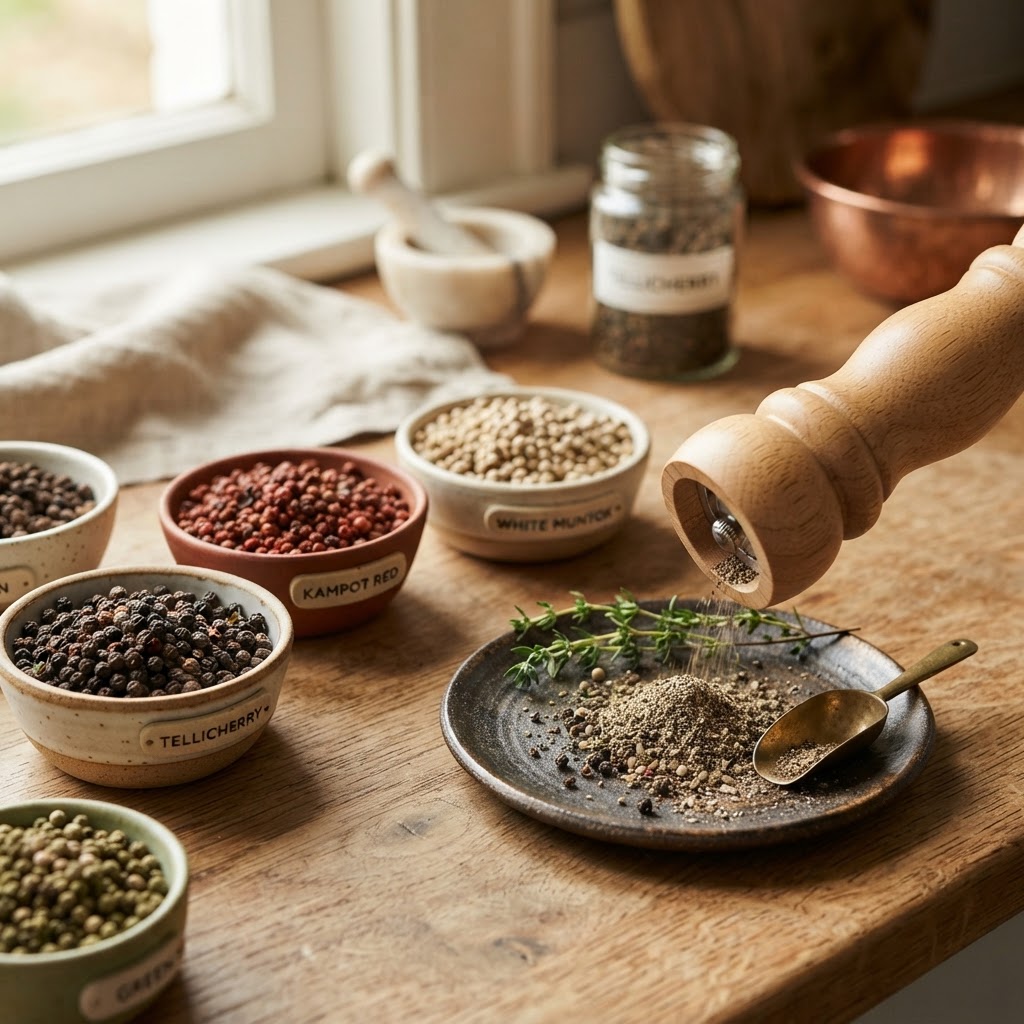
The Home Cook’s Guide to Peppercorns: Understanding Terroir, Heat Levels, and Why You Should Always Grind Fresh
The humble peppercorn is perhaps the most underrated workhorse in the professional kitchen, a tiny botanical sphere that holds the power to elevate a dish from mundane to magnificent. While many home cooks view black pepper as a static pantry staple—a dusty tin of pre-ground gray powder that has sat in the back of a cabinet for three years—the reality is that peppercorns are a complex, aromatic spice with distinct regional identities. Much like the grapes used in fine wine, the terroir of the Piper nigrum vine dictates the flavor profile, ranging from the bright, citrusy notes of Tellicherry to the deep, woody intensity of Vietnamese varieties. Understanding this diversity is the first step toward reclaiming your palate and moving beyond the generic "heat" we have all become accustomed to.
To cook like a chef, one must treat pepper not merely as a seasoning agent for heat, but as an aromatic spice that functions as the backbone of flavor. When you crack a peppercorn, you are releasing a symphony of volatile oils—pinene, limonene, and caryophyllene—that dissipate within minutes of exposure to air. This is why the industry standard for any serious kitchen is to grind fresh at the very moment of application, ensuring that the vibrant, floral, and resinous notes hit the plate with maximum potency. If your pepper tastes like sawdust or creates a dusty, unpleasant throat tickle, it is not the spice's fault; it is a sign that the oils have long since evaporated.
In this guide, we are going to demystify the world of pepper, moving far beyond the grocery store plastic grinder. We will explore the specific heat levels, the proper way to toast and store these potent berries, and why your choice of mill can actually change the outcome of your sauces. We will look at the science of piperine, the compound responsible for that characteristic sting, and how to balance it against fats, acids, and sweetness to create a more sophisticated dining experience at home. It is time to stop blaming the chef for a bland meal and start looking at the tools and ingredients sitting right there on your countertop.
The Botanical Origins: It Is All About Piper Nigrum
When we talk about "black pepper," we are referring to the dried, unripe fruit of the Piper nigrum vine, a flowering shrub native to the Malabar Coast of India. The journey from vine to grinder is a process of harvesting, boiling, and drying, which darkens the outer skin and shrivels the berry into the iconic wrinkled sphere we recognize. It is fascinating to note that black, white, and green peppercorns are all actually the exact same fruit; the difference in color comes down to the maturity of the berry at the time of harvest and the specific processing methods applied to the shell.
Understanding the Color Spectrum
Black Peppercorns:* Harvested when the fruit is just beginning to turn red, then sun-dried until the skin turns black and wrinkled. These provide the most complex and robust flavor profile.
White Peppercorns:* These are berries harvested when fully ripe, then soaked in water to remove the outer pericarp (the dark skin). Because the skin is removed, they lack the floral top notes of black pepper but provide a cleaner, more intense, and sometimes earthy heat.
Green Peppercorns:* These are picked early and preserved in brine or freeze-dried. They offer a fresh, vegetal, and acidic bite that works beautifully in creamy sauces or with poultry.
The terroir of the region where the vine is planted plays a massive role in the final chemistry of the berry. Just as a Cabernet Sauvignon grown in Napa Valley tastes different from one grown in Bordeaux, a peppercorn grown in the tropical heat of Indonesia will carry a different heat profile than one grown in the mountain air of the Western Ghats. When sourcing your peppercorns, look for labels that specify their origin—such as Tellicherry, Sarawak, or Lampong—as these indicate a higher quality and a more nuanced taste than generic "black pepper" blends.
"The true measure of a kitchen is found in the jar of pepper. If you are using pre-ground dust, you are essentially cooking with empty calories of flavor. The pepper should be an event, a burst of aroma that announces the dish before the fork even touches the tongue."
Why Freshness is Non-Negotiable
The volatility of the aromatic oils in peppercorns is the single most important factor in the success of your seasoning. As soon as you crush a peppercorn, the piperine and the essential oils begin to oxidize. Within 15 to 20 minutes, the complex, citrusy, and woody top notes vanish, leaving behind only the dull, one-dimensional burn. This is why professional chefs never use pre-ground pepper; it effectively turns a high-quality spice into a flavorless filler that clutters the palate.
The Science of the Mill
The mechanism of your pepper mill matters as much as the peppercorns themselves. A high-quality mill features a hardened steel grinding mechanism that shears the peppercorn rather than crushing it. Crushing can cause the berry to overheat, which destroys the delicate oils before they even hit the food. A clean, sharp shearing motion preserves the integrity of the essential oils, delivering a much more fragrant result.
To maintain your mill, you should never put it near the steam of a boiling pot. Steam rises, enters the grinder, and introduces moisture to the peppercorns, which causes them to cake, clump, and eventually harbor mold. Instead, grind your pepper into a small prep bowl or onto your palm, and then add it to the dish manually. This also gives you more control over the distribution of the seasoning, preventing the dreaded "pepper bomb" where a single clump ruins a delicate sauce.
Mastering Heat and Toasting Techniques
One of the most transformative techniques in a chef’s repertoire is the toasting of whole spices. By applying dry heat to whole peppercorns before grinding, you wake up the dormant oils and change the flavor profile from "sharp and spicy" to "mellow, nutty, and complex." This is a crucial step if you are making a dry rub for a steak or preparing a peppercorn-crusted sauce.
Step-by-Step: The Perfect Toast
When you toast your pepper, you are essentially performing a controlled chemical reaction. The heat causes the volatile compounds to expand and release their aroma. If you are cooking a long-simmered dish, consider adding cracked peppercorns at the beginning to infuse the base, but always finish with a fresh, fine grind at the very end to provide that bright, aromatic "lift" that makes a dish pop. It is the contrast between the deep, cooked-out flavor and the sharp, fresh finish that defines a professional-level culinary balance.
The Anatomy of Heat: Beyond the Sting
Many people mistake the irritation caused by low-quality, old pepper for "heat." True heat, derived from the alkaloid piperine, should be perceived as a slow, warming sensation that spreads across the tongue and throat. If your pepper makes you sneeze or irritates your throat immediately, it is likely stale. A high-quality peppercorn should be vibrant, nuanced, and pleasant, acting as a bridge between the savory components of your dish.
Balancing Pepper with Other Flavors
Fats:* Peppercorns are fat-soluble. If you are making a pan sauce, finish it with a knob of cold butter after adding the fresh-ground pepper; the butter will carry the oils of the pepper across the palate, making the flavor last longer.
Acids:* A squeeze of lemon juice or a dash of vinegar can brighten up the woody notes of a dark peppercorn, making them taste fresher.
Sweetness:* A touch of honey or maple syrup can tame an overly aggressive or sharp pepper, rounding out the heat and creating a more balanced profile.
Consider the role of pepper in a classic Steak au Poivre. The meat is heavily encrusted with coarsely cracked pepper. During the searing process, the high heat caramelizes the surface of the meat while simultaneously roasting the pepper crust. This process tames the sharpness of the pepper and transforms it into a smoky, savory coating that pairs perfectly with a cognac cream sauce. This is the perfect example of using pepper not as an afterthought, but as a primary structural element of the dish.
"To cook is to manage intensity. Pepper is the most accessible tool for this, yet it is so often misused. Treat your peppercorns with the same respect you give your truffles or your saffron, and you will see your culinary output transform almost overnight."
Sourcing and Storage: The Pro's Pantry
If you are serious about flavor, you must move beyond the grocery store aisle. Seek out single-origin peppercorns from specialty spice merchants. These suppliers often provide detailed information about the harvest year and the specific region. Buying in smaller quantities ensures that you use the product before it goes stale. A general rule of thumb: if you can't smell the peppercorns through the bag, they have likely been sitting on the shelf for too long.
Best Practices for Storage
Light:* Always store your peppercorns in an opaque container. Light degrades the essential oils significantly over time.
Temperature:* Keep your spices in a cool, dark cupboard, far away from the oven, dishwasher, or stovetop.
Airtight:* Oxygen is the enemy. Ensure your storage jar has a rubber gasket or a tight-fitting lid.
Whole vs. Ground:* Never buy pre-ground pepper. Even if you grind it yourself and store it, it is not the same. Keep the peppercorns whole until the exact second you need them.
If you find yourself with an abundance of peppercorns, do not be afraid to experiment with blending. Mix black Tellicherry peppercorns with green Szechuan peppercorns (which are technically not "pepper" but dried citrus berries) to create a floral, numbing, and complex spice blend. This type of experimentation is how chefs develop their own signature flavor profiles. Once you start tasting the difference between a Malabar peppercorn and a Talamanca, you will never be able to go back to the standard generic blend.
Culinary Applications: How and When to Grind
Timing is everything. In professional cooking, we differentiate between "seasoning" (which happens early in the cooking process) and "finishing" (which happens right before service). Pepper is unique because it serves both functions, but it behaves differently in each state.
The Three Stages of Pepper Application
Avoid the habit of shaking a grinder over a steaming pot for an extended period. Not only is the steam ruining your mill, but the pepper is also effectively "boiling," which strips away the top notes. Instead, take your prep bowl, grind your required amount, and incorporate it manually. This ensures that every serving is seasoned consistently and that you are not losing the delicate aromatic qualities of the spice to the rising steam.
Final Thoughts
The journey toward better cooking is rarely about learning complex, impossible-to-replicate techniques; it is about refining the small, overlooked details that define the quality of your ingredients. By upgrading your peppercorns, understanding the importance of fresh grinding, and learning how to manipulate the flavor through heat and timing, you are taking a massive step toward the professional standard. We often blame the chef for a dish that falls flat, but more often than not, the fault lies in the pantry.
Invest in a quality mill, source your peppercorns from vendors who care about origin, and practice the art of tasting. Take a single peppercorn, crush it under your knife, and smell it. Compare it to the dust sitting in that supermarket tin. The difference is palpable, immediate, and utterly transformative. Your kitchen is your domain, and your ingredients are your tools. Start treating your pepper as the vibrant, aromatic spice it truly is, and you will find that your everyday meals carry a depth and complexity you never thought possible.
Do not be intimidated by the variety available to you. Start with a classic Tellicherry and master it. Once you understand its reach and its limits, begin to explore the smoky notes of Lampong or the citrusy pop of a green peppercorn. Culinary confidence is built on the foundation of knowledge, and you are now equipped with the information necessary to make every dish more fragrant, more balanced, and undeniably more professional. Happy seasoning, and remember: if you want the best result, always blame the quality of the prep, not the dish itself.
Furthermore, consider the role that variety plays in the kitchen. If you are preparing a heavy, red wine-braised short rib, a robust and woody peppercorn is the ideal companion, as it stands up to the depth of the wine and the intensity of the fat. Conversely, if you are preparing a delicate lemon-herb roasted white fish, you may want a lighter touch, perhaps a touch of white pepper or a very fine, subtle grind of a milder black peppercorn. The goal is harmony, not just heat. Balancing the intensity of the piperine with the other ingredients in your dish is an art form, but one that is well within the grasp of the home cook who is willing to pay attention to the details.
Finally, keep in mind that the best tools are the ones that work with you, not against you. A mill that allows for an adjustable grind size is invaluable. You want a coarse grind for a crust on a steak, a medium grind for finishing a pasta dish, and a fine grind for a delicate velouté or a vinaigrette. By being able to control the surface area of the spice, you control the rate at which the flavor is released. This technical precision is what separates the casual home cook from the chef who understands the molecular mechanics of flavor.
As you move forward, keep a journal. Write down which peppercorns you used, how you toasted them, and how they interacted with the specific proteins or vegetables you were cooking. This documentation will turn your kitchen into a laboratory of flavor. You will begin to see patterns in how ingredients behave, and you will start to make intuitive leaps that feel like magic but are, in fact, the result of systematic, intentional practice. The peppercorn is the starting point, but the path forward leads to a lifetime of delicious discovery.
There is a profound satisfaction in knowing that the simple act of choosing and grinding your pepper has elevated your cooking. It is a subtle change, but a meaningful one. It changes the way your family and guests experience your food, turning a standard dinner into an aromatic experience. Never settle for the easy, mass-produced route. Your palate deserves the complexity of a fresh, high-quality spice, and your cooking deserves the respect of proper technique. Go forth, experiment, and enjoy the process of perfecting your flavor profiles one grind at a time. The kitchen is waiting for you to take charge.
Finally, remember that the most important ingredient in any dish is the intention behind it. When you are standing at your stove, grinding that fresh pepper, you are participating in a tradition that spans centuries and continents. You are connecting with the history of the spice trade, the evolution of culinary technique, and the simple desire to create something beautiful for those you love. That intention translates into the flavor of the food. So, take your time, appreciate the nuance, and never underestimate the power of a single, freshly cracked peppercorn. It is, quite literally, the world on your plate.
The journey of the home cook is continuous. There will always be new ingredients to source, new techniques to refine, and new flavor combinations to explore. But when you start with a solid foundation—like understanding the humble peppercorn—you find that the entire world of flavor opens up to you. You are no longer just following a recipe; you are understanding the why behind the steps. You are no longer just cooking; you are curating. And that, in essence, is what it means to step into the role of a chef in your own home.
So, the next time you find yourself reaching for that seasoning jar, pause. Take a moment to consider the peppercorns inside. Are they fresh? Are they high quality? Do they deserve to be the crowning touch on your hard work? If the answer is no, then it is time to upgrade. Because in the end, it is those small, intentional choices that define the quality of our lives, both in the kitchen and beyond. Embrace the process, respect the spice, and keep on cooking. Your kitchen is the heart of your home, and with these techniques, it will also be the most flavorful place you know.
We have covered the botanical history, the chemistry of the oils, the importance of freshness, the art of toasting, and the tactical application of heat. You are now better prepared than 90% of home cooks to handle this essential ingredient. Take this knowledge, apply it consistently, and watch how your dishes evolve. You will find that you have a deeper appreciation for the interplay of flavors, a keener sense of smell, and a more sophisticated palate. This is the goal of the home chef: to turn the mundane into the marvelous, one meal at a time.
Stay curious about your spices. Continue to look for the next level of quality. Whether it is sourcing a rare variety of peppercorn from a remote farm or learning how to balance it with new ingredients, keep pushing the boundaries of what you think is possible in your home kitchen. The "Blame The Chef" philosophy is all about empowerment, and that empowerment starts with you. You have the tools, the knowledge, and the passion. Now, go make something delicious.
As you continue to cook, let this guide serve as a reference point. When you are staring at a steak, a soup, or a simple pasta dish, remember these tips. Think about the terroir, the heat levels, and the aromatic oils. Think about when and how to grind the pepper. Think about the balance of fats and acids. By consciously applying these principles, you will find that your cooking becomes more consistent, more flavorful, and more rewarding. That is the true success of any kitchen project.
We will continue to explore other foundational ingredients in future posts. For now, focus on your pepper. Master the grind, refine the technique, and enjoy the difference it makes in your daily meals. The difference between "good" and "great" is often found in these small details. And remember, you don't have to blame the chef—because with the right knowledge, you are the chef. Happy cooking!
Get the Next Recipe
Weekly recipes, techniques, and gear picks — straight to your inbox.
