The Home Cook’s Guide to Peruvian Ceviche: Mastering Acid-Curing Ratios for Fresh, Vibrant Seafood Bowls
There is something undeniably transformative about the first bite of a perfectly executed Peruvian ceviche. It is a dish that defies the conventional definition of cooking, relying not on the searing heat of a flame or the slow breakdown of connective tissues in a Dutch oven, but on the precise, alchemical dance between fresh proteins and the aggressive bite of citrus. When you create this dish at home, you aren’t just preparing a meal; you are engaging in a centuries-old ritual that celebrates the bounty of the ocean. The magic lies in the leche de tigre, or "tiger’s milk," a potent, milky marinade that acts as the soul of the dish. It is this vibrant, acidic emulsion that separates a pedestrian seafood salad from a world-class ceviche that transports your palate straight to the bustling markets of Lima.
Many home cooks are rightfully intimidated by the prospect of raw seafood, fearing the nuances of texture or the potential for an uneven cure. However, mastery over ceviche is less about complex culinary equipment and more about an obsession with temperature control and ingredient quality. When you strip away the distractions of heavy sauces and complex preparations, you are left with nothing but the truth of the fish itself. By understanding the science of protein denaturation through citric acid, you gain the power to manipulate texture and flavor to your exacting standards. This guide is designed to peel back the curtain on this process, giving you the confidence to turn your home kitchen into a shrine for one of South America’s most revered contributions to global gastronomy.
As you embark on this culinary journey, remember that patience is as much an ingredient as the lime juice itself. You cannot rush the interaction between the acid and the muscle fibers, nor can you compromise on the freshness of your catch. In the following sections, we will break down the anatomy of a perfect bowl, from the selection of the fish to the delicate balance of aromatics that define the leche de tigre. We will explore the critical timing required to achieve that delicate "cooked" edge while preserving the buttery, raw interior of the fish. By the time you finish reading, you will not only be capable of replicating this Peruvian staple, but you will understand the "why" behind every step, allowing you to innovate with confidence in your own home kitchen.
The Foundation: Selecting the Perfect Protein
The integrity of your ceviche starts long before you reach for your knife or squeeze a single lime. Because this dish relies on the raw state of the protein, your selection criteria must be stringent. You are looking for firm-fleshed white fish that can hold its own against the sharp, pervasive sting of citrus. Species like sea bass, sole, flounder, or snapper are the gold standard in Peru. These fish have a clean, neutral profile that allows the marinade to shine without being overpowered by the oils often found in heavier, fatty fish like mackerel or tuna.
When visiting your local fishmonger, the most important question is not just what is fresh, but what was caught most recently. Look for clear eyes, bright red gills, and flesh that bounces back when pressed with a finger. If you find yourself in a situation where high-quality sea bass is unavailable, a firm monkfish or mahi-mahi can serve as an acceptable substitute, provided the fillets are trimmed of all dark muscle and skin. The goal is to provide a "blank canvas" of white, translucent protein that will absorb the vibrant flavors of the marinade without falling apart into mush.
The Science of Freshness
To ensure you are serving a safe and delicious product, keep your fish chilled below 40 degrees Fahrenheit at all times. Before you begin slicing, place your fish in the freezer for about 10 to 15 minutes. This firms up the flesh, allowing you to achieve uniform, clean cuts that are aesthetically pleasing and offer a consistent texture in every bite. When the fish is too warm, it tends to tear under the knife, which negatively impacts the final presentation and can lead to uneven curing during the marination process.
"In the world of ceviche, the fish is not just an ingredient; it is the canvas upon which the acidity paints its most vibrant, transformative story. Treat your fish with the reverence it deserves, and it will reward you with a texture that dances between buttery and firm."
Mastering the Leche de Tigre
The leche de tigre is arguably the most important component of the dish. It is a bold, spicy, and sharp emulsion that is created by mixing lime juice with fish stock, aromatics, and the juices released by the fish as it cures. While many home cooks mistakenly believe that the "milk" comes from dairy, it is actually a culinary term referring to the opaque, protein-rich liquid that results from the chemical reaction between the acid and the fish. To make a traditional version, you need a high-quality fish fumet or simply a few trimmings of the fish blended with lime, cilantro stems, ginger, garlic, and chilies.
The Acid-Cure Ratio
The ratio of acid to protein is the difference between a ceviche that tastes fresh and one that tastes like a pickled disaster. You want to aim for a marinade that is sharp enough to cook the surface of the fish but not so aggressive that it turns the fish tough or chalky. A standard starting point is one part citrus juice to one-third part aromatic stock. You should always use freshly squeezed Key limes if possible; their higher acidity and distinct floral notes are superior to standard Persian limes. Avoid bottled juices at all costs, as the pasteurization process alters the flavor profile, resulting in a flat, metallic finish.
Balancing the Aromatics
To achieve depth, you must balance the acidity with heat and savory notes. Use Ají Limo or Ají Amarillo peppers if you can source them; these Peruvian chilies offer a fruity, moderate heat that is iconic to the dish. If you cannot find these, a finely minced habanero or serrano pepper will suffice, provided you remove the seeds to control the spice level. Combine your chilies with the following aromatics:
* Fresh cilantro stems (finely minced)
* A touch of ginger (grated for a subtle bite)
* Red onion (thinly sliced)
* Sea salt (the essential conductor of flavor)
The Technique: Slicing and Curing
Precision is the hallmark of a professional ceviche. Once your fish is chilled and your aromatics are prepared, it is time to cut the protein. Aim for cubes approximately half an inch to three-quarters of an inch in size. These cubes should be uniform to ensure they cure at the same rate. When the pieces are uneven, you end up with some bites that are perfectly cured and others that are still completely raw, which creates an inconsistent sensory experience.
The Timing Protocol
Once the fish is in the bowl, season it generously with sea salt before adding the lime juice. The salt draws out moisture and allows the fibers to open up, which helps the citrus penetrate more efficiently. After seasoning, toss in the red onions and the aromatics. Finally, pour the leche de tigre over the fish. The cure should last between three to five minutes. Anything longer than five minutes, and you risk the fish losing its delicate, translucent quality and turning completely opaque and dry.
Monitoring the Cure
Watch the fish as it sits in the marinade. You want to see the edges turn a soft, milky white, while the center remains slightly glassy. This is the "medium-rare" state of ceviche. Once the timer hits four minutes, taste a piece. The fish should still possess a slight snap when you bite into it, but it should be infused with the brightness of the lime and the heat of the chili. If it needs more time, give it another 60 seconds, but never exceed seven minutes total, as the citric acid will continue to denature the protein until it loses all of its textural appeal.
"A bowl of ceviche that sits too long in the fridge is a culinary tragedy. The cure is a live, fleeting moment; it is a dish meant to be served the second it hits the peak of its chemical reaction, offering a perfect equilibrium of salt, acid, and texture."
The Peruvian Garnish Philosophy
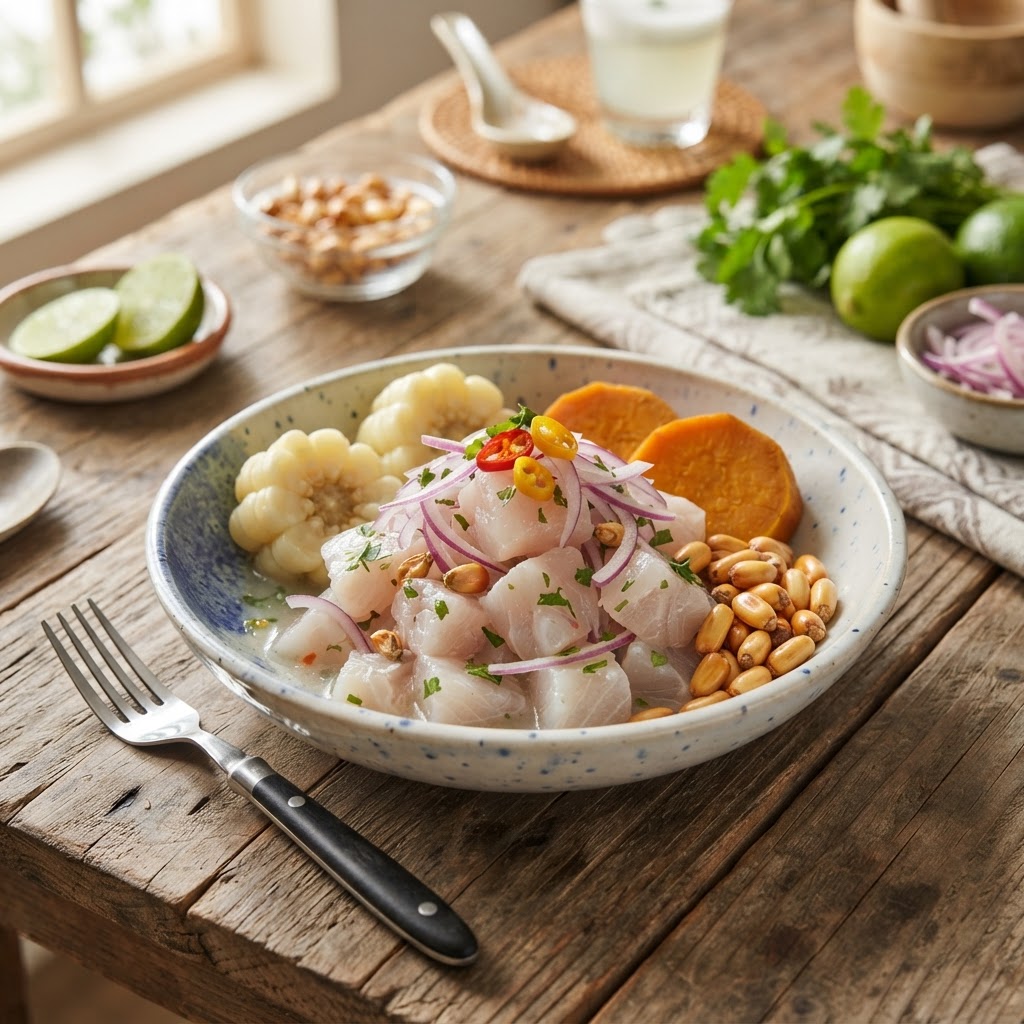
Peruvian ceviche is almost never served alone. It is traditionally accompanied by a set of "sidekicks" that provide necessary textural contrast to the soft fish. The most essential of these are choclo (large-kernel Andean corn) and camote (sweet potato). The starchiness of the boiled sweet potato and the chewiness of the corn help to neutralize the sharp acidity of the marinade, allowing your palate to reset between bites.
Preparing the Sides
To prepare your sweet potato, peel and boil it in water seasoned with a cinnamon stick, a star anise, and a splash of orange juice. This infuses the potato with a delicate sweetness that pairs perfectly with the citrusy punch of the ceviche. The corn should be boiled until tender and then cooled. Arrange these alongside your ceviche in a shallow bowl or on a chilled plate. The contrast between the cold, acidic fish and the warm, earthy potato creates a sophisticated balance that is the hallmark of high-end Peruvian cooking.
The Role of Texture
Don't forget the crunch. Thinly sliced cancha (toasted Peruvian corn nuts) or even a few sprigs of fresh, crisp cilantro leaves can elevate the dish. The crunch provides a necessary interruption to the softness of the fish and the creaminess of the sweet potato. When assembling the bowl, think about the plate as an architecture; you want a variety of colors, textures, and heights to ensure that every forkful provides a different aspect of the dish's complex character.
Common Pitfalls and Troubleshooting
Even with the best ingredients, there are several traps that home cooks fall into when preparing ceviche. The most common is over-salting. Because the lime juice is acidic, it can trick you into thinking the dish needs more salt than it actually does. Always season your fish lightly before adding the juice, and wait until the very end to adjust the salt levels. If you find the dish is too acidic, do not try to fix it by adding more fish; instead, balance it out with a tiny drizzle of honey or a splash of fresh coconut milk to mellow the bite.
Dealing with "Fishy" Flavors
If your ceviche tastes "fishy," it is almost always a result of either poor fish quality or the inclusion of dark bloodlines. When preparing your fillet, use a sharp fish filleting knife to remove the dark lateral line (the reddish-brown strip of flesh along the side of the fish). This line contains oils that can oxidize quickly and impart a strong, unpleasant flavor to the ceviche. Removing it takes only a moment but significantly improves the final result.
Keeping the Temperature
The most common mistake at home is allowing the ceviche to warm up during the preparation process. If your kitchen is hot, keep your fish in the freezer until the last possible second. You can also place your serving bowls in the refrigerator or freezer for 10 minutes before plating. A chilled bowl keeps the ceviche vibrant and fresh for the duration of the meal, preventing the lime juice from "over-cooking" the fish due to residual heat from the environment.
Chef-Level Tips for Modern Variations
Once you have mastered the traditional technique, the possibilities for experimentation are endless. You can introduce new flavor profiles by swapping the standard aromatics for different fruit juices or herbs. For a refreshing, Mediterranean-inspired twist, add a splash of grapefruit juice or a pinch of crushed fennel seeds. These additions maintain the acidic structure of the dish while offering a new, complex aroma that pairs beautifully with white fish.
Fusion Concepts
If you want to move away from the traditional, consider incorporating Japanese influence, which is actually deeply embedded in Peruvian history (a movement known as Nikkei cuisine). Add a dash of soy sauce or mirin to your leche de tigre to introduce an umami dimension that pairs incredibly well with the sharpness of the lime. A drizzle of high-quality sesame oil at the very end can also provide a luxurious, nutty finish that rounds out the sharper citrus notes.
Seafood Variety
Do not feel restricted to white fish. You can easily adapt these techniques for shellfish. Scallops are particularly wonderful for ceviche; their naturally sweet, creamy flesh reacts beautifully to the acidity of the lime. Simply slice the scallops into thin rounds and follow the same curing time. You can also experiment with cooked octopus or shrimp, which don't technically need the cure for safety but benefit immensely from being marinated in the leche de tigre for 15 to 20 minutes before serving.
"The true mark of a chef is not just the ability to follow a recipe, but the intuition to understand how ingredients interact. Once you understand the acid-cure, you are no longer limited by a set of instructions; you are free to compose flavors based on the seasons and your own imagination."
Final Thoughts
Mastering Peruvian ceviche is a milestone for any home cook. It moves you away from the reliance on heavy heat and teaches you to respect the raw ingredient, the balance of acid, and the vital importance of freshness. By treating your fish with care, monitoring your cure times, and mastering the vibrant, spicy emulsion of the leche de tigre, you are crafting a dish that is as intellectually stimulating as it is delicious.
As you continue to practice, you will develop a "sixth sense" for when the fish is cured to your liking. You will begin to notice how the color shifts from translucent to opaque, how the aroma changes as the chilies infuse the juice, and how the texture provides that perfect, firm-but-buttery resistance against the fork. Do not be discouraged if your first attempt isn't perfect; each bowl is an opportunity to learn, adjust, and refine.
The beauty of this dish is its simplicity. In a world of complicated culinary techniques and overly processed ingredients, ceviche stands as a beacon of purity. It is an invitation to slow down, source the best possible ingredients from your local market, and enjoy the process of transformation. Invite your friends over, keep the wine chilled, and serve your ceviche immediately after the cure is complete. There is no better way to celebrate the essence of fresh seafood than with a bowl crafted by your own hands, seasoned with the wisdom of the Peruvian culinary tradition, and served with pride. Enjoy the vibrant, acidic, and utterly addictive journey that is your homemade ceviche.
Get the Next Recipe
Weekly recipes, techniques, and gear picks — straight to your inbox.
