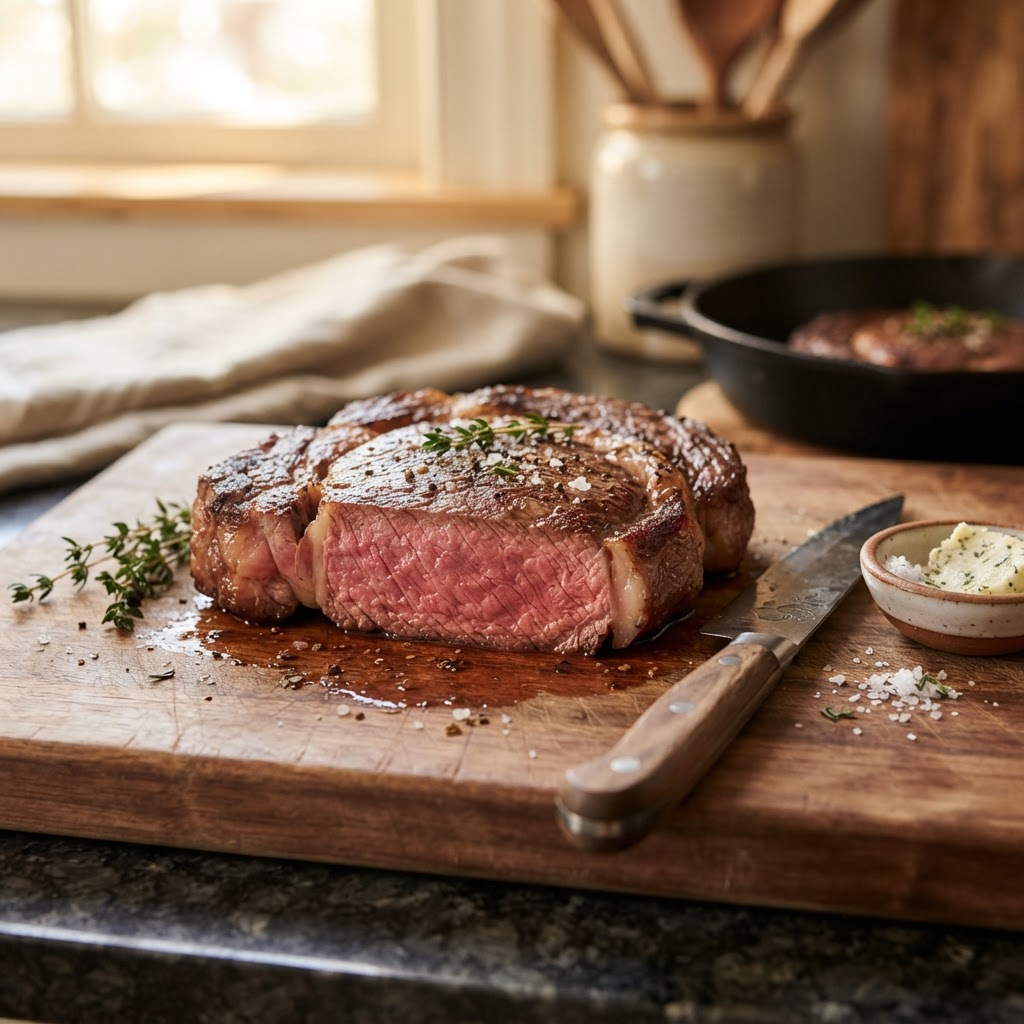
The Home Cook’s Guide to Rest Times: Mastering Carryover Heat for Perfectly Juicier Proteins
There is a persistent, almost tragic narrative in many home kitchens that goes something like this: the oven timer dings, the steak or roast is pulled from the heat, and the chef immediately carves into it with hungry anticipation. What follows is a kitchen tragedy—a pool of ruby-red juice floods the cutting board, the meat begins to gray and lose its structural integrity, and the resulting bite is a shadow of what it could have been. We have all been there, and we have all blamed the cut of meat, the pan, or even the grocery store butcher. But the truth is, the culprit isn’t the protein; it’s our own impatience. Mastering the art of the rest is perhaps the single most significant jump a home cook can make from "competent" to "extraordinary."
At its core, resting meat is about thermodynamics and the physics of protein fibers. When you subject a piece of muscle—be it beef, pork, chicken, or fish—to high heat, the muscle fibers contract and tighten, squeezing the internal moisture toward the center of the cut. If you slice into that protein while it is still in this state of high tension, those pressurized juices have nowhere to go but out, leaving you with a dry, fibrous interior. By allowing the meat to sit undisturbed, you are giving those fibers the time they need to relax, reabsorb the liquid, and stabilize at a lower, more consistent temperature. This simple, passive act is the secret to the succulent, edge-to-edge consistency found in high-end steakhouses.
The concept of carryover heat is the often-overlooked sibling of the resting phase. Because the exterior of a steak or roast is significantly hotter than the interior, that thermal energy continues to travel inward long after you have pulled it away from the heat source. If you pull a steak off the grill at your target temperature, it will inevitably overshoot that temperature while it sits, resulting in overcooked, chalky meat. This guide is designed to peel back the curtain on these processes, providing you with the technical framework to predict, manage, and execute the perfect rest every time you step up to the stove. Put down the carving knife, step back, and let’s talk about how time is the most important ingredient in your pantry.
Understanding the Physics of Protein Relaxation
Why Juices Migrate
When heat hits a protein, the primary goal is the denaturation of proteins and the rendering of fats. As the surface temperature climbs, the muscle fibers tighten like a coiled spring. This physical contraction physically forces the moisture—the water and dissolved proteins—out of the cell walls and toward the geometric center of the roast or steak. This is why the very center of a thick-cut steak is often the coolest and most saturated part of the cut immediately upon removal from the heat.
If you slice immediately, you break the vacuum seal of these fibers. The pressure that built up inside the protein is released instantly, and those precious juices are deposited onto your board. Once lost, that moisture cannot be replaced by butter, basting, or sauces. Resting allows the temperature gradient to even out—what we call thermal equilibrium—which reduces the pressure on the muscle fibers and allows them to relax and re-expand to hold that moisture.
The Role of Carryover Cooking
Carryover cooking is not an accident; it is a measurable phenomenon that home cooks must learn to calculate. The thickness, density, and initial temperature of the protein determine exactly how many degrees it will climb while resting. A thick, bone-in ribeye will have significantly more thermal mass than a thin skirt steak. Consequently, a thick roast might rise by 10 to 15 degrees Fahrenheit, while a thin, lean chicken breast might only rise by 3 to 5 degrees.
"The hardest part of professional cooking is not the searing or the seasoning; it is the discipline of waiting. The rest is where the meal is actually finished, and the impatient cook is a cook who will always struggle with consistency."
To master this, you must invest in a high-quality instant-read digital thermometer. Relying on the "finger poke" test or kitchen timers is a recipe for inconsistency. When you know that your steak will rise by 5 degrees, you can pull it from the fire at exactly 125°F for a perfect medium-rare finish of 130°F. This level of precision is what separates a lucky guess from a reliable culinary technique.
Determining Optimal Resting Times
The Scale of Cuts
Not all proteins require the same amount of time. A good rule of thumb for steaks is to allow them to rest for at least 5 to 10 minutes. For larger, more complex cuts like a whole roasted chicken, a pork loin, or a beef tenderloin, you are looking at a much longer window. A general guideline is to rest for roughly one minute per pound of meat, or until the internal temperature has plateaued and begun to drop by a few degrees.
Creating the Environment
While your protein rests, it is losing heat to the ambient air. If the room is drafty or cold, the outside of the meat will cool too quickly before the center has had time to finish cooking. We use a process called tenting to combat this. By loosely covering the meat with aluminum foil, you trap a small amount of heat and moisture near the surface of the protein, which helps maintain a steady temperature as the center comes up to its final degree.
Be careful not to wrap the meat tightly in foil, however. A tight wrap creates a humid, steaming environment that will inevitably ruin your hard-earned sear. The goal is to retain enough heat to ensure the interior reaches its target, not to cook the crust into a soggy mess.
The Science of Searing and Thermal Gradient
Controlling the Heat
When we talk about the Maillard reaction, we are talking about creating flavor through browning. But high-heat searing creates a sharp thermal gradient. If you were to look at a cross-section of a poorly rested steak, you would see a very dark, grey ring around the exterior and a bright, raw center. A well-rested protein, combined with proper temperature management, should show a uniform color from edge to edge.
To minimize the gray band, consider the reverse sear method. By bringing the meat up to temperature slowly in a low oven (around 225°F) before searing it at the very end, you ensure that the internal temperature is already close to your goal. This means the time spent in the high-heat pan is strictly for crust development, not for cooking the interior, which results in a much more forgiving window for resting.
The Importance of the Cutting Board
Do not underestimate the utility of a proper cutting board. A wooden board with a juice groove is essential for resting. If you use a flat plastic board, you lose the "jus" that naturally flows out during the resting process. These juices are essentially concentrated liquid gold—they contain fat, salt, and dissolved proteins that can be used to mount a finishing butter or drizzled back over the meat after slicing. Never wash those juices down the drain; they are the final seasoning step.
"The difference between a steak that tastes like cardboard and one that tastes like luxury is almost entirely dependent on how the juices behave once the heat is removed. Respect the rest, and your guests will respect your skill."
If you find that your board is collecting too much liquid, it is a sign that you likely sliced into the meat too soon. Even a perfectly rested steak will release a tiny amount of moisture, but if it looks like a soup on your board, your internal temperature was likely too high or your rest time was insufficient.
Common Mistakes to Avoid
The "Toughness" Trap
Many cooks believe that if a meat comes out tough, it was undercooked. In reality, it is usually the opposite. Overcooking forces moisture out of the muscle, and a lack of resting prevents the remaining moisture from settling back into the protein structure. If you are serving a roast and it feels "dry," examine your temperature logs. Did you pull it at the target, or did you wait until it reached the target? The latter is the mistake.
The Myth of the "Cold Steak"
There is a fear among novice cooks that if they let a steak rest for 10 minutes, it will be cold when they serve it. This is physically impossible if the meat has been handled correctly. A room-temperature plate—which you can achieve by placing your serving plates in a low oven or a warming drawer—is all you need to ensure the meat stays at the perfect eating temperature. Serving high-quality protein on a freezing cold plate is a quick way to shock the temperature downward, effectively undoing your hard work.
Tip 1:* Always warm your dinner plates before serving hot proteins.
Tip 2:* Use a thermometer every single time. There is no shame in being precise.
Tip 3:* If you are cooking multiple proteins, stagger their start times to ensure they all finish and rest according to their specific weight and density.
Advanced Techniques for Perfection
The Cold-Start Method
While counter-intuitive, starting your meat from a slightly cooler internal temperature can actually help you achieve a better crust. If the center of the meat is ice-cold, you have a much larger window of time to sear the exterior before the interior reaches the "overcooked" threshold. This is particularly useful for thick-cut steaks like a Porterhouse or a Tomahawk chop, where the sheer mass of the meat makes it difficult to sear without grey-banding.
The "Sizzle" Finishing Touch
Once the meat has rested, take the rendered fat from your pan, bring it to a high shimmer, and give the steak a 30-second "re-sear" before slicing. This wakes up the crust, which may have softened slightly during the rest, and ensures that the very first bite is as crispy as the first minute of cooking. This is a classic restaurant technique that ensures the customer experiences the texture of a fresh sear with the succulence of a perfectly rested protein.
Resting in an Aromatic Bath
For larger roasts, consider resting the meat on a bed of fresh herbs. As the heat radiates from the roast, it will gently wilt the herbs, releasing their essential oils into the air. If you place a few sprigs of rosemary, thyme, or crushed garlic cloves underneath the meat while it rests, the aroma will permeate the bark of the roast, adding a subtle depth of flavor that is unattainable any other way.
Troubleshooting Your Rest
When the Temperature Stalls
Sometimes, despite your best efforts, the temperature of your roast will stop rising before it reaches the desired level. This is often due to the ambient temperature of your kitchen or a draft. If this happens, don't panic. You can briefly place the roast back into a low oven or use a warm—not hot—water bath to gently nudge the internal temperature up. However, the best approach is prevention: ensure your resting area is draft-free.
Slicing Techniques
How you slice is just as important as how long you rest. Always slice against the grain. The "grain" is the direction of the muscle fibers. If you slice parallel to the fibers, each bite will be a long, tough strand. If you slice perpendicular to the fibers, you are effectively cutting the fibers into tiny, manageable lengths, making the meat feel significantly more tender to the palate.
"A great knife is a tool, but a great cook is an observer. Watch the color, check the temperature, and respect the silence of the rest. That is the rhythm of a successful kitchen."
Final Thoughts
Mastering the rest is the moment you stop following recipes and start understanding culinary craft. It represents the transition from focusing entirely on the "cooking" phase to focusing on the "finishing" phase. By controlling carryover heat and respecting the time required for protein stabilization, you are ensuring that your ingredients perform at their absolute peak.
Remember, there is no such thing as "too much" rest until the meat reaches room temperature. For most home cooks, the biggest risk is not resting long enough, not resting too long. The next time you find yourself staring at a beautifully seared piece of meat, remember that the clock hasn't stopped when the fire goes out. It has just entered its most important phase. Take a breath, pour a glass of wine, and let the thermodynamics do the heavy lifting for you. You have already done the hard work; the rest is, quite literally, just time.
If you ever feel the urge to carve into that steak the second it leaves the pan, take a moment to consider the potential. That extra five minutes of patience is the barrier between a "good dinner" and a "signature dish." Keep your thermometer close, keep your plates warm, and always, always let your meat rest. It is the signature of a thoughtful chef who understands that in the culinary arts, sometimes the most profound actions are the ones where we do absolutely nothing at all. Happy cooking, and may your boards be flavorful and your steaks be perfectly, consistently, and unforgettably juicy.
As we wrap up this guide, remember that these principles apply universally across all proteins. Whether you are handling a delicate filet of salmon, a robust rack of lamb, or a humble chicken thigh, the logic holds firm. Heat moves, fibers respond, and moisture obeys the laws of physics. Your role is simply to be the conductor of this process, managing the heat and the time to create a harmonious result on the plate.
Don't be discouraged if you don't get the carryover calculation perfect on the first try. Cooking is an iterative process. Keep a small journal or note in your phone about what temperature you pulled your roasts at and how many degrees they gained while resting. Over time, you will develop an intuitive sense for your specific equipment, your specific oven, and your specific preferences. That intuition is the mark of a seasoned home cook.
Finally, do not be afraid to experiment with the resting environment. Try resting on a warm wooden board versus a metal platter. Try tenting versus leaving the meat uncovered. See how these small variables change the final texture of the crust and the moisture content of the meat. Curiosity is the foundation of growth. Keep learning, keep testing, and continue to treat your ingredients with the patience they deserve. You are now armed with the knowledge to elevate your culinary game, and there is no protein you cannot master.
Every time you prepare a meal, you are telling a story. By mastering the rest, you ensure that the final chapter of that story—the eating—is just as impressive as the beginning. It shows a level of care and consideration for your ingredients and your guests that goes beyond mere technique. It shows that you understand the soul of cooking. Continue to focus on these fundamental basics, and you will find that your kitchen becomes a place of consistent joy and professional-level results.
So, go ahead and fire up that grill, heat that skillet, or roast that bird. You know the secrets now. You know that the wait is worth it, and you know how to wield the power of the rest to bring out the best in every meal. The "Blame The Chef" community is here to support you in every step of your culinary journey, so keep sharing your results, keep asking your questions, and above all, keep cooking with heart.
If you found this guide helpful, consider sharing it with a fellow home cook who might be struggling with dry roasts or unevenly cooked steaks. The joy of cooking is best when it is shared, and helping others master these basics is a great way to spread the passion. We look forward to seeing your successes in the kitchen. Remember, there is always more to learn and more to explore, so stay tuned for our upcoming guides on seasoning techniques and advanced pan-sauce preparation. Until then, keep the heat high, the rest long, and the flavors bold.
Resting is not just a technique; it is a philosophy. It is the belief that things take time, that patience yields quality, and that the process is just as important as the outcome. When we rush, we compromise. When we wait, we reward ourselves with the very best that our ingredients have to offer. That is the philosophy we live by here, and it is the philosophy that will make you a better cook with every single meal you prepare. Enjoy the process, trust the technique, and savor every bite of your perfectly rested protein. You have earned every bit of that juicy, succulent flavor.
For those of you who want to dive deeper into the world of thermodynamics, there are plenty of resources available that track the specific heat capacity of various meats. However, for the home kitchen, the simple act of using a high-quality thermometer and allowing for a reasonable rest period will put you in the top tier of home chefs. Don't overcomplicate it. Trust your tools, trust your senses, and trust the time.
One final reminder before you head back to the kitchen: your protein is a living, breathing entity until it hits the heat, and it deserves to be treated with respect throughout the cooking process. From the moment you season it to the moment you let it rest, you are a steward of that meal. Take pride in that, and let it reflect in the care you take with every single cut.
We hope this comprehensive guide has cleared up the myths surrounding resting and carryover cooking. It is a fundamental pillar of kitchen success, and mastering it will change your cooking life forever. Stay tuned for our next installment in the "Basics" series, where we will explore the nuances of searing temperatures and fat rendering. Until then, happy cooking, and keep pushing the boundaries of what you can create in your own home. You have all the tools you need—now go out there and make something spectacular.
If you have specific questions about how different proteins respond to resting, or if you have a favorite resting technique of your own, don't hesitate to reach out. We love hearing from our community and learning about the unique ways you apply these principles in your own kitchens. Let's keep the conversation going and continue to elevate our home cooking, one perfect, juicy slice at a time. The kitchen is yours. Own it. Master it. And most importantly, enjoy every single second of the journey. Whether it is a quick weeknight dinner or a slow-cooked weekend roast, remember that the principles of heat and time remain the same. Stick to them, and success is guaranteed.
The path to culinary excellence is rarely a straight line, but mastering the basics like resting and carryover heat provides a solid foundation that will support you through any recipe. Every great chef was once a home cook who struggled with the same questions you have today. The only difference between you and the professionals is the application of these small, consistent, and scientifically sound techniques. Keep applying them, keep refining your approach, and soon enough, these steps will become second nature. You've got this, and we can't wait to hear about your next kitchen victory.
In conclusion, never underestimate the power of a few minutes of patience. It is the cheapest and most effective upgrade you can give your cooking. It doesn't require expensive gadgets, rare ingredients, or years of training. It just requires the knowledge of why it matters and the discipline to let it happen. You now have that knowledge. Now, go forth and cook with the confidence that you are doing it right. And remember: if anyone asks why the food is so much better than last time, you can just tell them it’s because you stopped being in a hurry. That's the chef's secret, and now, it's yours too. Keep cooking, keep eating, and keep enjoying the incredible results that come from doing things the right way. We are always here to help you get the best out of your kitchen, so keep checking back for more tips, tricks, and culinary wisdom. Happy cooking!

Get the Next Recipe
Weekly recipes, techniques, and gear picks — straight to your inbox.
