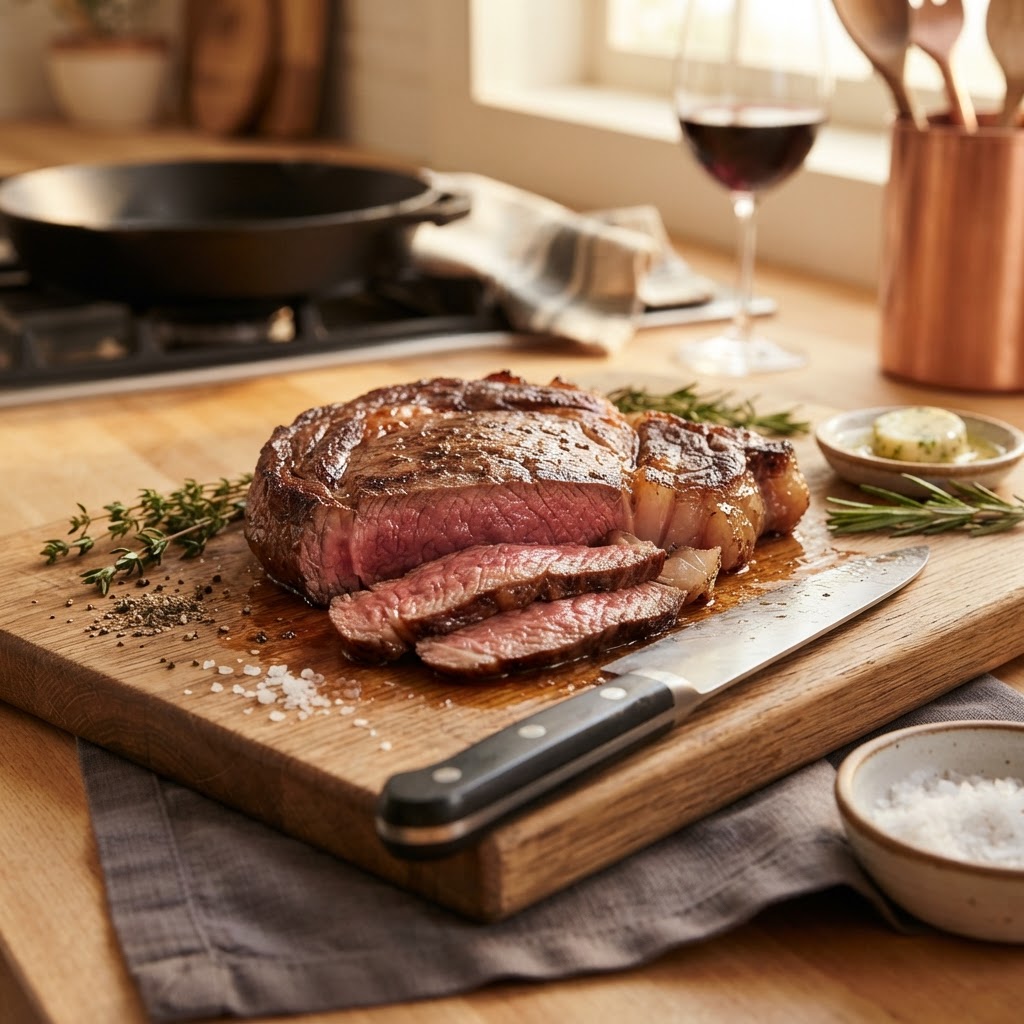
The Home Cook’s Guide to Resting Meat: Why Timing and Temperature Are Essential for Juicier Results
Every home cook has stood in front of a perfectly seared steak, knife in hand, itching to take that first celebratory slice. We spend hours sourcing the perfect cut, meticulously seasoning the surface, and watching the flame with the intensity of a hawk, only to sabotage our hard work in a matter of seconds. The temptation to carve into a protein the moment it leaves the heat source is a siren song that has ruined countless Sunday roasts and weeknight dinners. We mistakenly equate a sizzling, smoking pan with readiness, forgetting that the most transformative phase of cooking actually happens once the fire is turned off. Mastering the art of the rest is the singular bridge between a good home-cooked meal and a restaurant-quality dining experience.
The science behind resting meat is not merely a suggestion from pretentious food critics; it is a fundamental aspect of food chemistry. When meat is subjected to high heat, the muscle fibers contract and tighten, effectively squeezing the internal moisture toward the center of the cut. If you were to slice into the steak at the height of this tension, those juices—the very essence of flavor—would immediately bleed out onto your cutting board instead of remaining suspended in the meat. Resting provides the necessary thermal equilibrium that allows the muscle fibers to relax, reabsorb those juices, and distribute them evenly throughout the entire portion. Ignoring this step is the fastest way to turn a high-quality piece of protein into a dry, chewy disappointment.
At "Blame The Chef," we believe that confidence in the kitchen comes from understanding the "why" behind the technique, not just following a static recipe. Once you grasp the mechanics of heat transfer and internal moisture migration, you stop relying on guesswork and start cooking with the precision of a professional. This guide will walk you through the essential temperatures, the proper equipment for the job, and the subtle nuances of resting different types of meat, from delicate poultry to massive brisket. We are going to change the way you view the finish line of your cooking process, ensuring that every bite you serve is as tender and succulent as it deserves to be. By the time you finish reading, resting will become as intuitive to you as salting your water for pasta.
The Science of Muscle Relaxation and Carryover Cooking
The primary reason we rest meat is to manage the movement of water within the cellular structure of the protein. Muscle tissue is essentially a bundle of proteins, fat, and a significant amount of water. As heat is applied, the proteins begin to denature, tightening and pushing the moisture inward. By removing the meat from the heat and allowing it to sit, you are effectively allowing a process of carryover cooking to finish the job gently. This is the period where the internal temperature continues to rise, even though the external heat source has been extinguished.
Understanding Thermal Equilibrium
When you pull a steak off the grill at 125°F, it isn't actually finished cooking. The residual heat on the exterior of the meat continues to travel toward the cooler center, often raising the final internal temperature by 5 to 10 degrees. If you don't account for this, your "medium-rare" steak can easily cross the threshold into "medium-well" or even "well-done" while it sits on the board. This is why professional chefs often pull their meat slightly early, trusting the rest period to bring the temperature to the perfect level of doneness.
The Migration of Juices
Once the heat stops, the proteins lose that extreme tension. Over the course of five to twenty minutes, the fibers begin to slacken, and the juices—which have been forced into the center—begin to diffuse back outward toward the edges of the muscle. If you cut too early, you lose that liquid gold. That red puddle on your cutting board isn't blood; it is myoglobin, which is a protein-rich fluid that provides flavor and mouthfeel. Keeping it inside the meat is essential for achieving that buttery texture we all crave.
"The difference between a dry piece of protein and a succulent one is rarely about the quality of the meat itself, but rather the patience of the cook during those final, critical minutes of rest."
Guidelines for Resting Different Cuts
Not all meat requires the same amount of time to rest. The rule of thumb is generally proportional to the size and density of the cut. A delicate piece of fish needs far less time than a massive bone-in prime rib or a whole roast chicken. As a general starting point, you should plan for at least 5 minutes for small, thin items and up to 45 minutes or more for large, slow-roasted joints.
Steak and Chops
For a standard 1 to 1.5-inch thick ribeye, strip, or pork chop, five to ten minutes is the golden window. Because these cuts are relatively thin, they shed heat quickly, so you must be careful not to let them go cold. You want the meat to reach its optimal internal temperature without losing its serving warmth. If you are cooking multiple steaks, it is often helpful to keep them on a warmed platter, but never in a space so hot that they continue to sear.
Roasts and Whole Poultry
When dealing with large items like a whole turkey, a crown roast, or a leg of lamb, the physics changes. These items hold heat for a much longer period due to their mass. A large roast can easily rest for 20 to 30 minutes without dropping below a serving temperature. In fact, resting a large roast is essential because it allows the exterior temperature to equalize with the core, ensuring every slice from the outer edge to the dead center is consistent in texture.
Ground Meat and Patties
Surprisingly, even burgers and meatballs benefit from a brief rest. Many home cooks make the mistake of serving burgers immediately, resulting in juices running down the hands of the person eating. Giving a burger two to three minutes allows the fat and juices to stabilize within the patty, making the bite much more enjoyable and less messy. It is a small step that separates a backyard amateur from a true griddle master.
The Role of Equipment and Environment
Where you rest your meat is just as important as how long you rest it. Many people make the critical error of wrapping meat tightly in aluminum foil, which creates a steam-trap environment. While this keeps the meat hot, it also ruins the crust you spent so much effort building. When you steam your steak in foil, you lose that crisp, salty exterior, replacing it with a soggy, unappealing surface.
Using a Wire Rack
The best way to rest meat is on a wire rack set over a sheet pan or a carving board. This allows for airflow around the entire cut of meat, which prevents the bottom side from sitting in its own juices and losing its texture. Air circulation is your best friend when you want to maintain that perfect sear. If you are worried about heat loss, place the rack in a warm (but not hot) oven or simply tent it very loosely with a piece of foil, ensuring the edges remain open to prevent condensation.
Choosing the Right Cutting Board
While it seems obvious, your choice of cutting board matters. A wooden board with a juice groove is highly recommended for larger roasts. This feature catches the escaping juices, which can then be repurposed into a pan sauce or au jus. If you are resting a large brisket or prime rib, you want a board that is stable and easy to clean, as the resting process is the perfect time to prep your serving platters or finish your side dishes.
"Resting isn't a passive activity; it is a strategic window of time that allows you to clean your workstation, plate your sides, and prepare your pan sauces while the protein hits its peak of tenderness."
Essential Tips for Perfect Results
If you want to master the rest, you need to rely on objective data rather than guesswork. The single most important tool in your arsenal is a digital instant-read thermometer. Trying to judge "doneness" by touching the meat or relying on the clock is a recipe for inconsistency. Temperatures fluctuate based on pan thickness, ambient room temperature, and the starting temp of the meat.
The Importance of Temperature
To achieve a perfect medium-rare steak, you should aim for an internal temperature of about 120°F to 125°F before pulling it from the heat. During the rest, that temperature will rise to 130°F to 135°F. If you wait until the thermometer reads 135°F in the pan, by the time you sit down to eat, you will likely be looking at a medium-well steak. Here is a quick reference for pulled-off-heat temperatures:
Tenting vs. Covering
When people say "tent with foil," they often take it too literally. You don't want to wrap the meat like a baked potato. A true "tent" involves creating a loose dome over the meat so that the heat is trapped above it, but the steam can still escape from the sides. This prevents the moisture from settling back onto the crust, effectively preserving the Maillard reaction you worked so hard to achieve. If you aren't sure, err on the side of leaving it uncovered in a draft-free area of your kitchen.
Timing Your Sides
One of the biggest struggles home cooks face is timing everything to be ready at once. Use the resting phase as your deadline. If you know a large roast needs 20 minutes to rest, calculate your cooking time for your vegetables and starches so they finish just as the meat is pulled. This ensures that the meat doesn't get cold while you are scrambling to finish the roasted carrots or the mashed potatoes. Resting gives you the breathing room to be a graceful host.
When Resting Is Actually Dangerous
While we emphasize resting, there are specific contexts where it must be balanced against food safety. If you are cooking for a large group and need to hold a piece of meat for an extended period, you have to be conscious of the "danger zone"—the temperature range between 40°F and 140°F where bacteria thrive.
Holding Large Roasts
For long rests, such as with a brisket or a whole turkey, you might need to utilize an insulated cooler. This is a pro-chef technique known as a faux cambro. You wrap the rested, cooked meat in butcher paper, then a layer of heavy towels, and place it in a clean, dry cooler. This can hold the meat at a safe serving temperature for several hours. This is common practice in the BBQ world, where briskets are often rested for four to eight hours to achieve ultimate tenderness.
The Problem with Small Cuts
Conversely, you should never try to "hold" small steaks in a container for long periods. Because they have a high surface-area-to-volume ratio, they lose heat rapidly. If you try to force them to stay hot for too long, you will overcook them. Know the limits of your cut and respect the time constraints. A single steak does not have the thermal mass to survive a long rest; it needs to be served promptly after its five to ten-minute window.
Reheating Safely
If you find that your meat has dropped below the desired serving temperature, it is better to serve it slightly warm than to try and blast it in the oven or microwave. Microwaving meat is the ultimate sin, as it destroys the texture and causes the proteins to seize instantly. If you must reheat, use a very gentle approach, such as a low-temperature oven (200°F) or a quick sear in a warm pan just to take the chill off.
Elevating the Plate: What to Do While You Wait
The time spent resting your meat is the most productive part of your kitchen workflow. While the protein is resting, you should shift your attention to the pan drippings. Whether you are making a quick pan sauce with wine, butter, and herbs or simply deglazing the pan with a little stock, the flavors left behind in the skillet are precious.
Making the Pan Sauce
While the meat rests, place your pan over medium heat. Add a knob of butter and a splash of wine, beer, or beef stock. Scrape up the fond (the browned bits) from the bottom of the pan. This is pure concentrated flavor. By the time your meat is finished resting, you will have a beautiful, silky sauce to pour over the top or serve on the side.
The Finishing Touch
Resting is also the ideal time to add final seasonings. Before you slice, consider finishing your meat with a high-quality finishing salt like Maldon sea salt or a compound butter. Because the juices have redistributed throughout the meat, the texture is primed to absorb those final layers of flavor. If you apply these finishing touches while the meat is still warm but resting, they will meld perfectly with the protein.
"The kitchen is a symphony of timing; the rest period is your conductor, ensuring that every element of your meal comes together in perfect harmony at the final moment."
Common Mistakes to Avoid
Even with the best intentions, it is easy to fall into bad habits. The most common mistake is the "visual check." People often poke their meat or, even worse, cut a tiny sliver off the end to see if it is "done." Never cut into your meat to check for doneness. Every time you pierce the surface, you are creating a highway for those delicious juices to escape.
The "No-Poke" Rule
Avoid using a fork to move your meat. Every time you stab the protein, you release moisture. Use tongs or a spatula whenever possible. If you must use a fork, try to secure it in a way that doesn't penetrate deep into the center of the muscle. Treat your protein with care, and it will reward you in the final result.
The Importance of the Resting Vessel
Make sure your resting vessel is clean. If you use a dirty cutting board or a cold plate, you might introduce bacteria or unappetizing flavors to your perfectly cooked meat. Keep a dedicated board for resting and carving. Ensure it is at room temperature; putting a hot steak on a frozen board will cause an immediate and unwanted temperature shock that can affect the texture of the meat.
Ignoring the Meat’s Tendency
Understand the specific meat you are working with. A lean cut like a tenderloin needs to be handled with extreme care, as it doesn't have the intramuscular fat (marbling) to keep it moist if you get it wrong. A fattier cut, like a ribeye, is a bit more forgiving, but it still deserves the respect of a proper rest. The goal is always to maximize the moisture and tenderness, no matter the cut.
Final Thoughts
The journey to culinary excellence is paved with thousands of small, seemingly insignificant decisions. From the moment you season your protein to the final slice you plate for your family or guests, every action counts. Resting meat is not just a final formality; it is the culmination of your entire cooking effort. It is the moment where the chaos of the heat meets the order of the finished, perfect product.
By embracing the rest, you are proving that you value the ingredient and the process. You are moving beyond the frantic, impatient habits of a beginner and stepping into the shoes of a thoughtful, intentional chef. You will notice that your roasts become more consistent, your steaks become more tender, and your overall dining experience feels more relaxed and professional. The next time you find yourself staring at that beautiful piece of meat, remember that the most important tool you have isn't your knife or your fire—it is your patience.
Take those extra minutes. Let the juices settle, let the fibers relax, and let the temperature equalize. When you finally do make that first slice, you will be rewarded with a cut that is perfectly cooked from edge to edge, glistening with natural flavor, and tender enough to cut with the side of a fork. At "Blame The Chef," we promise that if you adopt this practice, you will never go back to the "cut-and-run" method again. Your guests will notice, your palate will thank you, and your kitchen confidence will reach new heights. Happy cooking, and remember: good things come to those who wait, especially when it comes to the rest.

Get the Next Recipe
Weekly recipes, techniques, and gear picks — straight to your inbox.
