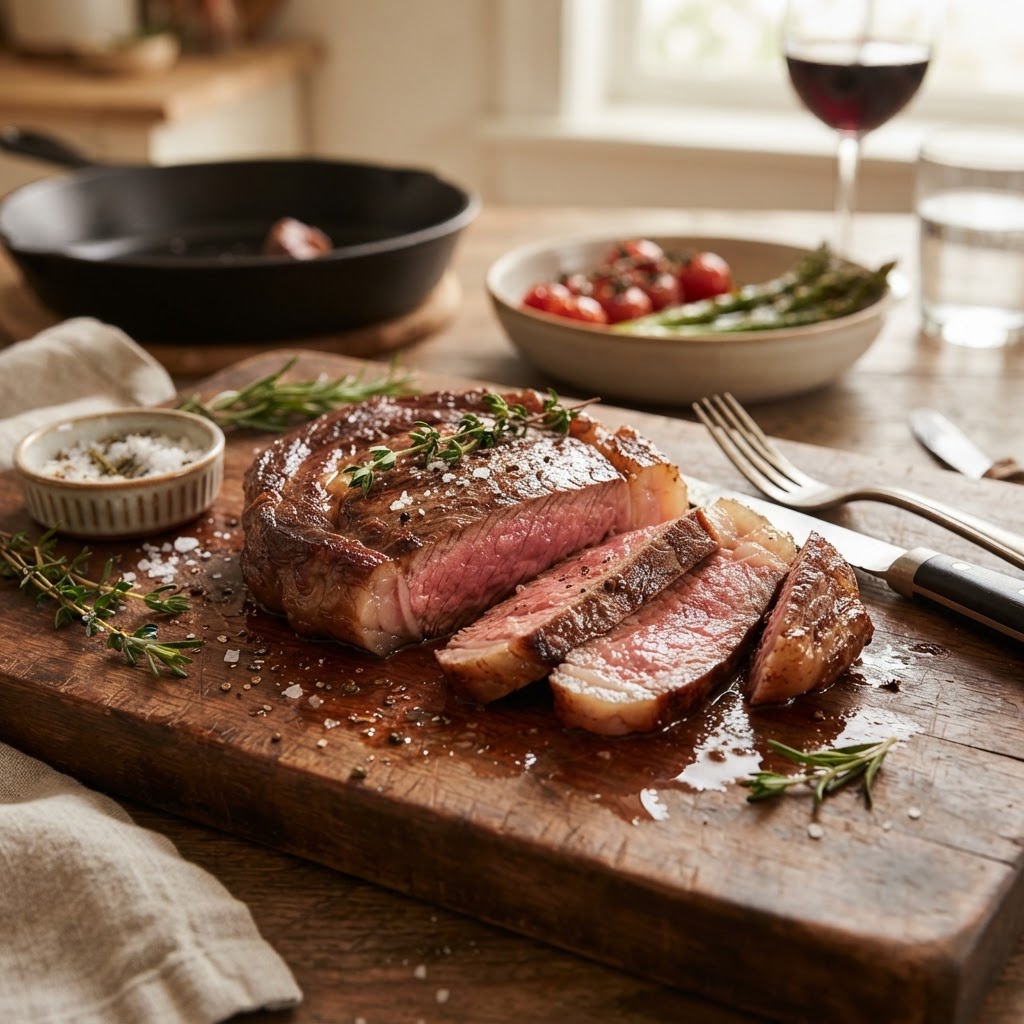
The Home Cook’s Guide to Resting Proteins: Mastering Carryover Cooking to Ensure Every Cut Remains Succulent and Tender
We have all experienced that heartbreaking moment of anticipation: you have spent hours meticulously seasoning, searing, and monitoring a beautiful cut of meat, only to slice into it immediately upon removing it from the heat. As the blade passes through, a flood of precious, flavorful juices runs across your cutting board instead of staying locked within the fibers of the protein. This unfortunate scene is the hallmark of a cook who has bypassed one of the most critical steps in the culinary process: the rest. Resting is not merely a suggestion or a decorative pause; it is a fundamental scientific necessity that separates the dry, tough, and disappointing meals from the succulent, tender, and professional-grade results you see in your favorite kitchens.
Understanding the physics of protein requires us to look at what happens at the cellular level when heat is applied. When you expose muscle fibers to high heat, the proteins begin to contract and tighten, effectively squeezing the moisture out of the center toward the exterior of the cut. If you were to carve the meat the second it leaves the pan, you are essentially opening the floodgates while the internal pressure is at its absolute peak. Allowing the protein to sit undisturbed provides a crucial window for the internal tension to relax, allowing those juices to redistribute evenly throughout the muscle rather than pooling on your board.
This guide is designed to demystify the art of the rest and introduce you to the concept of carryover cooking, a technique that will fundamentally change the way you approach your stove. Many home cooks fear that pulling a steak or a roast off the heat before it reaches its "target" temperature is a recipe for disaster, yet it is exactly the opposite. By leveraging the residual heat trapped within the protein, you can achieve a consistent, edge-to-edge doneness that is nearly impossible to replicate through direct heat alone. Mastery of these two concepts—resting and carryover—is the gateway to becoming a more intuitive and successful home chef.
The Science of Muscle Fibers and Juice Redistribution
When you cook a protein, whether it is a delicate chicken breast, a hearty ribeye, or a holiday roast, you are essentially manipulating the structure of animal muscle. Muscle tissue is composed of long bundles of fibers held together by connective tissue. As the temperature rises, these fibers contract, tighten, and lose their ability to hold onto their natural moisture. The higher the heat, the tighter the contraction, and the more liquid is expelled. This is why a well-done steak feels significantly firmer than a rare one—the structural integrity of the protein has physically changed due to the heat exposure.
During the active cooking phase, the outside of the meat is significantly hotter than the center, creating a temperature gradient that forces juices to migrate away from the heat source. If you cut into the protein instantly, the liquid is not only pressurized but is also concentrated in the coolest, least-cooked part of the meat. By letting the protein sit, you allow the thermal energy to equalize, meaning the temperature of the interior will continue to rise slightly while the surface begins to cool. This thermal equilibrium is the secret to a perfectly uniform texture.
"Resting is not a passive act of waiting; it is an active phase of the cooking process where the meat achieves its final, most desirable state of tenderness and internal balance."
Understanding Thermal Equilibrium
The concept of thermal equilibrium is simply nature’s way of saying that heat wants to spread out until everything is at the same temperature. When you take a steak off the grill at 125°F (51°C), the exterior is likely 150°F (65°C) or higher. Even after you remove the heat source, that surface energy will continue to conduct inward. If you cut it immediately, you interrupt this migration, losing flavor and texture. Giving the protein 5 to 10 minutes allows the heat to "settle," ensuring every bite you take is juicy and uniform.
The Role of Connective Tissue
In addition to the muscle fibers, we must consider collagen, the connective tissue that becomes soft and gelatinous when cooked properly. When you rest meat, especially tougher cuts like brisket or roasts that contain higher amounts of connective tissue, you are allowing that gelatinous structure to set. If you slice into it too early, the juices aren't just water; they are flavored, rich, and essential for the mouthfeel of the dish. Letting the meat set allows the juices to thicken slightly, ensuring they cling to the fibers instead of sliding away.
Mastering Carryover Cooking: The Art of the Early Pull
Carryover cooking is one of the most misunderstood techniques in the home kitchen, but it is the primary reason why restaurant food often tastes more consistent than home-cooked meals. Simply put, carryover cooking is the rise in internal temperature that occurs after you have removed the protein from the heat source. If your target for a medium-rare steak is 130°F (54°C), you should be removing that steak from the pan when it hits 120°F to 125°F (49°C-52°C).
The amount of carryover cooking you will experience depends heavily on the size and shape of the protein. A thin pork chop will only rise by about 3°F to 5°F because it doesn't hold much residual heat. However, a thick, three-pound beef tenderloin roast has a massive thermal mass and can rise by 10°F to 15°F or more while it sits on the counter. If you pull that roast at your target temperature, by the time you carve it, it will be significantly overcooked.
The Thermal Mass Factor
Think of your protein like a heated stone. A small pebble loses its heat instantly, while a large boulder stays hot for hours. To calculate your "pull temperature," consider these general rules of thumb:
Managing the Environment
The environment in which your protein rests also affects carryover. If you place a small steak on a cold ceramic plate, it will cool down rapidly. If you place a large roast on a warm wooden cutting board, the carryover cooking will be more pronounced. We recommend using a warm, but not scalding, resting plate. You want to slow the heat loss of the surface while still allowing the core to rise.
Why Temperature Control is Non-Negotiable
If you want to move from "home cook" to "proficient chef," you must stop relying on the "poke test" or your intuition. The only way to master the rest and carryover cooking is to use a high-quality, instant-read digital thermometer. Without one, you are flying blind. Professionals use these tools not because they lack experience, but because they understand that protein chemistry is exact. One or two degrees is often the difference between a perfectly succulent medium-rare and a dry, graying medium.
A probe thermometer, which can stay in the meat while it cooks, is another excellent option for larger cuts like pork shoulders or beef briskets. This allows you to monitor the internal temperature in real-time, giving you total control over the moment you choose to pull the protein from the oven. By observing the trajectory of the temperature rise, you can start to predict exactly when the heat will stop climbing, giving you the confidence to trust the process.
"Consistency is the highest form of professional culinary achievement. If you can replicate the exact level of doneness every single time you cook a steak, you have mastered the foundational element of the craft."
Calibrating Your Tool
Even the best digital thermometer is useless if it is uncalibrated. Once every few months, you should perform an ice-water test: fill a glass with crushed ice and top it off with cold water. Insert your thermometer probe; it should read exactly 32°F (0°C). If it is off by more than two degrees, check the manufacturer's manual for a calibration reset. A reliable tool is the only way to ensure your carryover calculations are accurate.
The Importance of Placement
Where you insert the probe matters just as much as the temperature itself. You want the tip of the thermometer to be in the center of the thickest part of the meat, avoiding any large pockets of fat or bone, as these elements conduct heat differently than muscle tissue. If you are cooking a bone-in roast, ensure the probe is at least a half-inch away from the bone to get an accurate reading of the muscle temperature.
The Optimal Resting Environment: Foil or No Foil?
A common debate among chefs is whether to tent your meat with aluminum foil during the rest. There is no singular answer, as the decision depends entirely on the outcome you are trying to achieve. Tenting with foil creates a warm, humid environment. This is excellent for large roasts where you want to maintain a high internal temperature and keep the exterior moist, but it comes at a cost: it can soften your crust.
If you have spent twenty minutes building a beautiful, mahogany-colored crust on a steak or a rack of lamb, wrapping it in foil will steam that crust, making it soft and soggy. Instead of foil, consider using a warm kitchen towel to cover the protein lightly if you are worried about heat loss. This allows for a small amount of airflow while keeping the meat insulated.
When to Use Foil
Large Roasts:* Use foil loosely to retain heat for the long resting period.
Whole Chickens:* Foil helps keep the skin from drying out too quickly.
Braises:* Since you are already dealing with liquid, you don't need to worry about the crust.
When to Skip the Foil
Seared Steaks:* You want to preserve the integrity of the crust you worked so hard to create.
Breaded Proteins:* Any breaded item will lose its crunch instantly in a foil tent.
Fish Fillets:* Fish cooks so quickly that it loses its internal structure if it is trapped in a humid environment.
Resting Timelines Based on Protein Type
Not all proteins are created equal, and their resting times should reflect their density and size. A delicate fish fillet might only need two minutes, while a ten-pound standing rib roast can benefit from forty-five minutes or even an hour of resting. Understanding these timing windows is essential for meal planning. If you are hosting a dinner party, the rest time is the perfect moment to finish your pan sauce, dress your salad, or warm your side dishes.
Quick-Cook Proteins
Proteins like chicken breasts, pork chops, and steaks benefit from a rest of 5 to 10 minutes. If you have been searing at high heat, the surface is very hot and will continue to conduct inward. A five-minute rest is often the minimum to allow the juices to settle. If you cut into a steak at the three-minute mark, you will likely see juices running out—keep waiting until the five-minute mark, and you will see the difference in the board.
Heavy-Duty Roasts
Larger cuts require more significant resting windows. For a whole chicken, 15 to 20 minutes is ideal. For a larger beef roast, such as a prime rib, you should aim for 30 to 45 minutes. Because these items have a large volume of liquid, they need more time for the temperature to stabilize and the fibers to fully relax. If you cut a large roast too early, you aren't just losing a little juice; you are essentially undoing the "doneness" you achieved in the oven.
Troubleshooting the "Cool Meat" Fear
The biggest hurdle for the home cook is the psychological fear that the meat will be cold by the time it hits the table. It is important to remember that meat is an insulator. Even when the surface feels room temperature, the center of a thick roast is still holding a significant amount of heat. If you are worried about the meal losing temperature, you can employ a few professional tricks that don't involve wrapping the meat in tight, soggy foil.
First, warm your serving plates. Placing a perfectly cooked steak onto a cold plate will instantly drop the meat's temperature by several degrees. By warming your plates in the oven at a low setting or under hot water and drying them thoroughly, you create a buffer that keeps the meat at the perfect eating temperature for longer. Second, if you are serving a steak, ensure that your pan sauce or butter topping is hot; this will provide an instant temperature boost upon plating.
The "Sizzle" Myth
Many people associate the "sizzle" of cutting into meat with freshness, but that sound is actually the sound of evaporating juices—your flavor is literally sizzling away into the air. Do not be tempted to slice for the sake of presentation or the audible satisfaction of the knife hitting the board. Focus instead on the visual cues of a rested protein: a slightly matte surface, a lack of liquid on the cutting board, and an edge-to-edge pink or brown interior that looks consistent and tender.
The Role of Pan Sauces
If you want to be extra careful, use the resting period to prepare a pan sauce. Deglazing the pan with wine, stock, or herbs while the meat rests is the perfect use of time. By the time the sauce is reduced to a syrupy consistency, the meat will have finished its carryover cooking and be perfectly ready to slice. The heat from the sauce will also help maintain the temperature of the sliced meat on the plate, providing a harmonious and professional dining experience.
The Final Slice: Technique Matters
How you slice the meat is just as important as the rest. Always look for the grain of the muscle—the direction in which the fibers run. If you slice parallel to the grain, you are forcing the diner to chew through long, unbroken muscle strands, which leads to a "tough" experience. When you slice perpendicular to the grain, you are shortening those fibers into tiny, manageable segments that feel tender and melt-in-the-mouth.
For tougher cuts like flank steak or skirt steak, this is non-negotiable. For tender cuts like filet mignon, it is less critical, but it is still a good habit to maintain. Using a sharp, non-serrated carving knife is essential. A serrated knife acts like a saw, tearing the fibers rather than slicing through them. A sharp, smooth blade will glide through the protein, keeping the juices inside the meat rather than pulling them out.
The Knife Selection
Chef’s Knife:* Excellent for smaller cuts like steaks, pork chops, and chicken breasts.
Carving/Slicing Knife:* The long, thin blade is perfect for larger roasts or whole birds, allowing for long, clean strokes without needing to "saw."
Utility Knife:* Best reserved for smaller vegetables; it is generally too short to provide the leverage needed for a smooth slice of meat.
The Cutting Board Surface
Wooden boards are significantly better for resting and carving than plastic or glass. Wood is porous, which means it doesn't dull your knife as quickly, and it provides a bit of "grip" that prevents the meat from sliding around. Furthermore, a wooden board with a "juice groove" around the perimeter is a great way to catch any errant juices, which you can then pour over the sliced meat before serving, ensuring that not a single drop of flavor is lost.
Final Thoughts
Mastering the rest and understanding the dynamics of carryover cooking is, quite frankly, a superpower in the home kitchen. It requires a shift in mindset: moving from a cook who reacts to the heat to a chef who anticipates the thermal movement of the protein. By planning your timing, respecting the physics of the muscle, and utilizing tools like a digital thermometer, you eliminate the guesswork that often leads to inconsistent results.
Remember that every time you rest your meat, you are honoring the ingredient. You have sourced quality protein, prepared it with care, and monitored it through the fire; denying it the few minutes it needs to reach its peak state would be a disservice to the meal itself. Be patient. Let the carryover cooking do the work for you. When you eventually place that first perfectly succulent, edge-to-edge cooked slice onto the plate, you will understand exactly why this step is the cornerstone of professional cooking.
The next time you find yourself standing over the stove with a timer, remind yourself that the goal is not just to reach a temperature, but to reach a level of quality. The rest is your best friend in the pursuit of the perfect bite. It is the moment the chef takes a breath, the kitchen settles, and the food comes into its own. Embrace the pause, trust the process, and you will find that your results in the kitchen improve more in a single week than they have in years of cooking without this essential knowledge. Happy cooking, and keep blaming the chef—because now, you’re the one in control.


Get the Next Recipe
Weekly recipes, techniques, and gear picks — straight to your inbox.
